Chalid Lutfie
Technical Foundation and the ZX Spectrum Ecosystem
The production of Still Flying was rooted in the technical limitations and unique sonic signatures of the ZX Spectrum, a home computer that maintained a robust following in Eastern Europe and Russia long after its commercial peak in Western markets. The compositions were authored throughout 2002 using Pro Tracker 3, a sophisticated music editor for the Spectrum that allowed composers to manipulate the AY-3-8910 (or the compatible YM2149F) programmable sound generator (PSG).
The AY-3-8910 chip provides three channels of square-wave sound, a noise generator, and a rudimentary envelope control system. Navigating these constraints required a high degree of technical ingenuity. Composers like C-Jeff utilized techniques such as rapid arpeggios to simulate chords and sophisticated modulation to create the illusion of a wider frequency range. The "lyric music novels" tagline reflects a shift in the demoscene’s musical philosophy, moving away from purely technical or rhythmic exercises toward a narrative-driven, melodic form of chip music.
Chronology of Development and Initial Releases
The timeline of Still Flying is inextricably linked to the competitive culture of the demoscene in 2002. This period was a transitional era for the ZX Spectrum community, where the hardware was increasingly treated as a specialized instrument for artistic expression rather than a primary computing device.
In mid-2002, the track "My Mind is Free" was entered into the CAFe 2002 demoparty, an influential event for the Central and Eastern European digital art scenes. Due to a linguistic error during the registration process, the track was originally titled "My mind free." Competing in the ZX Spectrum AY Music category, the piece secured 13th place. Despite the modest ranking, the track’s inclusion in the final album served as a bridge between competitive demo-writing and cohesive album production.
Later that year, the composition "Lonely Soul" was entered into the Paradox 2002 demoparty. This track demonstrated a significant evolution in C-Jeff’s mastery of the AY-3-8910 chip, achieving a 2nd-place finish in the music competition. Although "Lonely Soul" was not initially part of the Still Flying tracklist during its earliest conceptual stages, its stylistic alignment with the "lyric music novel" theme eventually made it an essential component of the project’s identity.
Approximately 18 months after the initial compositions were completed, the album was transitioned from a collection of individual files into an integrated "musicdisk." This format, common in the demoscene, allowed the music to be presented as a standalone executable program for the ZX Spectrum. This version featured coding by Vortex and graphical artwork by Schafft, with the final data packaging handled by Poisoned CyberJack. This collaborative effort transformed the album from a mere audio collection into a multi-media software product.
Collaborative Credits and Production Standards
The success of Still Flying was a result of a coordinated effort among several prominent figures in the 8-bit community. C-Jeff acted as the primary composer and producer, overseeing the creative direction of the project. The visual identity of the album was provided by Schafft, whose artwork complemented the atmospheric and "lyrical" nature of the music.
In a move to ensure high-fidelity audio standards—a challenge when working with legacy hardware—the mastering of the album was handled by MmcM (Sergey Romanov). MmcM is widely regarded as one of the most prolific and technically proficient composers in the ZX Spectrum scene. His involvement in the mastering process ensured that the 3-channel PSG output was balanced and optimized for modern listening environments while preserving the authentic "crunch" and character of the original AY-3-8910 output.
Analytical Perspective on the Musicdisk Format
The release of Still Flying as an executable musicdisk is a significant historical artifact. In the early 2000s, the distribution of digital music was still in its relative infancy compared to contemporary streaming platforms. Within the demoscene, the musicdisk was the equivalent of a visual album. It required a specialized player—often coded in assembly language—to read the tracker data in real-time and output it through the computer’s sound chip.
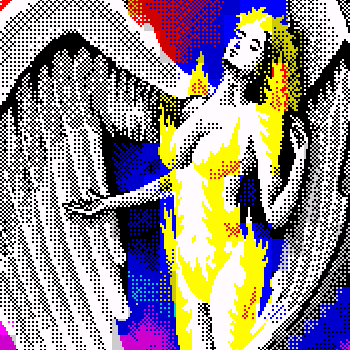
The coding by Vortex ensured that the player was efficient, leaving enough CPU cycles for Schafft’s graphics to be displayed without interrupting the audio playback. This synergy of code, art, and sound is the hallmark of the demoscene, and Still Flying remains a prime example of how these elements can be synthesized to create a cohesive user experience. The packaging by Poisoned CyberJack ensured the software was compact and functional, adhering to the storage constraints inherent to the ZX Spectrum platform.
Impact on the Chiptune Genre and Demoscene
Still Flying arrived at a time when chiptune was beginning to branch out from its origins as a subculture within the computer hobbyist scene into a recognized musical genre. By labeling the tracks as "novels," C-Jeff emphasized the storytelling potential of 8-bit sound. This approach helped pave the way for future artists to use limited hardware for more than just retro-gaming nostalgia, positioning the ZX Spectrum as a legitimate tool for serious musical composition.
The album also highlighted the international nature of the scene. While the hardware was British, the creative energy behind Still Flying was largely centered in Russia and the surrounding regions. This geographical hub was instrumental in keeping the ZX Spectrum relevant, developing new software tools like Pro Tracker 3 that exceeded the capabilities of original 1980s software.
Modern Accessibility and Digital Preservation
In the decades following its release, Still Flying has transitioned from a niche demoscene software package to a digitally preserved album available on modern platforms such as Bandcamp. This transition is crucial for the preservation of digital culture. It allows the music to be experienced by a global audience without the need for original hardware or specialized emulators.
The digital release maintains the original credits and historical context, ensuring that the contributions of Schafft, MmcM, and the coding team are recognized alongside C-Jeff’s compositions. This availability provides a window into the 2002 digital landscape, offering a case study in how artists worked within extreme technical limitations to produce works of lasting emotional resonance.
Broader Implications for Legacy Hardware
The continued relevance of albums like Still Flying suggests a broader trend in the music industry: the valuation of unique, hardware-specific textures over the infinite possibilities of modern digital audio workstations (DAWs). The specific limitations of the ZX Spectrum—the inability to play more than three notes at once without multiplexing, the lack of built-in filters, and the rigid timing of the tracker interface—forced a level of creativity that is often absent in modern production.
Furthermore, the "lyric music novel" concept remains a relevant framework for instrumental music. It suggests that even without lyrics, a sequence of melodic shifts and rhythmic changes can convey a narrative arc. Still Flying serves as a testament to the fact that the "soul" of a piece of music is not dependent on the bit-depth or the sample rate of the equipment used to create it, but rather on the intent and skill of the composer.
Summary of Legacy
Still Flying stands as a bridge between two worlds: the competitive, technical world of the 2002 demoscene and the broader, more accessible world of independent electronic music. Through its success at events like Paradox 2002 and its eventual release as a polished musicdisk, it solidified C-Jeff’s reputation as a leading voice in the AY-music community.
The album’s journey—from a series of tracks written on a real ZX Spectrum to a mastered digital release—reflects the evolution of the chiptune community itself. It is a community that values its history, respects the technical mastery of its pioneers, and continues to find new ways to share the unique sounds of the 8-bit era with the modern world. Still Flying remains a definitive example of what can be achieved when the constraints of the past are met with the creative vision of the future.