Jia Lissa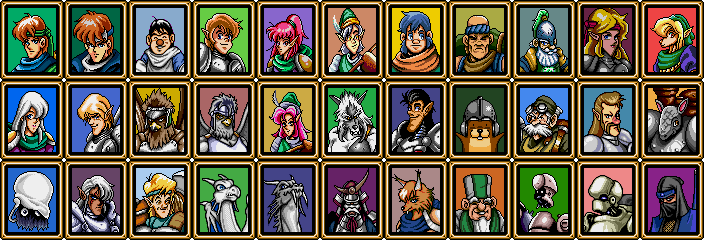
When Shining Force debuted on the Sega Mega Drive in March 1992, it did more than just provide a sequel to the successful dungeon crawler Shining in the Darkness; it established a new paradigm for tactical role-playing games (RPGs) on home consoles. Developed by Climax Entertainment and the newly formed Sonic Co., Ltd., the title represented a massive leap in technical ambition, narrative scope, and corporate investment. While its predecessor had proven that RPGs could be profitable for Sega, Shining Force was designed to expand the "Shining" universe into a sprawling epic that combined deep storytelling with a sophisticated turn-based strategy system. However, the path to its release was marked by intense technical challenges, creative exhaustion, and a growing rift between the developers and Sega’s corporate management.
The Strategic Shift: Redefining the RPG Genre
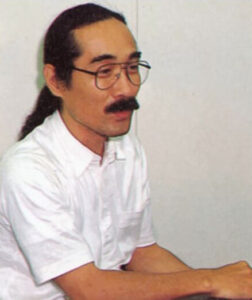
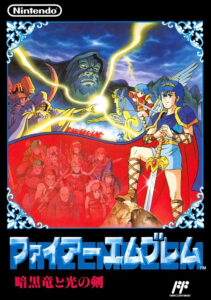
Following the release of Shining in the Darkness in early 1991, fans and industry observers expected a direct continuation of the first-person dungeon-crawling format. However, Hiroyuki Takahashi, the visionary leader at Climax, had long harbored a desire to create a game that focused on tactical formations and large-scale troop management. Takahashi’s inspiration did not come from the contemporary console hits like Nintendo’s Fire Emblem—a series he later claimed had "zero influence" on his work due to its slow pacing—but rather from PC titles like Kure Software Koubou’s Silver Ghost (1988).
Takahashi sought to solve the inherent monotony of traditional turn-based combat. In most RPGs of the era, battles were static affairs where players and enemies swapped blows in a fixed sequence. Takahashi envisioned a system where distance, terrain, and individual unit agility dictated the flow of battle. This led to the development of the "Simulation RPG" style, which combined the character progression and town exploration of a traditional RPG with the grid-based tactical combat of a strategy game. This hybrid approach allowed for a more dynamic experience, where positioning and formation were as critical as a character’s level or equipment.
Corporate Infrastructure: The Birth of Sonic Co., Ltd.
To realize this ambitious vision, the development team required more resources than Climax Entertainment could provide alone. In June 1991, a joint venture was established between Sega and the leadership of Climax to form Sonic Co., Ltd. This new entity was founded with an investment of 40 million yen, with Sega holding an 85% majority stake, Climax holding 6.25%, and Takahashi personally holding the remaining 4%.
The company was named after Sega’s new mascot, Sonic the Hedgehog, following a suggestion by Sega CEO Hayao Nakayama. The primary mandate of Sonic Co. was to handle the planning, market research, and marketing for Sega’s RPG lineup, allowing Climax to focus on the technical aspects of game production. This structure was modeled after Nintendo’s successful partnerships with affiliates like Ape Inc. and Mario Inc. The formation of Sonic Co. signaled Sega’s intent to compete directly with Nintendo’s dominance in the RPG market, which was then led by franchises like Dragon Quest and Final Fantasy.
Technical Milestones: Pushing the 16-Bit Frontier
Shining Force was a technical marvel for the 16-bit era, utilizing a 12-megabit (Mb) cartridge—the largest ever produced for the Mega Drive at the time of its development. This expanded memory was essential to accommodate the game’s cinematic battle animations, which were a cornerstone of Takahashi’s design philosophy. Unlike other strategy games that used small, static sprites, Shining Force featured large, detailed character portraits and fluid attack sequences.
The technical demands of these animations were so high that they threatened to exceed the cartridge’s capacity. Initial estimates suggested the battle scenes alone would require over 40Mb of data. To overcome this, the programming team, led by Yoshinori Tagawa and Haruki Kodera, developed proprietary compression routines. While standard industry compression typically achieved a 50% reduction in file size, the Climax team managed to compress the game’s graphical data to an unprecedented 22% of its original size.
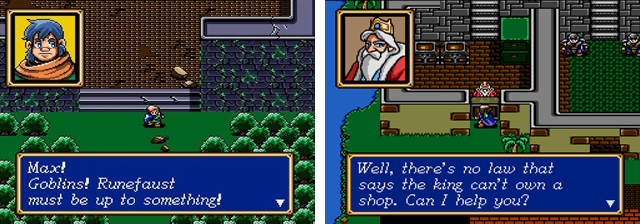
Furthermore, the game’s artificial intelligence (AI) was highly advanced for 1992. The developers implemented routines that allowed enemies to calculate their entire turn—including movement, target selection, and action—in less than one second. The AI was programmed to prioritize weaker or injured party members and would actively attempt to defeat the protagonist, Max, to trigger an immediate "Game Over" for the player.
Narrative Architecture and Character Design
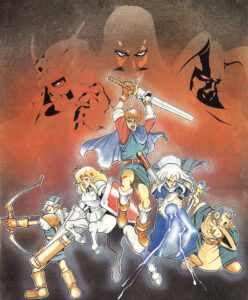
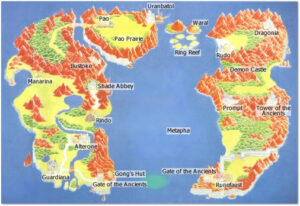
The lore of Shining Force was designed to be a prequel to Shining in the Darkness, set on the dual continents of East and West Rune. The story follows Max, a silent protagonist who washes ashore with no memory and is eventually tasked with leading the "Shining Force" against the sorcerer Darksol and the resurrected Dark Dragon.
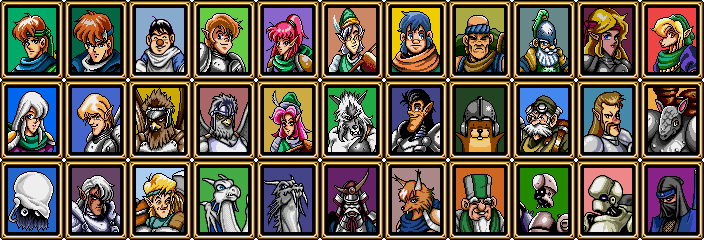
The task of populating this world fell to artist and scenario writer Yoshitaka Tamaki. Tamaki designed over 30 playable characters across ten different races, including humans, centaurs, birdmen, and elves. His designs were intentionally more realistic than the "Disney-like" caricatures seen in Shining in the Darkness, reflecting the game’s more serious themes of war and sacrifice.
A notable aspect of the design was the "Promotion" system. Once characters reached a certain level, they could be promoted to a more advanced class, which not only boosted their statistics but also granted them entirely new visual designs and battle animations. This provided players with a tangible sense of progression and encouraged experimentation with different party compositions. Among the most popular characters was Zylo the wolfling, whose design and combat style became a favorite among the development staff and fans alike.
The Sound of Rune: The Enigma of Masahiko Yoshimura
The game’s soundtrack was composed by Masahiko Yoshimura, who had previously scored Shining in the Darkness. Yoshimura’s work on Shining Force was characterized by noble, orchestral-style themes that captured the epic scale of the journey. However, Yoshimura was notoriously perfectionistic and expressed dissatisfaction with the Mega Drive’s FM synthesis hardware, believing it could not adequately reproduce the beauty of his compositions. This led him to record rearranged, orchestrated versions of the tracks for a special supplement CD released with the game’s strategy guide. Following the completion of Shining Force, Yoshimura largely moved away from the series, with subsequent entries being scored by Motoaki Takenouchi.
Marketing and Global Reception
Sega’s marketing blitz for Shining Force was extensive, particularly in Japan. The campaign included high-budget television commercials featuring live-action models and miniature sets, as well as a manga adaptation by Pokémon artist Toshihiro Ono titled Authentic Story of Saint Fencer Max. Public preview events, such as the "Shining Force First Party" hosted by Famitsu magazine, allowed hundreds of fans to test the game before its official launch.
Despite the hype and critical acclaim, sales figures for the original release were surprisingly modest. Reported data suggests the game sold approximately 200,000 units worldwide. This was lower than the sales for Shining in the Darkness, a discrepancy attributed to the niche appeal of the strategy genre in Western markets and the subtle narrative connections between the two games, which led some players to view them as unrelated titles.
Broader Impact and Corporate Fractures
While Shining Force was a creative success, its development took a heavy toll on the staff. The "crunch" period involved months of extended hours and "state of emergency" deadlines. Simultaneously, the relationship between Climax and Sega began to deteriorate. Following shifts in Sega’s management, Takahashi felt that Climax was being treated as an "unruly subsidiary" rather than a valued partner. The budgets for the Shining games remained minimal despite their high production quality, and Takahashi lamented that Sega was becoming more concerned with corporate profit than creative independence.

This friction eventually led to the franchise moving away from the original Climax team. While the Shining Force series continued on the Game Gear, Sega CD, and Saturn, the Dreamcast famously became the only major Sega platform not to receive an installment in the series.
Legacy and Implications
Today, Shining Force is regarded as a seminal title in the tactical RPG genre. It demonstrated that complex strategy could be made accessible to a broad audience through engaging characters and high-quality presentation. The game spawned a legacy that includes remakes, sequels, and a permanent place in various "Greatest Games" lists.
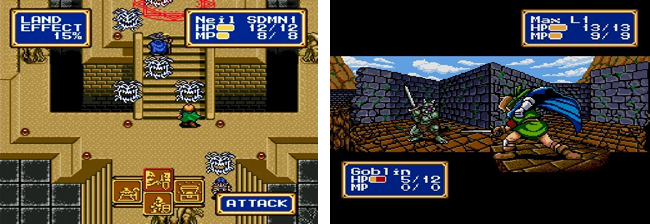
The "Shining" trilogy—comprising Shining in the Darkness, Shining Force, and the isometric action-RPG Landstalker—represents a unique period in gaming history where a small, dedicated team pushed 16-bit hardware to its absolute limits to create a cohesive, evolving world. Though the partnership between Climax and Sega eventually fractured, the design principles established in Shining Force continue to influence modern tactical RPGs, proving that the "Legacy of the Gods" remains a vital part of the industry’s heritage.