Vera Clarissa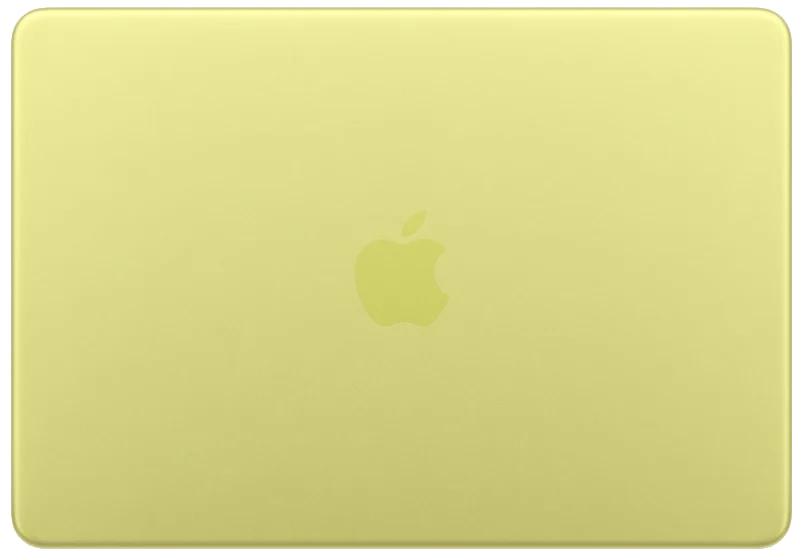
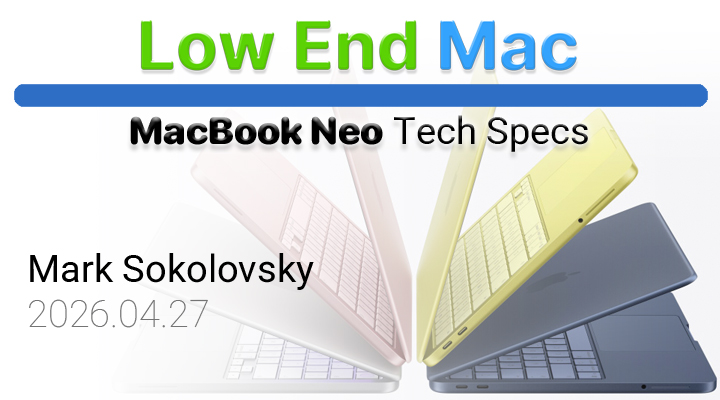
Apple has dramatically reshaped its notebook lineup for the current year with the reintroduction of the MacBook, now reimagined as the MacBook Neo. This new iteration marks a significant strategic shift for the company, positioning an accessible, lightweight, and vibrantly colored laptop at a compelling price point. With a starting MSRP of $599 USD, and an even more attractive $499 available through Apple’s Education Store, the MacBook Neo stands as the most budget-friendly Mac notebook to date, aiming to broaden the appeal of Apple’s ecosystem to a wider demographic of consumers and students.
This strategic move signals Apple’s intent to compete more directly in the entry-level laptop market, a segment historically dominated by Chromebooks and budget Windows machines. The MacBook Neo’s arrival comes at a time when the demand for versatile and affordable computing solutions continues to grow, fueled by remote work, online education, and the increasing reliance on digital tools for everyday tasks. The company’s decision to leverage its in-house silicon, specifically the A18 Pro chip—previously found in higher-end iPhones—underscores a commitment to delivering robust performance without compromising on cost.
The MacBook Neo is not merely an exercise in cost reduction; it represents a deliberate effort to infuse the affordability segment with Apple’s characteristic build quality and performance standards. The device is engineered with a sturdy aluminum chassis, a departure from the plastic construction often found in comparable budget laptops. This focus on premium materials aims to ensure durability and a refined user experience, even at its accessible price point. Furthermore, the inclusion of a redesigned, larger trackpad enhances user interaction, a subtle yet significant improvement that contributes to the overall usability of the device.
Under the hood, the MacBook Neo is powered by the A18 Pro chip, a testament to Apple’s silicon advancements. This chip, sharing lineage with the iPhone 15 Pro series, delivers impressive computational power. Benchmarking data indicates that the A18 Pro in the MacBook Neo offers nearly double the CPU performance of the M1 MacBook Air, a benchmark model that was itself lauded for its efficiency and speed. This substantial performance leap is particularly noteworthy when considering the typical offerings in the sub-$600 laptop market, where many competitors, including Chromebooks, often rely on less powerful Intel processors, or Windows notebooks in this price range may compromise on build quality and overall performance.
The A18 Pro chip’s capabilities are further highlighted by its single-core CPU performance, which, according to independent benchmarks, matches that of AMD’s high-end Ryzen 9 9950X3D processor. While this comparison might seem ambitious given the Neo’s positioning, it underscores Apple’s confidence in its integrated silicon’s ability to punch above its weight class, offering a smooth and responsive experience for everyday computing tasks, multitasking, and even more demanding applications.
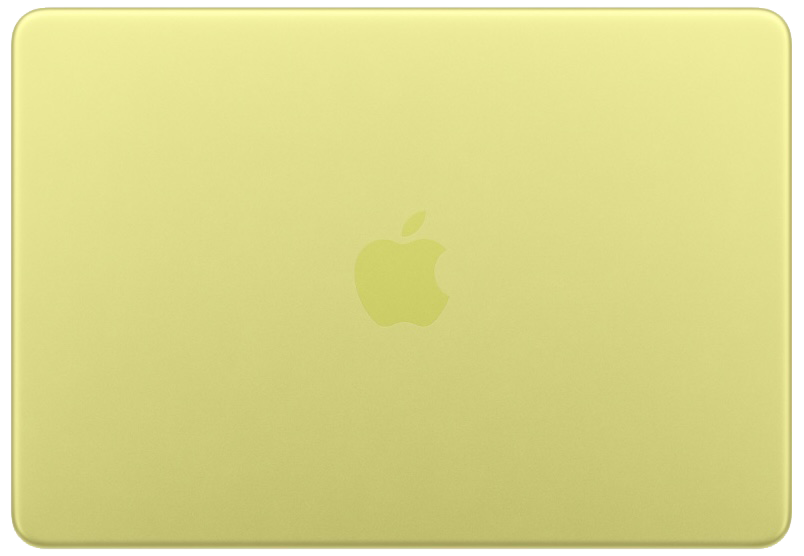
The design philosophy behind the MacBook Neo extends to its aesthetic appeal, with the device available in four distinct color options: classic Silver, a sophisticated Blush (Pink), a vibrant Citrus (reminiscent of Gatorade Lemon-Lime), and a deep Indigo (a muted, faded blue). This palette aims to cater to a diverse range of user preferences, allowing for personalization beyond functional requirements.
The display is a key component of the user experience, and the MacBook Neo features a 13-inch IPS LCD panel. It boasts a brightness of 500 nits, providing good visibility even in well-lit environments, and a pixel density of 219 pixels per inch (ppi). The resolution of 2408 x 1506 offers sharp visuals, suitable for productivity tasks, media consumption, and web browsing.

Underpinning the system’s performance is a configuration of 8 GB of 3750 MHz LPDDR5X-7500 SDRAM. This memory configuration, combined with the efficiency of Apple’s unified memory architecture, ensures swift data access and smooth multitasking. The graphics capabilities are handled by a 5-core GPU, integrated within the A18 Pro chip. The chip itself is manufactured using TSMC’s advanced 3-nanometer N3E FinFET process, a leading-edge manufacturing technology that contributes to both performance and power efficiency.
Storage on the MacBook Neo utilizes PCIe NVMe K8A5 NAND flash memory, delivering notably fast read and write speeds of approximately 1.4 GB/s. While this speed is more than adequate for most common user activities, it is important to note that, similar to the RAM, the onboard storage is soldered directly to the logic board. However, in a departure from typical Apple practice for soldered components, there is evidence suggesting that the storage can be upgraded. Independent technicians, such as DosDude1, have demonstrated the possibility of upgrading the internal storage to as much as 1 TB using specialized tools. This potential for user-driven upgrades, though requiring technical skill, adds a layer of long-term value to the device.
Commercially, the MacBook Neo is offered with either a 256 GB SSD for the $599 base model or a 512 GB SSD for the $699 configuration. These configurations provide a balanced approach to storage capacity and cost, catering to different user needs.
In its pursuit of affordability and a streamlined design, Apple has made several notable omissions compared to its higher-end MacBook models. The MacBook Neo foregoes the MagSafe charging connector, a feature that has been a staple of MacBooks since its reintroduction in 2020. Instead, users will rely on the USB-C port for charging. Connectivity is also somewhat limited, with the device featuring only one USB 3.0 port and a secondary USB 2.0 port. This configuration may necessitate the use of hubs or adapters for users who require multiple peripherals to be connected simultaneously.

Another significant departure is the absence of a backlit keyboard. While this decision contributes to cost savings and potentially battery life, it may be a drawback for users who frequently work in low-light conditions. To compensate, the MacBook Neo features a light-tone colored keyboard that visually complements the body color of the device, offering a distinct aesthetic. Touch ID, Apple’s fingerprint authentication system, is included but is reserved for the higher-tier $699 model, which comes with the 512 GB SSD. Beyond the USB ports, the device retains a standard 3.5mm headphone jack, a welcome inclusion for many users.
The integration of Apple Intelligence, Apple’s suite of AI-powered features, is a significant aspect of the MacBook Neo’s software experience. macOS, when running on any Mac with Apple Silicon, including the A18 Pro chip in the Neo, supports these advanced AI capabilities. This means users can leverage features such as enhanced Siri interactions, generative text capabilities, and intelligent image processing directly on their new MacBook. Apple Intelligence is also available on compatible iPads and iPhones, provided they are running the latest operating system versions and feature sufficiently powerful chips.
Background and Market Context
The introduction of the MacBook Neo can be viewed as Apple’s strategic response to the evolving landscape of the personal computing market. For years, Apple has maintained a premium pricing strategy for its MacBook line, effectively segmenting its offerings towards higher-income consumers and creative professionals. However, the burgeoning popularity of Chromebooks, particularly in educational institutions and among budget-conscious consumers, has presented a significant challenge. Chromebooks, often priced well below $500, offer a cloud-centric operating system that is simple to use, secure, and generally performs well for web-based tasks.
Apple’s previous attempts to enter the more affordable laptop space, such as the 12-inch MacBook and the earlier iterations of the MacBook Air, often occupied a mid-tier price bracket. The MacBook Neo’s aggressive starting price of $599, coupled with its robust feature set derived from Apple’s advanced silicon, represents a direct challenge to this established market dynamic. The company appears to be aiming to capture a segment of the market that might have previously been priced out of the Apple ecosystem or opted for less integrated solutions.
Chronology of Entry-Level MacBooks
While the "MacBook" brand has historically represented Apple’s premium notebook line, the company has experimented with more accessible models over the years. The original MacBook line, introduced in 2006, offered a more affordable alternative to the PowerBook. Later, the 12-inch MacBook (2015-2019) aimed for extreme portability and a minimalist design, albeit with a high price tag and limited port selection. The MacBook Air, initially positioned as a premium ultraportable, has, over time, become Apple’s most accessible MacBook, particularly with the transition to Apple Silicon. The MacBook Neo’s introduction marks a new chapter, explicitly targeting the sub-$600 price point with a feature set that emphasizes performance and build quality.
Supporting Data and Technical Specifications

- Processor: Apple A18 Pro chip (3nm N3E FinFET process by TSMC)
- CPU: Performance comparable to AMD Ryzen 9 9950X3D in single-core benchmarks. Nearly double the CPU performance of M1 MacBook Air.
- GPU: 5-core GPU.
- Memory: 8 GB 3750 MHz LPDDR5X-7500 SDRAM.
- Storage: PCIe NVMe K8A5 NAND.
- Read/Write Speeds: ~1.4 GB/s.
- Available Configurations: 256 GB ($599), 512 GB ($699). Potential for 1 TB upgrade (user-dependent).
- Display: 13-inch IPS LCD.
- Brightness: 500 nits.
- Resolution: 2408 x 1506 pixels.
- Pixel Density: 219 ppi.
- Connectivity:
- 1 x USB 3.0 port.
- 1 x USB 2.0 port.
- 3.5mm headphone jack.
- Wi-Fi 6E, Bluetooth 5.3.
- Battery Life:
- Up to 11 hours of wireless web browsing.
- Up to 16 hours of video streaming.
- Operating System: macOS with support for Apple Intelligence.
- Dimensions and Weight: (Specific dimensions and weight were not detailed in the original source, but it is implied to be lightweight due to its "Neo" designation.)
- Build Material: Aluminum chassis.
- Color Options: Silver, Blush (Pink), Citrus, Indigo.
- Keyboard: Non-backlit with light-tone color matching body.
- Biometrics: Touch ID (available on the $699 model).
Official Responses and Market Analysis
While no direct official statements from Apple executives regarding the MacBook Neo’s specific market strategy were provided in the source material, the product’s positioning speaks volumes. Apple typically emphasizes its commitment to delivering high-quality, integrated hardware and software experiences. The MacBook Neo appears to be an extension of this philosophy into a more price-sensitive market segment.
Industry analysts suggest that this move is a calculated effort to increase market share and introduce more users to the macOS environment. By offering a compelling entry point, Apple aims to foster brand loyalty from an earlier stage in a consumer’s or student’s computing journey. The performance metrics, particularly the comparison to higher-end chips, suggest that Apple believes it can offer a superior user experience in the budget category without significant compromises.
The trade-offs—such as the lack of MagSafe and a backlit keyboard—are likely considered acceptable by Apple for this price point, given the target audience. The inclusion of Apple Intelligence, however, ensures that even the most affordable Mac notebook benefits from the company’s latest software innovations, providing a modern and intelligent computing experience.
Broader Impact and Implications
The introduction of the MacBook Neo has several potential implications for the broader laptop market. Firstly, it intensifies competition in the sub-$1000 segment, forcing manufacturers of Chromebooks and Windows laptops to re-evaluate their pricing and feature sets. Apple’s entry with a premium-built device at a budget price could pressure competitors to enhance build quality or further reduce costs.
Secondly, it democratizes access to the Apple ecosystem. For students, young professionals, or individuals seeking a secondary computing device, the MacBook Neo offers a more attainable pathway into macOS, potentially leading to future upgrades to more powerful Mac models as their needs and budgets evolve.
Thirdly, the reliance on Apple’s A18 Pro chip in an entry-level device highlights the company’s confidence in its vertical integration strategy. By leveraging mobile-derived silicon for its notebooks, Apple can achieve remarkable performance-per-watt efficiency, which translates to excellent battery life and a fanless design in some of its products, contributing to a quieter user experience. The MacBook Neo, though likely not fanless given its performance potential, benefits immensely from this efficient architecture.

The decision to offer an upgrade path for storage, even if technically challenging, is also noteworthy. It suggests a recognition of user demand for upgradability, a feature that Apple has progressively reduced in its higher-end machines. This could signal a subtle shift in Apple’s approach to user customization and longevity of its products in the entry-level segment.
In conclusion, the MacBook Neo represents a bold and strategic move by Apple. By reintroducing the MacBook brand at an unprecedentedly affordable price point, while retaining core elements of Apple’s renowned performance, build quality, and software integration, the company is poised to capture a significant share of the entry-level laptop market. Its success will likely depend on its ability to deliver on its promise of performance and user experience without alienating a new demographic of Apple users.