Cecilia Chamidah Nur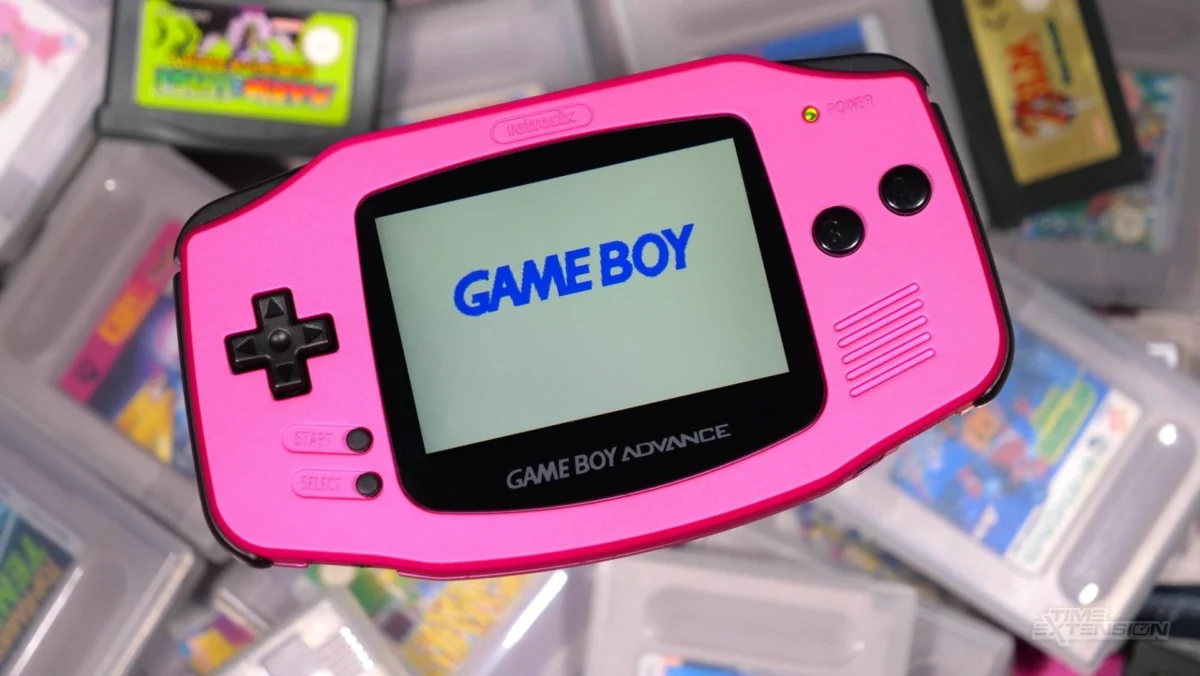
Nintendo’s Game Boy Advance (GBA), a pivotal handheld console that redefined portable gaming, marks its 25th anniversary today, a quarter-century since its initial launch in Japan on March 21st, 2001. This milestone celebrates a system that bridged the gap between classic console experiences and the nascent era of advanced handheld entertainment, leaving an indelible mark on the video game industry and solidifying Nintendo’s dominance in the portable market.
A New Dawn for Portable Gaming: The Game Boy Advance’s Genesis
The Game Boy Advance arrived at a crucial juncture for Nintendo, following the immense success of its predecessors, the original Game Boy and the Game Boy Color. The original Game Boy, launched in 1989, had revolutionized gaming on the go, selling over 118 million units and establishing a global phenomenon. Its successor, the Game Boy Color, released in 1998, introduced color graphics to the handheld realm while maintaining backward compatibility, a strategic decision that proved immensely popular. However, by the turn of the millennium, technological advancements in home consoles like the PlayStation 2, Nintendo 64, and Sega Dreamcast had pushed graphics and processing power to new heights. The market demanded a similar leap for portable devices.
Nintendo’s answer was the Game Boy Advance, initially codenamed "Project Atlantis." The company envisioned a powerful, 32-bit handheld that could deliver experiences comparable to its beloved Super Nintendo Entertainment System (SNES) console, but in a pocket-sized form factor. This ambition was a significant departure from the 8-bit architecture that had defined the Game Boy line for over a decade. The GBA’s development focused on enhancing graphical capabilities, processing speed, and the overall gaming experience, all while preserving the crucial backward compatibility with existing Game Boy and Game Boy Color titles – a testament to Nintendo’s understanding of its loyal customer base.
Technical Prowess and Design Innovations
At the heart of the Game Boy Advance was a 32-bit ARM7TDMI CPU clocked at 16.8 MHz, a substantial upgrade from the 8-bit Sharp LR35902 CPU of its predecessors. This powerful processor, combined with a dedicated graphics chip, allowed the GBA to display up to 32,768 colors simultaneously from a palette of 15-bit RGB, a dramatic improvement over the Game Boy Color’s 56 on-screen colors. The screen itself boasted a resolution of 240×160 pixels, providing a crisp and vibrant display for the era.
The GBA also adopted a new horizontal form factor, a departure from the vertical design of previous Game Boy models. This ergonomic change, coupled with the inclusion of shoulder buttons (L and R), made the GBA feel more like a miniature console controller, better suited for action-packed games and complex control schemes. This design philosophy directly facilitated the porting of SNES-era titles, many of which relied heavily on a four-face-button layout and two shoulder buttons.
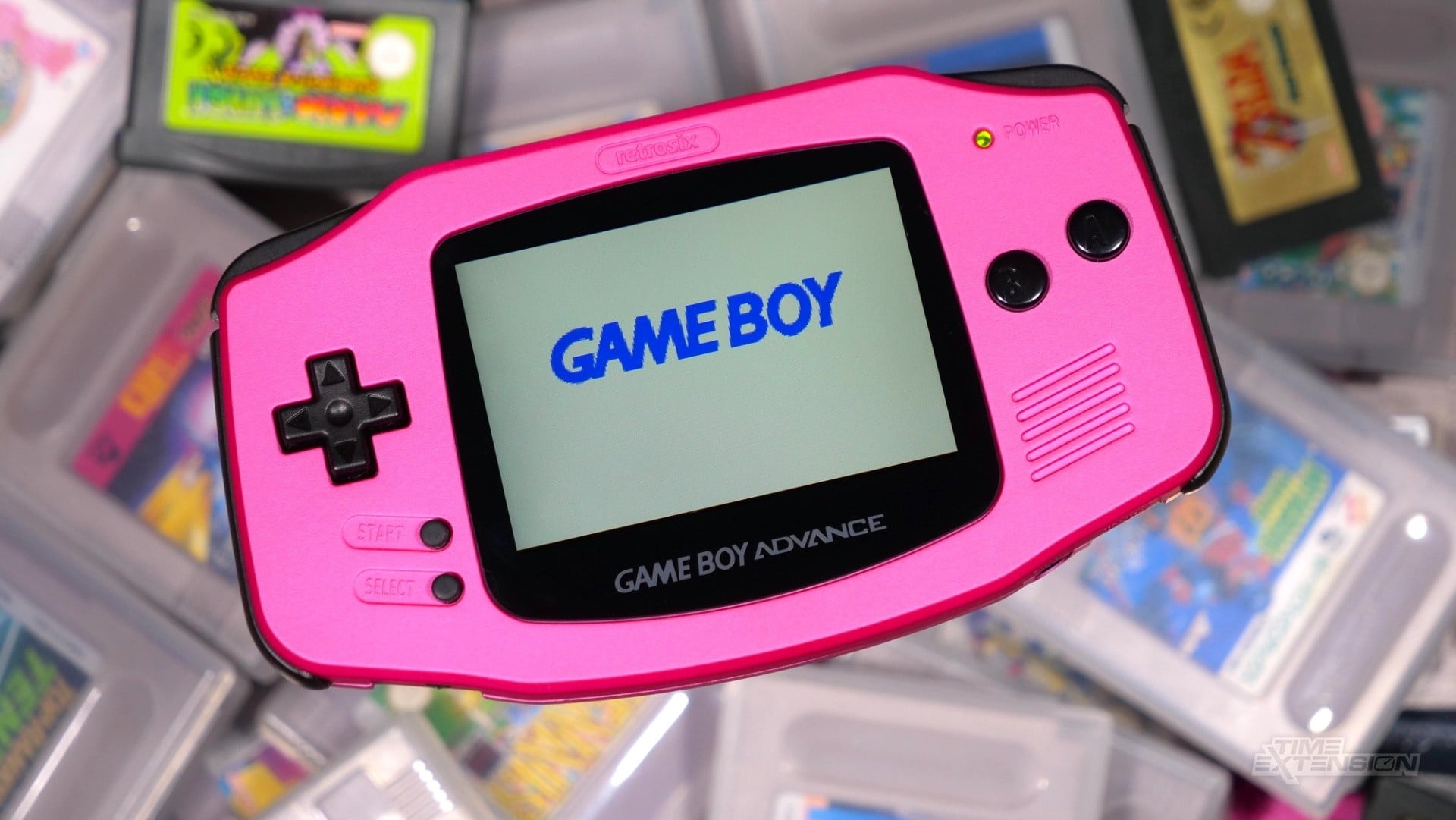
Connectivity was another key feature. The GBA supported local multiplayer gaming through a link cable, allowing up to four players to connect and play together. Some games even allowed multiple players to connect using only one game cartridge, further enhancing its social appeal. This emphasis on shared experiences was a core tenet of Nintendo’s design philosophy for its handhelds.
The Launch and Initial Reception
The Game Boy Advance made its debut in Japan on March 21st, 2001, to considerable anticipation. It was met with strong initial sales, driven by an impressive launch lineup that showcased the system’s enhanced capabilities. Key launch titles included the critically acclaimed Castlevania: Circle of the Moon, which immediately demonstrated the GBA’s capacity for deep, action-RPG experiences reminiscent of its console counterparts. F-Zero Maximum Velocity delivered blistering futuristic racing, highlighting the system’s speed and graphical fluidity, while Konami Krazy Racers offered a vibrant kart-racing alternative.
The system’s North American launch followed on June 11th, 2001, and its European release on June 22nd, 2001, each accompanied by a strong marketing push that emphasized its console-quality graphics and portability. While the initial reception was overwhelmingly positive regarding the system’s power and game library potential, a common critique emerged regarding the screen. The original GBA model lacked a built-in backlight, making it challenging to play in dimly lit environments without an external light source – a minor but notable drawback that many early adopters, including those who imported Japanese units, quickly identified. Despite this, the sheer novelty and quality of the games available ensured its commercial success.
A Software Library That Defined a Generation
The Game Boy Advance’s true legacy lies in its extensive and diverse software library, which ultimately sold over 377 million game cartridges worldwide. It became a haven for both classic revivals and innovative new intellectual properties.
Bringing Console Classics to the Palm of Your Hand: One of the most significant selling points, particularly for a generation of gamers raised on the SNES, was the GBA’s ability to host faithful ports of beloved 16-bit classics. Titles such as Super Mario World: Super Mario Advance 2, The Legend of Zelda: A Link to the Past & Four Swords, Metroid Fusion (an original game but building on the classic Metroid formula), Super Ghouls ‘n Ghosts, and Contra III: The Alien Wars EX allowed players to experience console-quality adventures on the go. These ports were often enhanced with new features, updated graphics, or additional content, making them appealing even to those who had played the originals. The GBA effectively extended the life and reach of the SNES library, introducing these masterpieces to a new generation of portable gamers.
Forging New Franchises and Expanding Universes: Beyond ports, the GBA was a fertile ground for original titles and new entries in established franchises. Intelligent Systems’ Advance Wars and Fire Emblem series found a dedicated audience, showcasing sophisticated turn-based strategy mechanics. Square Enix’s Golden Sun RPG series captivated players with its intricate plot, elemental magic, and stunning visuals, proving that deep role-playing experiences were perfectly suited for handheld play. The Mario & Luigi: Superstar Saga introduced a beloved new sub-series to the Mario universe, blending action-RPG elements with Nintendo’s characteristic charm. Other notable original titles included WarioWare, Inc.: Mega Microgames!, which innovated with its rapid-fire "microgame" concept, and Metroid Fusion, which offered a fresh take on the classic exploration-based gameplay.

The system also saw a significant influx of licensed games, often of varying quality, but also many gems. The sheer volume and variety of games, from puzzle titles like Puyo Pop Fever to sports simulations and fighting games, ensured that there was something for every type of player. This rich ecosystem of software was instrumental in the GBA’s long-term appeal and sales success.
Hardware Iterations: Addressing User Feedback
Nintendo, ever responsive to consumer feedback, addressed the original GBA’s screen limitations with two significant hardware revisions that further extended the system’s lifespan and appeal.
Game Boy Advance SP (2003): Launched in February 2003, the GBA SP (Special Project) was a monumental improvement. It featured a sleek, clamshell design that protected the screen when closed, making it far more portable and durable. Crucially, it incorporated a front-lit screen (and later, a brighter backlit screen model), which dramatically improved visibility in all lighting conditions. The GBA SP also included a rechargeable lithium-ion battery, a welcome upgrade from the original’s reliance on AA batteries. These enhancements made the GBA SP an instant hit, quickly outselling the original model and revitalizing the GBA brand. Its design would also influence future Nintendo handhelds.
Game Boy Micro (2005): In September 2005, Nintendo released the Game Boy Micro, a remarkably compact and stylish iteration. Designed for ultimate portability, it was significantly smaller and lighter than its predecessors, featuring a crisp, bright, and adjustable backlit screen. However, to achieve its diminutive size, the Micro sacrificed backward compatibility with original Game Boy and Game Boy Color games and utilized a proprietary link cable port, limiting its multiplayer options. Despite its niche appeal as a fashion-forward gaming device, the Game Boy Micro represented the pinnacle of GBA screen technology and ergonomics for its size, serving as a final swansong for the Game Boy line before the full transition to the Nintendo DS.
Sales Performance and Market Leadership
The Game Boy Advance family collectively sold an impressive 81.51 million units worldwide. This figure includes 41.64 million units of the original GBA, 43.57 million units of the GBA SP, and 2.42 million units of the Game Boy Micro. These robust sales figures firmly established the GBA as one of the best-selling video game consoles of all time and cemented Nintendo’s undisputed leadership in the handheld gaming market throughout the early to mid-2000s.
Its success was a testament to Nintendo’s strategic vision: delivering powerful, accessible, and fun gaming experiences in a portable format. The GBA faced some competition from devices like the Neo Geo Pocket Color and Bandai’s WonderSwan in Japan, but its superior technical specifications, overwhelming software support from both first- and third-party developers, and Nintendo’s marketing prowess allowed it to dominate the global market virtually unchallenged.
The End of an Iconic Era: The Final "Game Boy" System
One of the most significant aspects of the Game Boy Advance’s legacy is its distinction as the final system to bear the iconic "Game Boy" name. For over 15 years, from 1989 to 2005, the "Game Boy" brand had been synonymous with portable gaming, a cultural touchstone that spanned generations. The GBA represented the ultimate evolution of that lineage, pushing the 2D pixel art style to its absolute limits and offering a rich, diverse library of games.
However, the industry was rapidly moving towards 3D graphics and new interaction paradigms. Nintendo, recognizing this shift, began to conceptualize its next handheld. The successor to the Game Boy Advance was not another Game Boy, but the Nintendo DS, launched in late 2004. The DS introduced dual screens, a touch interface, and integrated Wi-Fi connectivity, fundamentally altering the landscape of handheld gaming and marking a deliberate break from the "Game Boy" tradition. While the DS maintained backward compatibility with GBA cartridges, its very name signified a "Developers’ System" and a new direction for Nintendo’s portable division. The GBA, therefore, stands as the grand finale of a legendary brand.
Lasting Legacy and Cultural Impact
The Game Boy Advance’s influence extends far beyond its impressive sales figures. It played a crucial role in shaping the modern handheld gaming experience. By proving that near-console-quality graphics and deep gameplay could thrive on a portable device, it set a new standard for what players expected from their on-the-go entertainment. Its library continues to be celebrated by retro gaming enthusiasts and speedrunners, and many of its original titles are frequently cited in discussions of the greatest games ever made.
Moreover, the GBA cultivated a generation of game developers who pushed the boundaries of 2D pixel art and sound design, creating masterpieces that still hold up today. Its emphasis on accessibility, strong first-party support, and robust third-party partnerships created a vibrant ecosystem that fostered innovation. The GBA’s success also provided Nintendo with the momentum and financial stability to pursue even more ambitious projects, including the revolutionary Nintendo DS and Wii.
As the Game Boy Advance celebrates its 25th anniversary, it serves as a powerful reminder of Nintendo’s enduring vision for portable entertainment. From its groundbreaking technical specifications for its time to its incredible library of games and its iterative hardware improvements, the GBA remains a beloved and influential console, a true icon in the annals of video game history. Its legacy continues to resonate, demonstrating the enduring appeal of quality gaming experiences, regardless of the screen size or the era.