Cecilia Chamidah Nur
A Phoenix or a Familiar Flicker? Alejandro Martín’s Latest Vision
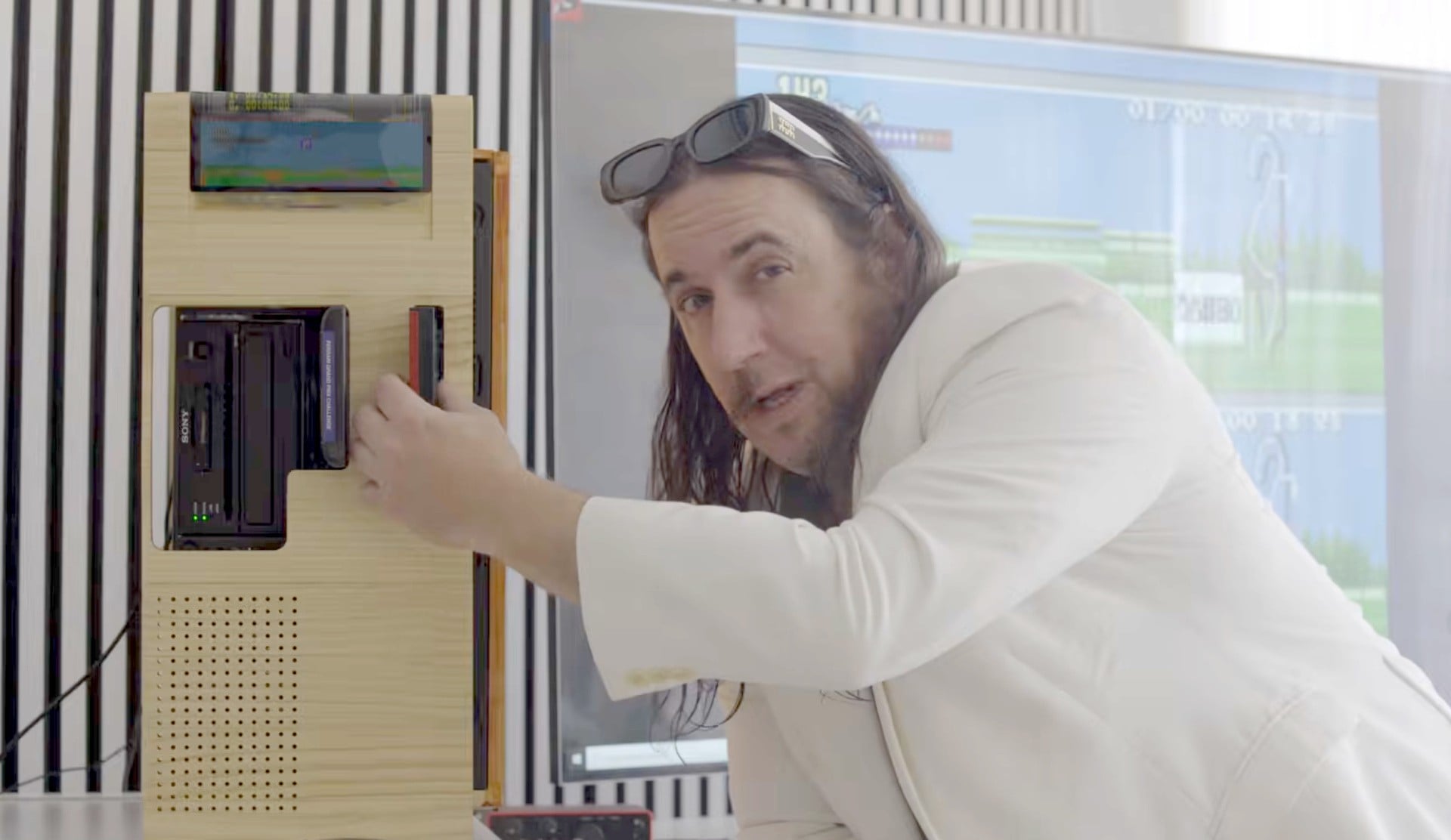
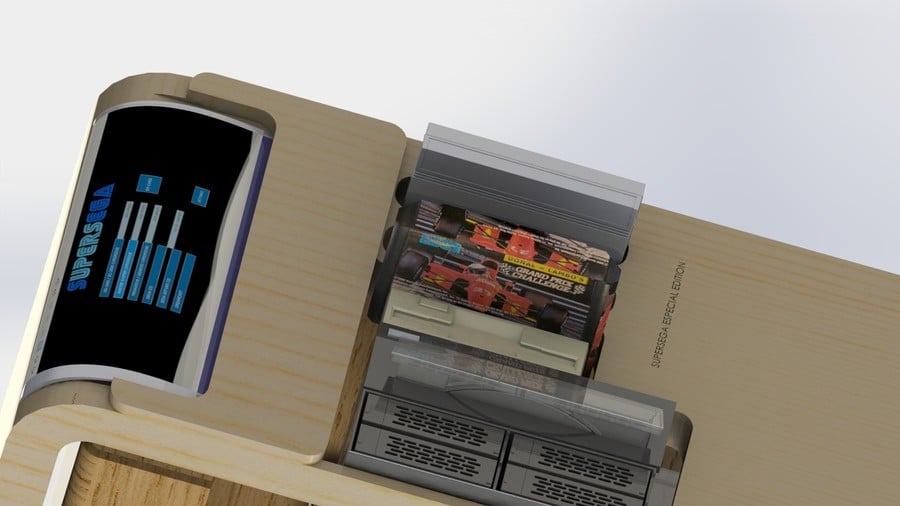
The SuperSega V3 is presented as a radical departure from conventional retro gaming hardware. At its core, it is envisioned as a high-end, wood-clad personal computer chassis designed to house user-supplied components, including powerful modern Nvidia GPUs. This choice signifies a complete abandonment of the Field-Programmable Gate Array (FPGA) architecture that was heavily promoted in the marketing of the original SuperSega. Instead, Martín’s new philosophy leans on the "brute-force power" of contemporary PC hardware to achieve its emulation goals.
Beyond its PC foundation, the V3 boasts an array of integrated features aimed at authentic retro experiences. It includes dedicated cartridge readers supporting a range of Sega systems, specifically the Mega Drive (Genesis), Master System, and the lesser-known SG-1000/SC-3000. Furthermore, an optical drive is slated for inclusion, intended to provide compatibility with Mega CD and Sega Saturn games. Perhaps the most visually striking, and indeed perplexing, element of the V3’s design is a built-in 2480 x 1860-pixel AMOLED display, which is depicted in promotional materials as being awkwardly bent over the top of the unit’s wooden casing. Martín asserts that this configuration will deliver "an unparalleled gaming experience that no FPGA console could even come close to," a claim that immediately invites scrutiny given the project’s technical choices and its creator’s past.
The Shadow of the Past: A Troubled Legacy
To understand the cautious reception of SuperSega V3, one must revisit the specter of its predecessor. The original SuperSega project, first unveiled in [hypothetical year, e.g., late 2023 or early 2024], garnered significant attention with its ambitious promise of an FPGA-based console offering unparalleled accuracy for Sega retro gaming. Martín positioned it as a premium device, leveraging the technical precision of FPGAs to replicate original hardware behavior, a feature highly coveted by purists within the retro gaming demographic.
However, the project quickly descended into chaos. What began as a hopeful venture soon transformed into a public relations nightmare, culminating in its spectacular collapse by [hypothetical year, e.g., late 2025]. Reports emerged of substantial delays, communication breakdowns, and ultimately, a failure to deliver consoles to numerous pre-ordering customers. The situation was exacerbated by widespread allegations of missing refunds, with some reports even suggesting that Martín had attempted to block individuals from reclaiming their payments. The official admission of defeat by Martín, documented in December 2025, left a trail of disillusioned backers and a significant dent in his credibility within the niche hardware market. This history established a profound trust deficit that any subsequent project from Martín would inevitably confront.
In the interim between the collapse of the original SuperSega and the announcement of V3, Martín was noted for developing a series of "odd-looking PC cases made from wood." These earlier ventures, while seemingly disparate, now appear to have been a foundational step towards the SuperSega V3. The wooden chassis, a hallmark of these previous PC cases, has been directly incorporated into the V3’s aesthetic and structural design, signaling a continuity in Martín’s design interests and a gradual evolution of his business focus from dedicated FPGA consoles to more versatile, PC-centric hardware platforms.
Technical Architecture and Design Philosophy: A Hybrid Approach
The technical blueprint of SuperSega V3 outlines a hybrid system that marries traditional PC components with specialized retro gaming interfaces. The requirement for users to supply their own central processing units (CPUs), random access memory (RAM), storage solutions, and most notably, high-end Nvidia GPUs, places a significant burden on the consumer. While this approach allows for future upgradability and leverages the immense processing power of modern graphics cards for advanced emulation, it also complicates the overall user experience and potentially inflates the final cost beyond the initial purchase price of the V3 unit itself. A user looking to run demanding Saturn emulation, for instance, might need to invest in a top-tier GPU, adding hundreds, if not thousands, of dollars to the total system cost.
The integrated cartridge readers for Mega Drive, Master System, and SG-1000/SC-3000 are a key selling point for enthusiasts who own original physical media. This allows for direct play of cartridges, potentially bypassing the need for ROM files and offering a tactile experience often lost in purely digital emulation. The inclusion of an optical drive for Mega CD and Saturn games further caters to collectors, enabling the use of original discs. However, the efficacy and compatibility of these drives with potentially aged media, and the quality of the optical emulation, remain critical unknowns.
The most significant technical shift lies in Martín’s abandonment of FPGA technology in favor of software emulation powered by "brute-force" PC hardware. FPGA solutions, exemplified by products from companies like Analogue, are revered for their ability to replicate the original console’s hardware at a fundamental level, often leading to pixel-perfect accuracy and minimal input latency. This fidelity is a core draw for purists. In contrast, software emulation on a powerful PC relies on sophisticated algorithms to mimic the original hardware’s behavior. While modern emulation can be highly accurate and offers numerous enhancements (upscaling, shaders, save states), it inherently differs from hardware-level replication. Martín’s assertion that V3 will offer "an unparalleled gaming experience that no FPGA console could even come close to" directly challenges the established virtues of FPGA, suggesting that raw processing power and potentially advanced rendering features (like higher resolutions or graphical enhancements driven by modern GPUs) will supersede the hardware-level accuracy offered by FPGA. This is a bold claim that will require rigorous demonstration to convince the discerning retro community. The "awkwardly bent" AMOLED display, while offering vibrant colors and deep blacks typical of the technology, raises ergonomic and practical questions about its durability, viewing angles, and overall utility in a desktop gaming setup.

Market Positioning and Competitive Landscape
The SuperSega V3 enters a competitive and increasingly sophisticated retro gaming hardware market. Its hybrid nature, combining PC components with physical media support, places it in a unique but crowded niche.
On one side, there are FPGA-based consoles like those from Analogue (e.g., Analogue Mega Sg), which prioritize hardware accuracy and purist experiences, often at a premium price. These devices typically do not use software emulation and focus on replicating the original console’s signal path and timing precisely. Martín’s direct comparison and dismissal of FPGA consoles suggest a deliberate attempt to differentiate V3, but also sets a high bar for its claimed performance advantages.
On the other side, hybrid systems like the forthcoming Polymega Remix offer modular cartridge and optical disc support, aiming to provide a consolidated platform for physical retro game libraries. The Polymega, with its existing ecosystem and upcoming upgrades, already occupies a similar functional space, albeit with its own proprietary hardware and software emulation. The existence of such alternatives means SuperSega V3 will need to offer a truly compelling unique selling proposition beyond merely playing old games from cartridges and discs.
Moreover, the vast majority of retro gaming enthusiasts already have access to highly capable and far more cost-effective emulation solutions on existing PCs, tablets, and smartphones. These platforms, often running open-source emulators, can achieve impressive levels of accuracy and offer a multitude of features, often for free or minimal cost. The primary distinction SuperSega V3 offers over these ubiquitous solutions is the ability to use original physical cartridges and discs directly. While this is a cherished feature for collectors, it is a niche appeal that must contend with the significant financial investment required for the V3, especially when factoring in the user-supplied PC components.
The anticipated price point for SuperSega V3 is another critical factor. Given the handmade wooden chassis, the integrated specialized hardware, and the expectation of users supplying high-end PC components, the total investment for a fully functional system is likely to be substantial. This positions the V3 firmly in the luxury segment of the retro gaming market, targeting affluent collectors or niche enthusiasts who prioritize a unique aesthetic and the direct use of physical media above all else, and who are willing to overlook the considerable trust issues associated with the creator.
Business Model and Consumer Trust: A Steep Uphill Battle
Alejandro Martín’s proposed business model for SuperSega V3 attempts to address some of the profound trust issues stemming from the previous project. He states that all units will be "made by hand" and will not be offered for sale until they are ready. Crucially, the payment structure is described as: "Once each unit has been produced, the full amount will be charged to the credit card." This "charge upon readiness" model aims to reassure potential buyers that they will not be charged for a product that does not exist or is indefinitely delayed, a direct response to the pre-payment debacle of the original SuperSega.
However, the efficacy of this revised approach in rebuilding consumer confidence remains highly questionable. The shadow of the previous project, with its unfulfilled orders and allegations of blocked refunds, looms large. Many in the retro gaming community, having been burned before, are likely to approach any new venture from Martín with extreme caution. Online forums and social media discussions already reflect deep skepticism regarding the viability of the project and the trustworthiness of its creator. A hypothetical survey of retro gaming enthusiasts might reveal that only a small fraction would consider purchasing a SuperSega V3, regardless of the payment terms, due to the lingering negative sentiment.
Industry analysts suggest that for a project with such a troubled past to succeed, an unprecedented level of transparency, consistent communication, and verifiable milestones would be required. Martín’s current approach, while ostensibly safer for the consumer on the payment front, does little to proactively mend the fractured relationship with the broader community. The absence of concrete pricing details and a detailed production roadmap further fuels uncertainty.
Implications for the Retro Gaming Community
The re-emergence of SuperSega, in its V3 guise, holds several implications for the broader retro gaming community. On one hand, it represents an example of entrepreneurial spirit, albeit a controversial one, pushing the boundaries of what constitutes a "retro console." Martín’s willingness to experiment with hybrid PC/retro solutions and unique display technologies could, in an ideal scenario, inspire genuine innovation. However, the project also serves as a stark reminder of the importance of consumer protection and ethical business practices within niche markets.
The ongoing narrative surrounding SuperSega underscores the vital role of due diligence for consumers considering backing independent hardware projects. The market for bespoke retro gaming solutions, while passionate, is often small and vulnerable to ambitious but ultimately unsustainable ventures. The SuperSega saga highlights the need for creators to maintain transparency and accountability, especially when dealing with pre-orders or crowdfunding models.
Ultimately, the SuperSega V3 stands at a crossroads. It presents a highly unique, potentially powerful, and certainly expensive proposition for a very specific segment of retro gamers. Its success or failure will hinge not only on its technical merits and the execution of its ambitious design but, perhaps more critically, on Alejandro Martín’s ability to overcome a profound legacy of mistrust. Whether this latest iteration is a genuine attempt at redemption or merely another chapter in a bizarre, unfolding narrative remains to be seen. The retro gaming world watches, with a mixture of morbid curiosity and guarded hope, to see if SuperSega V3 will finally materialize, or if its creator will, once again, vanish into the night.
[source supersega.com]