Cecilia Chamidah Nur
Roy Ozaki, the visionary head of Mitchell Corporation and a revered veteran of the video game industry, passed away on Friday, January 12, 2024, at the age of 73. Born in Kobe, Japan, on December 31, 1950, Ozaki’s death was publicly announced following a respectful delay, awaiting permission from his family and colleagues. His passing marks the end of an era for a figure whose sharp wit, unconventional business acumen, and tenacious spirit left an indelible mark on the arcade and console gaming landscape.
A Life Defined by Innovation and Resilience
Ozaki’s journey in the gaming world began during a pivotal period for the nascent industry. His early career saw him contribute significantly to Data East, a prominent arcade game developer and publisher. He joined Data East without formal training, initially writing scenarios and voice scripts for their pioneering LaserDisc games, a technology that pushed the boundaries of interactive entertainment in the early 1980s. Ozaki’s natural aptitude and strong work ethic quickly earned him recognition, leading him to abandon his formal education to fully immerse himself in the burgeoning industry.
It was this foundational experience at Data East, a company known for titles like BurgerTime and Karate Champ, that forged Ozaki’s understanding of game development and distribution. Data East, at its peak, was a formidable force in the arcade market, and Ozaki’s involvement provided him with invaluable insights into the mechanics of a rapidly evolving global entertainment business. His time there, where he even faced down organized crime elements attempting to extort businesses, foreshadowed the formidable and uncompromising personality he would cultivate throughout his career.
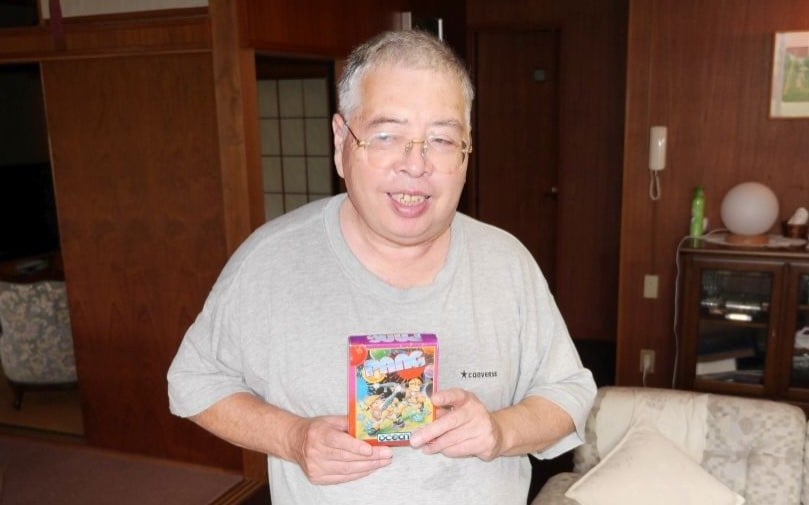
The Birth and Rise of Mitchell Corporation
Roy Ozaki’s leadership of Mitchell Corporation was not a predetermined path but rather a decision born out of familial duty and a latent entrepreneurial spirit. He inherited the company from his father, a business initially involved in shipbuilding. The transition from heavy industry to interactive entertainment was a testament to Ozaki’s adaptability and foresight. Alongside his trusted partner, Koichi Niida, who would become a pillar of support and strategic counsel, Ozaki transformed Mitchell Corporation into a notable entity in the video game sector. Niida, a former youngest branch manager at Data East in Osaka, brought an equally robust understanding of the industry, complementing Ozaki’s audacious vision.
Mitchell Corporation’s "glory days" were marked by a diverse and intriguing portfolio of games that captured the imagination of players worldwide. The company initially leveraged its strategic partnerships for distribution. Ozaki famously recounted how Mitchell became one of six Japanese distributors for Capcom coin-op products, a relationship that proved immensely lucrative. With a substantial line of credit, Mitchell capitalized on the arcade boom, particularly benefiting from the global phenomenon of Street Fighter II. Ozaki’s audacious approach to sales, which sometimes involved selling to territories beyond his designated region, highlighted his maverick business style. He humorously recalled a Capcom associate warning him that he’d soon be left with only the "North and South Pole" to sell to, a testament to his aggressive and widespread distribution tactics.
Iconic Titles: Puzz Loop and Pang
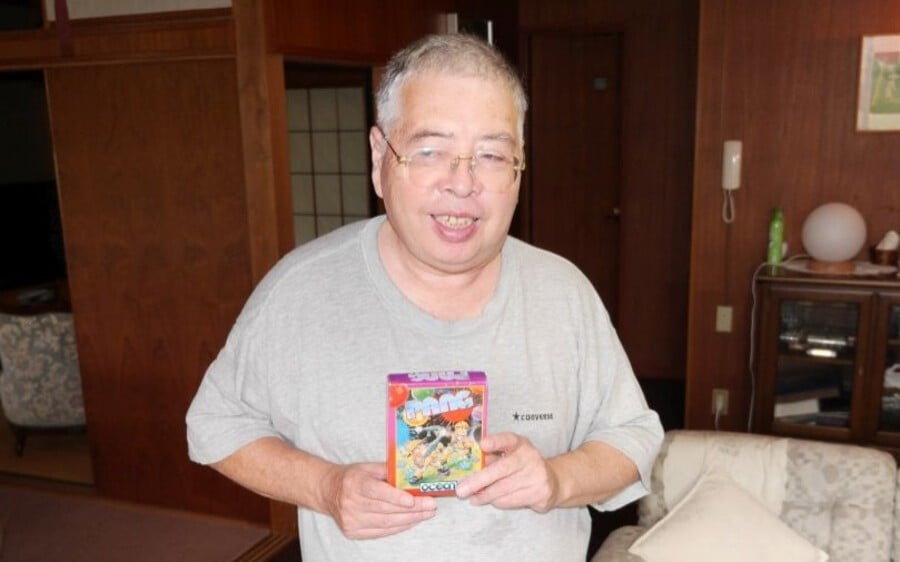
Among Mitchell Corporation’s most enduring contributions to gaming were the highly influential puzzle game Puzz Loop and the arcade classic Pang (also known as Buster Bros. in North America).
-
Puzz Loop, released in 1998, introduced a unique and addictive marble-matching mechanic. Players had to shoot colored marbles into a chain of moving marbles, matching three or more of the same color to eliminate them before they reached a designated point. The game’s innovative design and fast-paced gameplay resonated deeply with audiences, leading to its global success and spawning numerous imitators. Its core mechanic was famously adopted by later popular titles like PopCap Games’ Zuma and MumboJumbo’s Luxor, demonstrating Puzz Loop‘s significant impact on the puzzle game genre. Roy Ozaki was known for challenging Electronic Arts over their perceived copying of Puzz Loop‘s mechanics, further cementing his reputation as a tenacious businessman unafraid to defend his company’s innovations.
-
Pang (1989), a cooperative arcade game, tasked players with popping balloons that bounced around the screen. Its simple yet engaging premise, combined with challenging levels and a distinct visual style, made it a beloved staple in arcades. The game’s success led to several sequels and ports across various home platforms, solidifying its status as a timeless classic and a testament to Mitchell Corporation’s ability to craft universally appealing games.
These titles, alongside Mitchell’s other contributions, built a legacy that showcased the company’s commitment to engaging gameplay and innovative concepts, securing its place in the annals of arcade history.
A Maverick Personality and Unyielding Spirit
Roy Ozaki was not just a businessman; he was a character. Known for his candidness and direct communication, he "held nothing back," a trait that made him both a challenging and compelling figure. An extensive interview conducted by author John Szczepaniak over two days in September 2013, yielding seven hours of material, painted a vivid picture of Ozaki’s life and career. Conversations took place in diverse settings—in cars, restaurants, a mountainside inn, and at his home—reflecting his down-to-earth nature. Kouichi Yotsui, the acclaimed creator of Strider and a longtime friend, was present, underscoring the deep relationships Ozaki cultivated within the industry.

Ozaki’s anecdotes from his career illustrate his strategic thinking and unwavering determination. He recounted a business philosophy where cultivating strong client relationships meant fully immersing oneself, even if it meant "getting fat" by joining customers for steak dinners and late-night whiskey sessions. This approach underscored his belief in personal connection as a cornerstone of successful sales.
His negotiation tactics were equally insightful. Ozaki humorously described using his partner, Niida, as a strategic facade during international meetings. By pretending to translate and needing time to "explain" decisions to Niida, Ozaki cleverly bought himself precious moments to formulate his responses without revealing his thought process to the opposing party. This blend of intelligence, humor, and cunning defined his professional interactions.
Years prior to the 2013 interview, Ozaki suffered a stroke, which severely impacted his ability to enunciate clearly and caused partial paralysis. However, this medical crisis, far from deterring him, only highlighted his immense fighting spirit. He battled fiercely to regain physical movement and speech, embodying the same resilience he displayed when confronting gangsters at Data East, challenging Electronic Arts, or enduring years of software piracy. For Ozaki, such setbacks were merely obstacles to be overcome, not reasons to yield. He was, as described by Kouichi Yotsui, "an intelligent, good-humoured, and down-to-earth hippie" – a charming company president who wasn’t bound by conventional thinking.
A Family Legacy of Public Service and Democracy
Roy Ozaki’s personal history was deeply intertwined with a prominent family lineage known for its significant contributions to Japanese public life. His great-uncle, Yukio Ozaki, was a towering figure in Japanese politics, serving as the first mayor of Tokyo and holding a seat in parliament for an astonishing 63 years. Yukio Ozaki was a staunch advocate for democratic movements in Japan, a legacy honored by the Kensei Kinenkan (Constitutional Government Memorial Hall) in Tokyo, dedicated to parliamentary government and democracy, which is often referred to as the "Ozaki Museum." This illustrious background, including a great cousin who served as a Supreme Court Judge, made Roy Ozaki an "odd one" in his family, choosing the unconventional path of entertainment entrepreneurship over traditional public service. Yet, his own commitment to standing his ground and speaking his mind mirrored the independent and principled spirit of his forebears.

The Enduring Impact and Future of Mitchell’s IP
In his later years, Roy Ozaki actively sought to ensure the longevity of Mitchell Corporation’s creative output. One of his last requests to his interviewer, John Szczepaniak, was to spread the word that Mitchell’s rich portfolio of intellectual properties was available for licensing. This proactive approach has already borne fruit, as evidenced by the resurfacing of titles like Cannon Dancer / Osman, a spiritual successor to Strider, which received a long-awaited home release years after its arcade debut. This demonstrates the lasting appeal and potential of Mitchell’s creations.
The management of Mitchell Corporation’s legacy is now in the hands of key figures who shared Roy Ozaki’s vision. While his son, Shinichiro Ozaki, occasionally uses his father’s old email address, Koichi Niida, Ozaki’s longtime partner, holds full authority over the IP management and company liquidation of Mitchell Co., Ltd. This arrangement ensures that the company’s valuable assets and historical contributions continue to be overseen by those intimately familiar with its history and potential.
Roy Ozaki’s passing leaves a void in the video game industry, but his legacy as a "larger-than-life businessman" will undoubtedly endure. He was a man who led a full life, navigated complex challenges with unparalleled grit, and conducted business with a distinctive flair. His unwavering commitment to his principles, his strategic brilliance, and his ability to blend humor with tenacity created a unique persona that inspired those around him. Roy Ozaki is survived by his only son, Shinichiro Ozaki, and a vast body of work that continues to entertain and influence gamers and developers alike. His life serves as a testament to the power of individuality and an uncompromising pursuit of one’s vision.