Cecilia Chamidah Nur
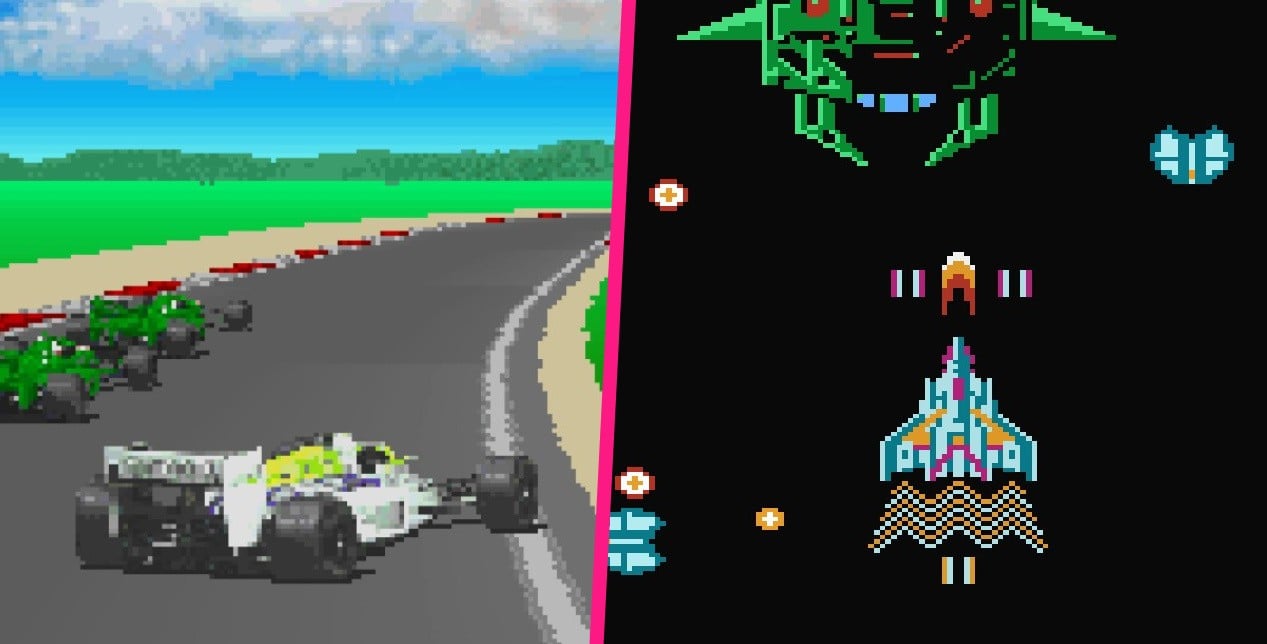
Hamster, the Japanese company renowned for its dedicated efforts in video game preservation, has officially announced the latest additions to its esteemed Arcade Archives and Console Archives collections. This week, enthusiasts of classic gaming will see the release of Namco’s groundbreaking 1987 racing simulation, Final Lap, and Nichibutsu’s 1986 Famicom shoot ’em up, Terra Cresta, bringing these seminal titles to modern platforms with a suite of contemporary enhancements.
Hamster’s Mission: Preserving Gaming Heritage
Hamster Corporation has carved a significant niche in the video game industry through its "Arcade Archives" and "Console Archives" initiatives. These series are more than mere re-releases; they represent a concerted effort to digitally preserve and make accessible some of the most influential arcade and console titles from gaming’s golden age. Each release meticulously emulates the original hardware and software, often incorporating modern quality-of-life features such as online leaderboards, save states, screen filters, and customizable controls, ensuring both authenticity for purists and accessibility for new players. This commitment to preservation addresses the inherent challenges of maintaining aging arcade machines and console hardware, which are susceptible to degradation over time. By digitally archiving these games, Hamster plays a crucial role in safeguarding video game history, allowing future generations to experience the foundational works that shaped the industry. The upcoming releases of Final Lap and Terra Cresta underscore this ongoing mission, highlighting different facets of gaming’s rich past.
Final Lap: A Formulaic Revolution Returns
Scheduled for release on March 26th, 2026, Namco’s Final Lap will join the Arcade Archives series, with versions available for PlayStation 4 and Nintendo Switch, and an Arcade Archives 2 iteration for Switch 2, PlayStation 5, and Xbox Series X|S. The game, originally launched in arcades in 1987, holds a significant place in the history of racing simulations and arcade hardware innovation.
Birth of a Racing Icon and the F1 Boom
Final Lap emerged at a pivotal moment for motorsport in Japan. 1987 marked the return of the Japanese Grand Prix to the Formula One World Championship calendar, held at the newly refurbished Suzuka Circuit. This event, the first Japanese Grand Prix since 1977 at Fuji Speedway, ignited a massive surge in F1’s popularity across the nation. Namco capitalized on this fervor, building upon the success of its earlier, iconic racing titles like Pole Position (1982) and Pole Position II (1983). While Pole Position is often credited with popularizing the behind-the-car perspective in racing games, Final Lap aimed for a more realistic and immersive experience, reflecting the sophistication and excitement of contemporary F1 racing. The game’s single course was famously modeled after the Suzuka Circuit, providing players with an authentic virtual representation of the track that was captivating the Japanese public. This real-world connection significantly contributed to the game’s appeal and cultural resonance at the time.
Technical Prowess and the Vision of Multiplayer Racing
What truly set Final Lap apart in 1987 was its revolutionary hardware. It was the first game to utilize Namco’s then-new System 2 arcade board. This powerful architecture represented a significant leap forward in graphical capabilities and processing power for arcade games, enabling more detailed environments, smoother scrolling, and a greater sense of speed than its predecessors. The System 2 board allowed Final Lap to push the boundaries of arcade realism, creating a more convincing F1 experience.
Beyond its graphical fidelity, Final Lap introduced an unprecedented multiplayer feature that redefined arcade competition. The game was designed to allow up to four two-player cabinets to be physically linked, facilitating exhilarating eight-player races. This innovative networked multiplayer system was a monumental achievement for its era, fostering a communal and competitive arcade environment rarely seen before. Players could choose from four F1 vehicles – Williams-Honda, Lotus-Honda, McLaren-Porsche, or March-Cosworth – by plugging special connectors into their machines, adding another layer of authenticity and choice. The ability to race against seven other human opponents created an intense, dynamic experience that kept players returning to arcades.
However, a notable point of discussion for the upcoming re-release is the apparent omission of this groundbreaking eight-player multiplayer functionality. Hamster’s listing indicates the game as single-player only for this release. While the technical complexities of emulating such a specific, cabinet-linking system for modern digital platforms are considerable, its absence will be felt by those who remember the game’s original, defining feature. This decision likely stems from the challenges of replicating the specific network architecture of the original arcade setup in a cross-platform digital environment, or a strategic choice to focus on the core single-player experience with modern online leaderboards.
Gameplay and Enduring Legacy
Final Lap‘s gameplay, while featuring a single track, emphasized precision driving, strategic overtaking, and mastering the nuances of the Suzuka Circuit. The thrill of betting "everything on the final lap," as the publisher’s description aptly puts it, resonated deeply with players. The game’s success led to a series of sequels and spin-offs, including Final Lap 2, Final Lap 3, Final Lap Twin (for the PC Engine), and Final Lap R, which further expanded on its racing mechanics and introduced new tracks and vehicles. This lineage cemented Final Lap‘s status as a foundational series within the racing genre.
Furthermore, Final Lap extended its reach beyond the arcade. In 1988, Arc System Works, a company that would later become renowned for fighting game franchises like Guilty Gear and BlazBlue, released a port of Final Lap for the Nintendo Famicom. This port holds historical significance as Arc System Works’ debut title, marking the beginning of a prolific developer’s journey. While adapting the arcade experience to the Famicom’s more limited hardware presented challenges, it demonstrated the game’s widespread appeal and influence.
The Modern Re-release: Features and Platforms
The Arcade Archives re-release will offer Final Lap for $7.99 on PS4 and Switch, while the enhanced Arcade Archives 2 version for Switch 2, PS5, and Xbox Series X|S will be priced at $9.99. Both versions are set to include a range of features not present in the 1987 arcade original. These modern additions include global online leaderboards, allowing players to compete for high scores against a worldwide community. The Arcade Archives 2 version will further enhance the experience with an exclusive TIME ATTACK MODE, catering to players who thrive on optimizing lap times. Additionally, players can expect various screen filters, offering options to replicate the look of a CRT monitor or enjoy a crisp, modern display, providing customization for their retro gaming experience.
Publisher’s Perspective
Hamster’s official description encapsulates the essence of Final Lap: "Bet everything on the final lap! ‘FINAL LAP’ is a racing game released by NAMCO LIMITED (current Bandai Namco Entertainment Inc.) in 1987. 1987 marked the dawn of the F1 boom in Japan. Set against the backdrop of that era, this title portrays the raw power of racing machines and the stoic world of professional competition. Experience nail-biting, high-speed battles set on the legendary circuit as it was back then. Push yourself to the absolute limit where every tenth of a second counts—and give it everything you’ve got!" This description not only highlights the game’s historical context but also emphasizes its core appeal: intense, high-stakes racing where precision and nerve are paramount.
Terra Cresta: Soaring Back into Action
This week’s Console Archives entry brings Nichibutsu’s vertically scrolling shoot ’em up, Terra Cresta, to modern consoles. This Famicom classic, originally released in 1986, will be available on March 26th, 2026, for Nintendo Switch 2 and PlayStation 5, priced at $7.99.
From Moon to Terra: A Shmup Evolution
Terra Cresta is a direct sequel to Nichibutsu’s earlier 1980 fixed-screen shooter, Moon Cresta. Moon Cresta was itself a significant title, known for its innovative feature allowing players to dock with additional ship components to increase firepower, though losing them upon taking damage. Terra Cresta took this concept and expanded upon it dramatically, debuting in arcades in 1985 before its Famicom port a year later.
Nichibutsu (Nihon Bussan) was a prominent developer during the golden age of arcade gaming, known for a variety of genres, but particularly for its contributions to the burgeoning shoot ’em up genre. Terra Cresta arrived during a period of intense innovation within shmups, where developers were constantly experimenting with new power-up systems, enemy patterns, and scoring mechanics. It stood out by refining the docking mechanic, making it more integral to both offense and defense.
Innovative Gameplay: The Wing Galiber’s Formations
At the heart of Terra Cresta‘s gameplay is the protagonist ship, the Wing Galiber. Players begin with a single, agile craft, but as they progress and collect specific power-ups, they can dock with up to four additional ally ship parts. Unlike simply adding firepower, Terra Cresta‘s innovation lay in its "formation attack" system. Players could dynamically split their ship components and arrange them into various predetermined formations, each offering unique attack patterns and tactical advantages. For example, some formations would spread shots across a wider area, while others would concentrate fire, or even provide temporary shields. Mastering the timing of docking and undocking, and strategically deploying these formations, was crucial for overcoming the increasingly challenging waves of enemies and bosses. This dynamic formation system added a layer of strategic depth rarely seen in vertically scrolling shooters of its time, moving beyond simple power-up collection to active tactical decision-making.
A Journey Through Platforms
Following its arcade debut, Terra Cresta enjoyed widespread popularity, leading to ports across numerous home computing and console platforms. It reached the Commodore 64 and ZX Spectrum, popular home computers in Western markets, bringing its unique gameplay to a broader audience. Its port to the Nintendo Famicom / NES was particularly impactful, introducing the game to millions of console owners and solidifying its status as a classic. A notable release was its inclusion in Dempa’s Video Game Anthology Vol. 1 – Moon Cresta / Terra Cresta for the X68000, a high-end Japanese home computer known for its excellent arcade conversions. The proliferation across these diverse platforms underscores the game’s enduring appeal and the widespread recognition of its innovative mechanics.
The Console Archives Treatment
The Console Archives release of Terra Cresta for Switch 2 and PS5 aims to provide a definitive modern experience of the Famicom version. Priced at $7.99, this reissue will include several enhancements designed to improve playability and accessibility. These features include customizable button layouts, allowing players to map controls to their preference; rapid-fire settings, a common convenience feature for shmups; and multiple save points, which provide greater flexibility and reduce frustration, especially for a game known for its challenging difficulty. These additions ensure that while the core game remains authentic, the modern playing experience is significantly more user-friendly.
Publisher’s Narrative
Hamster’s description of Terra Cresta sets the stage for its narrative and gameplay: "’TERRA CRESTA’ was released by Nichibutsu in 1986 for an 8-bit home console. It is a shooting game in which humanity, driven to the bottom of the sea by the evil Mandora, fights to reclaim the Earth. In this shooting game, humanity has been driven into the depths of the ocean by the evil Mandora. Now, they rise up and fight to reclaim the Earth! The protagonist ship, the Wing Galiber, features a unique system that allows it to dock with ally parts or split apart for powerful formation attacks. You can even customize your very own formation designs!" This narrative, while simple, provides a compelling backdrop for the intense shooting action, emphasizing humanity’s struggle and the Wing Galiber’s unique capabilities. The mention of customizing formation designs highlights the strategic depth available to players.
The Broader Impact of Digital Preservation
The simultaneous release of Final Lap and Terra Cresta through Hamster’s Archives series is more than just a nod to nostalgia; it represents a critical facet of modern gaming culture and digital preservation.
Bridging Eras: Accessibility for New Generations
These re-releases bridge the gap between gaming’s pioneering past and its technologically advanced present. For seasoned players, they offer a convenient and enhanced way to revisit cherished memories without the need for aging hardware or complex emulation setups. For younger generations, they provide an invaluable opportunity to experience foundational titles that influenced countless modern games. This accessibility is crucial for understanding the evolutionary trajectory of game design, art, and technology. The inclusion of features like online leaderboards and save states ensures that these classics can be enjoyed by a contemporary audience without compromising their original integrity.
Challenges and Triumphs in Archiving
The process of bringing these games to modern platforms is fraught with challenges, from meticulously reverse-engineering proprietary arcade hardware to navigating complex licensing agreements. Hamster’s consistent output and high-quality emulation stand as a testament to their technical expertise and dedication. However, the decision to omit Final Lap‘s eight-player multiplayer feature highlights the inherent difficulties in perfectly replicating every aspect of a bygone era’s technology in a universal digital format. Despite such compromises, the overall success of the Arcade and Console Archives series demonstrates a significant triumph in digital preservation, making otherwise inaccessible pieces of history widely available.
The Future of Retro Gaming
The continued success and expansion of series like Arcade Archives and Console Archives signal a robust and growing market for retro gaming. As the industry matures, the appreciation for its history deepens, and companies like Hamster are at the forefront of ensuring that this history remains alive and playable. These releases are not just products; they are cultural artifacts, offering insights into the technological constraints, creative solutions, and gameplay philosophies that defined early video games.
As Final Lap races back onto screens and Terra Cresta takes flight once more, they serve as potent reminders of the enduring appeal and historical significance of classic gaming. They invite players to not only enjoy the thrill of the game but also to reflect on the legacy these titles have left on the vast and ever-evolving landscape of interactive entertainment.