Cecilia Chamidah Nur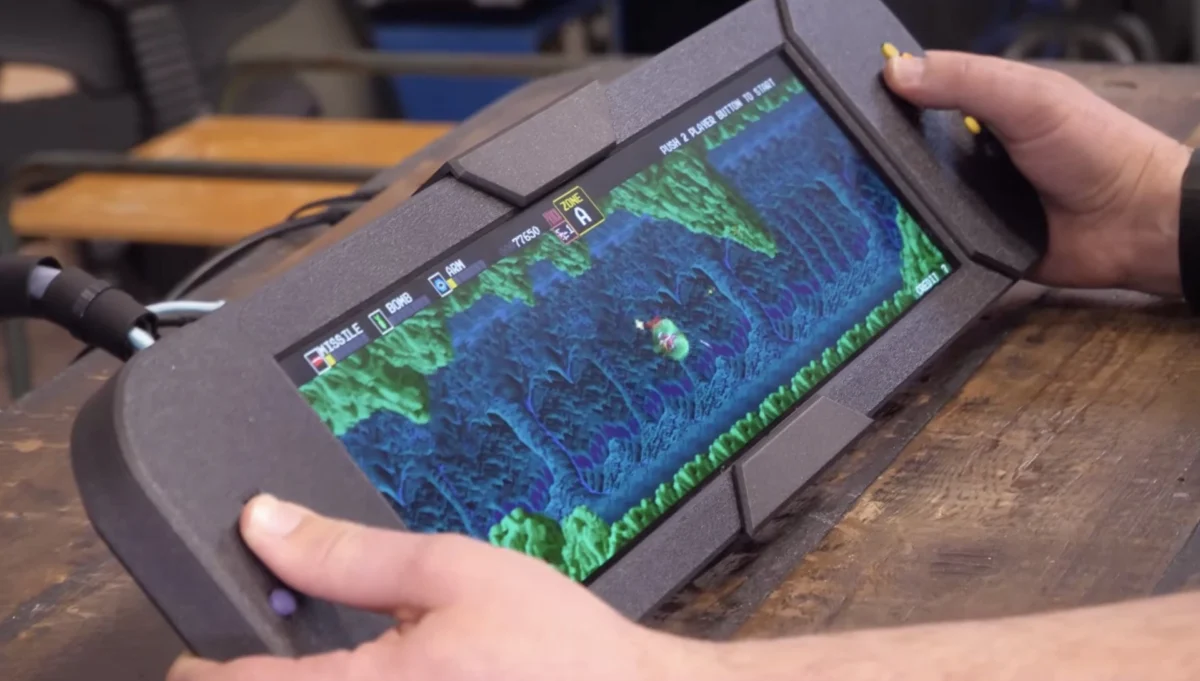
The announcement, disseminated via social media channels and an inaugural video update, underscores the project’s nascent but ambitious nature. The development team is actively exploring various form factors to determine the optimal design for the device, emphasizing a collaborative approach by inviting community involvement in the process. This engagement is a hallmark of the MiSTer FPGA ecosystem, which thrives on open-source contributions and collective expertise. While specific release dates remain fluid due to the early stage of development, the team has expressed optimism that the portable MiSTer could potentially debut before the close of the current year.
The Genesis of the MiSTer FPGA Project and Its Evolution
To fully appreciate the significance of a handheld MiSTer, it is crucial to understand the foundational technology and the community that drives it. MiSTer FPGA (Field-Programmable Gate Array) represents a paradigm shift in retro gaming preservation and experience. Unlike software emulation, which simulates the original hardware’s behavior through software layers, FPGA-based solutions reconfigure a silicon chip to become the original hardware at a gate level. This distinction is critical for purists, as it virtually eliminates the input lag, audio inaccuracies, and visual glitches often associated with software emulation, providing an experience remarkably close to playing on original hardware.
The MiSTer project originated as an open-source initiative, primarily built around the Terasic DE10-Nano development board. Its strength lies in its modularity and the vibrant global community of developers who contribute "cores" – the FPGA configurations that replicate specific vintage gaming consoles, arcade machines, and home computers. These cores are meticulously reverse-engineered, often down to the individual logic gates, resulting in unparalleled accuracy for systems ranging from the NES and SNES to the Neo Geo and various arcade boards.
The Multisystem 2, the predecessor to the announced handheld, represents a significant step in making MiSTer more accessible. It consolidates the various components typically required for a MiSTer setup (the DE10-Nano, I/O board, RAM module, case, power supply, etc.) into a streamlined, all-in-one console. This integration simplifies the user experience, moving MiSTer from a hobbyist-assembly project to a more consumer-friendly appliance, while still retaining the core’s open-source flexibility. The Multisystem 2 garnered considerable attention for its robust build quality, thoughtful design, and commitment to the MiSTer ethos, setting a high bar for any subsequent iterations. The move to a portable format naturally follows the trend of consumer demand for convenience and mobility in retro gaming.
Deep Dive into Development: Form Factor and Technical Hurdles
The development team’s statement about exploring the "ideal form factor" highlights one of the most significant challenges in creating a handheld MiSTer. Designing a portable device involves a delicate balance of ergonomics, display technology, battery life, thermal management, and robust input controls, all while miniaturizing complex electronics.
- Ergonomics and Controls: A comfortable grip for extended play sessions, tactile buttons, accurate joysticks or D-pads, and responsive triggers are paramount. The MiSTer ecosystem supports a wide array of peripherals, but integrating these into a single, cohesive handheld design requires custom engineering.
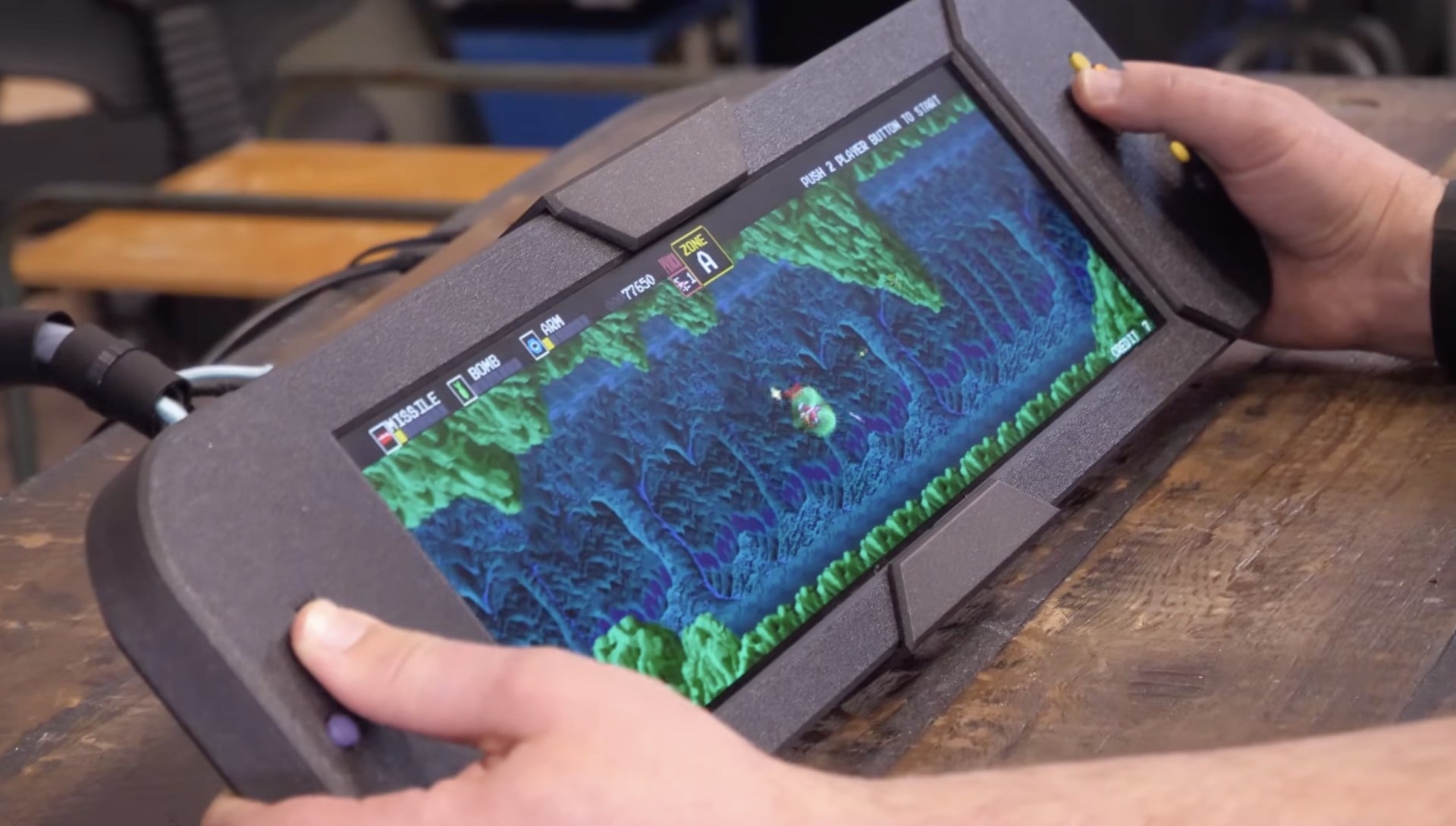
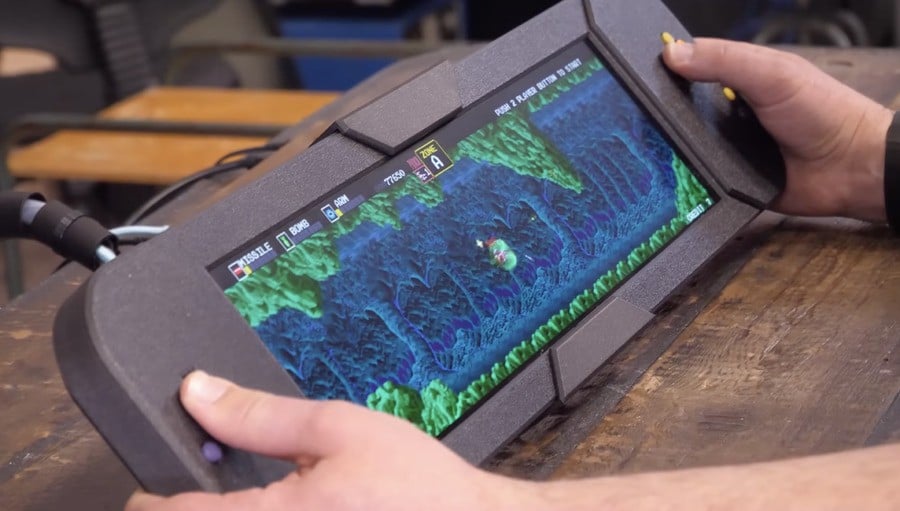
- Display Technology: The choice of screen is crucial for a retro gaming device. Factors include resolution, aspect ratio support, refresh rate, and color accuracy. Many classic games were designed for specific aspect ratios (e.g., 4:3), and a modern widescreen display needs intelligent scaling options to avoid distortion or black bars. The team’s playful showcase of the ‘Wide Boy’ prototype, a MiSTer FPGA system running the Darius core on a widescreen display, offers a glimpse into their experimentation with screen formats and core compatibility, particularly for titles that might benefit from or require wider aspect ratios. Darius, an iconic arcade shooter known for its multi-screen setups, exemplifies the kind of unique challenges and opportunities that arise when adapting classic arcade experiences to modern, diverse display configurations.
- Battery Life and Power Management: FPGA chips, especially those used in MiSTer, can be power-intensive. Optimizing power consumption without compromising performance is a major hurdle for a portable device intended for on-the-go gaming. This will involve careful selection of components, efficient power delivery circuits, and potentially custom firmware optimizations.
- Thermal Management: Cramming powerful electronics into a small chassis often leads to heat generation. Effective cooling solutions (passive or active) are necessary to prevent throttling and ensure device longevity.
- Custom PCB Design: Unlike the modular DE10-Nano setup, a dedicated handheld will likely require a custom-designed printed circuit board (PCB) to integrate the FPGA, memory, display controller, power management, and input circuitry into a compact space. This is a complex engineering task that adds significant development time and cost.
The "deep in development" status suggests that these architectural and engineering considerations are currently at the forefront of the team’s efforts. The promise of a device appearing "before the end of the year" indicates that significant progress has already been made, moving beyond initial conceptualization to tangible prototyping.
Community Engagement and the Open-Source Advantage
The call for community involvement — "everyone’s invited to help us make it happen" — is a cornerstone of the MiSTer project’s philosophy. This open-source approach has been instrumental in the platform’s rapid expansion and refinement. Community contributions extend beyond core development to include user interface improvements, bug reporting, hardware modifications, and detailed documentation.
For the MiSTer Pocket, community input could prove invaluable in several areas:
- Feedback on Prototypes: Early prototypes, even if rudimentary, can benefit from user testing and feedback on ergonomics, button feel, and overall user experience.
- Software Optimizations: While the core FPGA logic is hardware-based, the underlying Linux operating system and user interface components can be optimized for the handheld form factor.
- Accessory Development: The community might contribute designs for cases, stands, or even alternative input modules.
- Core Compatibility and Enhancements: Ensuring all existing MiSTer cores run optimally on the handheld, and potentially adapting them for the specific display or control scheme, will be an ongoing effort.
This collaborative model reduces development costs and accelerates innovation, fostering a strong sense of ownership and dedication among enthusiasts. It also allows the project to tap into a diverse pool of talent, from hardware engineers to software developers and passionate gamers.
Market Context and Competitive Landscape
The announcement of a portable MiSTer comes at a time when the retro handheld market is experiencing a significant boom. Several established players and new entrants are vying for consumer attention, offering a diverse range of devices:
- Analogue Pocket: A premium FPGA-based handheld known for its exquisite design, high-quality display, and multi-cartridge support. While it also uses FPGA, it’s a closed-source ecosystem, focusing on a curated library of specific consoles (Game Boy, Game Gear, Lynx, Neo Geo Pocket Color, with adapter support for others). Its strength lies in its plug-and-play simplicity and hardware-accurate cartridge slots.
- Linux-based Emulation Handhelds: Devices from companies like Anbernic, Retroid Pocket, and Ayn offer powerful ARM processors running Linux, capable of software emulation for a vast library of systems, often up to PlayStation 2 or even Nintendo Switch for higher-end models. These devices prioritize breadth of compatibility and often come at a lower price point than FPGA alternatives.
- Steam Deck and ROG Ally: While not strictly "retro" handhelds, these powerful PC-based devices can emulate virtually any retro system through software, offering versatility at a higher price and power consumption.
The MiSTer FPGA Multisystem 2 Pocket would carve out a unique niche within this crowded market. Its primary differentiator would be the unparalleled accuracy of FPGA emulation, offering a level of fidelity that often surpasses even premium software emulation and rivals dedicated original hardware. While the Analogue Pocket also offers FPGA accuracy, the MiSTer platform boasts a significantly larger and ever-growing library of cores, encompassing a wider array of arcade systems and home computers in addition to consoles. The open-source nature also provides a level of future-proofing and community support that proprietary systems cannot match.
Implications for Retro Gaming Preservation
The development of a handheld MiSTer carries profound implications for retro gaming preservation. As original hardware ages and becomes increasingly difficult to maintain, FPGA-based solutions offer a robust and accurate alternative.
- Accessibility: A portable MiSTer makes high-fidelity retro gaming more accessible to a broader audience, removing the need for a complex home setup or a dedicated display.
- Portability of Preservation: It allows enthusiasts, researchers, and archivists to carry a comprehensive library of accurately emulated systems wherever they go, facilitating study and enjoyment of digital history.
- Long-Term Viability: The open-source nature of MiSTer ensures that the project can evolve and adapt over time, with new cores and features continually being added by the community, far beyond the lifespan of any single commercial product.
- Educational Value: For those interested in the technical intricacies of classic hardware, MiSTer provides a unique window into how these systems fundamentally operated, offering an educational tool for understanding vintage electronics.
The ‘Wide Boy’ prototype, albeit a humorous demonstration, underscores the project’s capacity for innovation in presentation, even for arcade games like Darius that pushed display boundaries in their original form. This experimental spirit is vital for advancing the field of retro gaming and ensuring that classic titles can be experienced in new, engaging ways while respecting their historical context.
Future Outlook and Anticipated Release
The prospect of a MiSTer FPGA Multisystem 2 Pocket appearing before the end of the year is an exciting, albeit ambitious, timeline for a project of this complexity. Such a rapid development cycle would indicate significant pre-planning and potentially leverage existing component designs from the Multisystem 2. However, hardware development is notoriously prone to delays, especially when striving for quality and user experience.
If the team successfully navigates the technical challenges and delivers a compelling product, the MiSTer Pocket could become a landmark device in the retro gaming community. It would bridge the gap between the unparalleled accuracy of FPGA and the convenience of modern portable gaming, offering a truly uncompromising retro experience on the go. The success of the project will depend on its ability to deliver on the core promise of "all the fun of MiSTer" while maintaining a reasonable price point and robust build quality. The global retro gaming community will undoubtedly be watching its progress with keen interest, eager to see how this ambitious project takes shape.