Farhan hamdan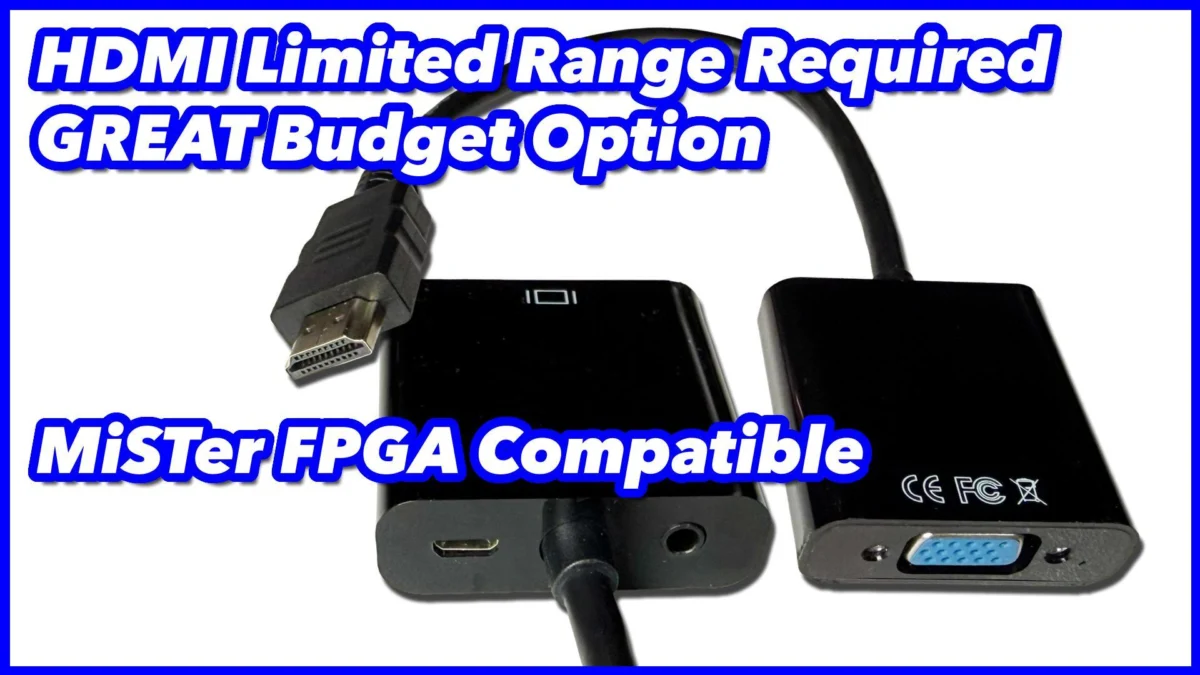
The landscape of retro computing and gaming has long been characterized by a unique challenge: bridging the technological chasm between modern digital video outputs and the analog inputs of classic displays. This often necessitates specialized, and sometimes costly, conversion hardware to ensure authentic visual experiences. However, a recent discovery has sent ripples through the enthusiast community: a remarkably inexpensive HDMI to VGA converter, priced at approximately $5, has been found to deliver performance levels typically associated with significantly more expensive Digital-to-Analog Converters (DACs). This device, identified as the Cableader HDMI to VGA DAC, includes a 3.5mm audio output, adding to its utility and making it a compelling option for a wide array of applications, particularly within the MiSTer FPGA, RePlayOS, and Kodi ecosystems.
The Genesis of an Unexpected Performer: The $5 Cableader DAC
The core of this significant finding revolves around the Cableader HDMI to VGA + 3.5mm Audio DAC. At its nominal price point, such converters are often viewed with skepticism regarding their performance and signal integrity. Historically, cheap converters have been notorious for introducing artifacts, signal degradation, or failing to accurately convert complex video timings, particularly those outside standard consumer resolutions. The revelation that this specific $5 unit performs "much better than expected" marks a pivotal moment for hobbyists and professionals alike who rely on accurate analog video output.
The device’s surprising efficacy is primarily contingent on one critical factor: receiving an "HDMI Limited Range" signal. This technical specification is crucial for understanding its superior performance. Digital video signals can be transmitted in two primary luminance ranges: "Full Range" (0-255) and "Limited Range" (16-235). Full Range is typically used for PC monitors, while Limited Range is standard for consumer video devices like TVs, Blu-ray players, and many gaming consoles. When a DAC designed to work optimally with a Limited Range input receives such a signal, it can process the data more efficiently and accurately, leading to a cleaner, more vibrant, and artifact-free analog output. The fact that platforms like MiSTer FPGA, RePlayOS, and Kodi offer the option to output an HDMI Limited Range signal is a key enabler for this DAC’s outstanding performance within these specific applications. This compatibility extends even to the "weird resolutions and refresh rates" frequently employed in retro gaming and emulation scenarios, which often prove problematic for less sophisticated converters.
Technical Nuances: Understanding HDMI Limited vs. Full Range
To fully appreciate the significance of the "HDMI Limited Range" requirement, a brief delve into video signal processing is necessary. When a digital HDMI signal is converted to an analog VGA signal, the DAC must accurately translate the digital luminance and chrominance values into corresponding analog voltages. If a DAC is calibrated for Limited Range (16-235) and receives a Full Range (0-255) signal without proper scaling, it can result in "crushed blacks" (details in dark areas are lost) and "clipped whites" (details in bright areas are lost), leading to a reduced dynamic range and a visually inferior image. Conversely, if a Full Range DAC receives a Limited Range signal, the image might appear washed out.
The Cableader DAC’s proficiency with Limited Range signals suggests a design optimized for consumer video standards, which aligns perfectly with the output capabilities of many retro-focused digital platforms. This optimization allows it to achieve a level of fidelity that, under these specific conditions, rivals that of more expensive, professional-grade DACs. This performance-to-cost ratio is virtually unheard of in a market segment where precision and signal integrity often come at a premium. The integrated 3.5mm audio DAC further enhances its value, providing a complete video and audio conversion solution in a single, compact unit.
Empowering Retro Platforms: MiSTer FPGA, RePlayOS, and Kodi
The true impact of this affordable DAC is realized through its seamless integration with popular retro computing and media platforms. Each of these platforms presents unique demands for video output, and the Cableader DAC addresses them effectively.
The MiSTer FPGA Project: MiSTer (Multi-video game system emulator with SDRAM) is an open-source project that utilizes Field-Programmable Gate Arrays (FPGAs) to replicate the hardware of vintage computers and video game consoles with an unprecedented level of accuracy. Unlike software emulation, FPGA recreation offers cycle-accurate timing and behavior, making it the gold standard for retro enthusiasts seeking authentic experiences. MiSTer’s "Direct Video" output mode is designed to bypass much of the modern video processing chain, delivering raw video signals suitable for direct connection to CRT (Cathode Ray Tube) displays or specialized converters.
For the Cableader DAC to function as a MiSTer Direct Video solution, specific configuration changes are necessary within the MiSTer’s .ini file. These settings are critical for ensuring proper signal formatting and compatibility:
vga_mode=rgb: This command configures the video output to use the RGB (Red, Green, Blue) color space, which is the native format for VGA.composite_sync=1: This enables composite sync, a method where horizontal and vertical synchronization signals are combined into a single line. Many older VGA monitors and professional displays prefer or require composite sync for stable image display.hdmi_limited=2: This is the crucial setting that forces the MiSTer’s HDMI output to generate a "Limited Range" signal, precisely what the Cableader DAC excels with.direct_video=0: This setting ensures that the MiSTer is not attempting to output a raw Direct Video signal through the HDMI port in a way that bypasses standard HDMI signaling, allowing the converter to properly interpret the output.
Furthermore, for users employing the Laser Bear MiSTer YPbPr Direct Video Adapter in conjunction with this DAC (though this configuration seems less direct given the DAC’s VGA output), the vga_mode setting would be adjusted to vga_mode=ypbpr if the intent was to output YPbPr component video through the Direct Video port, then convert that to VGA, which is an unusual chain. More commonly, the DAC would be used directly from MiSTer’s HDMI output to a VGA display. The core takeaway is the meticulous control MiSTer offers over its video output, enabling optimal performance from external converters.

RePlayOS: While less widely known than MiSTer, RePlayOS is another platform focused on retro gaming and computing, often utilizing similar principles of hardware acceleration or optimized software environments to deliver accurate retro experiences. Its compatibility with the Cableader DAC underscores the device’s versatility across various retro-centric operating systems and frameworks that require precise video output to legacy displays.
Kodi: As a popular open-source media center software, Kodi is renowned for its ability to manage and play a vast array of digital media. While typically associated with modern displays, Kodi’s flexibility allows it to be configured for specific video output requirements, including those beneficial for older displays. The ability to output a "Limited Range" HDMI signal within Kodi makes the Cableader DAC an excellent choice for users looking to connect a Kodi-powered device to a VGA monitor or projector, perhaps for a dedicated media setup or for displaying content on older screens that still offer excellent picture quality.
Navigating the Broader Ecosystem of Video Conversion Solutions
The emergence of a high-performance, ultra-affordable HDMI to VGA DAC must be understood within the context of a rich and diverse ecosystem of video conversion technologies. The need to bridge digital HDMI to analog VGA stems from the fundamental shift in display technology over the past two decades. As HDMI became the ubiquitous digital standard, legacy analog inputs like VGA, SCART (Syndicat des Constructeurs d’Appareils Radiorécepteurs et Téléviseurs), and YPbPr component video gradually faded from new hardware. However, a significant installed base of high-quality CRT monitors and projectors, prized by retro enthusiasts for their unique visual characteristics (e.g., scanlines, zero input lag, true black levels), necessitates reliable conversion solutions.
The market offers a spectrum of such devices, ranging from simple passive adapters to sophisticated active converters with advanced scaling and processing capabilities. The Cableader DAC directly competes with, and in specific scenarios, outperforms, much more expensive alternatives. For instance, high-end solutions like HD Fury and Reflex Prism (which has been tested as a "great, full-featured DAC") are renowned for their robust feature sets, advanced signal processing, and comprehensive compatibility. These devices often include features like EDID (Extended Display Identification Data) management, advanced scaling options, and support for a wider array of input/output formats, justifying their significantly higher price tags (often hundreds of dollars). The $5 Cableader DAC, while lacking these advanced features, proves that for a targeted application (HDMI Limited Range to VGA with audio), a minimalist approach can yield exceptional results.
Other, slightly more expensive, yet still budget-friendly, HDMI to VGA DACs exist, such as an "$8 HDMI to VGA (no audio) DAC." These options highlight the competitive nature of the low-cost converter market. The inclusion of a 3.5mm audio jack in the Cableader unit at a lower price point further distinguishes it from these alternatives, providing a more complete solution without requiring a separate audio extractor.
Beyond HDMI to VGA, the retro community also utilizes converters for other analog standards. The RetroTINK VGA to SCART Cable and HD15-2-SCART adapter are examples of solutions designed to connect VGA sources to SCART televisions, which are prevalent in Europe and highly valued for their RGB capabilities. These devices cater to different display types but share the common goal of maintaining signal integrity across different video standards. The existence of such a varied product landscape underscores the persistent demand for flexible and high-quality video conversion in the retro hardware scene.
Clarifying the YPbPr Distinction: Avoiding Misinformation
In the complex world of video signals, precision in terminology and application is paramount. A crucial clarification was issued regarding an earlier review of an HDMI to YPbPr DAC. It was explicitly stated that that particular HDMI to YPbPr DAC does not work with MiSTer. This distinction is vital because while both VGA (RGBHV) and YPbPr are analog component video formats, they are electrically distinct and require different types of conversion. Using the wrong converter can lead to a garbled image or no signal at all. The initial phrasing in the video might have caused confusion, leading some to mistakenly believe the YPbPr DAC was suitable for MiSTer setups, potentially as an alternative to the VGA DAC or specific YPbPr adapters like the Laser Bear MiSTer YPbPr Direct Video Adapter. The clarification ensures that enthusiasts select the correct adapter for their specific MiSTer configuration and desired output format, preventing frustration and wasted resources.
Implications and the Future of Retro Hardware Accessibility
The discovery of the $5 Cableader HDMI to VGA DAC represents more than just a good deal; it signifies a broader trend in the retro computing and gaming community towards greater accessibility and cost-effectiveness. By offering premium-level performance at an unprecedented low price point, this device lowers the barrier to entry for hobbyists who might otherwise be deterred by the expense of high-quality converters. It empowers more individuals to connect their modern digital retro-gaming setups (like MiSTer) to beloved vintage analog displays, fostering a wider appreciation for the aesthetics and performance of classic hardware.
This development also underscores the value of independent hardware reviews and community-driven research. Without thorough testing and open sharing of findings, such a high-value component might have remained undiscovered or its optimal use cases unclear. The detailed configuration instructions for MiSTer FPGA, for example, are a testament to the collaborative spirit of these communities.
Looking ahead, the success of this budget DAC could inspire manufacturers to produce more targeted, high-performance, and affordable solutions for niche markets. It demonstrates that with careful design and optimization for specific signal parameters, exceptional quality does not always have to come with a hefty price tag. As vintage hardware ages and digital interfaces become even more dominant, the demand for reliable and economical analog conversion solutions will only grow. The Cableader HDMI to VGA DAC, with its surprising performance, has carved out a significant place in this ongoing technological bridge-building effort, proving that sometimes, the most impactful innovations come in the smallest, most affordable packages. The continued support for independent content creators, often through platforms like Patreon, remains crucial for funding the exhaustive testing and review processes that bring such valuable insights to the community.