Chalid Lutfie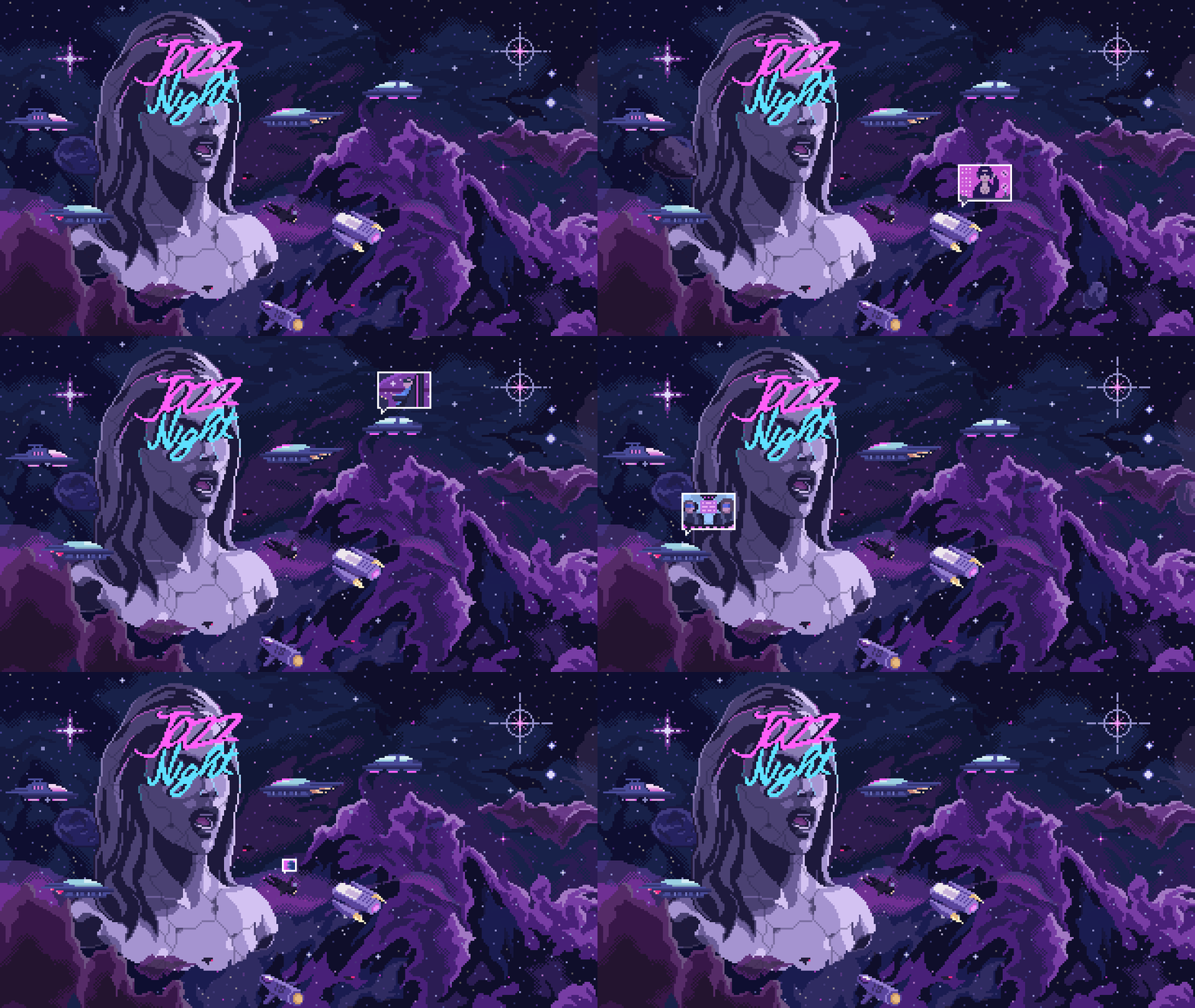
The electronic music landscape witnessed a significant genre-blending milestone on April 25, 2017, with the release of The Frequency Modulators Orchestra, Vol. 1, the debut album on the Ubiktune label by Juan Irming, performing under the moniker Amplitude Problem. This project represents a deliberate conceptual experiment, utilizing the historically "cold" and clinical textures of Frequency Modulation (FM) synthesis to recreate the "warm," improvisational, and human-centric grooves associated with traditional jazz and funk. By constraining the technical palette to FM synthesizers and lo-fi drum samples, Irming has produced a work that challenges the perceived limitations of digital sound design while paying homage to the golden eras of both 1980s computing and 1970s fusion.
The album is not merely a collection of tracks but a structured exploration of how digital algorithms can be manipulated to simulate the expressive nuances of live instrumentation. To ensure the highest fidelity for this complex sonic profile, the project was mastered by the Grammy Award-winning engineer Don Grossinger, whose portfolio includes work with jazz icons such as Miles Davis. This choice of engineer underscores the project’s serious intent to bridge the gap between niche electronic subcultures—such as chiptune and synthwave—and the broader high-fidelity jazz world.
Historical Context and the Evolution of Amplitude Problem
Juan Irming’s journey to The Frequency Modulators Orchestra, Vol. 1 is rooted in the European demoscene of the late 1980s. The demoscene, a computer art subculture focused on pushing the technical boundaries of hardware, served as a foundational training ground for many of the world’s leading electronic composers. Irming gained early recognition as a composer for SYNC, a renowned Atari ST demo crew. During this era, hardware limitations forced composers to be exceptionally creative with sound chips, a skill set that Irming has carried into his contemporary professional career. His success in various demo music contests established a reputation for technical precision and melodic complexity.

Following his early success in Europe, Irming moved to Los Angeles to attend the Musicians Institute in the early 1990s. This formal training in keyboard performance and music theory allowed him to synthesize his technical "chip" background with a deep understanding of traditional musical structures. Over the subsequent decades, Irming established himself as a versatile producer and sound designer, contributing to a wide array of projects including hip-hop, video game soundtracks, and synthwave.
Prior to his debut on Ubiktune, Irming was a frequent collaborator within the "nerdcore" and cyberpunk music scenes. He was instrumental in the production of YTCracker’s 2014 cyberpunk concept album, Introducing Neals, which is often cited as a landmark in the genre. It was during the production of the track "Feel Like Leisure Suit Larry" for that album that Irming rediscovered the potential of FM synthesis for creating "zany," percussive grooves. This realization sparked a multi-year creative cycle that led to his 2015 album Blue Bots Dots and eventually the focused conceptual framework of The Frequency Modulators Orchestra.
Technical Analysis of Frequency Modulation in Jazz Composition
The decision to use FM synthesis as the exclusive melodic tool for a jazz-funk album is a significant technical choice. Unlike subtractive synthesis, which involves filtering harmonically rich waveforms, FM synthesis involves modulating one waveform (the carrier) with another (the modulator). This process, popularized by the Yamaha DX7 in the 1980s, is known for producing sharp, metallic, and glass-like timbres that can often sound brittle or "cold."
In The Frequency Modulators Orchestra, Vol. 1, Irming reverses this reputation. By meticulously programming the operators and envelopes of his synthesizers, he replicates the "warmth" of Rhodes pianos, the "snap" of slap bass, and the "breath" of woodwind instruments. The "Orchestra" in the album title refers to this ensemble of digital patches, each treated as an individual musician within a virtual band. This approach allows for a high degree of "human" error simulation and improvisational flair, which are essential components of the jazz genre.
Supporting this sonic world is the inclusion of lo-fi drums, which provide a rhythmic grit that offsets the clean precision of the FM synthesis. The result is a texture that feels both nostalgic and futuristic—a "pixelated rabbit hole" that aligns with the aesthetic of modern synthwave while maintaining the structural integrity of a jazz record.
Collaborative Artistry and Visual Identity
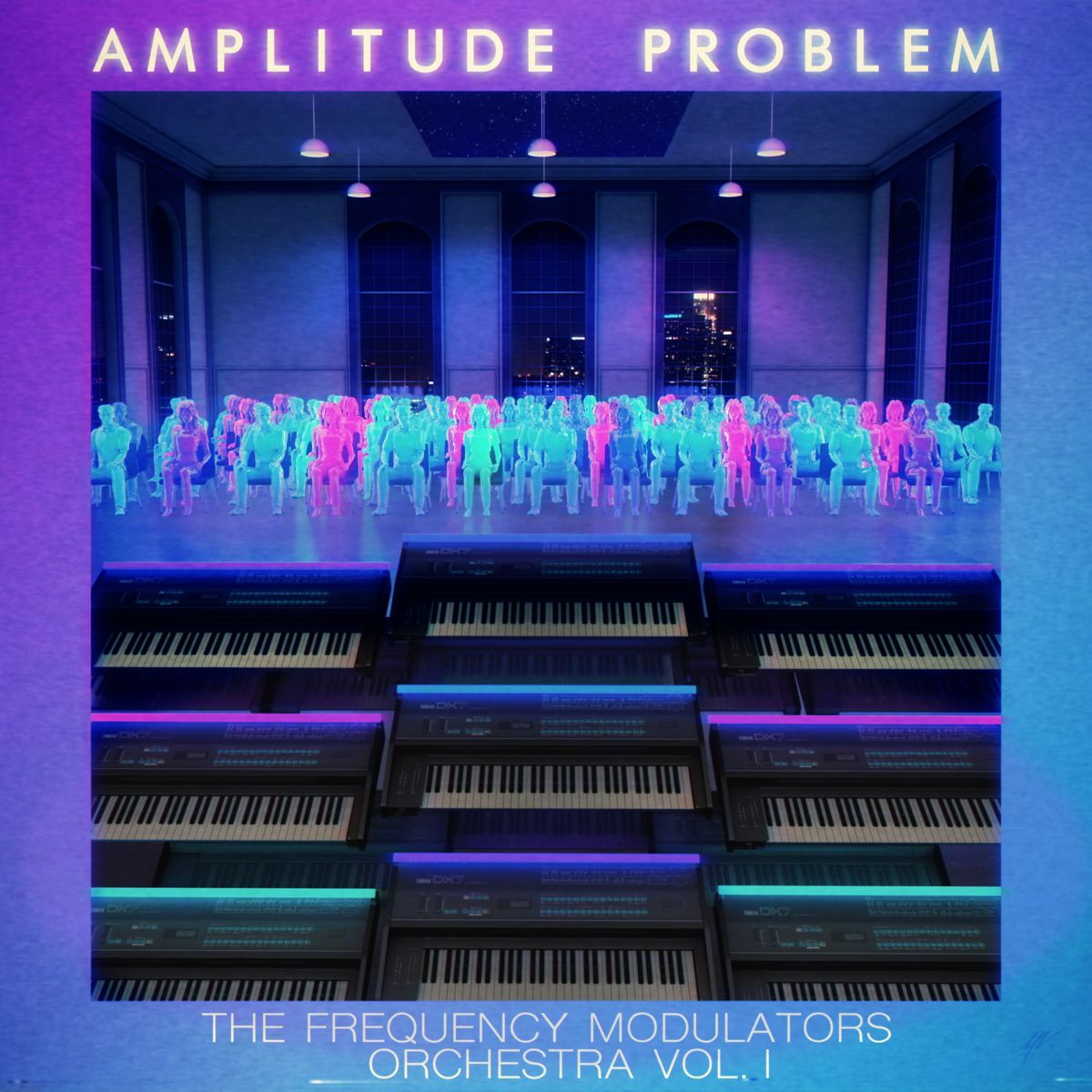
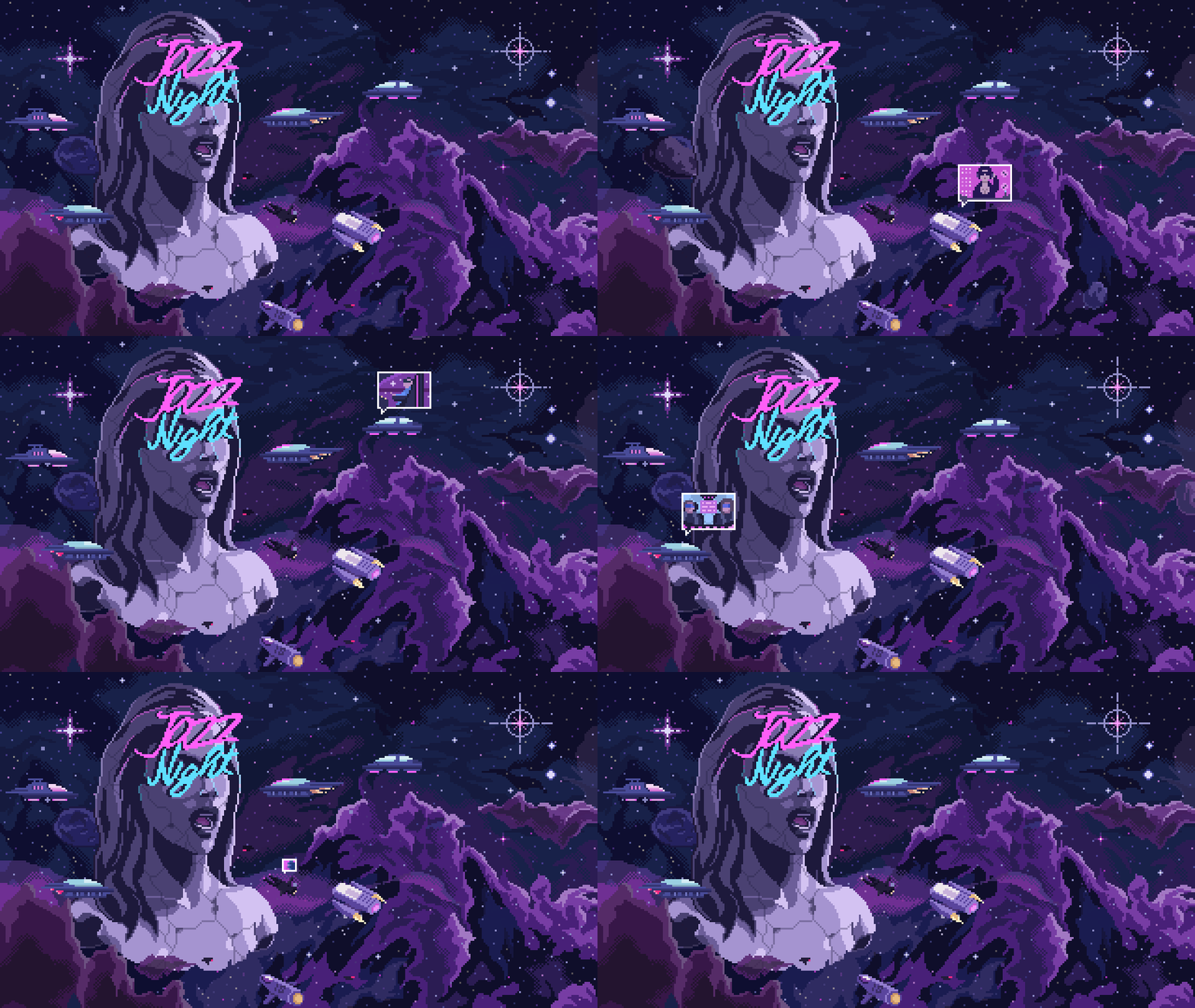
The aesthetic presentation of The Frequency Modulators Orchestra, Vol. 1 is as deliberate as its audio production. The album features front cover artwork by Mythical Vigilante, whose style often evokes the neon-soaked, retro-futuristic imagery of the 1980s. This is complemented by additional art and animations from Valenberg, a prominent pixel artist known for his work on the video game VirtuaVerse.
Valenberg’s contribution, specifically the "Jazz Night" animation, serves as a visual metaphor for the album’s concept. By using pixel art—a medium defined by its digital constraints—to depict a classic, atmospheric jazz club setting, Valenberg mirrors Irming’s use of digital FM synthesis to depict human jazz grooves. This synergy between visual and auditory media has become a hallmark of the Ubiktune label’s releases, which often cater to an audience that values the intersection of retro technology and modern artistry.
Chronology of Production and Creative Philosophy
The production of the album spanned approximately ten months, beginning in late 2015. During this period, Irming moved away from the vocal-centric production styles he had utilized with artists like YTCracker, focusing instead on the "purely musical expression" afforded by instrumental tracks. According to Irming, the absence of lyrics places a higher burden on the instrumentalist to maintain listener engagement through complexity and conviction.

A key element of the production timeline was the emphasis on live-key jamming. Rather than meticulously "drawing" notes into a digital audio workstation (DAW), Irming leaned heavily on improvisation. This "in-the-moment" philosophy is what allows the album to transition from the introspective nature of its opening four tracks to the more expansive, "heartfelt commentary" of the final three tunes.
The track "Ghosts in My Medicine Cabinet" serves as a focal point for this philosophy. Irming describes it as a track that requires "conviction" and an "all-in" approach, representing the more experimental and personal side of the record. This track, along with others on the album, tells a story of self-examination, viewed through the "lens" of bizarre space adventures and digital landscapes.
Broader Impact on the Electronic and Synthwave Scenes
The release of The Frequency Modulators Orchestra, Vol. 1 comes at a time when the synthwave and retrowave genres are experiencing a period of diversification. While much of the scene remains focused on the cinematic "outrun" style characterized by 1980s film scores, Irming’s work points toward a more sophisticated integration of traditional music genres.
By proving that FM synthesis—often maligned for its complexity and perceived lack of "soul"—can be used to create compelling jazz-funk, Irming has provided a roadmap for other electronic producers. The album’s inclusion of mastering by Don Grossinger further validates the project within the professional audio community, suggesting that "chip-inspired" music is moving beyond the confines of internet subcultures and into the realm of serious contemporary composition.
Furthermore, Irming’s background in the demoscene and his work on video games like Power Drive 2000 and VirtuaVerse link the album to a broader cultural movement that celebrates the "glitchy" and "pixelated" aesthetics of the past not as limitations, but as valid artistic choices.
Conclusion and Availability
The Frequency Modulators Orchestra, Vol. 1 stands as a testament to the versatility of Juan Irming as a composer and the enduring appeal of FM synthesis. It is a record that bridges two worlds: the high-tech, algorithmic precision of the digital age and the low-tech, soulful improvisation of the jazz era.
The album is currently available across all major digital distribution platforms and streaming services, including Bandcamp, Spotify, and Apple Music. As Amplitude Problem continues to perform at major events such as Comic Con and Game On Expo, the release of this debut on Ubiktune marks a significant chapter in the career of a producer who remains dedicated to exploring the "frequency modulation" of the human experience through sound.