Chalid Lutfie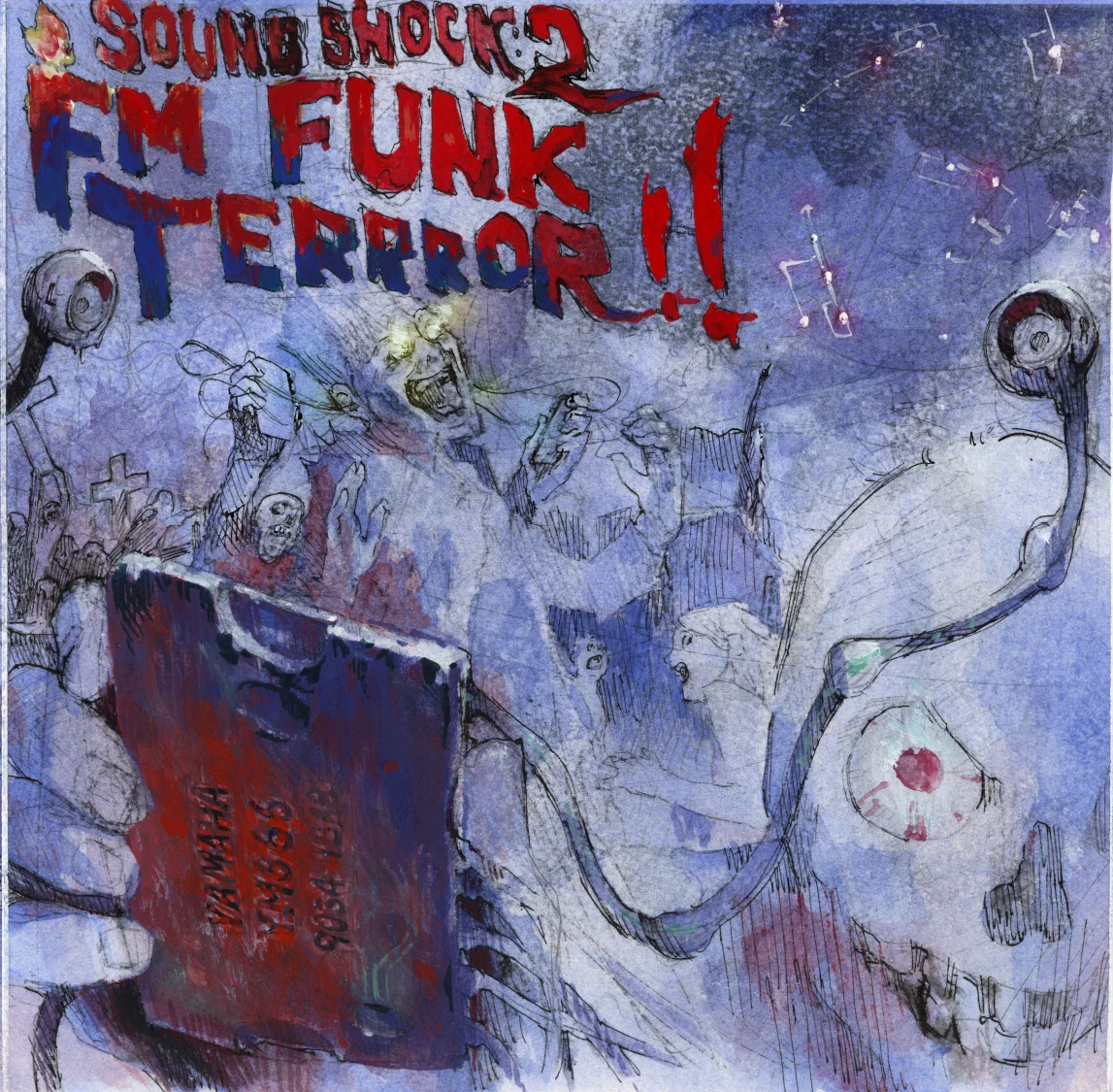
The conclusion of the SOUNDSHOCK music series marks a significant milestone in the contemporary appreciation of Frequency Modulation (FM) synthesis, a sound technology that defined the auditory landscape of the 1980s and early 1990s. While the series is primarily celebrated for its high-energy compositions and technical mastery of vintage sound chips, the visual identity of the trilogy—crafted by artist Tsuyoshi Shimokura—has played an equally vital role in establishing its cultural footprint. On April 15, 2017, the series producers released a comprehensive retrospective detailing the creative synergy between the music and the hand-painted cover art that defined the project. This retrospective provides a rare glimpse into the meticulous process of translating the abstract, metallic textures of FM sound into a cohesive visual narrative that spans three distinct volumes: FM FUNK MADDNESS!!, FM FUNK TERRROR!!, and FM FUNK NIRVANA!!
The partnership between the project’s organizer, known as zinger, and Tsuyoshi Shimokura began through a mutual connection in the chip-music community. Shimokura, a professional artist with a background in manga, was initially recruited as a musician. However, his deep-seated passion for retro computing, arcade gaming history, and the specific aesthetics of FM synthesis hardware led to a broader collaboration. His artwork does not merely serve as a decorative wrapper for the albums; rather, it functions as a visual manifestation of the "FM spirit," incorporating technical diagrams, historical gaming references, and a unique philosophical outlook on the evolution of digital sound.
The Genesis of the Collaborative Vision
The collaboration was sparked when zinger discovered Shimokura’s portfolio, which revealed a sophisticated blend of traditional manga techniques and a preoccupation with technological motifs. This discovery led to the commissioning of the cover for the first installment, FM FUNK MADDNESS!!. The creative process was characterized by a deep exchange of cultural references, ranging from 1980s arcade flyers to classic horror cinema. This synergy allowed the SOUNDSHOCK series to transcend the typical boundaries of a music compilation, turning each release into a multimedia tribute to the era of 16-bit hardware.
The chronology of the series reflects a progression from frantic energy to dark intensity, and finally to a state of cosmic resolution. This trajectory is mirrored in Shimokura’s artistic evolution across the three covers. By examining the development of each piece, one can observe how the series transitioned from a celebration of the "heroic" era of arcade gaming to a more profound exploration of the relationship between the listener, the machine, and the creative legacy of the past.
FM FUNK MADDNESS!! The Heroic Age of Synthesis
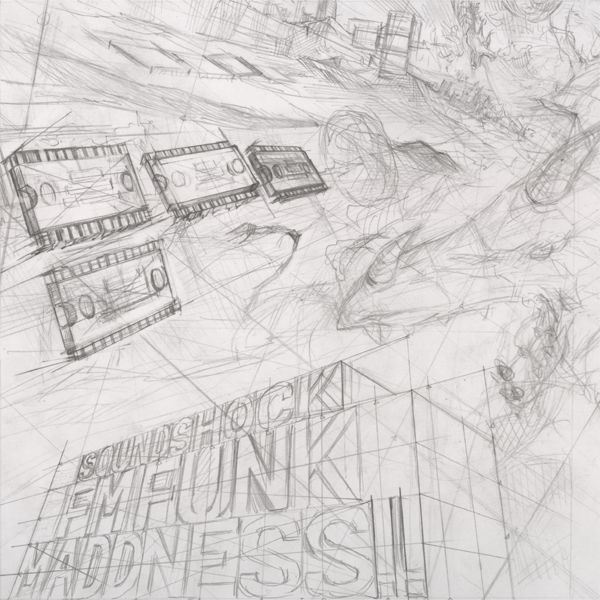
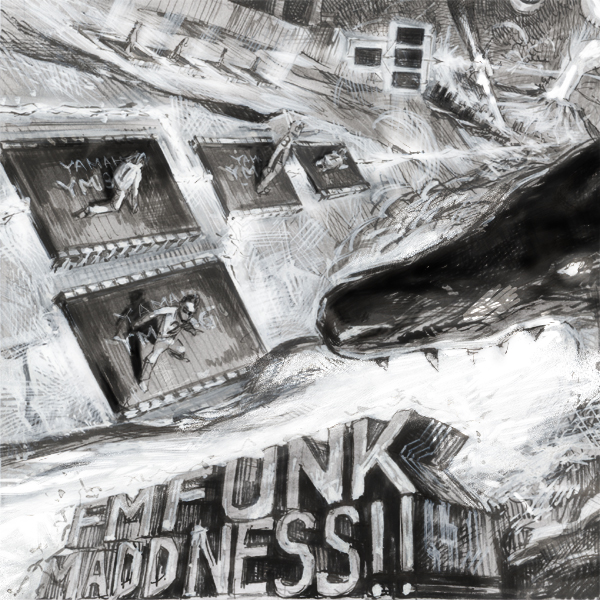
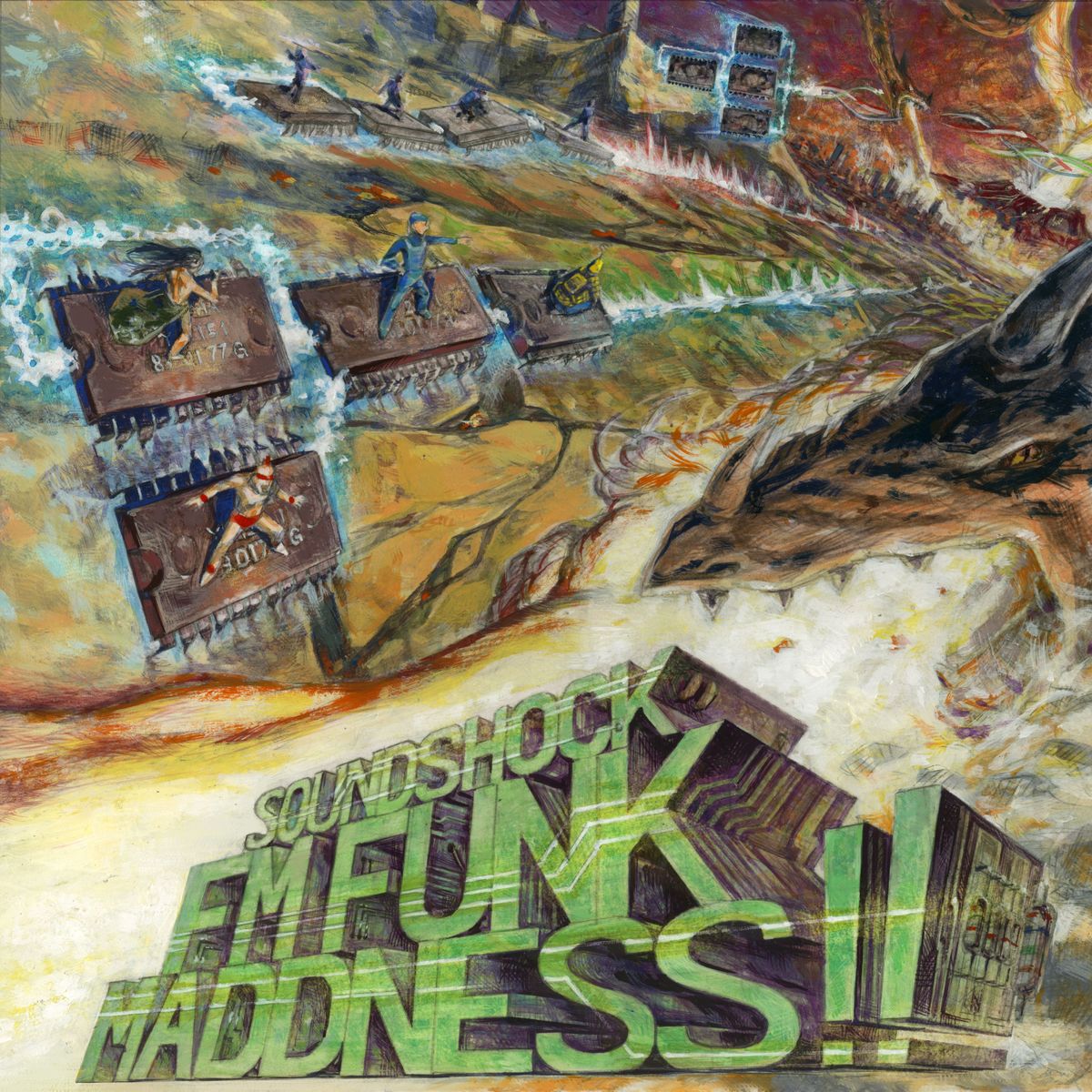
For the inaugural release, FM FUNK MADDNESS!!, the objective was to capture the sheer kinetic energy of early FM-driven arcade games. The artistic direction drew heavy inspiration from the promotional materials of Taito’s legendary arcade titles, specifically the flyers for Metal Black and Darius II. These games were known for their sophisticated use of the Yamaha YM2151 sound chip, and their visual style often featured a blend of biomechanical sci-fi and high-stakes action.
Shimokura’s concept for the first cover centered on the idea of musicians as "FM heroes" using the power of sound to combat monstrous forces. The artwork is notable for its intricate details, particularly the inclusion of FM algorithm charts—diagrams that illustrate how various operators (oscillators) are connected to produce specific sounds. In a playful yet technical touch, Shimokura depicted these FM chips as sentient entities with legs resembling caterpillar tracks, marching into battle. This personification of hardware served to bridge the gap between the cold, mathematical nature of frequency modulation and the vibrant, lived experience of the gamers and musicians who championed it.
FM FUNK TERRROR!! Horror and the Obsession of Sound
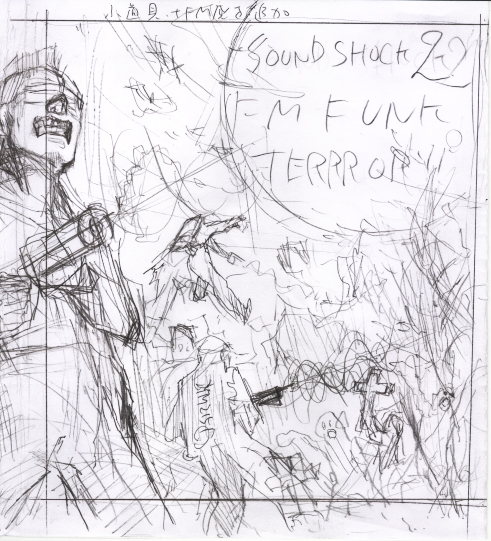
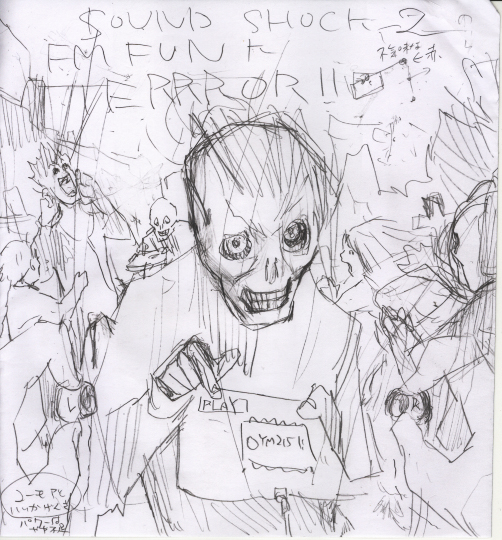
The second volume, FM FUNK TERRROR!!, shifted the thematic focus toward the darker, more aggressive capabilities of FM synthesis. FM sound is often characterized by its ability to produce "unnatural" metallic clangs and haunting, dissonant textures, making it a perfect match for the horror genre. To guide this visual direction, zinger provided Shimokura with a curated selection of 1980s horror movie posters, including A Nightmare on Elm Street and The Evil Dead, alongside references to the Splatterhouse video game series.
The resulting artwork is a dense, macabre tribute to the "terror" of the machine. The central figure is a ghoul wielding a gravestone-styled device labeled "YM666"—a fictionalized, demonic version of the Yamaha chipsets. This character acts as a "recruiter," attempting to "turn" listeners into disciples of the FM sound. One of the most acclaimed details of this cover is the sky, where the stars are arranged not in traditional constellations, but in the shapes of FM algorithm patterns. This subtle integration of technical data into the fantasy landscape underscored the series’ dedication to its niche subject matter.
Shimokura even penned a short narrative to accompany the piece, describing a world where "Algorithm constellations" signal the arrival of zombies who haunt villages, inflicting "FM terror" on the inhabitants. This narrative layer suggested that the music was more than just a collection of tracks; it was a transformative force capable of "shocking" the listener’s brain and awakening a new passion within their soul.
FM FUNK NIRVANA!! The Spiritual and Technical Zenith
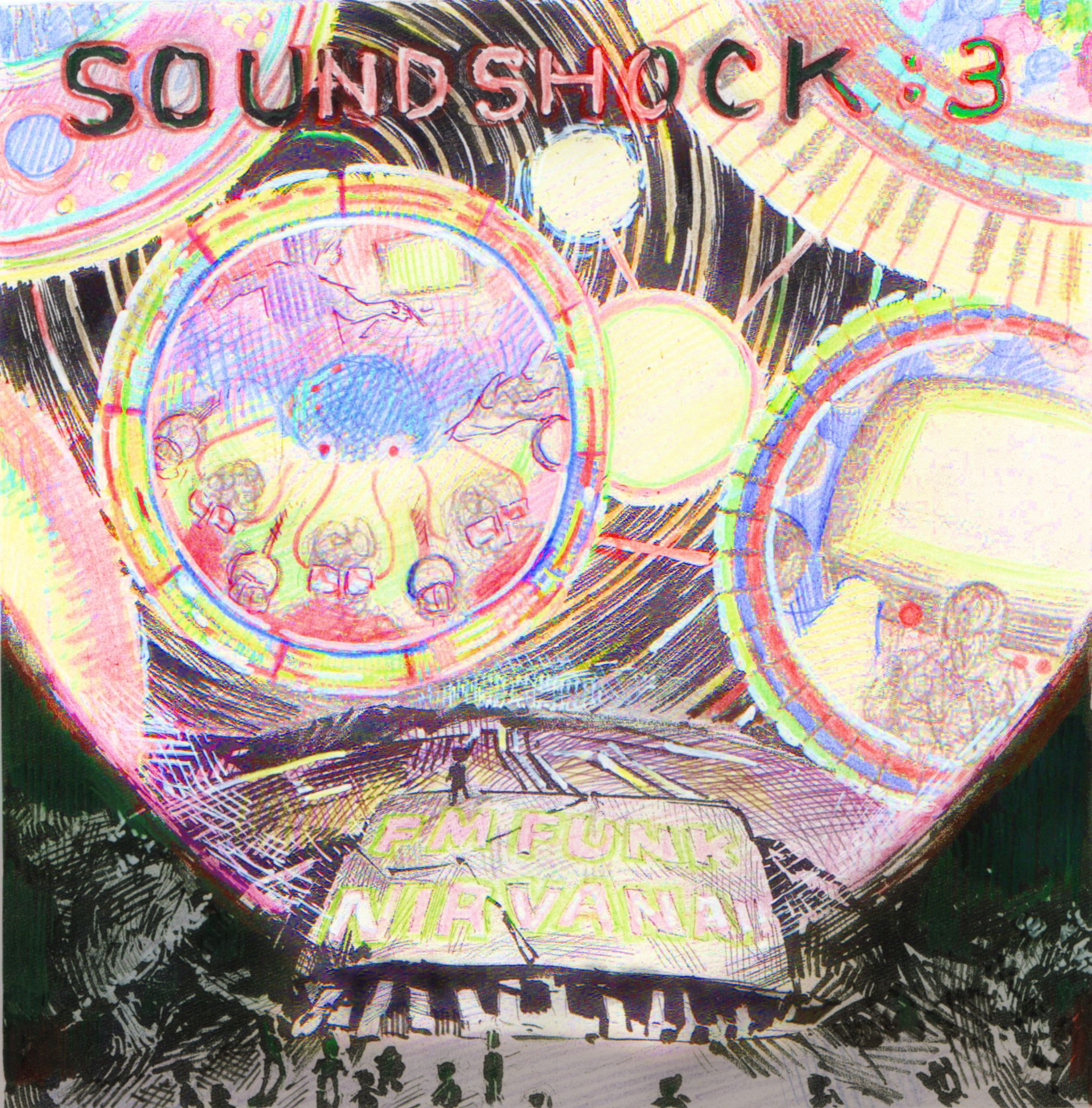
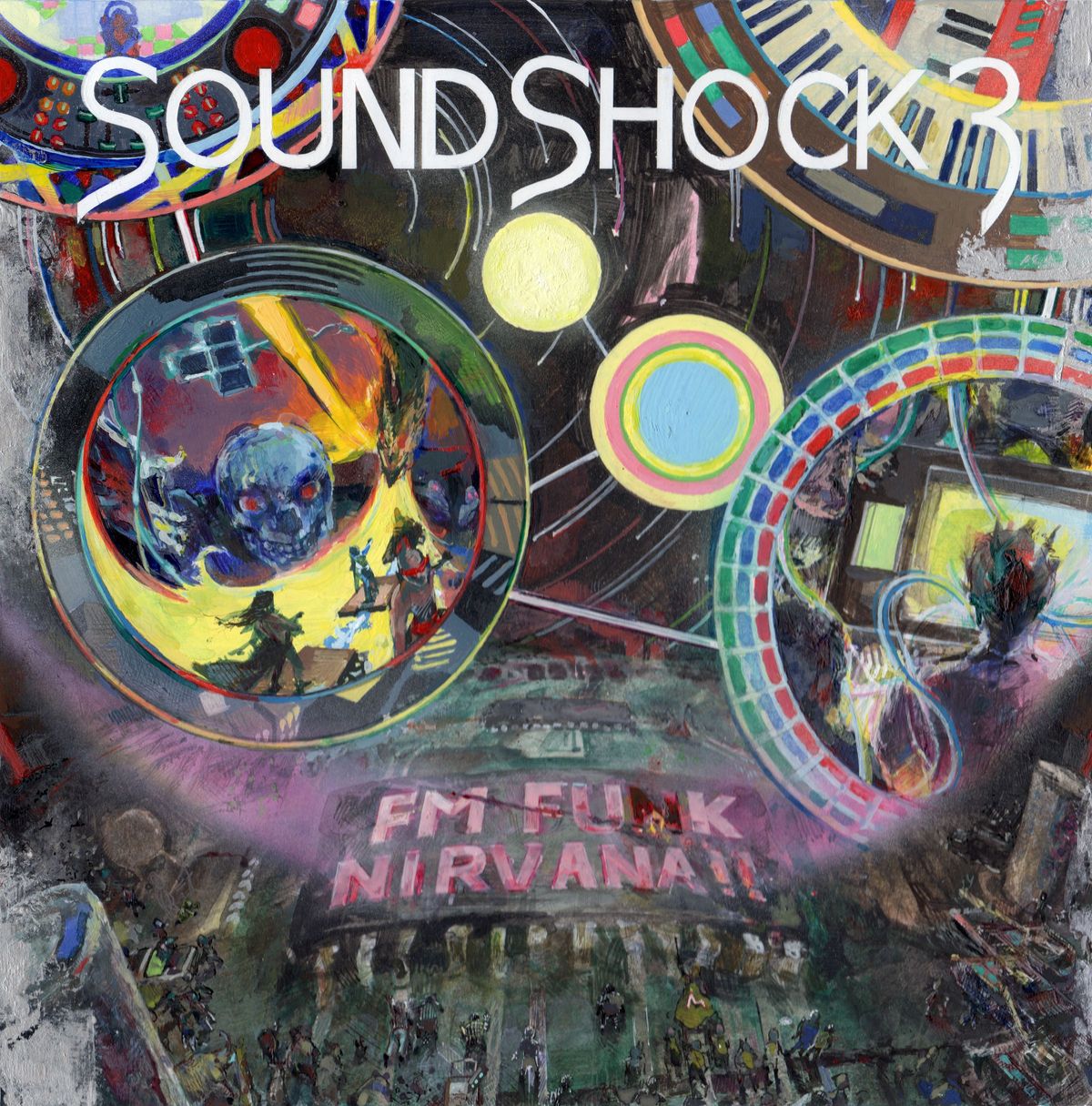
The final installment, FM FUNK NIRVANA!!, represents the series’ arrival at a state of ultimate realization. The title itself was inspired by a fan comment that zinger had observed years prior, suggesting that the series should eventually reach a state of "Nirvana." While the previous titles utilized intentional misspellings—"MADDNESS" and "TERRROR"—to convey a sense of "maxed out" power, the word "NIRVANA" was left in its standard form. The producers felt that the concept of Nirvana was already at its peak, and any further linguistic embellishment would diminish its weight.
The visual direction for this finale was the most abstract of the three. Shimokura drew inspiration from the soundtrack cover of Darius Gaiden and Buddhist iconography, specifically the "mandala." In spiritual traditions, a mandala is a tool for focusing attention and inducing a trance-like state. Shimokura’s interpretation featured a celestial map of spheres, each containing different "elements" of the FM universe.
At the base of the composition, a throng of disciples is seen approaching a massive FM chip mounted on a circuit board, treating the hardware as a sacred object of worship. This imagery perfectly encapsulates the series’ ethos: the elevation of obsolete technology to the status of a spiritual guiding tool. It suggests that while the hardware may be "dead" in a commercial sense, its spirit remains a central pillar for a devoted community of "believers."
Technical Context The Yamaha Legacy
To understand the depth of Shimokura’s artwork, one must understand the technical significance of the hardware it depicts. The "FM chips" featured in the art refer to the Yamaha YM series, most notably the YM2151 (found in many arcades and the Sharp X68000), the YM2612 (the heart of the Sega Genesis/Mega Drive), and the YM3812 (the OPL2 chip used in early PC sound cards).
FM synthesis works by using one waveform (the modulator) to change the frequency of another (the carrier). The complexity of the sound depends on the "algorithm"—the specific way these operators are stacked. By incorporating these algorithm charts into the artwork of all three albums, Shimokura paid homage to the programmers and sound designers of the 80s who had to master complex mathematics to create iconic soundtracks. This technical grounding is what separates the SOUNDSHOCK series from generic retro-nostalgia; it is a project built on a deep, fundamental understanding of the medium it celebrates.
The Artist’s Final Message and Broader Implications
As the series concluded, Tsuyoshi Shimokura shared a poignant message with the fanbase, framed by the producer as a reflection on the cycle of creative influence. Shimokura noted that the end of SOUNDSHOCK should not be viewed as a mournful event. Instead, he described the project as a "seed" for "future stars that have yet to be born." He posited that the creators and fans of FM sound are part of a continuous lineage, serving as the "progeny" of those who came before them and the "forerunners" for those who will follow.
This philosophy of "spiritual offshoots" highlights the broader impact of the SOUNDSHOCK series on the independent music scene. By providing a high-profile platform for modern FM composition and pairing it with world-class visual art, the project helped sustain a niche aesthetic that might otherwise have faded into obscurity. The series has influenced a new generation of "chiptune" and "synthwave" artists, many of whom have begun to incorporate authentic FM hardware into their workflows, directly fulfilling Shimokura’s prophecy of "future stars."
Conclusion The Lasting Legacy of SOUNDSHOCK
The April 2017 update serves as a definitive record of a unique moment in digital art and music history. Through the combined efforts of zinger and Tsuyoshi Shimokura, the SOUNDSHOCK series provided a comprehensive sensory experience that honored the past while pushing the boundaries of contemporary creative expression.
The hand-painted covers remain a testament to the power of physical media in a digital age, offering a tactile and visual depth that complements the complex, multi-layered sounds of the albums. As the "Algorithm constellations" fade into the background of the music industry’s broader history, the seeds planted by the SOUNDSHOCK trilogy continue to grow, ensuring that the metallic, vibrant, and "maddening" sound of FM synthesis will resonate for generations to come. The series stands as a reminder that technology is not merely a tool for production, but a source of genuine spiritual and artistic inspiration.