Chalid Lutfie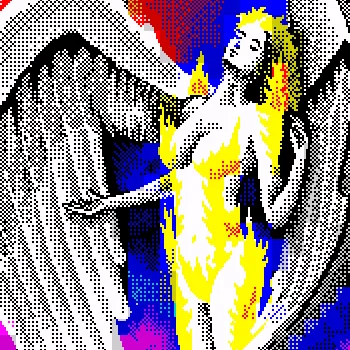
The release of Still Flying serves as a primary artifact of the demoscene era, representing a transitional period where hardware-constrained audio production began to bridge the gap between niche technical hobbyism and structured musical storytelling. Composed entirely in 2002 using the Pro Tracker 3 editor on original ZX Spectrum hardware, the album functions as a collection of what the artist describes as "lyric music novels," establishing a narrative-driven approach to chiptune composition that was relatively uncommon at the time.
Historical Context and Technological Constraints
To understand the significance of Still Flying, one must examine the environment in which it was produced. The ZX Spectrum, released by Sinclair Research in 1982, utilized the AY-3-8910 sound chip. This programmable sound generator was capable of producing three channels of square wave audio and one channel of white noise. By 2002, the demoscene—a computer art subculture focused on creating self-contained, real-time generated programs—had evolved significantly, yet it remained tethered to the limitations of this aging hardware.
C-Jeff’s work during this period was characterized by a meticulous effort to maximize the expressive potential of the AY chip. Pro Tracker 3, the software used for the album’s creation, required users to input data in hexadecimal format, demanding a high degree of technical proficiency. The creation of Still Flying was not merely an act of composition but a feat of data management, as the limited memory capacity of the ZX Spectrum necessitated extreme efficiency in note placement and pattern looping.
Chronology of Production and Distribution
The timeline of Still Flying is inextricably linked to the demoparty circuit of 2002. The album’s tracks were forged in the competitive heat of events like CAFe 2002 and Paradox 2002.
The track "My Mind is Free" provides a clear window into this timeline. Originally submitted to the CAFe 2002 demoparty as "My mind free"—a title altered due to the composer’s developing command of the English language at the time—it secured a 13th-place finish in the ZX Spectrum AY Music competition. Following the event, the track was refined and incorporated into the final tracklist of the album.
Similarly, "Lonely Soul," while not part of the initial conceptualization of the album, was written in the same productive window. It saw success at the Paradox 2002 demoparty, where it achieved a 2nd-place ranking. The inclusion of these competition-tested pieces helped shape the album’s stylistic consistency, bridging the gap between individual demoscene entries and a cohesive long-form release.
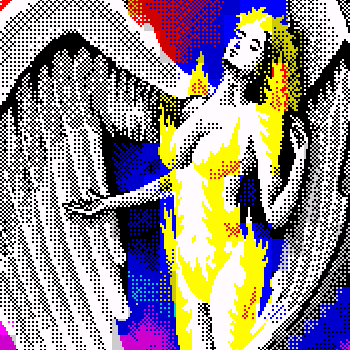
The distribution of the album followed a trajectory typical of early-2000s digital art. While the music existed as a standalone collection, it was elevated to a technical showcase roughly 18 months after its inception. The project was converted into an executable ZX musicdisk—a standalone program that plays the music tracks while displaying graphics. This conversion involved a collaborative effort: Vortex handled the code, Schafft provided the visual artwork, and Poisoned CyberJack managed the data packing to ensure the software functioned within the strict memory constraints of the ZX Spectrum.
Supporting Data and Technical Contributions
The production of Still Flying involved a specialized team, reflecting the collaborative nature of the demoscene. The credits for the project include:
- C-Jeff: Composer and Producer, responsible for the core melodic and rhythmic structures.
- Schafft: Artwork, providing the visual identity for the musicdisk release.
- MmcM: Mastering, a critical role in ensuring that the raw output of the AY chip remained intelligible and balanced when played back on contemporary hardware or through emulators.
The technical specifications of the release remain a subject of interest for retro-computing enthusiasts. By utilizing Pro Tracker 3, the team pushed the limits of the AY chip’s polyphony. The resulting audio signature is one of sharp, precise transients and a distinct, metallic timbre that defined the "Spectrum sound." The transition from the original Pro Tracker files to an executable disk format represents an important chapter in the preservation of digital art, as it allowed the music to be experienced as the creators intended: as an integrated audio-visual program.
The Evolution of the Demoscene and Broader Implications
The demoscene is often cited as a precursor to the modern indie game development movement. The skills honed in the late 90s and early 2000s—optimization, engine architecture, and creative limitation management—have proven highly transferable. C-Jeff’s transition from a participant in ZX Spectrum competitions to a broader musical career mirrors the path of many engineers and artists who emerged from this subculture.
The implication of Still Flying is not merely that it constitutes a successful chiptune album, but that it challenged the perception of the ZX Spectrum as an obsolete tool. By treating the platform as a legitimate musical instrument, C-Jeff and his collaborators argued that creative intent is independent of hardware sophistication. This sentiment has become a cornerstone of the retro-gaming and chiptune communities, which continue to thrive by finding new ways to exploit the capabilities of legacy hardware.
Furthermore, the longevity of the album—still accessible via platforms like Bandcamp—demonstrates the shift from ephemeral demoparty entries to durable digital media. The digital archival efforts of sites like Demozoo and Pouet have ensured that the history of Still Flying is not lost to bit rot, providing future researchers with a clear record of the creative evolution of the early 2000s.
Official Responses and Legacy
While individual reactions from the 2002 demoparty judges are largely archived in historical databases like Demozoo, the lasting impact is measured in the album’s enduring popularity within niche electronic circles. The "lyric music novels" tagline has remained a point of focus for critics, suggesting that the music was intended to convey complex emotional states that transcended the technical limitations of the AY chip.
The success of "Lonely Soul" at Paradox 2002 served as a validation for the project’s stylistic direction. When viewed through the lens of modern production standards, the album stands as a testament to the discipline of the era. The decision to master the tracks with MmcM was a pivotal moment in the album’s lifecycle, as it provided a professional polish that allowed the compositions to hold up against modern chiptune productions.
In conclusion, the trajectory of Still Flying—from a collection of individual competition entries to a unified, distributed work of art—encapsulates the maturation of the digital subculture in the early 21st century. It serves as a reminder that the limitations of hardware often act as a catalyst for innovation, forcing creators to distill their ideas into their most essential and potent forms. As the demoscene continues to influence contemporary digital art, the contributions of C-Jeff, Schafft, and their peers remain foundational to the understanding of the intersection between human creativity and the constraints of binary logic. The project stands as a benchmark for how historical technical achievements can be preserved, recontextualized, and appreciated long after the hardware of their birth has been relegated to the archives of computing history.