Indra Gunadi
The Commodore 64 community on Reddit is currently rallying against a wave of automated software submissions, with users on the r/c64 subreddit identifying a specific itch.io creator, operating under the handle “ready64,” who is allegedly using artificial intelligence to mass-produce and upload non-functional games to the platform. This incident has sparked a broader conversation within retro gaming circles and among digital content platforms about the integrity of user-submitted content in an era increasingly influenced by AI generation. The subreddit’s moderators have taken a firm stance, explicitly stating, "We will stop featuring the games of this developer," signaling a clear intent to protect their community from what they perceive as digital pollution.
The Enduring Legacy of the Commodore 64 and Its Dedicated Community
To fully appreciate the gravity of this situation, it is crucial to understand the unique position of the Commodore 64 (C64) within computing history and the passionate community that sustains it. Launched in 1982, the C64 quickly became the best-selling single computer model of all time, largely due to its advanced graphics and sound capabilities for its era, making it a powerful platform for games and creative applications. Decades after its commercial peak, the C64 continues to thrive, supported by an active community of enthusiasts, developers, and preservationists. This community is dedicated to maintaining the hardware, developing new software, creating demos, and archiving the vast library of existing titles.
The C64 scene is characterized by a deep appreciation for the technical craft involved in programming for an 8-bit machine with significant hardware constraints. Developing a game for the C64 requires a specialized understanding of its architecture, assembly language programming, and creative problem-solving to optimize performance within limited memory and processing power. As such, new homebrew games or demos released for the C64 are often met with considerable enthusiasm and respect, viewed as a testament to skill and dedication. This context explains why the appearance of mass-produced, non-functional AI-generated content is particularly jarring and unwelcome. It stands in stark contrast to the ethos of quality, ingenuity, and human effort that defines the community’s engagement with the platform.
Itch.io: An Open Platform for Independent Developers
The platform at the center of this controversy, itch.io, is a popular open marketplace for independent video game developers. Launched in 2013, itch.io distinguishes itself with its flexible pricing models, developer-friendly revenue share, and a relatively open submission policy. It has become a vital hub for indie creators, offering an accessible avenue for publishing games, interactive fiction, assets, and even physical games. Its democratic approach means that virtually anyone can upload content, fostering a vibrant ecosystem of experimental and niche titles that might not find a home on more curated digital storefronts.
While this open model is a significant strength, promoting diversity and accessibility, it also presents inherent challenges regarding content moderation and quality control. Unlike platforms with strict approval processes, itch.io largely relies on user reporting and automated systems to identify problematic content. This balance between fostering a free creative environment and preventing abuse is a perpetual tightrope walk for open platforms. The incident involving "ready64" highlights a growing vulnerability for such platforms: the potential for malicious actors or automated systems to exploit open submission policies to flood the marketplace with low-quality, non-functional, or even harmful content, thereby diluting the value for legitimate creators and users alike.
Chronology of Discovery and Community Mobilization
The issue gained significant traction within the r/c64 subreddit around late January 2024, though initial observations by community members may have occurred earlier. The Reddit post, "Master of the house – WTF – now there are 23 of them!", served as a focal point for escalating concerns. Users began to notice a pattern of numerous, oddly titled game submissions appearing on itch.io under the developer handle "ready64." What initially seemed like a few curious, perhaps amateur, attempts at C64 game development quickly evolved into a recognized problem as the volume of these uploads rapidly increased.
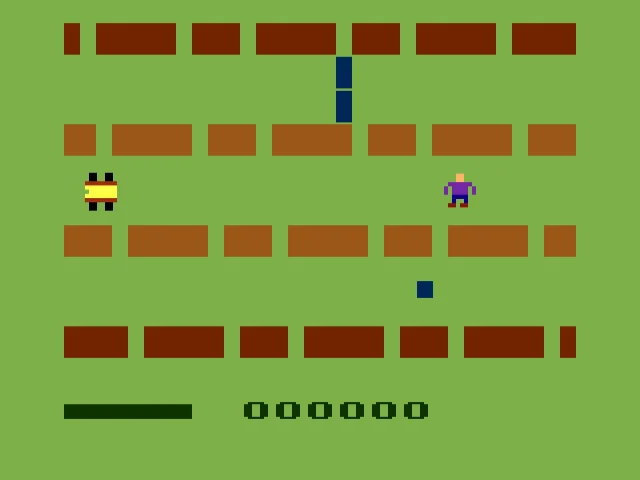
Community members, accustomed to the typically high standard of effort in C64 homebrew, started to investigate these titles. Their findings were consistent: the games were largely non-functional, exhibiting broken mechanics, nonsensical graphics, or failing to load entirely. Some were described as seemingly random collections of C64 sprites and sounds, devoid of coherent gameplay or objective. The sheer quantity and uniform lack of quality strongly suggested automated generation rather than human development. Discussions on the subreddit quickly converged on the hypothesis that "ready64" was utilizing artificial intelligence tools to churn out these titles en masse, possibly as an experiment, a test of platform limits, or an attempt to game recommendation algorithms.
The community’s response was swift and decisive. Users engaged in detailed analysis of the uploaded files, sharing observations and confirming the widespread non-functionality. This collective investigation culminated in the r/c64 moderators issuing their explicit statement to "stop featuring the games of this developer." This action, while limited to the subreddit’s own promotion and visibility mechanisms, sends a clear message of rejection and sets a precedent for how the community intends to safeguard its digital spaces from content deemed illegitimate or harmful. It also underscores the power of community-driven moderation in identifying and responding to novel forms of platform abuse.
The Mechanics of AI-Generated Content and "Non-Functional Games"
The alleged use of AI by "ready64" brings to light the nascent but rapidly evolving capabilities of artificial intelligence in content creation. While AI has made significant strides in generating text, images, and even short video clips, its application in producing fully functional, engaging video games, especially for complex retro platforms like the C64, remains highly experimental and largely unrefined.
In this context, "AI-generated games" likely refer to software created using AI models trained on existing game data, code snippets, or asset libraries. These models might be capable of:
- Generating Assets: Creating sprites, background tiles, or sound effects that resemble those found in C64 games.
- Generating Code Snippets: Producing fragments of BASIC or assembly code.
- Assembling Components: Attempting to combine these generated assets and code into a executable program.
However, the leap from generating individual components to producing a cohesive, playable game that adheres to the C64’s specific technical requirements is substantial. The C64 has a fixed memory map, specific graphics (VIC-II) and sound (SID) chip registers, and a unique programming environment. AI models, particularly those not specifically trained on the intricacies of C64 development, are highly unlikely to produce coherent code that correctly interfaces with these hardware specifics to create a functional game. The result, as observed by the community, is often a collection of digital artifacts that might look superficially like a game but lack any underlying logic, interaction, or playability. They are essentially digital "ghosts" of games – appearing to exist but offering no substance. This stands in stark contrast to human-developed homebrew, which, even in its simplest forms, aims for a clear gameplay loop and technical stability.
Implications for Indie Game Platforms and Content Moderation
The "ready64" incident serves as a stark warning and a critical case study for platforms like itch.io and indeed for any digital marketplace that hosts user-generated content. The exponential growth in AI’s generative capabilities presents a new frontier for content moderation challenges:
- Volume and Scalability: AI can produce content at a rate far exceeding human capacity for manual review. Relying solely on human moderators or even community reporting becomes unsustainable when faced with an onslaught of automated submissions.
- Detection of AI-Generated Content: Distinguishing between legitimate, human-created content and AI-generated content, especially sophisticated forms, is becoming increasingly difficult. New tools and techniques will be required to identify AI fingerprints or patterns of generation.
- Definition of "Functional" or "Quality" Content: Platforms will need to refine their terms of service to address AI-generated content and establish clearer guidelines for what constitutes a "functional game" or acceptable submission quality. The C64 community’s definition of "non-functional" is clear, but this can be subjective across different content types.
- Content Pollution and Discovery: A flood of low-quality, AI-generated content can "pollute" a platform, making it harder for legitimate, human-made creations to be discovered. This directly harms independent developers who rely on platforms like itch.io for visibility.
- Erosion of Trust: If users frequently encounter non-functional or spammy content, it can erode their trust in the platform and diminish their overall experience, potentially driving them away.
Itch.io, like many open platforms, typically has terms of service that prohibit spam, non-functional content, and abuse. However, enforcing these policies against AI-driven mass production requires proactive measures, potentially including more robust automated filtering, enhanced reporting mechanisms, and clear communication with the community about how such issues are being addressed. The platform will likely need to evaluate its submission pipeline for vulnerabilities that allow such high-volume, low-quality uploads to bypass initial checks.
Broader Ethical Questions and the Future of AI in Creative Fields
Beyond the immediate concerns for the C64 community and itch.io, this incident taps into broader ethical and philosophical questions surrounding the role of artificial intelligence in creative endeavors:
- Authorship and Originality: Who is the author of an AI-generated game? What is the value of originality when content can be endlessly replicated or generated from existing data?
- Value of Human Effort: If AI can produce content en masse, does it devalue the painstaking human effort and creativity that goes into crafting genuine works? For the C64 community, where technical mastery is highly prized, this question is particularly resonant.
- Intellectual Property: If AI models are trained on copyrighted works, what are the implications for intellectual property rights when the AI then generates "new" content? While not explicitly at play with "ready64," it’s a looming concern for AI-generated media.
- The "Creative" Role of AI: Is AI a tool to augment human creativity, or can it be a creator in its own right? The "ready64" case illustrates a potentially disruptive, rather than assistive, application of AI.
- Maintaining Digital Ecosystem Health: How do communities and platforms ensure that the digital spaces designed for human connection and creativity do not become overwhelmed by automated, soulless output?
This incident serves as a microcosm of the challenges that are increasingly emerging across various creative industries, from visual arts and music to journalism and game development. The ability of AI to generate content rapidly and at scale necessitates a re-evaluation of how platforms, communities, and individuals define value, authenticity, and acceptable engagement in the digital realm.
Official Responses and Community Expectations
While itch.io has not yet issued a public statement specifically addressing the "ready64" developer or AI-generated C64 games, their general policies prohibit "spam, illegal content, or other abusive behavior." It is reasonable to infer that such mass uploads of non-functional content would fall under these categories. Platforms like itch.io typically rely on user reports to identify violations, and given the public discussion on Reddit, it is highly probable that reports have been filed, prompting internal review. The platform will likely face increasing pressure to implement more sophisticated detection mechanisms to identify and mitigate AI-driven spam proactively.
The r/c64 moderators’ explicit decision to "stop featuring the games of this developer" is a crucial official response from within the affected community. This action reflects a consensus among the community leadership that such content does not align with the subreddit’s mission to celebrate and support genuine C64 development. It underscores the importance of community self-governance in maintaining the integrity of niche digital spaces.
Community members, through their discussions, have expressed a mixture of frustration, amusement, and concern. Many are frustrated by the effort it takes to sift through such content, while others are amused by the sheer absurdity of the non-functional games. Underlying these reactions, however, is a shared concern for the future of indie game platforms and the potential for AI to disrupt the delicate balance of creative ecosystems. They expect platforms to act swiftly and decisively to protect legitimate creators and users from this new form of digital "shovelware."
Conclusion
The "ready64" saga on itch.io, as uncovered by the vigilant r/c64 community, is more than just a peculiar incident in the niche world of retro computing. It is a potent early warning signal for the broader digital landscape. It highlights the escalating challenges faced by open content platforms in the age of generative AI, forcing a critical re-evaluation of content moderation strategies, platform vulnerabilities, and the very definition of creative output. As AI tools become more sophisticated and accessible, the line between innovation and abuse will continue to blur, making community vigilance, robust platform policies, and thoughtful ethical discussions more vital than ever to preserve the integrity and value of digital creative spaces. The C64 community’s swift response serves as a powerful reminder that even in a rapidly evolving digital world, human discernment and collective action remain essential safeguards against the proliferation of automated, soulless content.