Indra Gunadi
The venerable Commodore 64, a computing icon from the 1980s, continues to defy its age with the release of new software, demonstrating the enduring vitality of its dedicated community. On June 27, 2026, the latest entry in the "Master Of The House" series, titled "Master Of The House 16: Dracula," made its debut, offering a fresh gothic text adventure experience for enthusiasts of the classic 8-bit machine. Developed by ready64, this new title plunges players into a world of exploration, peril, and classic interactive fiction mechanics, reaffirming the C64’s status as a platform for ongoing creative output, even decades after its commercial prime.
The Enduring Legacy of the Commodore 64
Introduced by Commodore International in January 1982, the Commodore 64 quickly ascended to become the best-selling single personal computer model of all time, with estimated sales figures ranging from 17 to 22 million units over its lifespan. Its widespread adoption was fueled by its relatively affordable price point, robust graphics and sound capabilities for its era, and an immense library of software encompassing productivity applications, educational tools, and, most notably, games. The C64 played a pivotal role in shaping the early video game landscape, introducing millions to the world of digital entertainment. Its unique SID sound chip, vivid sprite graphics, and a vibrant community of developers fostered an ecosystem that produced thousands of titles, many of which are considered classics today. Even after Commodore ceased production of the C64 in 1994, a passionate global community has kept the platform alive, fostering a continuous stream of new hardware modifications, software tools, and, critically, new games. This dedication ensures that the C64 is not merely a relic of the past but a living, breathing platform for contemporary creation. The release of "Master Of The House 16: Dracula" in 2026 is a testament to this remarkable longevity and the persistent innovation within the retro computing scene.
The Resurgence of Text Adventures and Interactive Fiction
The text adventure genre, also known as interactive fiction, predates graphical gaming and relies solely on textual descriptions and player commands to drive its narrative and gameplay. Pioneers like "Colossal Cave Adventure" (1976) and Infocom’s "Zork" series (1977 onwards) captivated early computer users, demanding imagination, logical deduction, and precise command input. These games thrived on platforms like the Commodore 64, where memory limitations often made complex graphical presentations impractical. While the genre experienced a decline with the advent of more sophisticated graphics in the late 1980s and 1990s, it never truly vanished. Instead, it evolved into a niche but vibrant art form, sustained by dedicated communities and new tools like Inform and Twine.
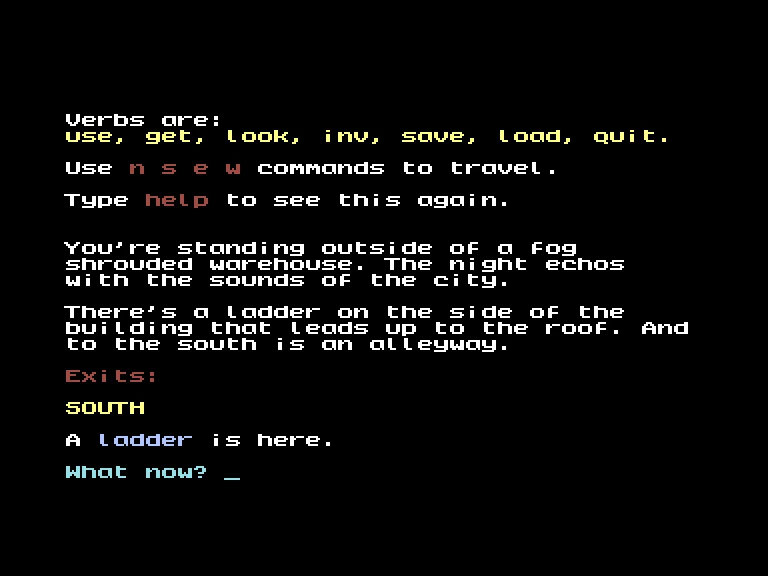
The appeal of text adventures lies in their ability to engage the player’s imagination as a primary graphical processor, fostering a deep immersion in the narrative. They challenge players with intricate puzzles, often requiring careful reading, environmental observation, and experimental command inputs. "Master Of The House 16: Dracula" taps directly into this rich heritage, offering a classic parser-based experience that harks back to the golden age of interactive fiction. For many players, particularly those who grew up with the C64, these games represent a nostalgic return to a simpler yet profoundly engaging form of digital storytelling. For newer enthusiasts, they offer a unique glimpse into the foundational mechanics of game design and narrative construction, unburdened by modern graphical complexities.
Gameplay Mechanics and Gothic Immersion
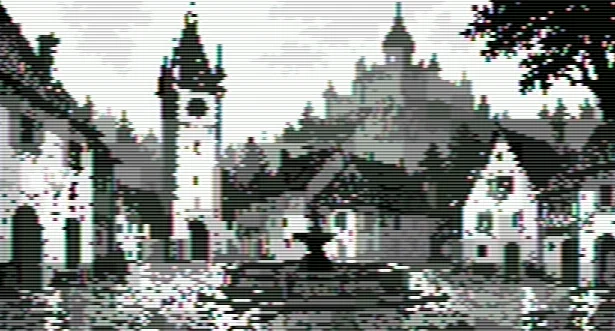
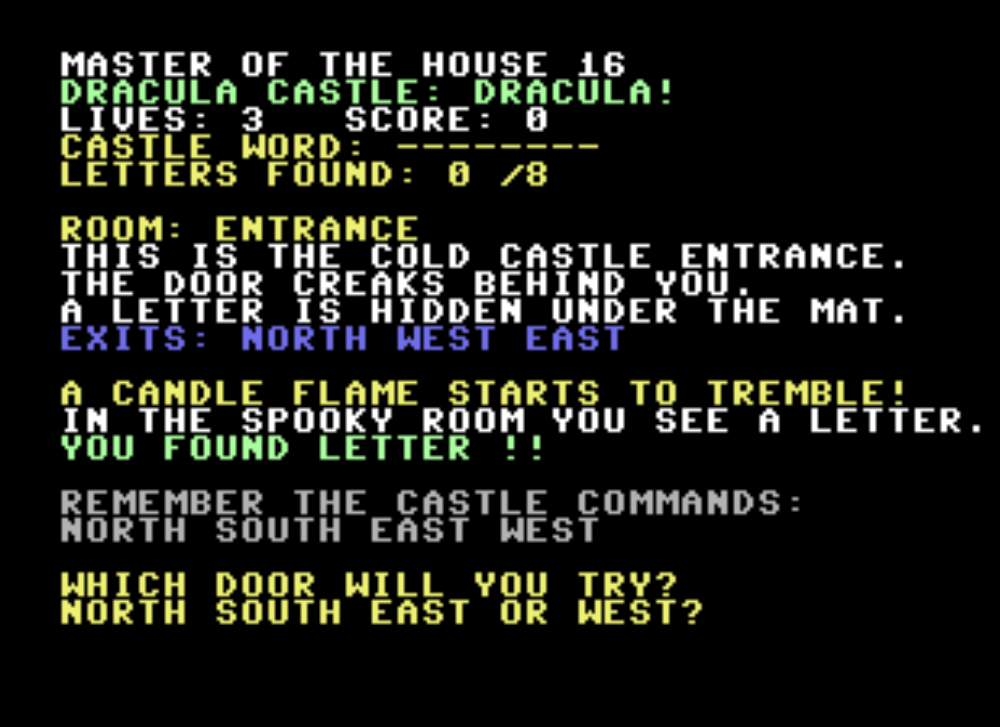
"Master Of The House 16: Dracula" is designed as a gothic text adventure, immersing players in a thematic world evocative of classic horror literature. The core gameplay revolves around exploring nine distinct rooms, each likely presenting its own set of challenges, descriptions, and hidden secrets within a confined, atmospheric setting. This limited number of rooms suggests a highly focused and intricate design, where every object, description, and interaction carries significance, characteristic of well-crafted text adventures that prioritize depth over sprawling scale.
The primary objective of the game is to "collect the letters DRACULA!" This task likely functions as a multi-part puzzle or a series of mini-objectives, requiring players to solve environmental riddles, find hidden items, or overcome specific obstacles to reveal each letter. Such a mechanic provides a clear sense of progression and motivates players to meticulously search and interact with their surroundings. The game’s titular antagonist, Dracula, is not merely a background element but an active threat that players must "dodge." This introduces a dynamic, real-time or turn-based risk element into the gameplay. The presence of Dracula implies mechanics such as timed events, pursuit sequences, or strategic avoidance, adding a layer of tension and urgency to the exploration and puzzle-solving. The limited resource of "only 3 lives" further amplifies this sense of risk and reward. Each encounter with Dracula, or perhaps other perils within the gothic environment, can lead to the loss of a life, forcing players to be cautious, plan their moves meticulously, and learn from their mistakes. This classic arcade-style constraint in a text adventure context creates a heightened sense of challenge and encourages replayability as players strive for a perfect run or to master the game’s intricate mechanics. The interplay between exploration, item collection, enemy avoidance, and limited lives defines the core loop of "Master Of The House 16: Dracula," promising a challenging and engaging experience for fans of the genre.
Developer Spotlight: ready64 and the Homebrew Renaissance
While specific details about the creative team behind ready64 are often modest within the independent homebrew scene, their consistent output, evidenced by "Master Of The House 16," speaks volumes about their dedication to the Commodore 64 platform. The numerical suffix "16" strongly suggests that "Dracula" is part of an ongoing series, indicating a sustained commitment to developing new content for the C64 and refining their craft within the text adventure genre. This sustained development is characteristic of the vibrant homebrew community, where passionate individuals or small teams dedicate countless hours to creating new games, demos, and utilities for vintage hardware.
Developing for the Commodore 64 in the 21st century presents a unique set of challenges and opportunities. Modern developers typically utilize cross-development environments, writing code on contemporary PCs using specialized compilers and assemblers that target the C64’s MOS 6510 CPU. Emulators like VICE are indispensable for rapid testing and debugging, while actual C64 hardware, often connected via modern interfaces like the Ultimate64, is used for final verification to ensure compatibility and authentic performance. Platforms such as itch.io have become crucial for these independent developers, providing a low-barrier-to-entry marketplace to distribute their creations, often for free or on a "pay-what-you-want" basis. This model allows niche titles like "Master Of The House 16: Dracula" to reach its intended audience directly, bypassing traditional publishing routes that would be economically unviable for retro platforms. The existence and success of developers like ready64 underscore the democratic and community-driven nature of the retro gaming movement, where passion and technical skill often outweigh commercial imperatives.
The Modern C64 Community and its Broader Impact
The release of "Master Of The House 16: Dracula" is not an isolated event but a continuation of a robust trend within the broader retro computing community. Websites like pdroms.de, where this release was announced, serve as vital hubs for news, reviews, and distribution of new and archival software for classic systems. Online forums, social media groups, and YouTube channels dedicated to the C64 buzz with discussions, technical support, and showcases of new projects. Events such as the annual RetroChallenge or demoparties like Revision continue to push the boundaries of what is possible on these vintage machines, fostering friendly competition and collaborative innovation.
New game releases like "Dracula" contribute significantly to the cultural preservation of the Commodore 64. They keep the system relevant not only for those who experienced its golden age but also for new generations discovering its charm through emulation or revitalized hardware. This blend of nostalgia and discovery ensures that the C64’s legacy is not merely remembered but actively experienced and expanded upon. The community also engages in physical media production, with some developers offering their games on new cartridges or 5.25-inch floppy disks, providing an authentic retro experience for collectors and purists. The ongoing creation of new content strengthens the entire ecosystem, attracting new users, encouraging hardware restoration, and inspiring future developers.
Inferred Statements and Community Reception
While specific official statements from ready64 regarding the creative process or philosophical underpinnings of "Master Of The House 16: Dracula" are not typically issued in the same manner as mainstream game studios, the developer’s continued dedication to the "Master Of The House" series can be interpreted as a clear mission statement: to consistently provide engaging, well-crafted text adventures that honor the C64’s capabilities and appeal to its loyal fanbase. This consistent output suggests a commitment to refining the genre’s mechanics within the C64’s constraints, pushing narrative and puzzle design boundaries for the platform.
Early reactions within the vibrant Commodore 64 community, as evidenced by discussions on dedicated forums and social media platforms, generally greet new releases with enthusiasm. The anticipation for fresh content that expands the C64’s software library is consistently high. Players appreciate titles that demonstrate technical proficiency, creative game design, and a genuine understanding of the system’s unique characteristics. For "Master Of The House 16: Dracula," the combination of a classic gothic theme, the proven risk-and-reward gameplay loop, and the developer’s track record within the "Master Of The House" series likely garners positive initial reception, prompting players to dive into its challenges and share their experiences. The immediate availability on platforms like itch.io further streamlines the process for enthusiasts to access and engage with the game, fostering rapid community feedback and discussion.
Implications and Future Outlook for Retro Development
The release of "Master Of The House 16: Dracula" carries several implications for the C64 homebrew scene and the broader retro gaming landscape. Firstly, it underscores the continued viability and creative fertility of developing for legacy platforms. Far from being a niche curiosity, new C64 titles represent a significant cultural movement that values craftsmanship, historical context, and community engagement. Secondly, it highlights the enduring appeal of foundational game genres like the text adventure. In an era dominated by hyper-realistic graphics and complex mechanics, the simplicity and intellectual challenge of interactive fiction continue to resonate with a dedicated audience, proving that engaging gameplay transcends visual fidelity.
Looking ahead, the trend of new retro game releases is likely to continue and potentially grow. As tools become more accessible and the community expands, more developers may be inspired to create content for classic systems. This could lead to further innovation within established genres, as well as experimental titles that push the boundaries of what was historically thought possible on these machines. The ongoing interest in retro gaming, fueled by nostalgia, historical curiosity, and a desire for unique experiences, suggests a sustained market for games like "Master Of The House 16: Dracula." Such releases not only enrich the C64’s already vast software library but also serve as important cultural artifacts, demonstrating the timeless appeal of well-designed interactive experiences, regardless of their technological origins. The Commodore 64, through the efforts of developers like ready64, remains a vibrant testament to the power of community and the enduring spirit of creation.