Retno Hari Mulyono
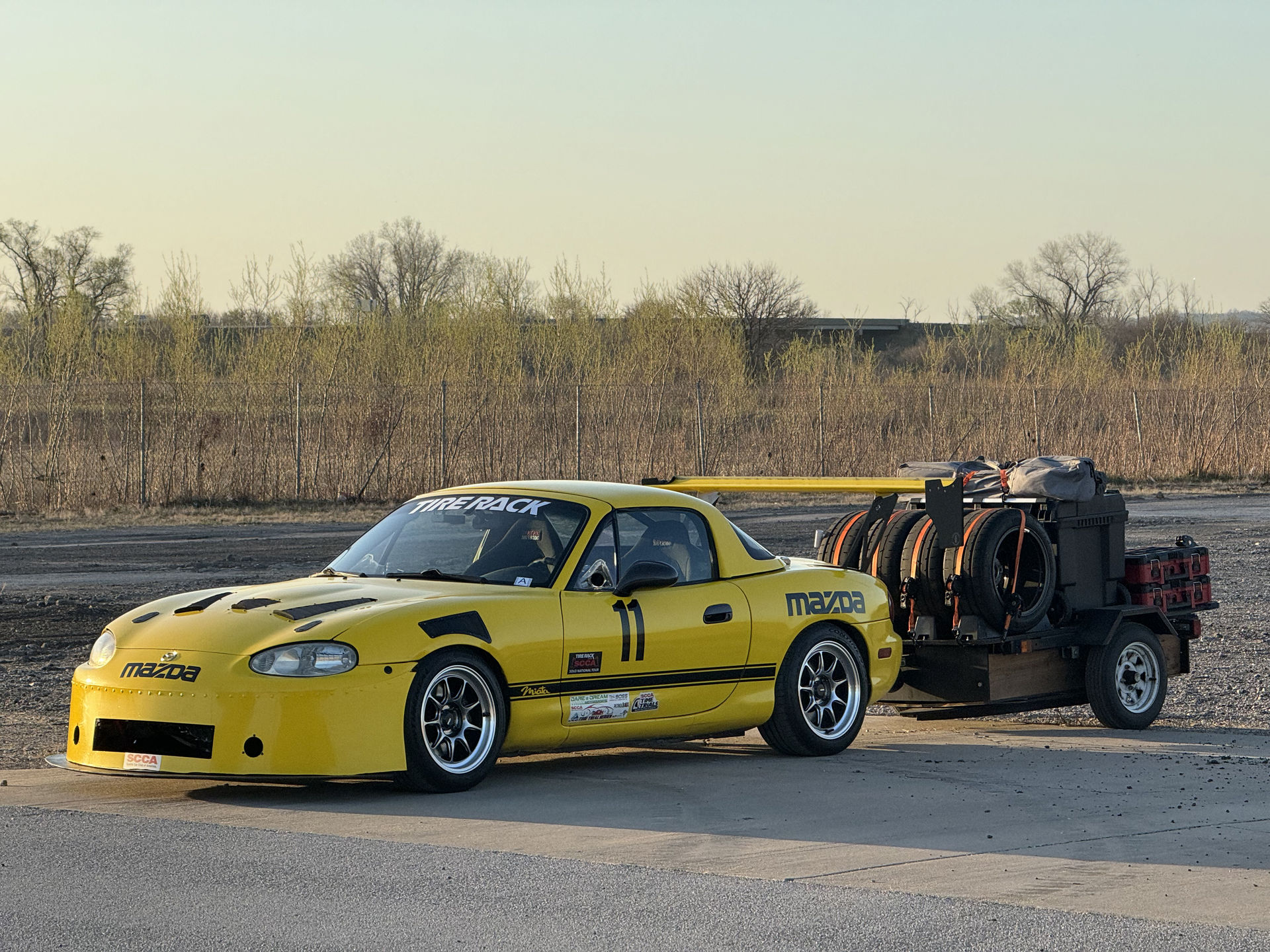
The burgeoning popularity of amateur track days and autocross events across North America has necessitated a shift in how enthusiasts manage vehicle consumables, particularly high-performance tires. For many participants, the transition from standard street tires to dedicated track rubber, such as 200 Treadwear (TW) or semi-slick compounds, represents a significant milestone in performance capability. However, the logistical challenge of transporting these specialized components to and from racing circuits remains a primary hurdle, particularly for owners of compact sports cars like the Mazda Miata. The emergence of the tire trailer as a specialized utility solution addresses the dual concerns of tire longevity and operational safety, providing a middle ground between driving on track-focused rubber and the significant investment required for a full truck-and-trailer transport rig.
The Technical Conflict of High-Performance Rubber
To understand the necessity of a tire trailer, one must first analyze the engineering characteristics of modern track-day tires. High-performance tires rated at 200TW, such as the Hankook Ventus RS4 or the Michelin Pilot Sport Cup 2, are designed with specialized rubber compounds that prioritize grip under high thermal loads. While these tires are technically street-legal and DOT-approved, their performance window is remarkably narrow.
Industry data suggests that the lifespan of a track tire is not merely a function of tread depth but is primarily governed by "heat cycles." Each time a tire is brought up to operating temperature and then cooled, the chemical composition of the rubber changes, eventually leading to "heat cycling out," a state where the rubber hardens and loses its adhesive properties regardless of the remaining tread. Using these tires for highway transit to a track event subjects them to unnecessary thermal cycles and abrasive wear, effectively wasting the tire’s competitive life on non-competitive miles.
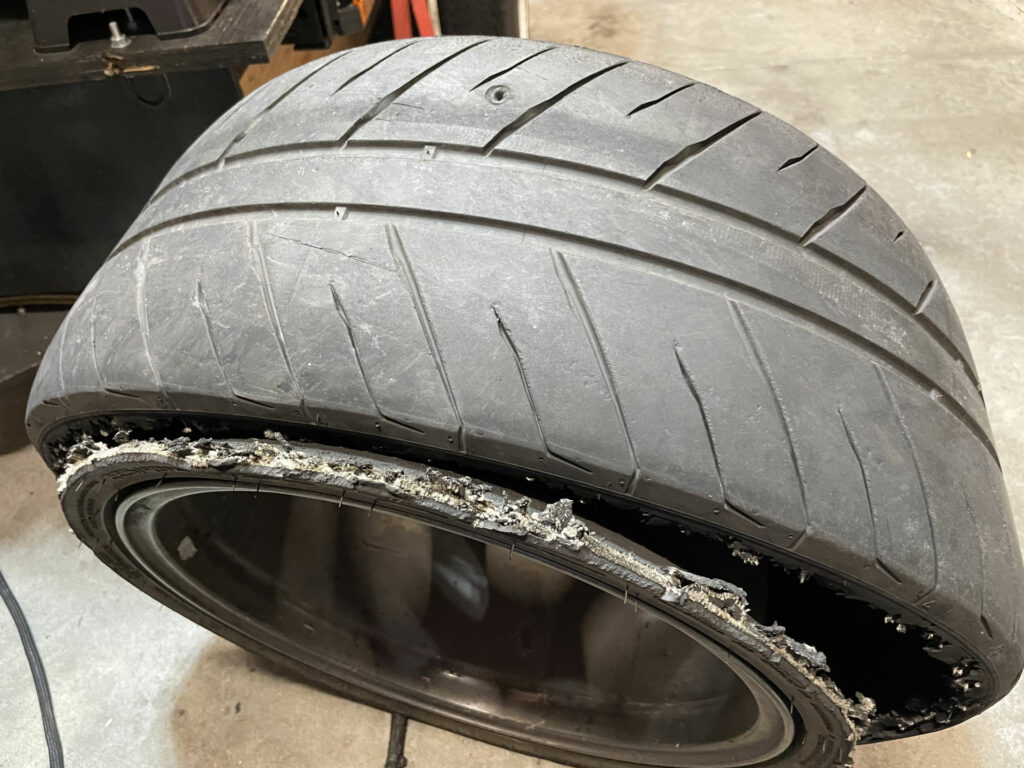
Furthermore, the safety implications of driving track-focused tires in suboptimal conditions are a major concern for safety officials. Most 200TW tires have a high glass transition temperature, meaning they become brittle and lose nearly all traction in cold weather. Additionally, their tread patterns are often optimized for dry lateral grip, featuring large shoulder blocks and minimal siping. In heavy rain, these tires are prone to hydroplaning at speeds far lower than standard passenger tires. Incidents reported by track enthusiasts often cite the "white-knuckle" experience of navigating sudden downpours on heat-cycled track rubber, where maintaining directional stability becomes a significant challenge even at reduced speeds.
Logistical Barriers for Compact Vehicles
While owners of larger performance vehicles, such as the Chevrolet Corvette or BMW M3, can often fit a spare set of wheels and tires within the cabin or trunk, the Mazda Miata and similar roadsters lack the internal volume for such cargo. This creates a strategic bottleneck: the driver must either compromise on performance by using a "jack-of-all-trades" street tire or risk a roadside emergency without a spare.

The tire trailer offers a modular solution to this spatial deficit. By utilizing a small-footprint utility frame, drivers can transport a full set of four wheels, fuel, tools, and paddock gear without modifying the interior of the vehicle or compromising the car’s center of gravity with roof-mounted racks.
Chronology of a Custom Tire Trailer Build
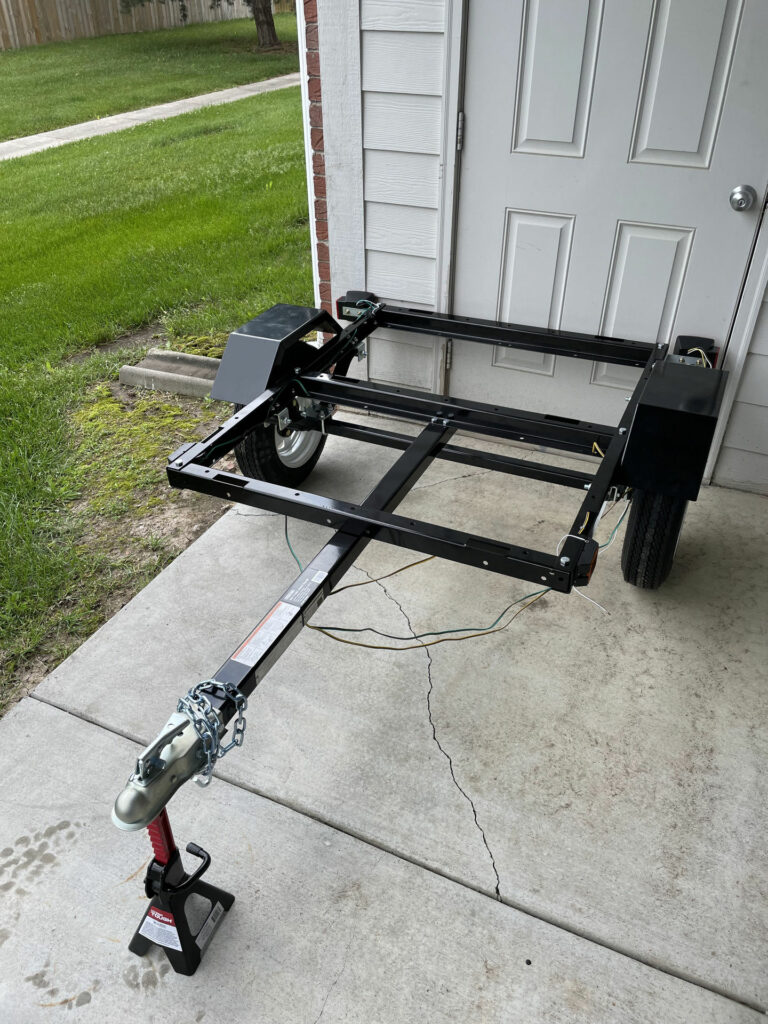
The construction of a dedicated tire trailer typically follows a phased approach, moving from a basic chassis to a highly specialized logistics platform. The process often begins with a standard utility frame, such as the 40-inch by 48-inch steel frames provided by retailers like Northern Tool or Harbor Freight. These kits provide a cost-effective, lightweight foundation that can be assembled in a domestic garage environment.
Phase I: Foundation and Primary Storage
The initial phase involves the assembly of the steel frame and the installation of a durable deck. Professional-grade builds often utilize 3/4-inch plywood, treated with weather-resistant paint, to create a stable platform. To maximize utility, builders often design the deck to overhang the frame slightly, increasing the available square footage for gear.
Centrally located storage is critical for maintaining a low center of gravity. Weather-tight toolboxes, such as the DeWalt DWST38000, are frequently bolted directly to the axle line. These units serve as a mobile "mission control," housing essential track-day supplies:
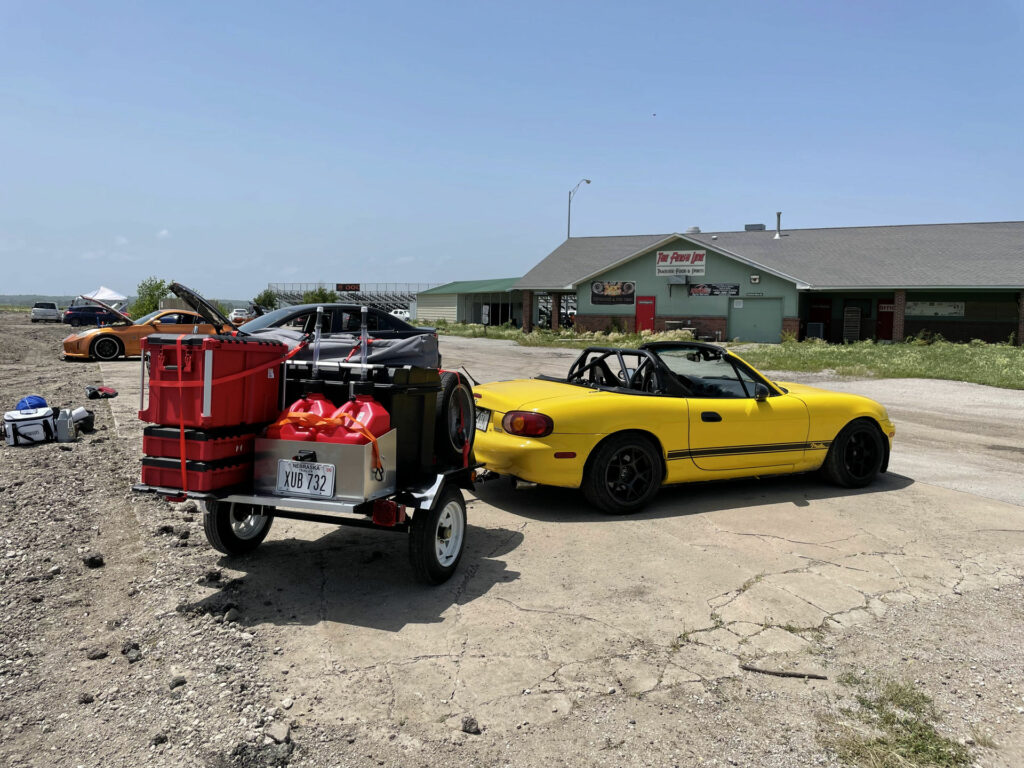
- Torque wrenches and socket sets for wheel swaps.
- Hydraulic floor jacks and jack stands.
- Tire pressure gauges and portable air compressors.
- Consumables such as engine oil, brake fluid, and spare sensors.
- Paddock comforts, including folding canopies and chairs.
Phase II: Specialized Cargo Management
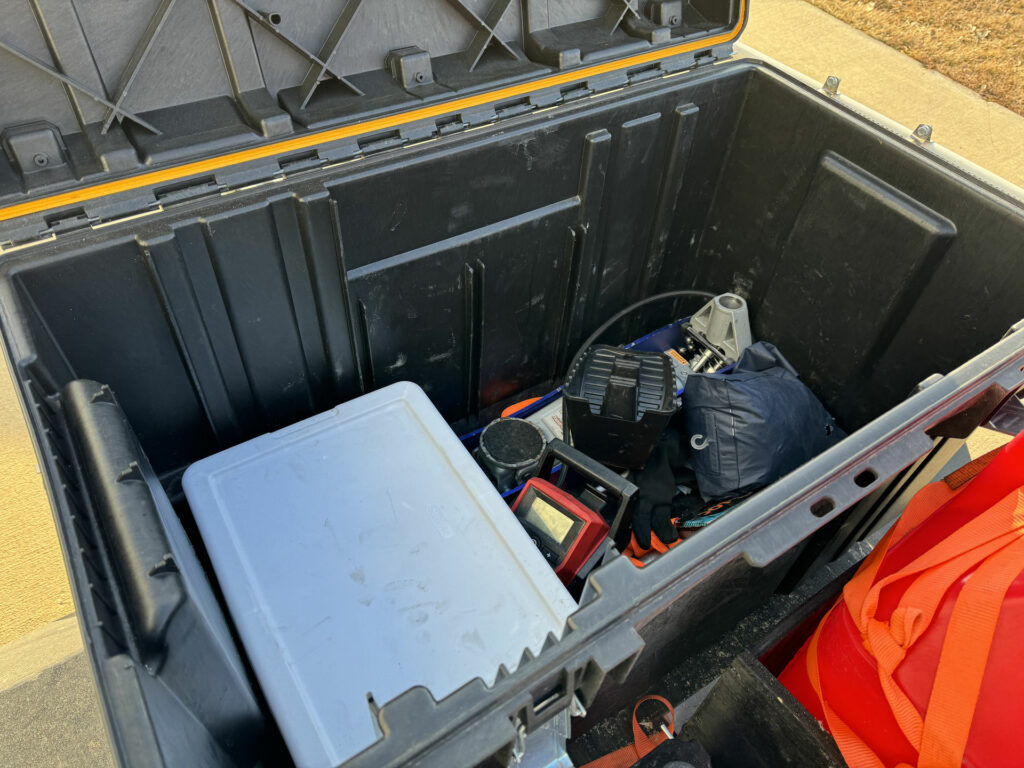
The second phase focuses on the secure mounting of wheels and fuel. Given the dynamic forces involved in towing behind a lightweight sports car, weight distribution is paramount. Mounting the wheels at the front of the trailer puts more weight on the tongue, which improves tracking stability and reduces the likelihood of trailer sway at highway speeds.
Security for the wheels is often triple-redundant, involving a central mounting rod (such as all-thread or electrical conduit), heavy-duty ratchet straps, and locking cables to prevent theft in hotel parking lots. Fuel storage is another critical component, as many enthusiasts prefer to bring their own high-octane or E85 fuel to avoid the inflated prices and potential scarcity of specialized fuels at rural race tracks. Systems like the VP Racing fuel jugs or the 15-gallon Flo-Fast containers are common, often requiring custom-fabricated mounts or L-bracket reinforcements to ensure they remain upright during cornering.
Phase III: Advanced Refinement and Structural Upgrades
Long-term use of DIY tire trailers often reveals the limitations of entry-level components. The "bias-ply" tires that come standard with budget trailer kits are frequently rated for low speeds and have limited heat dissipation. Experienced builders often upgrade to radial tires, such as the 145R12 specification. Radial tires offer a more stable contact patch, lower operating temperatures, and increased durability for long-distance transit.
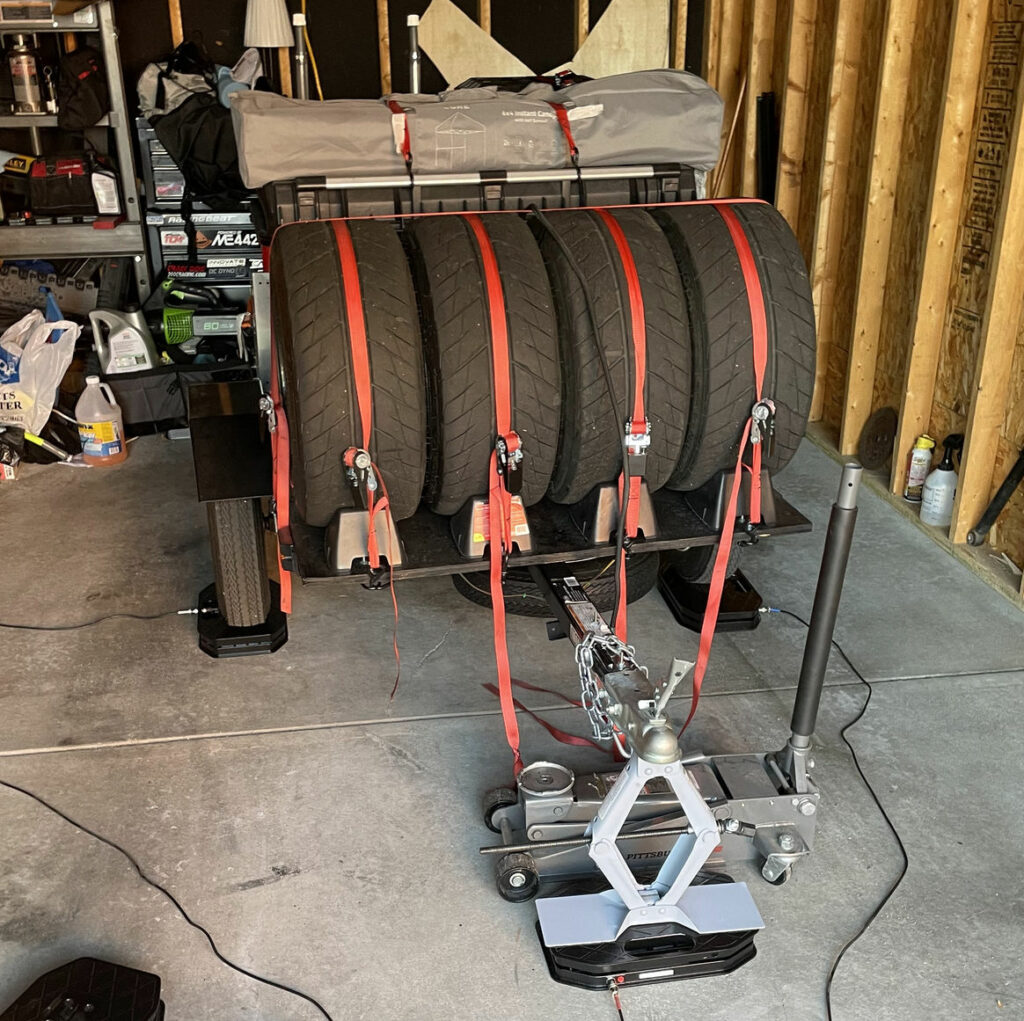
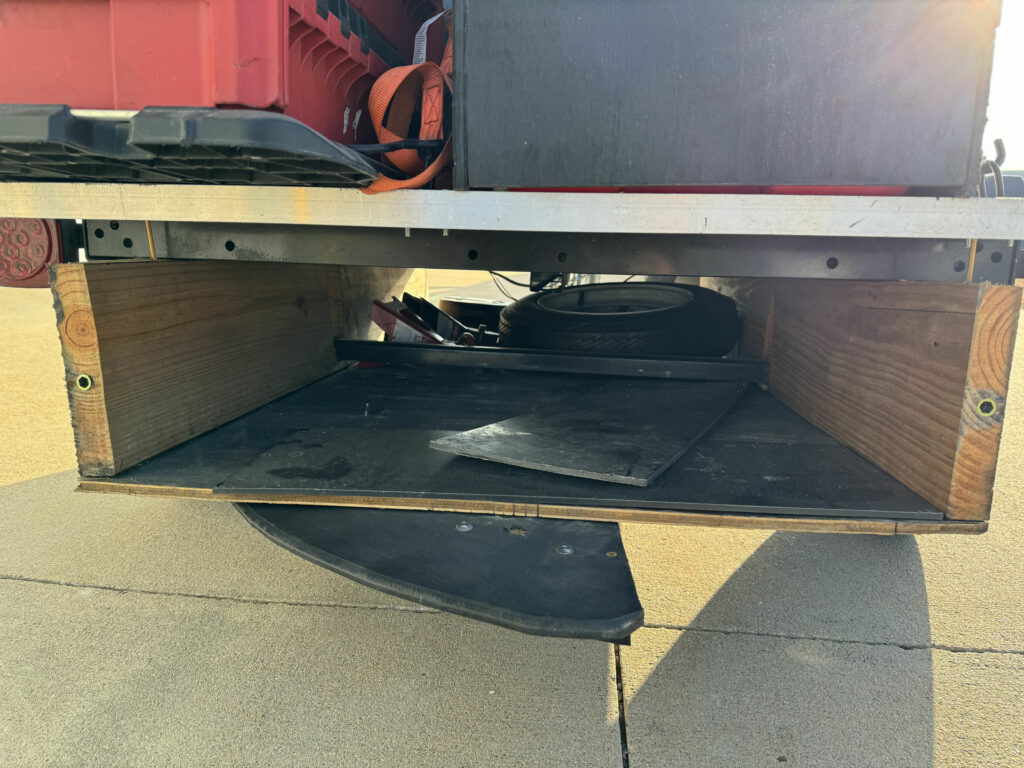
Furthermore, the addition of a "lower deck" or sub-floor allows for the storage of heavy, flat items like spare aerodynamic splitters, jack stands, and canopy weights. This maximizes the vertical space of the trailer while keeping the heaviest items as close to the ground as possible.
Economic and Safety Analysis
From a financial perspective, the tire trailer represents a significant saving compared to the alternative of a dedicated towing vehicle. A used pickup truck and a full-sized car hauler can cost upwards of $30,000, excluding increased insurance, maintenance, and fuel costs. In contrast, a fully outfitted tire trailer can be constructed for between $800 and $1,500.
Safety data from grassroots motorsports organizations suggests that drivers who utilize a second set of tires are less likely to experience "on-track" failures. Driving on tires that have been stressed by hundreds of highway miles increases the risk of punctures and structural fatigue. By swapping to fresh rubber at the circuit, the driver ensures the integrity of the tire’s sidewall and carcass.
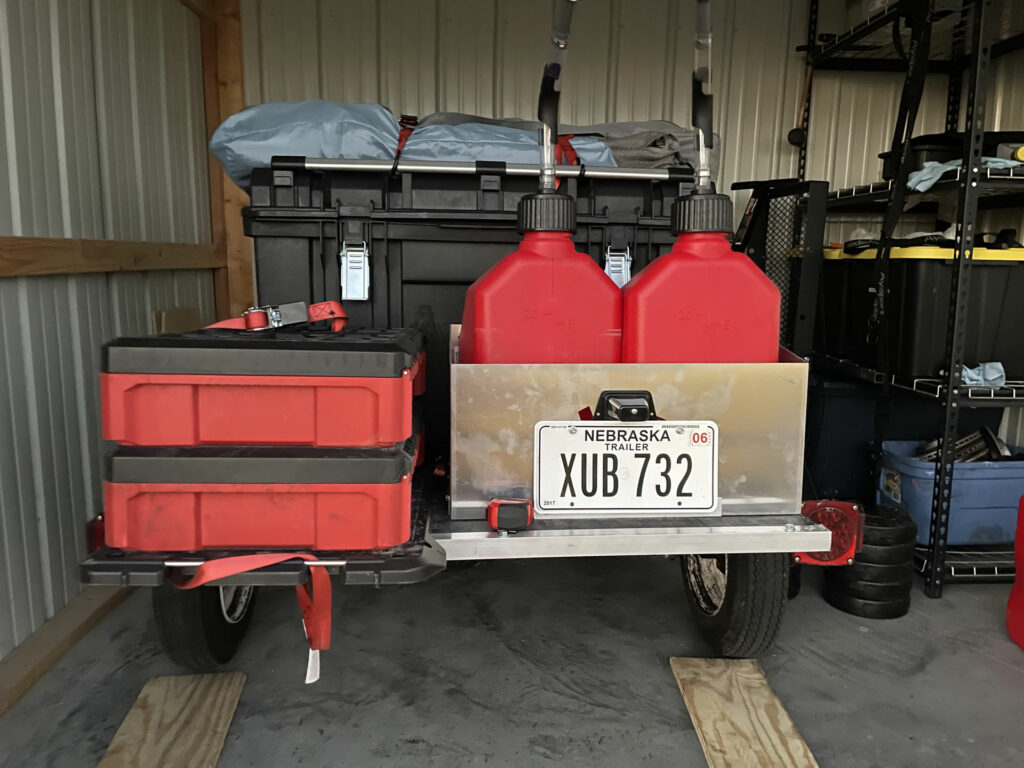
However, towing with a small vehicle like a Miata requires strict adherence to weight limits. Most Miata hitches are rated for a 200-pound tongue weight and a 2,000-pound total trailer weight. A typical tire trailer, fully loaded with four wheels (approx. 160 lbs), 10 gallons of fuel (approx. 65 lbs), and 100 lbs of tools, remains well within these safety margins, typically grossing under 600 pounds.
Industry Reactions and Market Trends
The rise of the DIY tire trailer has prompted a response from the aftermarket industry. Companies like Leroy Engineering have moved into the space, offering premium, pre-built tire trailers that feature independent suspension systems and high-speed bearings. These professional units cater to enthusiasts who seek the benefits of a tire trailer without the time investment of a custom build.

Track organizers have also adapted, with many SCCA (Sports Car Club of America) and NASA (National Auto Sport Association) events now providing designated "trailer parking" areas for participants who arrive with tire trailers. This acknowledgment highlights the tire trailer’s status as a staple of the modern grassroots racing paddock.
Broader Implications for the Enthusiast Community
The tire trailer is more than a mere utility tool; it is an enabler of the "Arrive and Drive" philosophy. It allows the amateur racer to maintain the purity of their sports car—avoiding the need to transform it into a compromised "street/track" hybrid—while still possessing the tools and tires necessary for competitive performance.
As environmental regulations and fuel costs continue to influence the automotive landscape, the efficiency of towing a 500-pound utility trailer versus a 5,000-pound car hauler becomes increasingly relevant. The tire trailer represents a sustainable, high-utility solution that preserves the accessibility of motorsports for the average enthusiast. Whether it is a custom-built frame with a plywood deck or a high-end engineered solution, the tire trailer remains a vital component in the logistics of modern amateur racing, ensuring that the journey to the track is as safe and efficient as the laps driven upon it.