Retno Hari Mulyono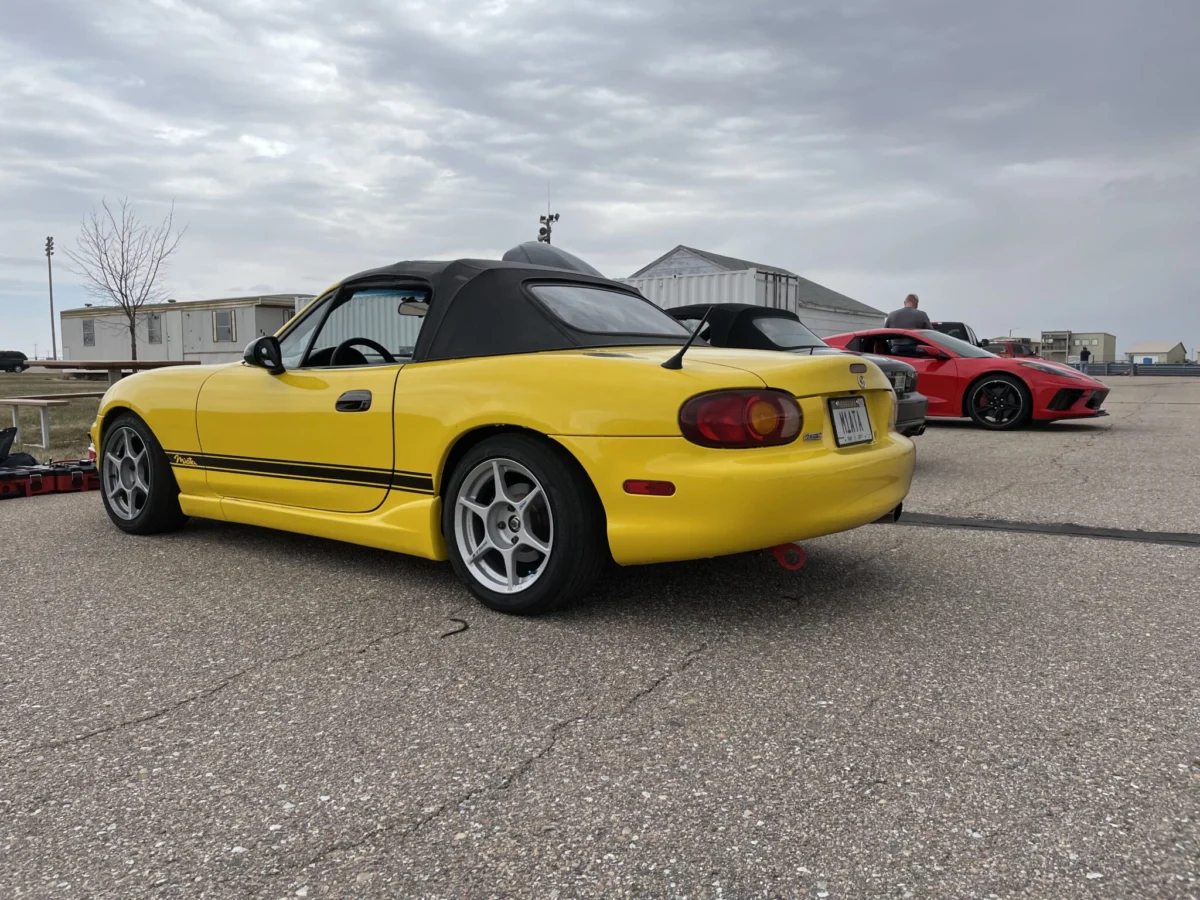
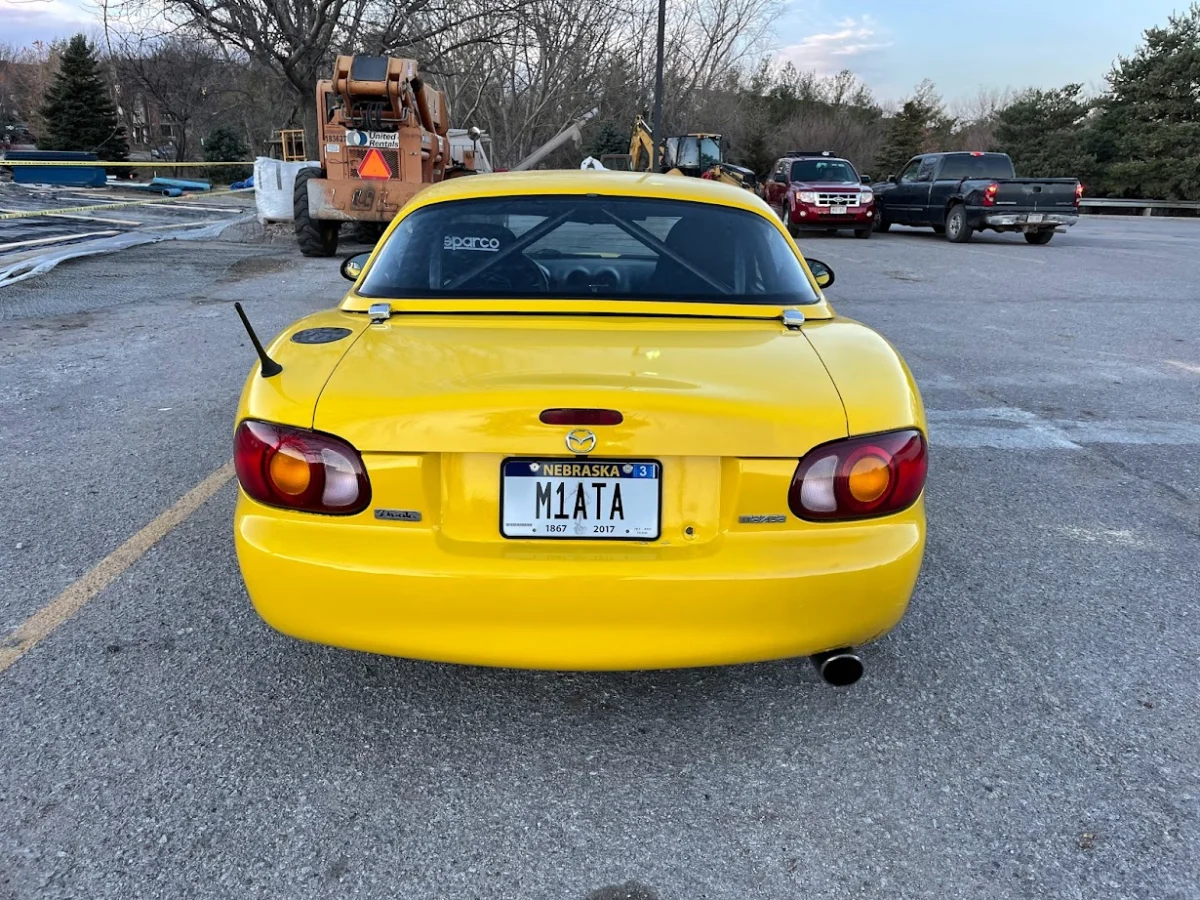
The second year of development for the Mazda MX-5 NB platform has concluded, marking a significant transition from a standard street-legal roadster to a specialized performance machine capable of competitive lap times across multiple disciplines. This period, spanning from March 2022 to February 2023, was defined by a dual-track approach: the systematic mechanical hardening of the vehicle and the measurable progression of driver skill. Through a rigorous schedule of track days, autocross events, and technical modifications, the project has demonstrated the enduring viability of the second-generation Miata as a primary choice for grassroots motorsports enthusiasts.
Strategic Optimization of Track Performance and Driver Development
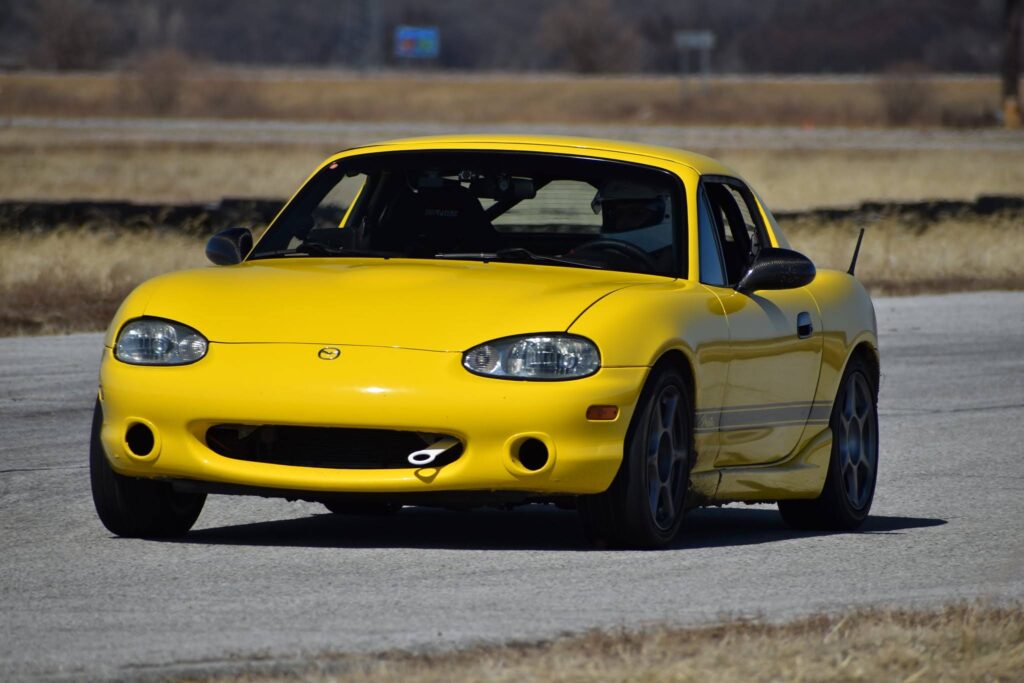
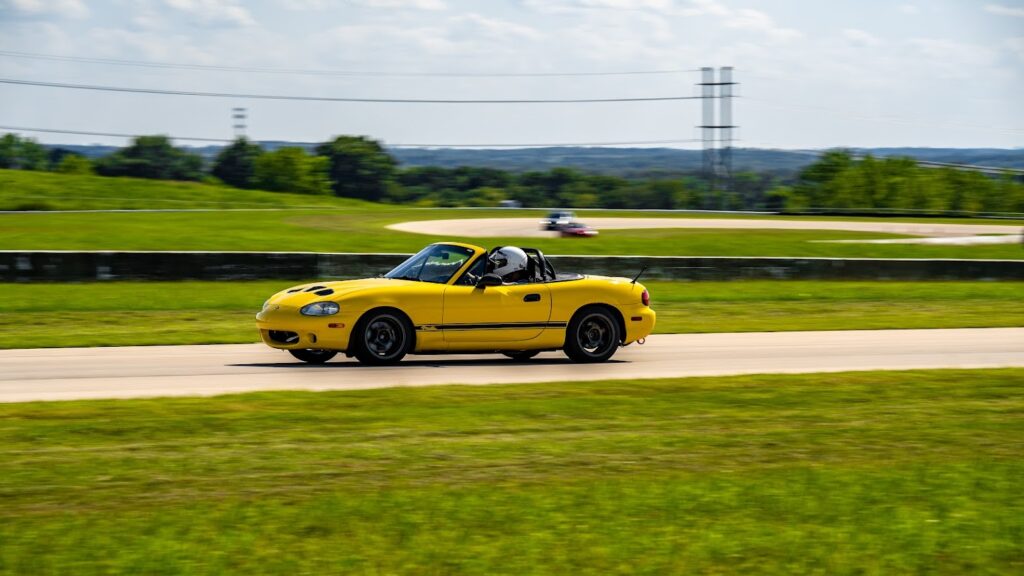
The driving season commenced in March 2022 at Raceway Park of the Midlands (RPM), a facility located in the American Midwest known for its challenging, undulating surface. This initial outing served as a baseline for the year’s progress. Over the course of eight distinct track days at RPM, the vehicle’s performance data revealed a remarkable 11.29-second improvement in lap times over a seven-month period. While mechanical upgrades contributed to this delta, technical analysis suggests that the majority of the gains were derived from driver refinement—specifically in identifying corner limits and optimizing racing lines.
In April 2022, the testing moved to Motorsports Park Hastings (MPH). Unlike the rougher, patched surface of RPM, MPH offered a freshly repaved asphalt circuit, providing a high-grip environment that allowed for a comparative analysis of chassis behavior. The contrast between these two facilities highlighted the necessity of a versatile suspension setup capable of managing both high-speed stability on smooth surfaces and compliance on degraded pavement.
Technical Enhancements and Utility Solutions
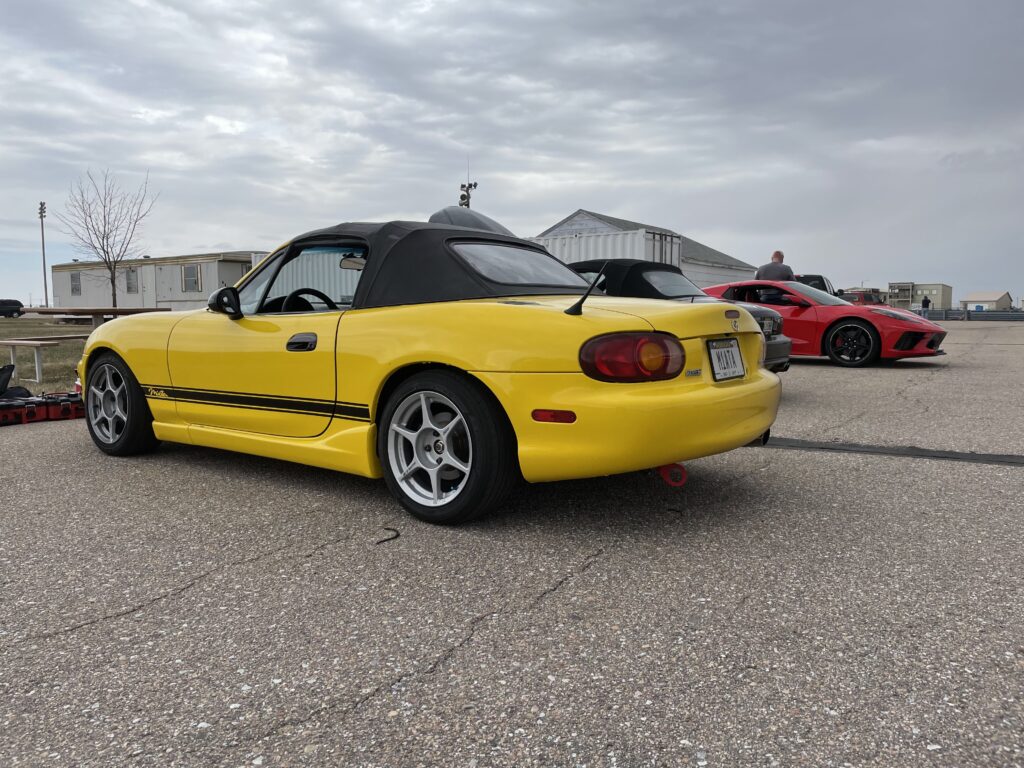
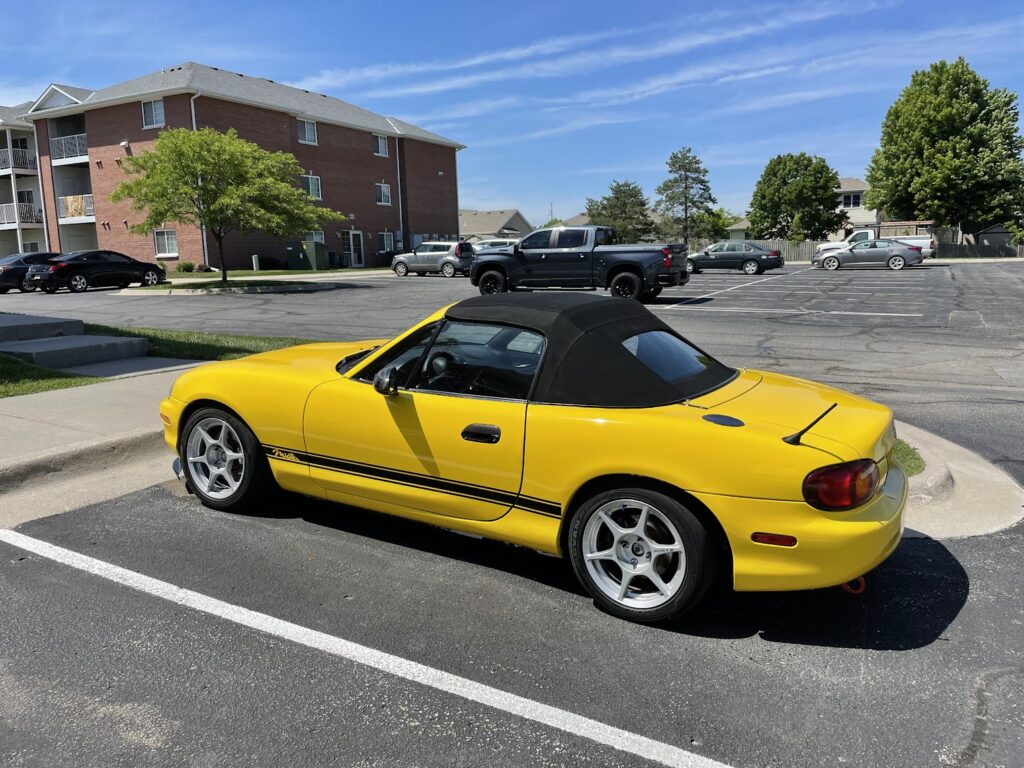
As the project progressed into the second quarter of the year, the focus shifted toward logistical efficiency and structural maintenance. In May 2022, the vehicle underwent a significant cosmetic and functional upgrade with the installation of a Robbins canvas soft top featuring a zippered glass window. The replacement of the original, deteriorating vinyl top with a modern canvas alternative provided not only improved weather sealing but also enhanced ease of operation in varying temperatures. The installation process involved a junkyard-sourced frame, allowing for a seamless swap that minimized vehicle downtime.
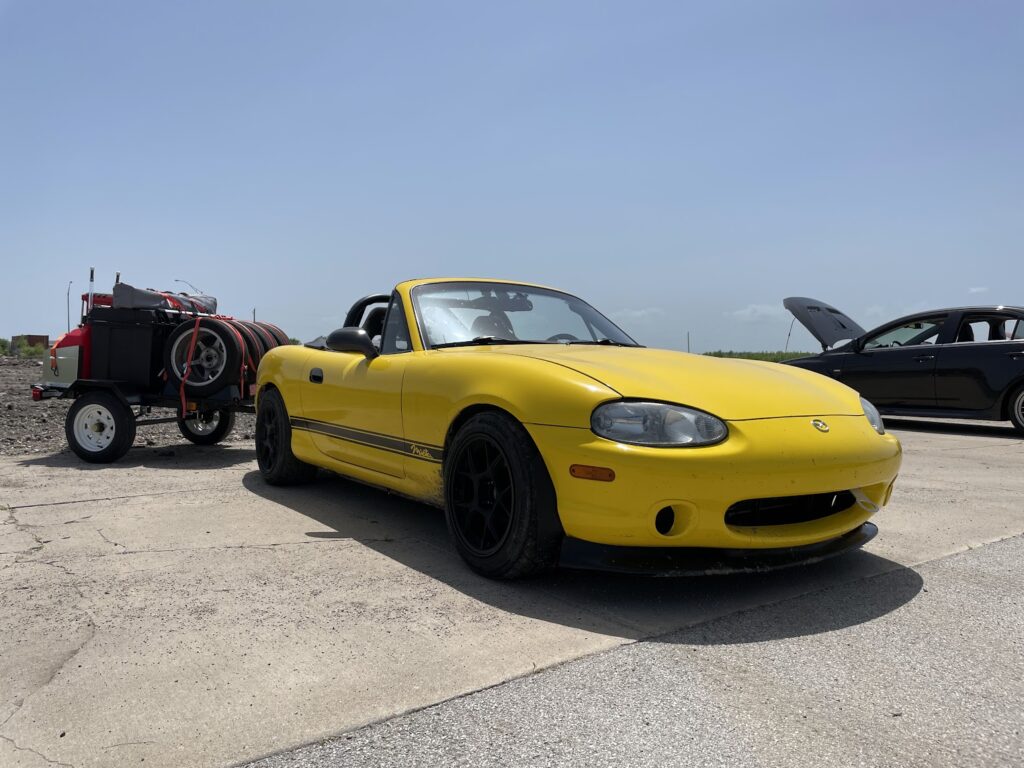
Recognizing the spatial limitations inherent in the MX-5 chassis, June 2022 saw the introduction of a custom-fabricated tire trailer. Based on a 40×48 Northern Tool chassis with an extended plywood deck, the trailer was engineered to carry four spare tires, a comprehensive tool suite, fuel jugs, and paddock support equipment. Weighing approximately 700 lbs when fully loaded, the trailer proved that the NB Miata possesses sufficient torque and braking capacity for light-duty towing, facilitating over 1,000 miles of transit to distant circuits without mechanical failure.
Power Extraction and Engine Management Analysis
The mid-year phase focused on quantifiable power gains. In July 2022, the vehicle returned to the dynamometer to measure the impact of several key modifications. In the previous year, the car produced 115 wheel-horsepower (whp) and 106 lb-ft of torque with basic intake and exhaust upgrades. By July 2023, following the installation of a "squaretop" intake manifold and a Megasquirt ECU tuned for E85 ethanol fuel, the output rose to 136 whp and 119 lb-ft of torque.
This 18% increase in power is significant for a naturally aspirated 1.8-liter BP-series engine. The use of E85 allowed for more aggressive ignition timing, while the squaretop manifold—originally a factory component on non-US market Miatas—optimized airflow at higher RPM ranges. Industry analysts note that such gains represent the upper tier of "bolt-on" performance for the NB1 engine variant before internal modifications or forced induction become necessary.
Multi-Disciplinary Competition: Autocross and Rallycross
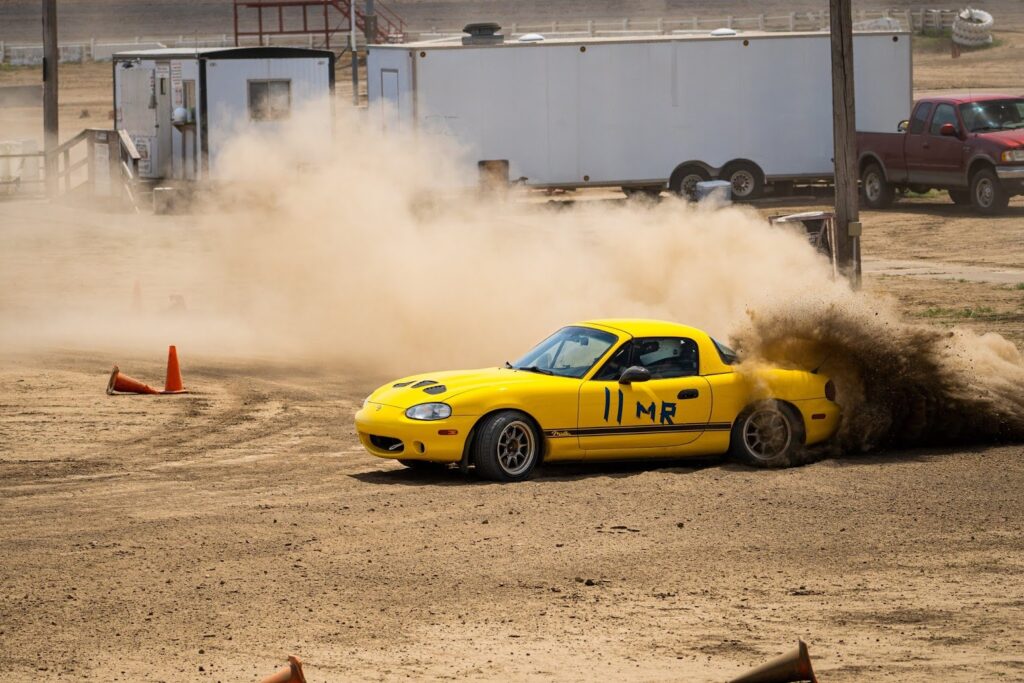
The third quarter of 2022 expanded the vehicle’s operational envelope into low-traction and precision environments. In August, the project visited Heartland Motorsports Park in Topeka, a facility favored by the NASA Central Region and SCCA for its elevation changes and technical complexity. This served as a precursor to a diversified September schedule that included the vehicle’s debut in SCCA Rallycross at I80 Speedway in Nebraska.
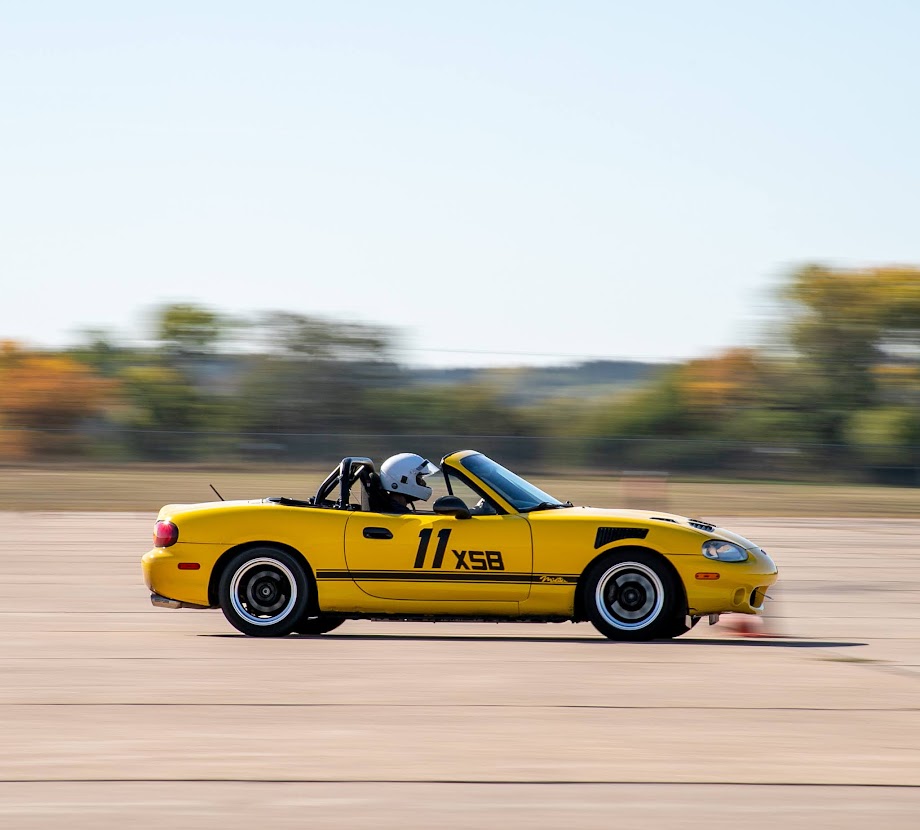
Rallycross participation provided critical data on vehicle control in low-grip scenarios. Despite the loss of a front lip spoiler due to the uneven terrain, the experience underscored the Miata’s balanced weight distribution, which remains manageable even when sliding on dirt surfaces. Concurrently, the vehicle participated in every local SCCA Autocross event held by the Nebraska Region. Starting the year in the bottom 8% of the field, the driver-vehicle pairing improved to the 50th percentile by October, demonstrating the efficacy of consistent seat time in a controlled, competitive environment.
Incident Analysis and Structural Resilience
On October 29, 2022, during the final track session of the season at RPM, the vehicle was involved in a high-speed excursion. While navigating Turn 10, a loss of rear-end traction led to a corrective slide that resulted in understeer through Turn 11. The vehicle exited the racing surface and impacted a tire wall at approximately 60 mph.
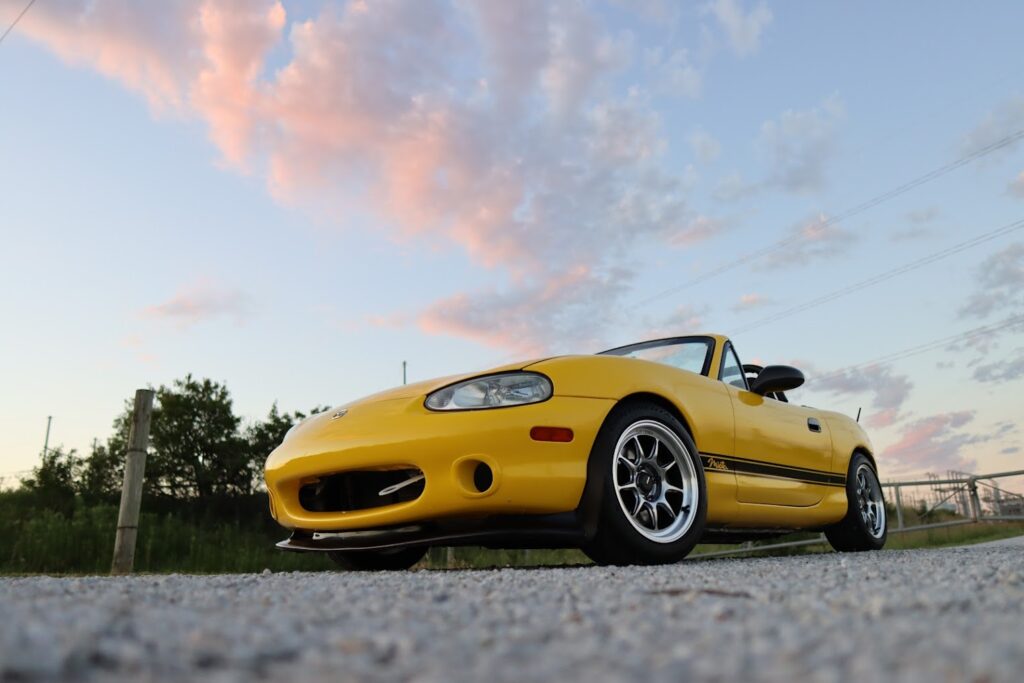
The incident served as a real-world test of the track’s safety infrastructure and the vehicle’s structural integrity. The tire wall successfully dissipated the kinetic energy of the impact, preventing serious injury to the occupants and catastrophic damage to the chassis. The damage was limited to the hood, front bumper, left fender, and headlight. Notably, the vehicle remained mechanically sound and was driven home following the incident. Repairs were completed throughout November, utilizing replacement body panels and a fresh yellow vinyl wrap, which proved to be a cost-effective alternative to professional paint for a vehicle frequently exposed to track hazards.
Winter Evolution: Suspension and Powertrain Hardening
With the vehicle in winter storage by late November, the focus returned to mechanical refinement. December 2022 was dedicated to a comprehensive suspension overhaul. The previous rubber bushings were replaced with A1 Ground Control Nylatron bushings, and Paco Motorsports adjustable rear upper control arms were installed. Nylatron, a self-lubricating solid plastic, offers lower friction and less binding than traditional polyurethane, though it increases Noise, Vibration, and Harshness (NVH) levels—a trade-off deemed acceptable for a track-focused build.
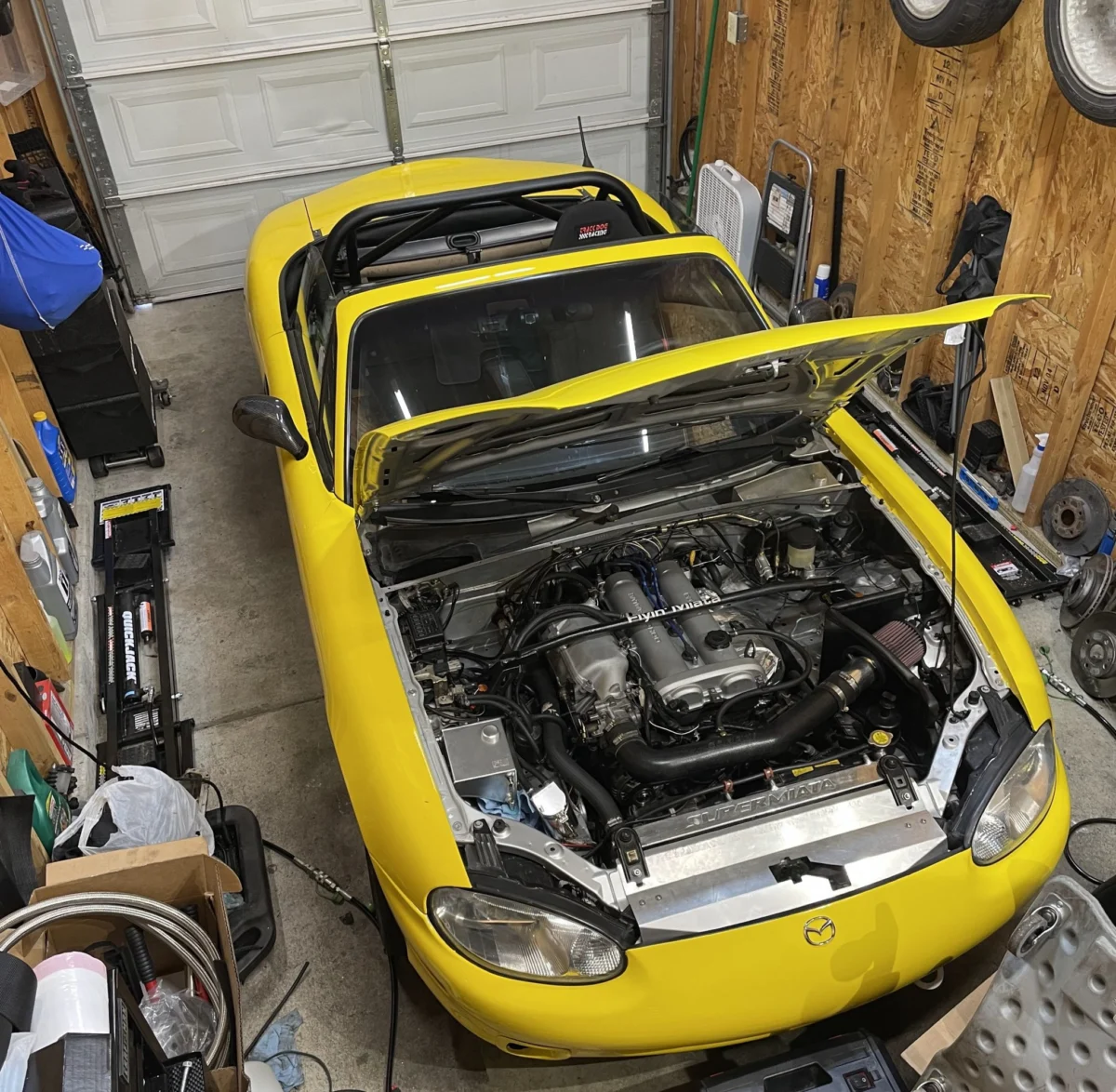
In January 2023, the engine was removed for the second time in the project’s history to address a leaking rear main seal. This maintenance window allowed for several "while-you-are-in-there" upgrades, including:
- Installation of a Supermiata sport clutch and lightweight flywheel.
- Upgrading to a 1.8-liter BP6D VVT (Variable Valve Timing) motor and a 6-speed manual transmission.
- Replacement of the oil pan gasket and front main seal.
- Installation of a Supermiata harmonic balancer to reduce engine vibrations at high RPM.
These changes transitioned the powertrain from the older BP4W head design to the more advanced VVT system, providing a broader torque curve and improved high-end reliability.
Aerodynamic Theory and Implementation
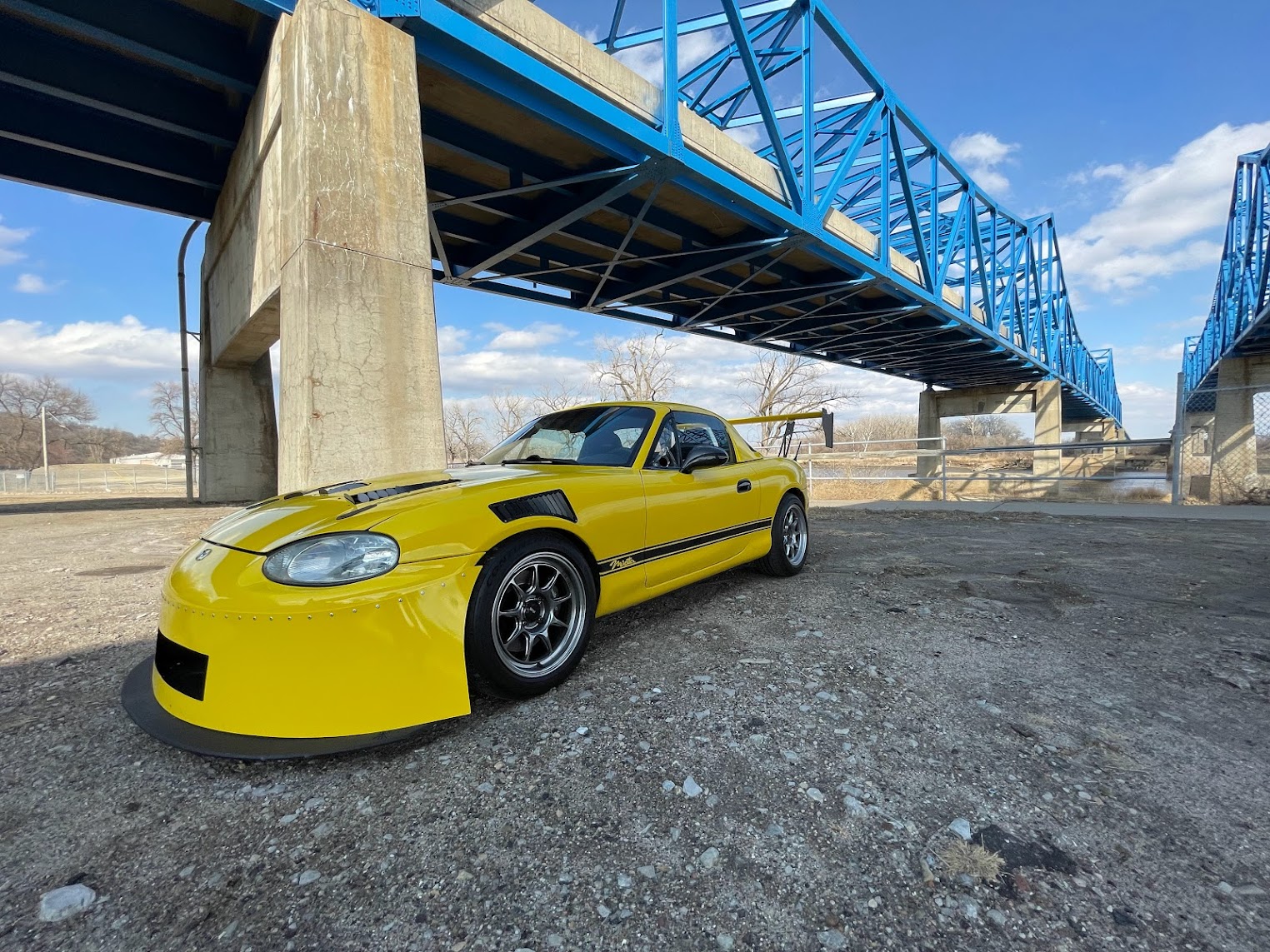
The final stage of the second-year cycle involved the installation of a Nine Lives Racing "Medium Downforce" aero kit in February 2023. The kit includes a chassis-mounted aluminum rear wing and a front splitter. Initial testing on public roads indicated a significant reduction in high-speed lift, a known aerodynamic deficiency of the MX-5’s "jellybean" silhouette.
Aerodynamicists suggest that at track speeds (80–120 mph), the addition of functional downforce can drastically increase cornering speeds and driver confidence. The Nine Lives Racing wing, which is sturdy enough to support significant weight, transforms the vehicle’s stability profile, making it feel more "planted" as speeds increase. This modification aligns the car with the SCCA XS-B autocross class regulations, which allow for such aerodynamic packages.
Conclusion and Industry Implications
The two-year anniversary of this NB Miata project illustrates the broader trends in the amateur racing community: a move toward data-driven performance, the adoption of advanced engine management systems, and the increasing accessibility of aerodynamic technology. By documenting every month of ownership, the project provides a blueprint for how a 20-year-old platform can be modernized to compete with contemporary performance vehicles.
As the project enters its third year, the combination of a VVT engine, advanced suspension bushings, and a functional aero package positions the vehicle as a formidable contender in regional NASA and SCCA events. The evolution from a compromised street car to a purpose-built track tool reflects the enduring legacy of the Mazda MX-5 as the cornerstone of grassroots motorsports in North America. Future developments are expected to focus on fine-tuning the new powertrain and extracting the maximum potential from the aerodynamic upgrades during the 2023 driving season.