Cecilia Chamidah Nur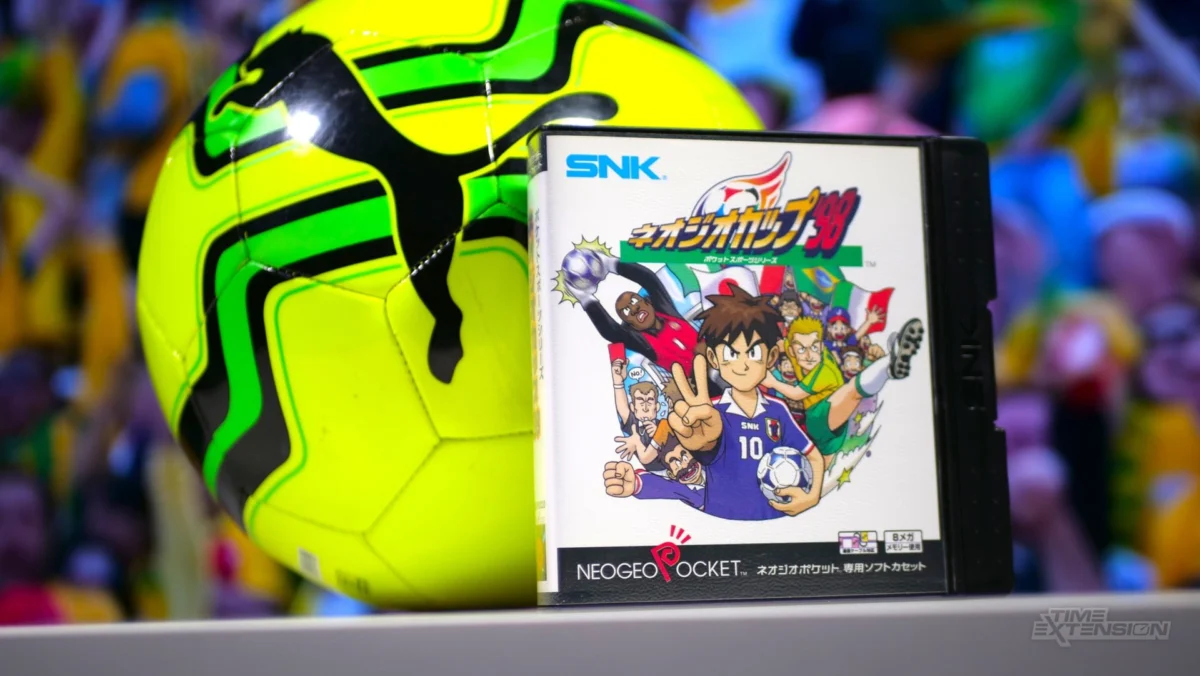
As global attention once again converges on the spectacle of a thrilling FIFA World Cup, this week’s retrospective turns its focus to a relevant yet often-overlooked gem from gaming’s past: Neo Geo Cup ’98, a distinctive football title originally crafted for SNK’s monochrome Neo Geo Pocket handheld. This pint-sized adaptation, released in 1999, stands as a fascinating counterpoint to its arcade and home console brethren, offering a unique take on the beautiful game that capitalized on the fervor surrounding the 1998 World Cup in France. Far from a mere port, the handheld version of Neo Geo Cup ’98 carved out its own identity, showcasing surprising depth and design choices that differentiate it significantly from its more graphically robust counterparts, cementing its place as a curious and compelling entry in the pantheon of retro sports titles.
The Genesis of a Handheld Adaptation: Capitalizing on World Cup Fever
The original impetus for Neo Geo Cup ’98 stems directly from the immense global excitement generated by the 1998 FIFA World Cup, hosted by France. This particular tournament was a landmark event, culminating in France’s historic victory over Brazil in a memorable final. The World Cup, held from June 10 to July 12, 1998, saw 32 nations compete across 10 cities, capturing the imagination of billions worldwide. Such a high-profile international sporting event invariably creates a fertile ground for tie-in media, including video games, eager to tap into the prevailing cultural zeitgeist. SNK, a company renowned for its arcade dominance with the Neo Geo MVS (Multi Video System) and its home console equivalent, the Neo Geo AES (Advanced Entertainment System), was no stranger to sports titles. In response to the World Cup’s popularity, the company released Neo Geo Cup ’98: The Road to the Victory for its arcade and AES platforms. This game, typical of SNK’s arcade sports offerings, featured vibrant graphics, fast-paced action, and a control scheme designed for short, intense play sessions.
However, the handheld Neo Geo Cup ’98 was not a direct translation of this arcade experience. Instead, it represented a strategic decision by SNK to leverage the same brand recognition for a completely different platform with distinct technical capabilities and target audience. The handheld version, despite sharing the "Neo Geo Cup ’98" moniker and the overarching theme of international football, was developed as a separate entity, tailored specifically for the limitations and opportunities presented by the Neo Geo Pocket. This approach allowed developers greater freedom to rethink gameplay mechanics rather than being constrained by the need to replicate a high-fidelity arcade experience on less powerful hardware.
SNK’s Foray into Portables: The Neo Geo Pocket Era
The Neo Geo Pocket was SNK’s ambitious, albeit short-lived, venture into the handheld gaming market. Launched in Japan in late 1998, the monochrome device was designed to offer a premium portable gaming experience, distinguished by its high-quality clicky micro-switched joystick and often elaborate packaging. At a time when Nintendo’s Game Boy reigned supreme, SNK sought to carve out a niche by focusing on a more mature audience and offering arcade-quality experiences in a portable format, albeit within the constraints of a black-and-white display. The initial Neo Geo Pocket, however, faced stiff competition and a relatively small install base. SNK quickly followed up with the Neo Geo Pocket Color in March 1999 (Japan) and August 1999 (North America and Europe), which introduced a color screen and backward compatibility with monochrome titles. This rapid iteration reflected SNK’s determination to succeed in the handheld space, even as the company navigated broader financial challenges in its arcade and home console divisions.
Neo Geo Cup ’98 was among the early wave of titles for the monochrome Neo Geo Pocket, demonstrating SNK’s commitment to supporting the device with a diverse range of genres, including sports. The decision to develop a football game was a logical one, given the universal appeal of the sport and the recent World Cup hype. However, the technical specifications of the Neo Geo Pocket necessitated a fundamental re-imagining of the game’s presentation and mechanics. The device featured a 16-bit processor, a 40x40mm monochrome LCD screen, and a resolution of 160×152 pixels. These specifications, while respectable for a late-90s handheld, were a far cry from the powerful Neo Geo MVS arcade hardware, which could display hundreds of colors and handle complex sprites and backgrounds. This technological disparity mandated a creative approach to design, leading to the distinct characteristics that define the handheld Neo Geo Cup ’98.
Gameplay and Design Divergence: A Unique Field of Play
The most striking divergence between the handheld Neo Geo Cup ’98 and its arcade/AES counterpart lies in its fundamental visual presentation and gameplay perspective. While Neo Geo Cup ’98: The Road to the Victory (arcade/AES) adopted the traditional horizontal-scrolling perspective common to most football video games, the Neo Geo Pocket version opted for a vertical-scrolling pitch. This singular design choice profoundly impacts the player’s view of the field, offering a different strategic dynamic. In a vertical-scrolling setup, players typically see less of the width of the field at any given time but gain a clearer, more direct view of the immediate play ahead. This can lend itself to faster, more direct attacking play and a focus on forward movement rather than expansive wing play.
Accompanying this unique perspective was a distinct artistic style. The handheld version featured players rendered in a more cartoon-like, super-deformed aesthetic. This stylistic choice was likely a pragmatic one, allowing for larger, more expressive character sprites that remained discernible on the monochrome, lower-resolution screen of the Neo Geo Pocket. The exaggerated features and simpler animations contributed to a charming, accessible visual identity that contrasted with the more realistic (for the time) proportions of the arcade characters. This cartoonish charm also aligned with a common trend in handheld gaming, where simplified aesthetics often compensated for technical limitations while enhancing visual clarity.
Despite its weaker presentation compared to the arcade behemoth, the Neo Geo Pocket Neo Geo Cup ’98 surprisingly showcased a considerable amount of depth. This depth was not merely a matter of surface-level features but extended to its core gameplay mechanics. Players could execute various passes, shots, and defensive maneuvers, requiring strategic thinking beyond simple button mashing. The controls, benefiting from the Neo Geo Pocket’s acclaimed micro-switched joystick and responsive buttons, felt precise and intuitive, allowing for nuanced control over player movement and actions. This focus on solid mechanics and engaging gameplay was crucial for a handheld title, as portable games often rely on immediate playability and sustained engagement to compensate for shorter play sessions. Indeed, many critics and players retrospectively argue that this portable iteration is arguably more entertaining than its arcade/AES counterpart. This sentiment highlights a crucial point: graphical fidelity does not always equate to superior gameplay, and creative design within constraints can often lead to more engaging and memorable experiences. The handheld’s vertical perspective and simplified visuals might have, paradoxically, streamlined the gameplay, making it more focused and addictive for quick bursts of play.

Evolution and Preservation: From Monochrome to Color and Beyond
The story of Neo Geo Cup ’98 does not end with its monochrome release. As SNK transitioned to the Neo Geo Pocket Color, many of its early black-and-white titles received updated color versions. Neo Geo Cup ’98 was among them, reissued as Neo Geo Cup ’98 Plus. This colorized version retained all the core gameplay and charm of the original but enhanced the visual experience with a palette of vibrant hues. The addition of color significantly improved the clarity of the sprites, the distinction between teams, and the overall aesthetic appeal, breathing new life into the game without altering its fundamental design. For enthusiasts looking to experience this unique football title today, Neo Geo Cup ’98 Plus is widely considered the definitive version due to its enhanced visuals.
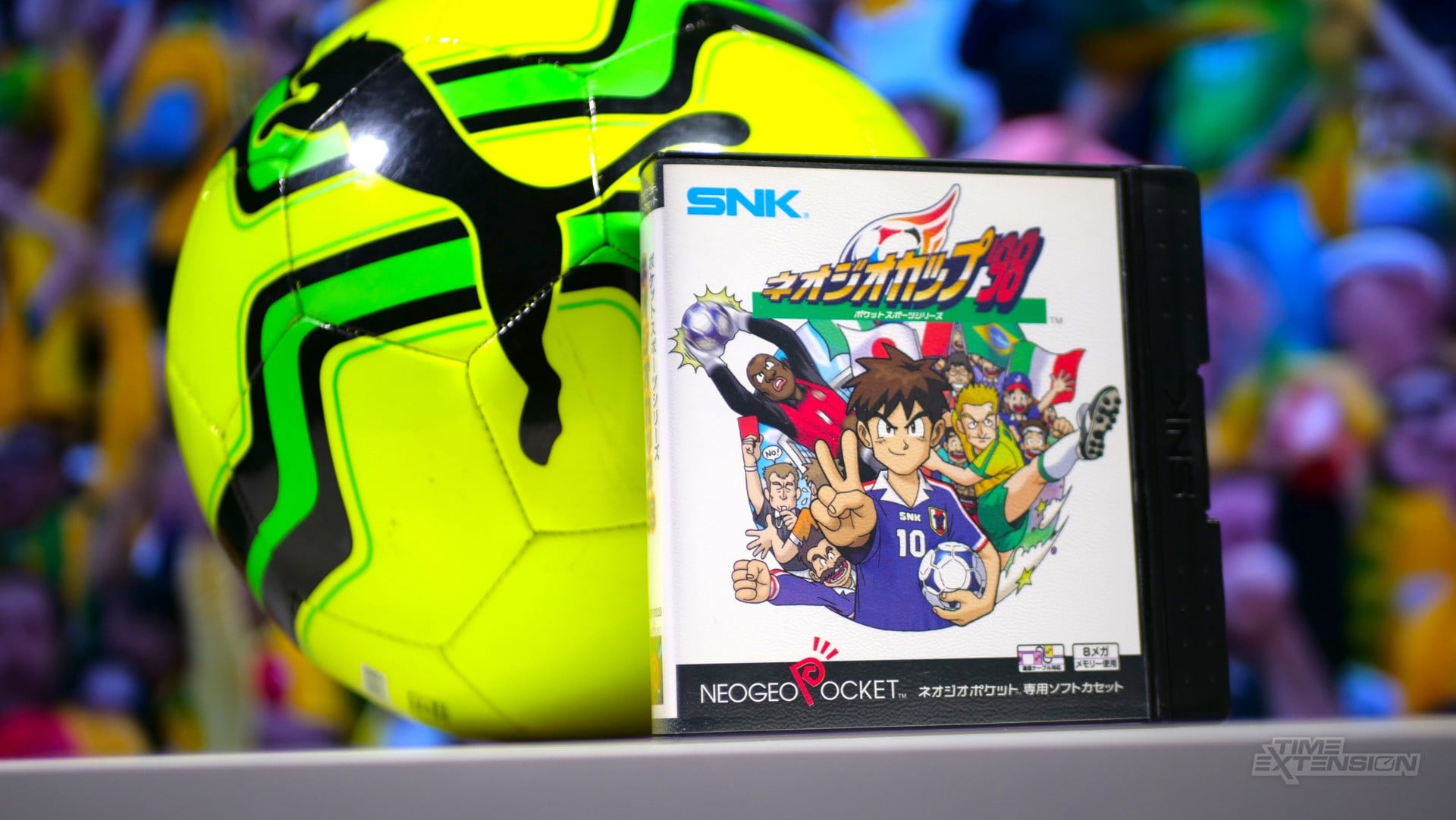
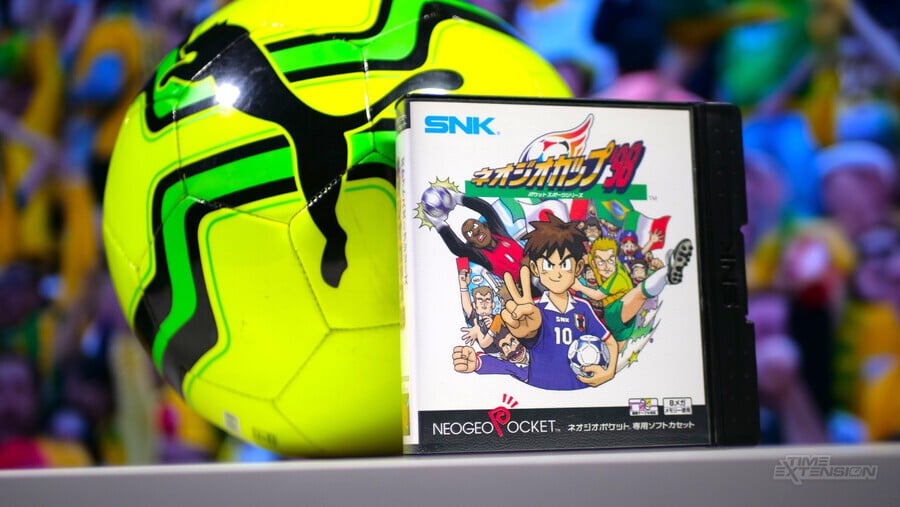
In the modern era of digital distribution and retro gaming preservation, Neo Geo Cup ’98 Plus has found a new audience. It is notably included in the Neo Geo Pocket Colour Selection Vol. 2, a compilation released for contemporary platforms like the Nintendo Switch and PC. This collection serves as a vital historical archive, bringing classic Neo Geo Pocket Color titles to a new generation of players while allowing veteran fans to revisit their favorites on modern hardware. The inclusion of Neo Geo Cup ’98 Plus in such a collection underscores its enduring appeal and its significance within SNK’s handheld catalog. While the digital release offers convenience and modern features like save states and screen filters, the original monochrome version’s cover artwork holds a special nostalgic charm for many, embodying the era of its initial release. The tactile satisfaction of the Neo Geo Pocket’s hardware, coupled with the stark black-and-white visuals, offers a distinct retro experience that digital emulations, while excellent, cannot fully replicate.
The Broader Impact and Legacy: A Handheld Niche

The trajectory of Neo Geo Cup ’98 reflects several broader trends in the video game industry of the late 1990s and early 2000s. Firstly, it exemplifies the common practice of game developers creating distinct versions of titles for different platforms, especially between powerful home consoles/arcades and less powerful handhelds. This was not merely a cost-cutting measure but a design philosophy recognizing the unique play patterns and technical constraints of portable gaming. Handheld games often thrived on simpler controls, quicker sessions, and unique visual styles that translated well to smaller screens.
Secondly, the game’s existence highlights SNK’s experimental phase in the handheld market. While the Neo Geo Pocket and Pocket Color ultimately could not dethrone Nintendo’s dominance, they represent a valiant effort by SNK to diversify its portfolio beyond its arcade roots. These handhelds fostered a loyal cult following, and their unique library of games, including Neo Geo Cup ’98, contributed to a distinct identity that sets them apart from their contemporaries. The Neo Geo Pocket’s hardware, particularly its innovative clicky joystick, remains a point of admiration for many retro gaming enthusiasts, influencing future portable designs.
Finally, Neo Geo Cup ’98 stands as a testament to the enduring appeal of retro sports games. While modern football titles boast hyper-realistic graphics and complex simulations, games like Neo Geo Cup ’98 offer a stripped-down, more immediately playable experience that prioritizes fun and accessibility. Its surprising depth within a seemingly simple framework is a hallmark of good game design, proving that innovative mechanics can overcome graphical limitations. The game’s revival in modern collections also speaks to the growing interest in video game preservation and the desire to re-experience or discover classic titles that shaped the industry.
In conclusion, Neo Geo Cup ’98 for the Neo Geo Pocket is more than just a World Cup tie-in; it is a fascinating case study in adaptive game design, a charming example of SNK’s foray into handhelds, and a testament to the fact that innovation and enjoyment are not solely dependent on cutting-edge technology. Its distinct vertical perspective, cartoonish aesthetics, and surprising gameplay depth combine to create a truly unique football experience that continues to resonate with retro gaming aficionados, proving that even a pint-sized masterpiece can deliver a mighty kick.