Cecilia Chamidah Nur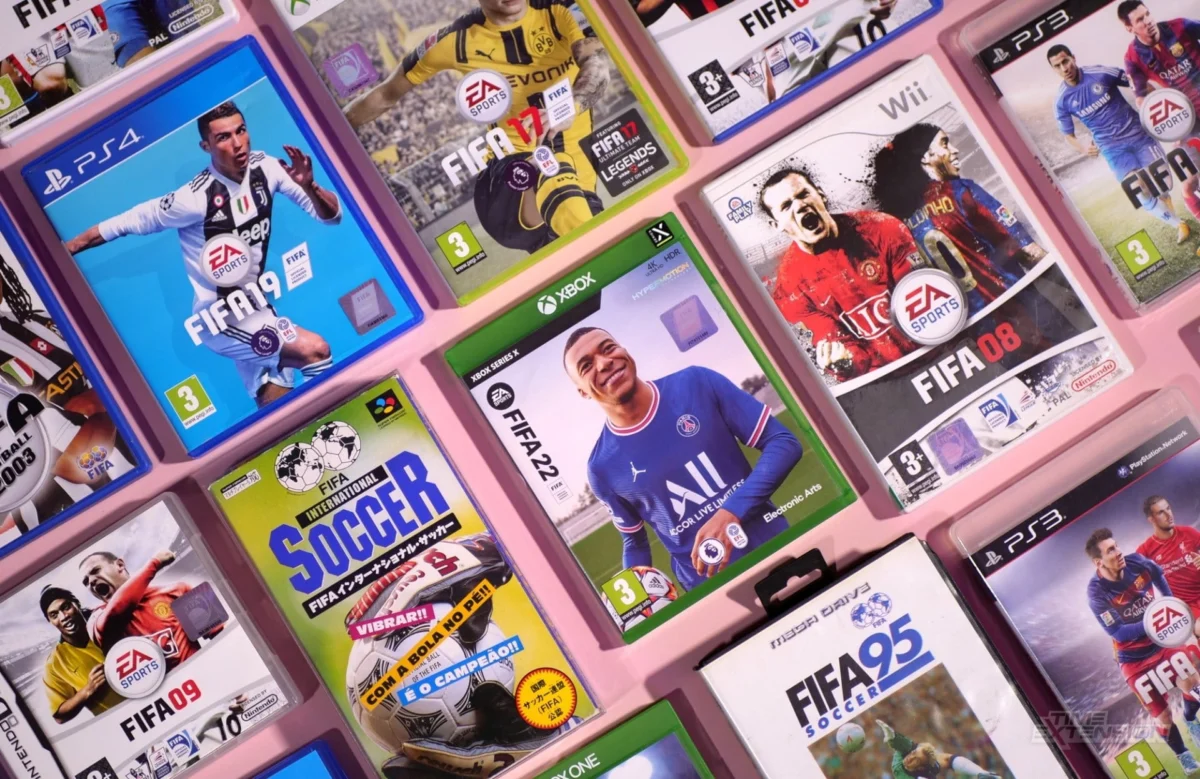
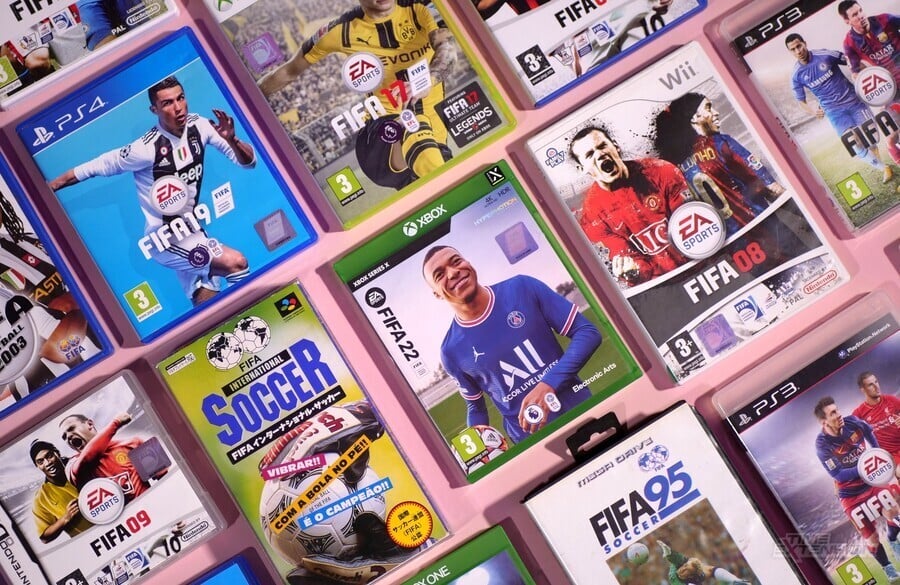
With the excitement surrounding the FIFA World Cup 2026 having commenced earlier this week on June 11th, a renewed focus has been cast upon the indelible legacy of football in popular culture, particularly its intersection with the video game industry. This auspicious timing provides a pertinent opportunity to revisit the storied history of the FIFA video game series, a franchise that, for nearly three decades, served as the definitive interactive representation of the world’s most popular sport. From its inception in 1993 until its rebranding in 2022, the FIFA series captivated hundreds of millions of players globally, with its annual releases consistently featuring the sport’s most prominent athletes on its iconic cover art. This comprehensive retrospective aims to meticulously document every cover star who graced a FIFA box, tracing the evolution of football’s digital face through its remarkable 29-year run.
The era of FIFA as a named entity in the gaming world officially concluded in 2022, marking a significant inflection point in the landscape of sports simulation. The decision by Electronic Arts (EA) and the Fédération Internationale de Football Association (FIFA) to discontinue their longstanding business partnership, which had been the bedrock of the franchise’s identity, sent ripples across both the gaming and football communities. Following extensive negotiations and reported disagreements over licensing fees and creative control, EA opted to sever ties with the global footballing body. Consequently, the highly successful video game series was reborn under the new moniker, EA Sports FC, with EA Sports FC 24 serving as the inaugural title in this new chapter.
The transition from FIFA to EA Sports FC represents more than just a name change; it signifies the end of a dominant cultural phenomenon. Prior to the split, the FIFA franchise had achieved staggering commercial success, selling an estimated 325 million copies worldwide by 2021. This made it not only one of the most triumphant franchises in the realm of interactive entertainment but also, by a significant margin, the most popular sports series in video game history. The absence of the familiar FIFA logo on the game boxes for the first time in nearly three decades underscored the magnitude of this shift, prompting both nostalgia for the past and anticipation for the future.
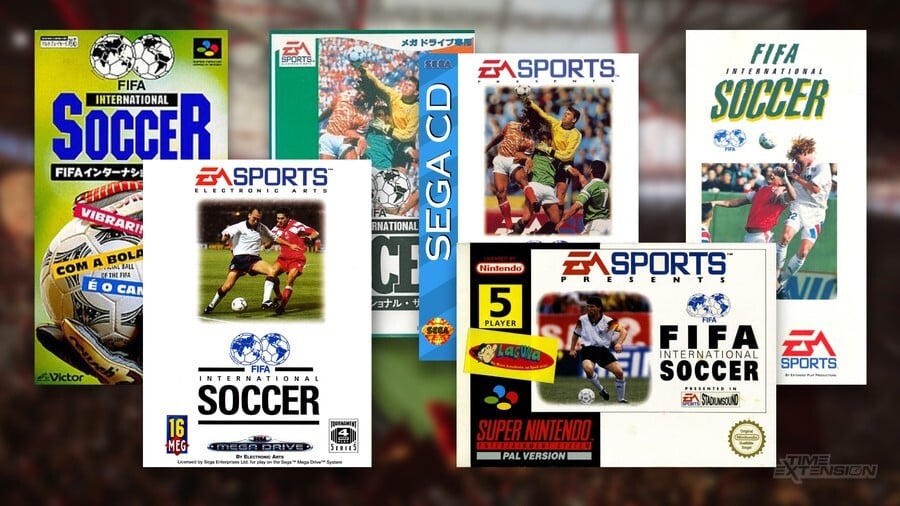
The partnership between EA and FIFA began in 1993 with the release of FIFA International Soccer. At a time when football video games were still finding their footing, EA’s ambitious project aimed to deliver an authentic simulation experience, complete with official team names, player likenesses, and realistic gameplay. The collaboration provided EA with invaluable brand recognition and access to official FIFA tournaments, while FIFA benefited from the immense global reach and marketing power of a leading video game publisher. This symbiotic relationship propelled the franchise to unprecedented heights, establishing it as the gold standard for football simulations.
A Chronological Journey: The Evolution of FIFA Cover Stars
The selection of cover stars for each FIFA iteration was a critical marketing strategy, reflecting both the global appeal of the sport and regional market dynamics. Far from featuring a static global icon each year, EA often employed a nuanced approach, utilizing multiple cover stars tailored to specific regions or countries. This strategy allowed the company to connect with diverse fan bases by showcasing local heroes alongside international superstars, an approach that evolved significantly over the decades.
The 1990s: Pioneering the Digital Pitch
The inaugural decade of the FIFA series laid the groundwork for its future dominance. Early covers often featured generic action shots or lesser-known players, gradually transitioning to more recognizable figures as the franchise gained traction.
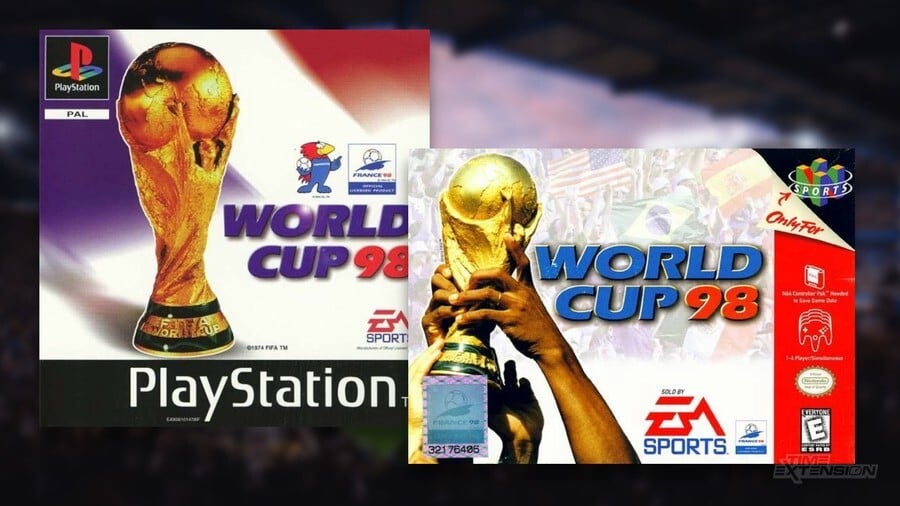
- FIFA International Soccer (1993): The very first FIFA game typically featured two players battling for the ball, often without specific player identification, emphasizing the action rather than individual celebrity. This minimalist approach was characteristic of early sports titles, focusing on the game itself.
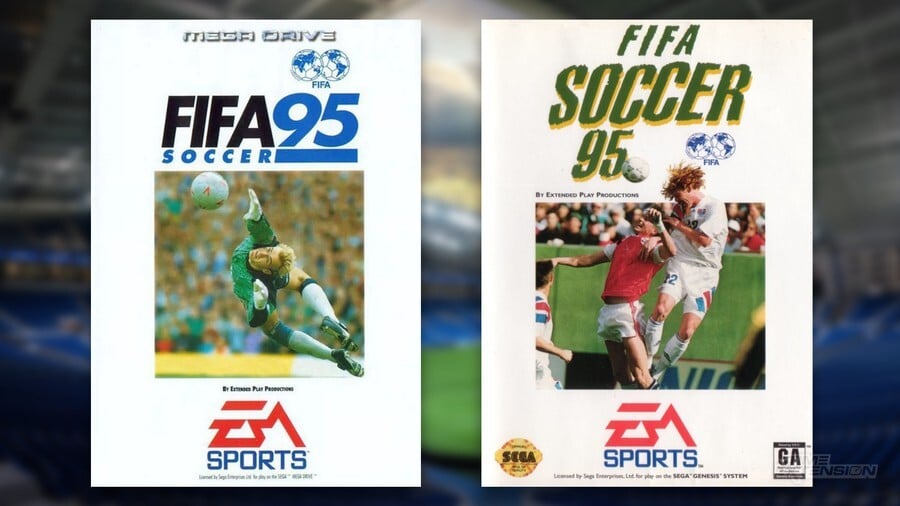
- FIFA Soccer 95: The series began to embrace more specific imagery, although still largely generic.
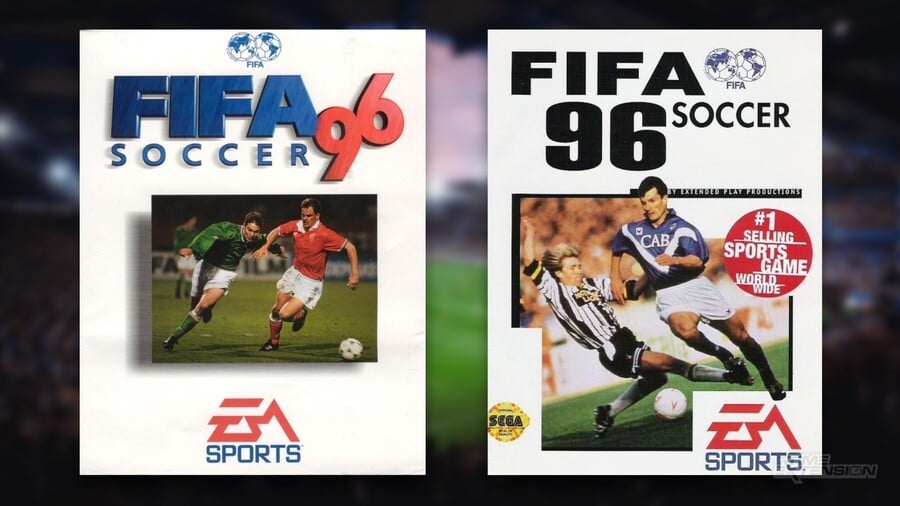
- FIFA Soccer 96: Covers started to feature more dynamic poses, hinting at the increasing graphical fidelity and player recognition.
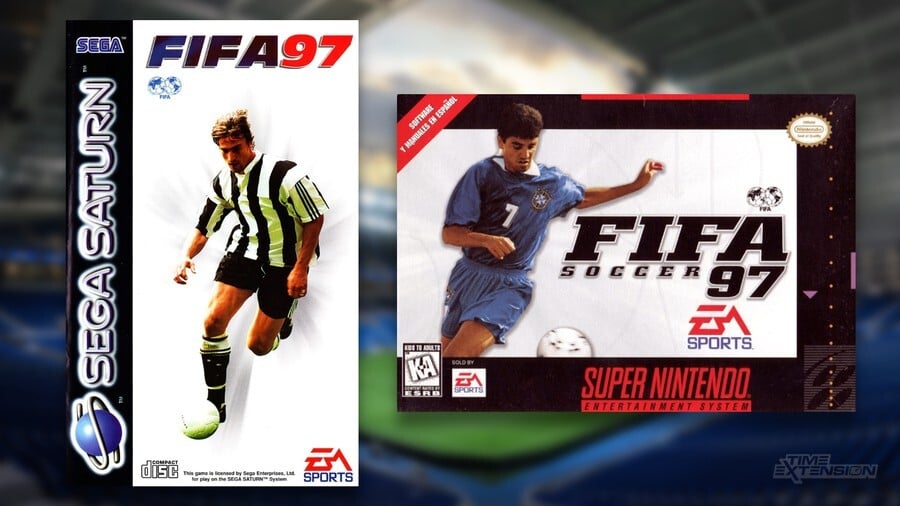
- FIFA 97: This edition saw a significant step towards featuring individual stars. David Ginola, then a prominent figure in English football with Newcastle United, appeared on the UK cover, signaling a move towards local heroes.
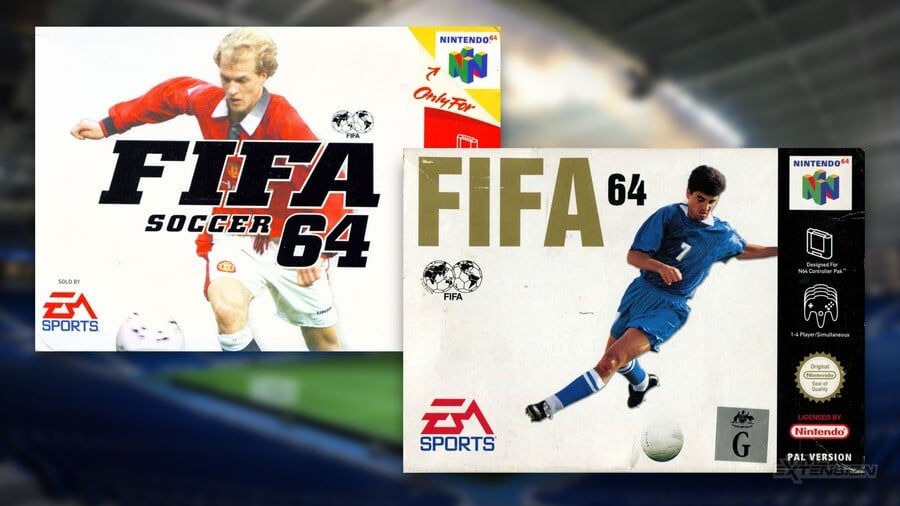
- FIFA 64 (1997): Released specifically for the Nintendo 64, this title often mirrored the main series’ cover philosophy for the year.
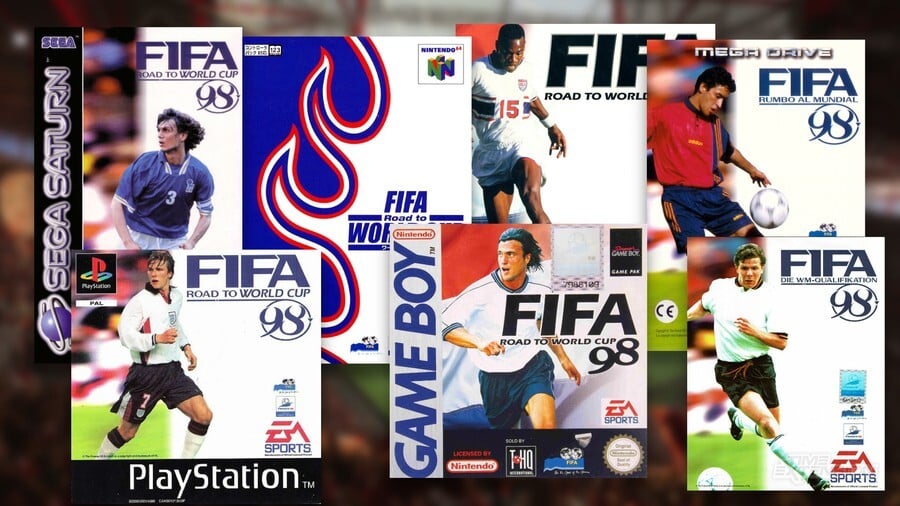
- FIFA: Road to World Cup 98 (1997): Capitalizing on the impending 1998 FIFA World Cup in France, this title was a landmark release. It famously featured David Beckham on its UK cover, cementing his status as a burgeoning global icon, alongside other regional stars like Andreas Möller (Germany) and Raúl (Spain). This marked a clear strategic shift towards high-profile endorsements.
- FIFA World Cup 98: The official World Cup tie-in game, often featuring players from participating nations.
- FIFA 99: Dennis Bergkamp, the elegant Dutch striker for Arsenal, graced the UK cover, reflecting the growing popularity of European club football. Other regions featured their own stars, solidifying the regional cover strategy.
The 2000s: Global Superstars and Market Expansion
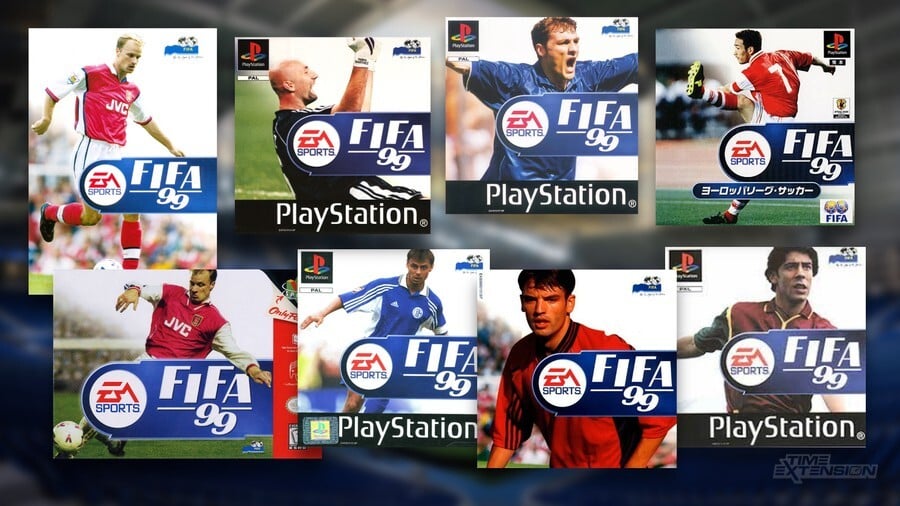
As the new millennium dawned, the FIFA series mirrored the increasing globalization of football, with its cover stars becoming more recognizable worldwide.
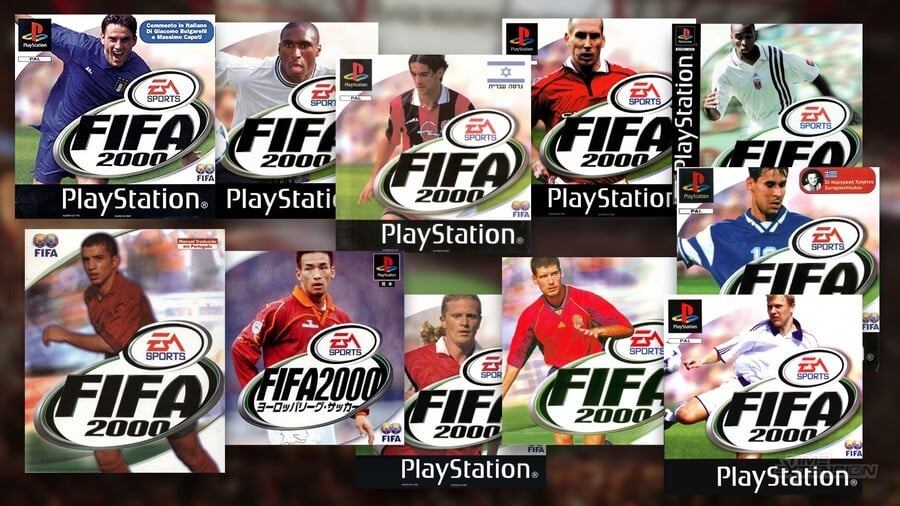
- FIFA 2000: Sol Campbell, then an Arsenal defender, appeared on the UK cover. International versions featured stars like Lothar Matthäus (Germany) and Pep Guardiola (Spain), showcasing a mix of established legends and rising talents.
- FIFA 2001: Paul Scholes of Manchester United was a prominent cover star, reflecting the Premier League’s growing international appeal.
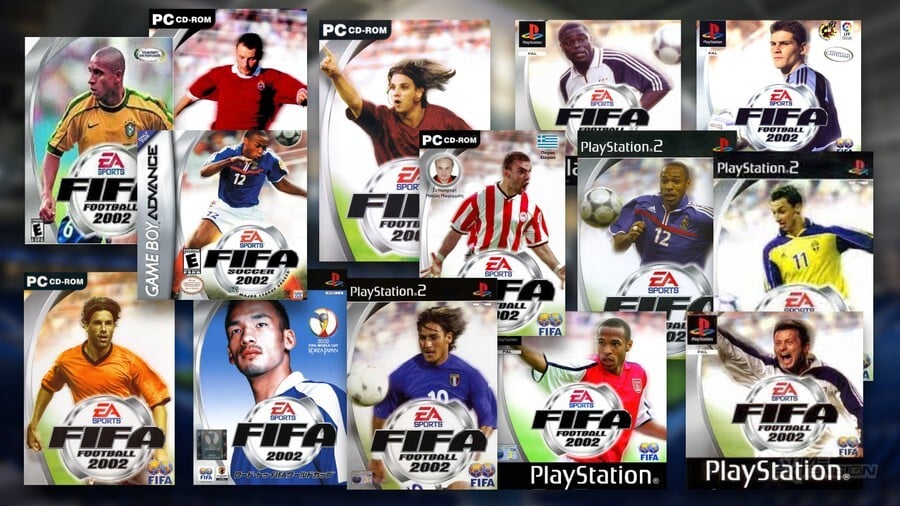
- FIFA Football 2002: Thierry Henry, the prolific French striker, became a recurring face, signifying the dominance of attacking flair.
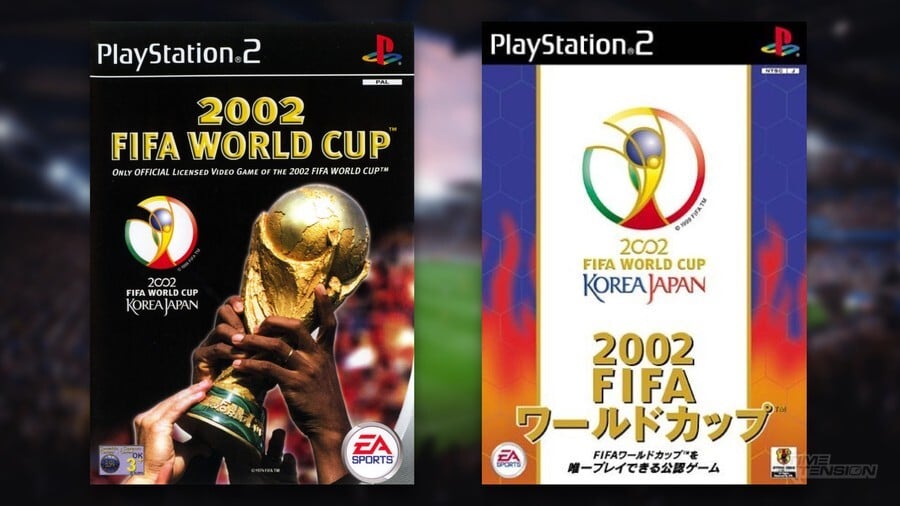
- 2002 FIFA World Cup: The official game for the first World Cup held in Asia, featuring diverse national team players.
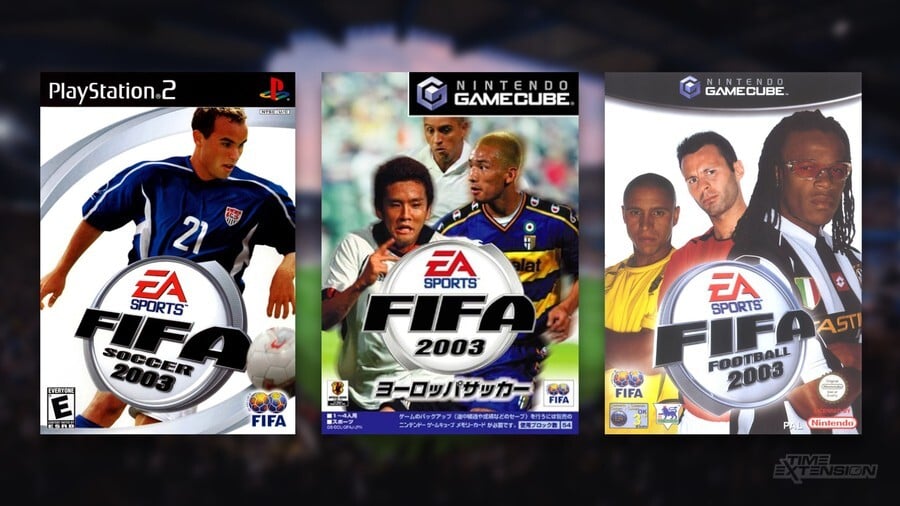
- FIFA Football 2003: Roberto Carlos, the legendary Brazilian left-back, was a global face, often accompanied by local players like Ryan Giggs (UK).
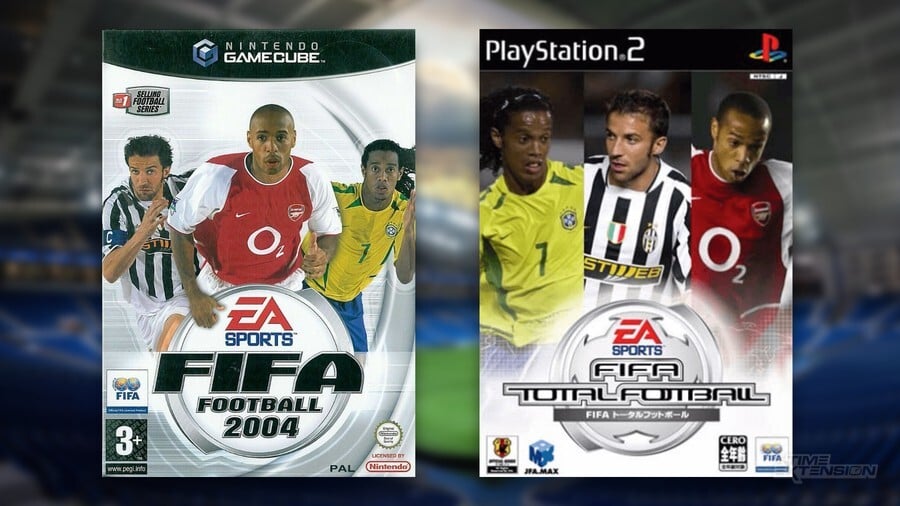
- FIFA Football 2004: Thierry Henry returned, sharing the spotlight with Alessandro Del Piero and Ronaldinho, a trio that epitomized attacking football at the highest level. This collaboration foreshadowed the rise of truly global marketing campaigns.
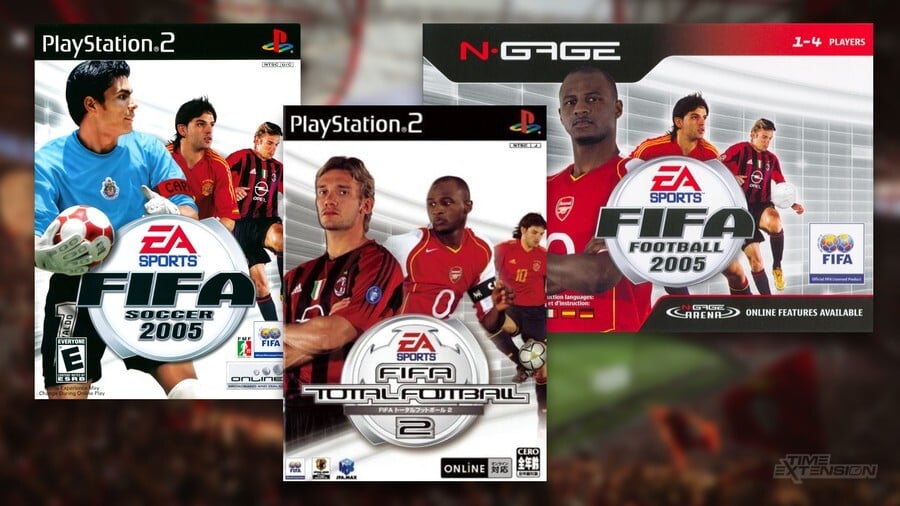
- FIFA Football 2005: Patrick Vieira, Fernando Morientes, and Andriy Shevchenko formed a powerful trio, representing different facets of European football excellence.
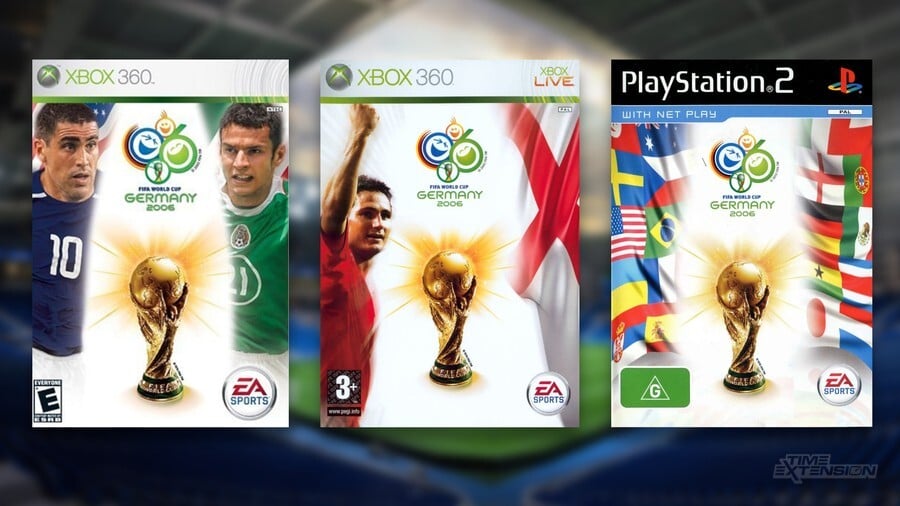
- 2006 FIFA World Cup: Released ahead of the tournament in Germany, this game highlighted national team heroes.
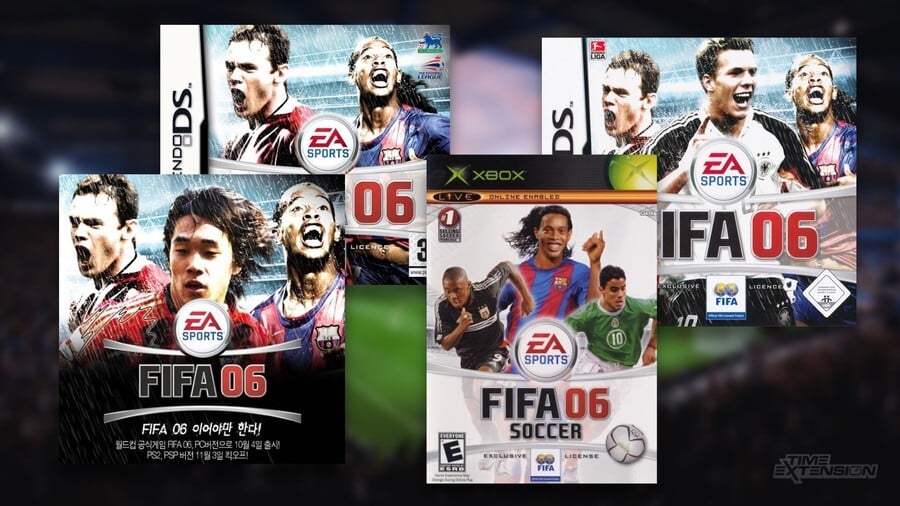
- FIFA 06: Wayne Rooney, a breakout star for Manchester United and England, became a recurring figure, often paired with Ronaldinho, who was rapidly ascending to global superstardom. This partnership symbolized the blend of raw English talent and Brazilian samba football.
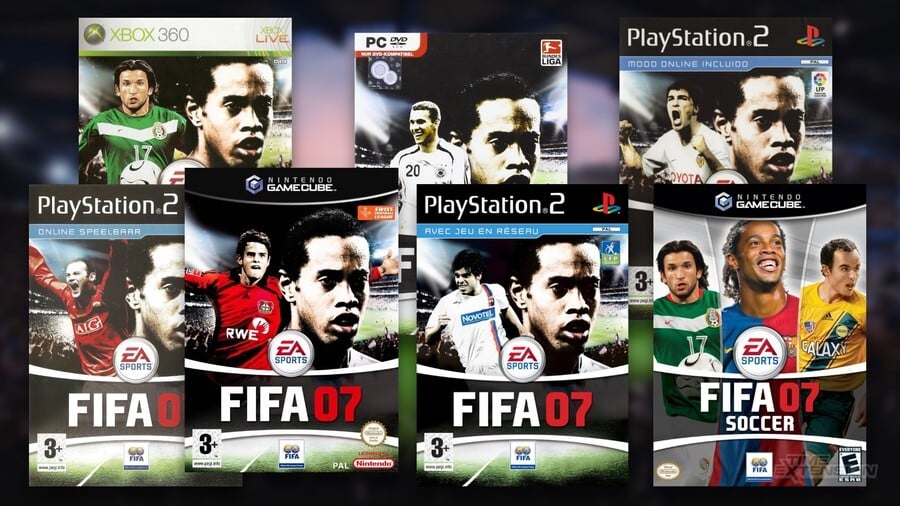
- FIFA 07: Ronaldinho continued his reign, often alongside local heroes like Wayne Rooney (UK). His iconic grin and dazzling skills made him a perfect fit for the vibrant branding of the series.
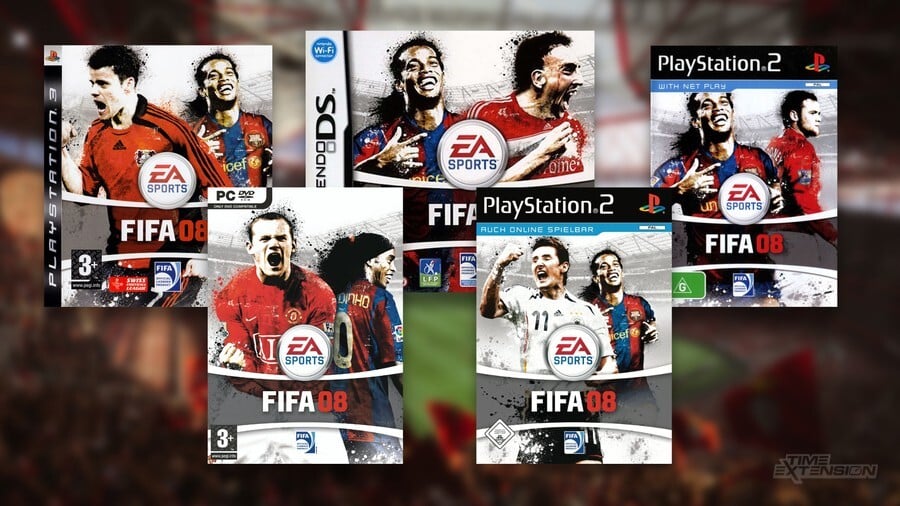
- FIFA 08: Ronaldinho remained central, sharing covers with players such as Sergio Ramos (Spain) and Miroslav Klose (Germany), maintaining the regional customization.
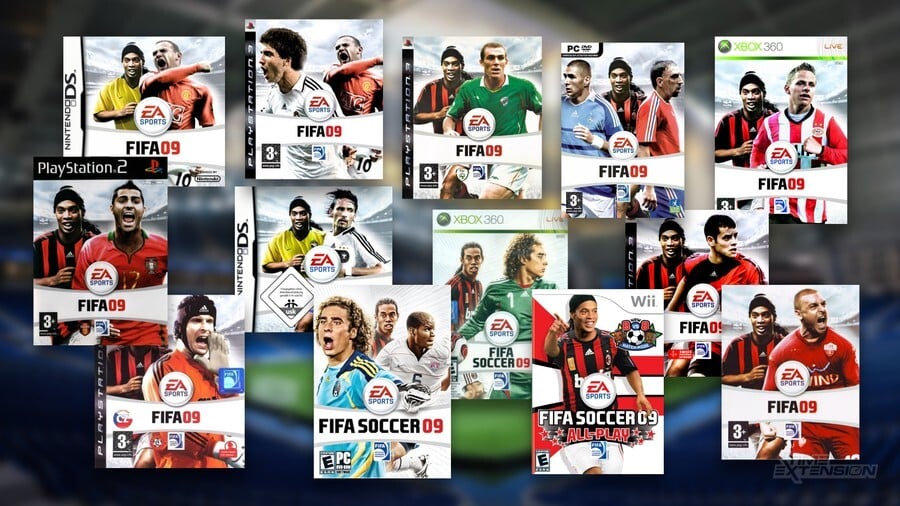
- FIFA 09: Ronaldinho’s final appearance as a primary cover star for the main series, paired with players like Wayne Rooney (UK) and Franck Ribéry (France). This marked the end of an era for the Brazilian maestro.
The 2010s: The Messi-Ronaldo Duopoly and Digital Dominance
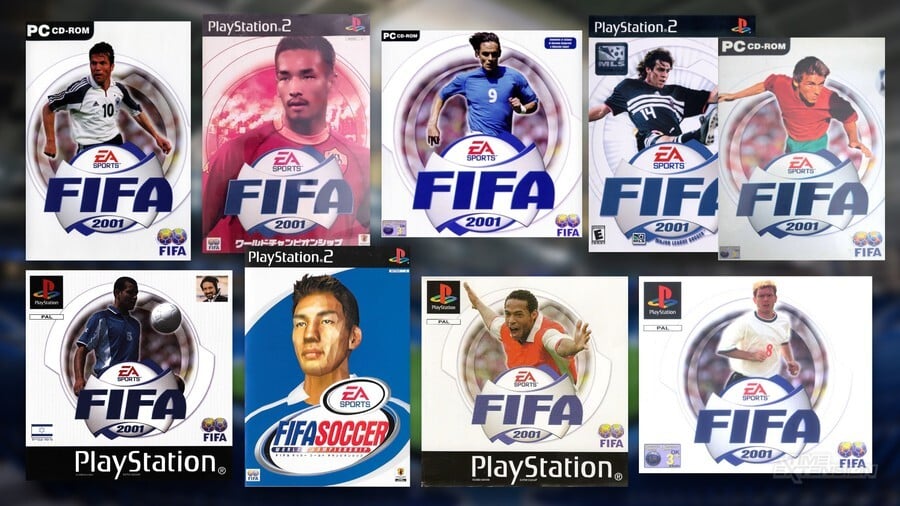
This decade was largely defined by the unparalleled rivalry between Lionel Messi and Cristiano Ronaldo, whose dominance in world football was frequently reflected on FIFA covers.
- 2010 FIFA World Cup South Africa: The official game for the first African World Cup, featuring players from various national teams.
- FIFA 10: Wayne Rooney took center stage in the UK, often alongside Frank Lampard. For the first time, Messi began his multi-year run as a global cover star, replacing Ronaldinho in a symbolic passing of the torch.
- FIFA 11: Wayne Rooney continued as a primary regional star, with Kaká joining Messi on some international versions, showcasing a collection of Ballon d’Or winners.
- FIFA 12: Wayne Rooney continued his consistent presence, often paired with Jack Wilshere for the UK edition, reflecting a focus on English talent. Lionel Messi solidified his status as the global face of the franchise.
- FIFA 13: Lionel Messi was the undisputed global star, appearing on most covers worldwide, often with regional partners like Alex Oxlade-Chamberlain (UK) or Karim Benzema (France).
- FIFA 14: Messi continued his reign, frequently accompanied by local stars such as Gareth Bale (UK) or Stephan El Shaarawy (Italy). The game capitalized on Messi’s peak form and global recognition.
- 2014 FIFA World Cup Brazil: The official tournament game, celebrating the host nation and its stars.
- FIFA 15: Lionel Messi’s iconic run continued, often featuring alongside local talents such as Eden Hazard (UK/Belgium) or Arturo Vidal (Chile), further emphasizing localized appeal.
- FIFA 16: This edition marked a significant moment as it introduced female players to the series. Lionel Messi remained the global cover star, but for the first time, female players like Alex Morgan (US) and Christine Sinclair (Canada) appeared on regional covers, a groundbreaking move for representation.
- FIFA 17: Marco Reus, the German winger, won a global cover vote, appearing as the sole cover star after beating out Eden Hazard, James Rodríguez, and Anthony Martial. This democratic approach engaged fans directly in the marketing process.
- FIFA 18: Cristiano Ronaldo, having recently won the Champions League and Ballon d’Or, took over as the global cover star, marking his first and only primary cover appearance for the main FIFA series. His inclusion was a direct response to his unparalleled global stature.
- FIFA 19: Cristiano Ronaldo initially returned, but after his transfer to Juventus, he was replaced by a trio of Neymar, Kevin De Bruyne, and Paulo Dybala on the standard edition, with Ronaldo featuring on the Champions Edition. This dynamic change reflected real-world football transfers impacting game marketing.
The 2020s: The Final Chapters and a New Beginning
The final years of the FIFA series saw a continuation of featuring elite global talent, leading up to the historic brand split.
- FIFA 20: Eden Hazard, having moved to Real Madrid, became the global cover star, representing a new generation of talent.
- FIFA 21: Kylian Mbappé, the French superstar, ascended to global cover status, reflecting his meteoric rise and status as a future face of football.
- FIFA 22: Kylian Mbappé returned for his second consecutive year, solidifying his position as one of the most marketable athletes in the sport. This would be the penultimate FIFA title under the original branding.
- FIFA 23: The final game to bear the FIFA name, this edition featured Kylian Mbappé alongside Sam Kerr, the Australian women’s football captain, on its global cover. This historic pairing marked the first time a female player shared the global cover, a powerful statement on the growing prominence of women’s football and a fitting farewell to the FIFA brand.
The Significance of the Cover Star
The FIFA cover star was more than just a marketing tool; it was a cultural barometer, reflecting the sport’s global trends, emerging talents, and enduring legends. From the early days of generic player models to the meticulously rendered likenesses of superstars, each cover told a story of football’s evolution. The shift from regional heroes to global icons like Ronaldinho, Messi, and Ronaldo underscored the increasing interconnectedness of the football world and the expanding reach of the video game market. The later inclusion of female athletes further demonstrated a commitment to inclusivity and the recognition of women’s football as a significant force. These covers served as visual time capsules, evoking memories of specific seasons, iconic moments, and the players who defined them for millions of fans.
The Brand Split: Implications for EA and FIFA
The decision to end the EA-FIFA partnership was driven by complex factors, primarily financial disagreements and creative control. Reports indicated that FIFA was seeking a substantial increase in its licensing fee, potentially doubling it to over $1 billion for a four-year cycle. EA, on the other hand, expressed a desire for greater creative freedom, including the ability to expand beyond the traditional 11-a-side match simulation into broader gaming experiences, esports, and digital initiatives without the constraints of FIFA’s brand requirements.
Implications for EA Sports FC: For EA, the rebranding to EA Sports FC represented a calculated risk and an opportunity. While losing the globally recognized "FIFA" name could initially impact sales, EA retained all crucial league, club, and player licenses through independent agreements with hundreds of organizations, including the Premier League, La Liga, Bundesliga, Serie A, and UEFA Champions League. This meant the core gameplay experience, including teams and players, would remain largely intact. The change allowed EA to redirect the substantial licensing fees previously paid to FIFA towards game development, new features, and marketing for EA Sports FC, potentially fostering greater innovation and flexibility. Early indications suggest EA Sports FC has maintained much of its predecessor’s market share, leveraging its established fanbase and comprehensive licensing agreements.
Implications for FIFA: For FIFA, the split presents a challenge and an ambition. While it retains the rights to the "FIFA" name for video games, it no longer has a ready-made developer with three decades of experience and a massive installed user base. FIFA has publicly stated its intention to develop its own suite of football video games, partnering with various developers to create competing titles. This strategy aims to create a broader ecosystem of FIFA-branded games, potentially across different genres and platforms. However, establishing a new, competitive franchise from scratch against EA’s entrenched dominance, and against Konami’s eFootball (formerly Pro Evolution Soccer), is a formidable undertaking that will require significant investment and a compelling vision.
The Future of Football Gaming
The departure of the FIFA name from EA’s flagship football title marks the end of a remarkable era but also signals a new competitive landscape in sports simulation. EA Sports FC is poised to continue its legacy, bolstered by extensive club and player licenses, while FIFA embarks on a quest to establish its own gaming presence. The competition between these entities, alongside long-standing rivals like eFootball, promises an interesting future for football gaming. As the FIFA World Cup 2026 looms, reminding fans of the sport’s unparalleled global appeal, the digital realm will continue to evolve, seeking to capture the magic of the beautiful game, even if under different banners. The iconic cover stars of the past will forever serve as a testament to the enduring impact of a series that brought the world’s most popular sport into millions of homes, shaping a generation of football fans and gamers alike.