Cecilia Chamidah Nur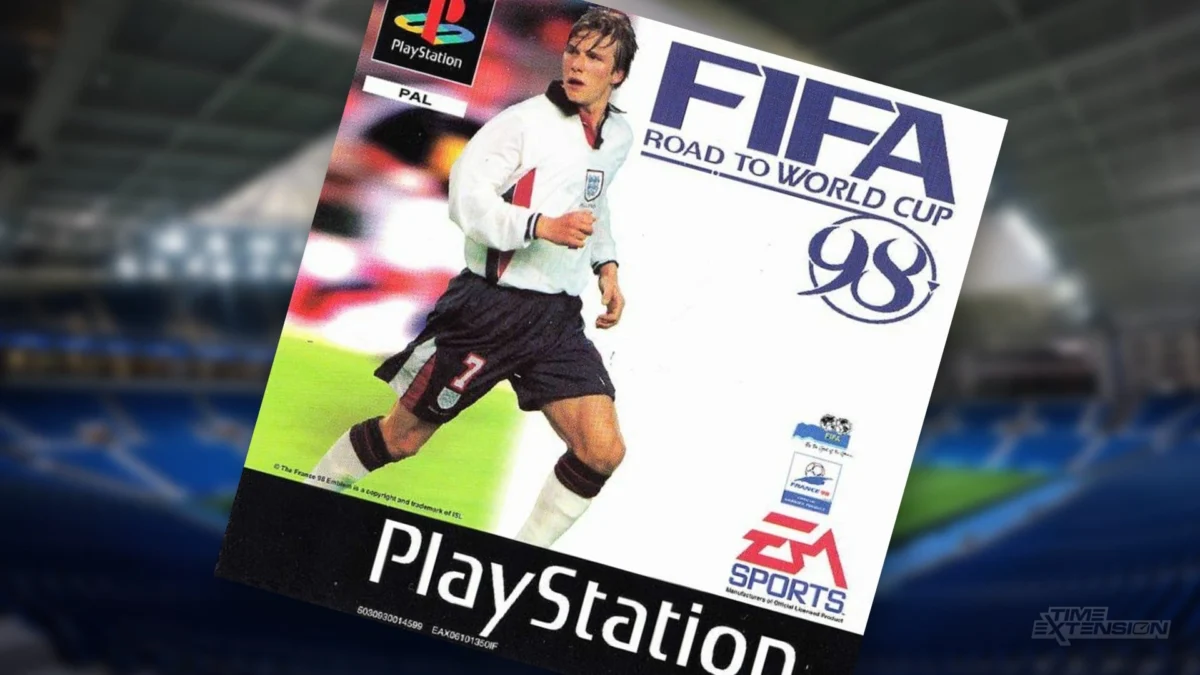
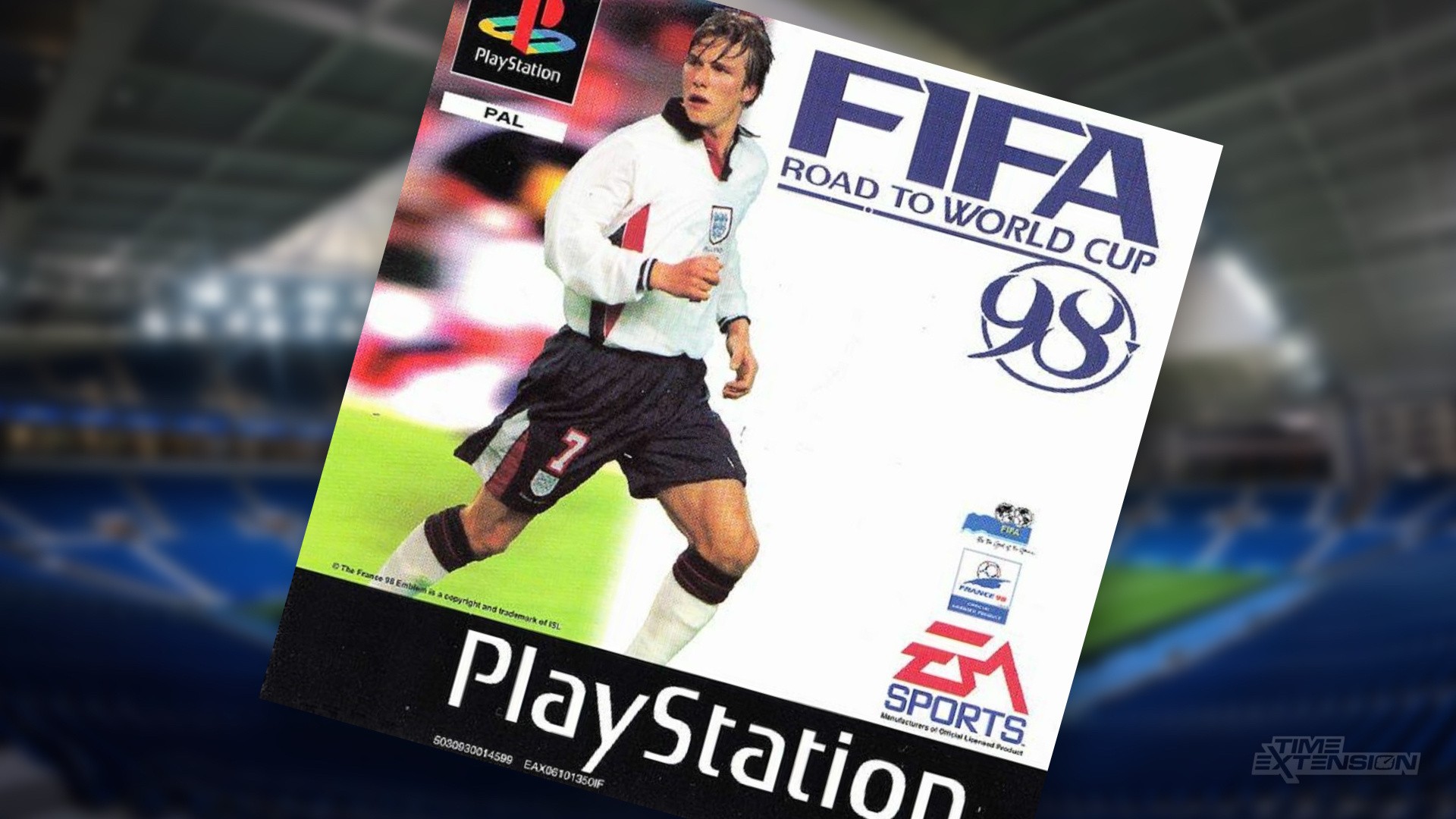
With the 2026 FIFA World Cup having recently commenced on June 11th, drawing global attention to the pinnacle of international football, it is an opportune moment to reflect on a seminal title in sports video game history: FIFA Road to World Cup 98. Widely regarded by its developers as the series’ high point, this game not only captured the spirit of a world-defining tournament but also ushered in a new era for EA Sports’ immensely successful franchise, setting benchmarks for content, innovation, and strategic market releases. This article revisits the fascinating development anecdotes from those who shaped this iconic title, exploring its genesis, the challenges overcome, and its enduring legacy, drawing from a feature originally published on February 26th, 2024.
The Genesis of a Classic: Addressing Previous Disappointments
Before FIFA Road to World Cup 98 achieved critical and commercial acclaim, the FIFA series faced a pivotal juncture. Its predecessor, FIFA 97, despite robust sales and some positive reviews, garnered significant internal and external criticism. Released as the second game to utilize the Virtual Stadium engine and the first to integrate motion-capture animation with polygonal 3D characters, FIFA 97 was intended as a leap forward. However, its execution left much to be desired for many, including key figures within EA Canada.
The PlayStation version of FIFA 97, for instance, received a scathing one-star review from Next Generation magazine, which decried its "slow" pace, "choppy frame rate," "sloppy control," and "miserable ball physics," labeling it "the most disappointing EA Sports game in years." Similar sentiments were echoed for the Nintendo 64 release, FIFA Soccer 64, which Computer and Video Games dismissed as "a complete shambles," further highlighting the emerging threat from competitors such as Sega’s Worldwide Soccer on the Saturn and Konami’s International Superstar Soccer on the N64. This competitive landscape underscored the urgent need for a significant overhaul.
Internally, the disappointment was palpable. Bruce McMillan, the series’ executive producer, and Marc Aubanel, a producer, were particularly dissatisfied. McMillan recounted the experience, stating, "I don’t think FIFA 97 was our best work. I’d done 96, and I’d hired an executive producer because I had other responsibilities in the studio at the time and it just didn’t work out. Mark and I finished the title, but we were not happy with it." He further added that the organizational missteps led to the team "tak[ing] its foot off the gas." Aubanel vividly recalled the arduous development of FIFA 64, describing it as a "death march" where "no one was super proud of it because we were barely alive by the time we finished the game and shipped it." The concurrent release of Super Mario 64, a groundbreaking 3D title, also cast a long shadow, making their efforts feel comparatively insufficient.
An Ambitious Triple-Release Strategy
From this period of introspection and disappointment emerged an audacious plan: a three-game release strategy designed to capitalize on the upcoming 1998 FIFA World Cup in France, for which EA had secured licensing rights. McMillan, rather than allowing the team to dwell on past failures, galvanized them with a vision for an unprecedented annual output.
The strategic rollout was meticulously planned:
- FIFA Road to World Cup 98 (1997): This foundational title would feature both domestic clubs and national teams, incorporating a comprehensive campaign mode centered on the World Cup qualifying process. This emphasis on the journey to the World Cup aimed to resonate with fans’ national pride and the significance of every qualifying match.
- World Cup 98 (1998): Released closer to the actual tournament, this game would exclusively feature national teams and serve as the officially licensed World Cup product, allowing players to simulate the final stages of the prestigious event.
- FIFA 99 (1998): Concluding the ambitious cycle, this installment would revert to featuring both national and domestic clubs, but with a renewed focus on league football, ensuring a continuous offering for diverse football fans.
McMillan presented this bold strategy to EA’s US leadership, emphasizing the emotional connection fans had with national teams during qualification. "People cared about clubs in FIFA 97 – that’s what they cared about. They weren’t thinking of the World Cup yet or so on and so forth. But then, going into 98, you’re going to have a World Cup year, so you’re going to have a ton of qualifying stuff in 1997, so it’s about your nation." He assured EA of the team’s capacity to deliver three high-quality titles, impressing upon his team the critical importance of Road to World Cup 98 being "stellar" to ensure the success of the subsequent releases. This strategic move was not merely about product output but about re-establishing FIFA’s dominance and leveraging a global sporting event like never before in the gaming world.
Innovations and Technical Refinements
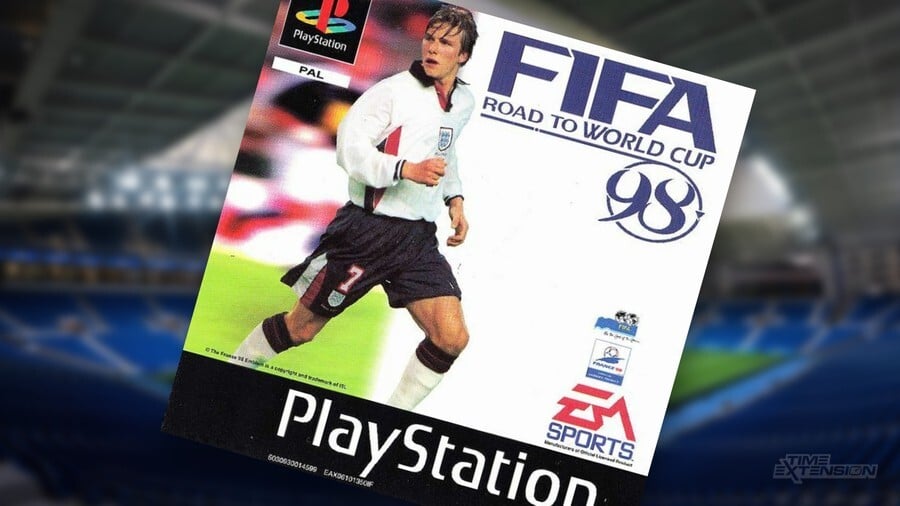
To elevate FIFA Road to World Cup 98 beyond its predecessors, EA Canada implemented a wealth of new content and technical improvements. The game dramatically expanded its roster, featuring all 172 FIFA-registered national teams and 189 clubs across 11 leagues – an unprecedented scale for the time. Player and team customization options, including the ability to edit home and away kits, further enhanced realism and player engagement.
A crucial area of focus was addressing the animation and gameplay mechanics that had plagued FIFA 97. Critics had noted a sluggishness, partly due to motion-capture animations having to play out fully before subsequent player inputs registered. McMillan challenged his team to develop technology that would allow for smooth transitions between animation frames while retaining "nice, twitchy gameplay."
Brian Plank, a lead programmer on the project, was instrumental in this endeavor. He explained the inherent tension between visual realism and player control: "Motion capture is great for capturing how a human moves, and you can capture a bunch of that. But the question is how to parameterise it so you can have a character who can run around, kick the ball, head the ball, and look realistic while still maintaining control over everything." Plank’s approach prioritized maintaining responsive control while integrating fluid, realistic movements, a balance that defined the game’s improved feel. The result was a noticeably faster and more fluid gameplay experience that skillfully blended arcade accessibility with simulation depth, addressing a core criticism of FIFA 97.
Revolutionizing In-Game Commentary and Audio
Beyond gameplay, the audio experience underwent a significant transformation. The commentary and speech tools received an extensive update, not just to revise team and player names and introduce new languages, but also to rectify errors from the previous year. Robert Bailey, credited as "additional programming" and a key sound designer/programmer, spearheaded this monumental effort. He developed cutting-edge tools to categorize and splice commentary, embarking on annual global trips to record various regional commentators.
Bailey’s recollection of recording French and German commentary in a Düsseldorf video studio, rather than an audio facility, highlights the ingenuity and challenges faced. He detailed the complex process of recording "25,000 or so" player names in four distinct variations (unexcited, excited, and two with a ‘fon’ prefix for dynamic combination), a task met with initial skepticism by local engineers. "Each name was recorded twice by itself, in an unexcited and excited intonation. The same name was then recorded in two intonations with the prefix ‘fon’, which would be combined on the fly in the game with another phrase. So we would record ‘Smith’, ‘SMITH!!!’, ‘Fon Smith’, and ‘FON SMITH!!’." The successful implementation of this system, allowing for seamless, dynamic commentary, was a technical marvel that greatly enhanced immersion, further cementing the game’s reputation for innovation.
The ‘Song 2’ Phenomenon: A Soundtrack Revolution

One of FIFA Road to World Cup 98‘s most enduring legacies was its pioneering use of licensed music, a departure from the series’ reliance on in-house compositions. The game featured tracks from artists like Blur, The Crystal Method, and Electric Skychurch, creating a vibrant, modern atmosphere that resonated deeply with players. This shift was largely championed by Chris Taylor, an EA audio specialist and former drummer for The Payolas, who, according to Marc Aubanel, was instrumental in pushing the idea internally.
Initially, the concept faced internal resistance. Members of the audio team preferred creating original scores, viewing external licensing as "offensive." Robert Bailey admitted, "the notion of licensing somebody else’s stuff rather than writing the stuff yourself was initially deemed to be kind of offensive; there was a bit of pushback from the people in the audio department about it."
Even more significant was the hurdle presented by EA’s then-CEO and President, Larry Probst, who had issued an edict against licensing music due to past issues, specifically citing the Road Rash game on 3DO, which had granted royalties instead of a flat fee. Aubanel recounted the tense moment when Probst discovered licensed music in FIFA 98: "Larry shouted, ‘Stop!’ and started yelling at us. He was like, ‘Why the f**k did you put music in the game?’ And we said, ‘Well, a salary is X many dollars a year, and it basically cost us 9 months of one person’s salary to get eight top 10 songs in the game.’ He kind of went, ‘Oh, I guess that’s alright then.’ But we were sweating at the time." This anecdote highlights the risk-taking and conviction of the development team in pushing for a feature that would fundamentally change game soundtracks.
The most iconic track, Blur’s "Song 2," which famously played over the opening sequences, has become synonymous with the game. The story of its acquisition has become legendary within EA. Bruce McMillan revealed the band’s motivation: "The guys, Damon and Alex specifically, wanted four tickets to the World Cup on the centreline, and we had lots of tickets on the centreline… They were big football fans. Massive football fans. So it was not that difficult to get Song 2 at all. It was actually very, very easy." Sean Ratcliffe, from EA UK marketing, corroborated this, explaining that Blur’s manager waived TV spot licensing fees in exchange for four World Cup final tickets. This relatively low-cost acquisition, compared to the track’s immense cultural impact and its role in boosting the game’s appeal, proved to be a marketing masterstroke. "Song 2" not only became a global hit, peaking at No. 2 on the UK Singles Chart and No. 6 on the US Alternative Airplay chart, but its presence in FIFA Road to World Cup 98 cemented its status as an anthem for a generation of gamers, demonstrating the power of integrating popular culture into interactive entertainment.
Multi-Platform Challenges and Widespread Success
FIFA Road to World Cup 98 launched in June 1997 on Windows PCs, followed by releases on SNES, Mega Drive, PlayStation, Sega Saturn, N64, and Game Boy in subsequent months. This extensive multi-platform rollout was facilitated by EA Canada’s innovative "language-agnostic" development approach, allowing the core asset library to be reused across various platforms. These materials were then distributed to global studios tasked with optimizing the experience for specific hardware.

This broad approach, uncommon for major franchises at the time, was a key factor in the series’ massive sales. However, it also presented significant technical challenges, particularly for consoles with limited resources. Peter Andrew, lead programmer for the PlayStation version at EA Seattle, described the intense memory management: "We basically filled the PS1 disc. So the challenge was keeping the frame rate high but keeping the fidelity of the animation… we had this system where we would have banks of animation… once 2 or 3 animations in a bank were used, we purged it from memory and pulled in another one from the disc." This complex "streaming management" was a "hot nightmare."
Yossarian King, lead programmer for the N64 version, highlighted similar constraints: "The constrained space of the N64 forced us to limit things. So one of the biggest examples was the commentary was pared back quite a lot for the Nintendo 64 versions." While the N64 version offered only "a very light form of colour commentary" without player names, its cartridge format offered an advantage in speed, eliminating the "streaming delay" inherent with CD-ROMs. These adaptations, while necessary, demonstrated the dedication to bringing a consistent, albeit platform-optimized, experience to a wide audience.
Critical Acclaim and Enduring Legacy
Upon its release, FIFA Road to World Cup 98 was not only a commercial triumph but also garnered widespread critical acclaim. Reviewers lauded it as a substantial improvement over FIFA 97. Electronic Gaming Monthly (issue 103) praised the PlayStation version, with John Ricciardi declaring it "a very, very good soccer game and one of the best available for the PlayStation, if not the best." N64 Magazine’s Tim Weaver called the N64 version "a real surprise," commending its "beautifully fluid" gameplay and marking an astounding improvement over the "sewage-like mess that was FIFA 64."
This wave of positive reception signaled FIFA’s return to the pinnacle of sports gaming. However, the work was far from over. The team immediately shifted focus to World Cup 98, followed by FIFA 99, fulfilling McMillan’s ambitious triple-release strategy within a single year. While exhausting for the core team, who were accustomed to breaks between projects, this relentless pursuit of excellence ultimately delivered three highly regarded football games across numerous platforms.
Bruce McMillan unequivocally regards FIFA Road to World Cup 98 as the series’ zenith. "I’ve played every FIFA, and I would argue that that’s the best FIFA that’s ever been made and still is… I think in the case of FIFA, FIFA Road to World Cup 98 was the best. And the reason I say that is because of the amount of people who played it and kept playing it and playing it and playing it." This sentiment highlights the game’s deep engagement and replayability, which fostered a loyal player base. Marc Aubanel, reflecting on the challenge of objective assessment after intense development, emphasized the importance of fresh player perspectives in validating their work.
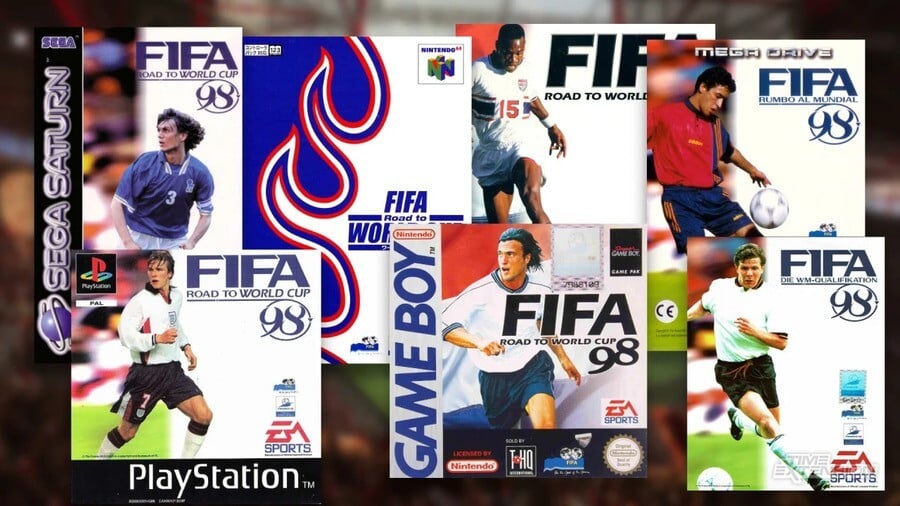
The success of FIFA Road to World Cup 98 and its sister titles solidified EA Sports’ position as a powerhouse in the sports gaming market. It set a new standard for content depth, technical polish, and the strategic integration of popular culture through licensed music. Both McMillan and Aubanel continued their impactful careers within the FIFA series, with McMillan staying until FIFA 2001 and Aubanel until FIFA World Cup 2002. Their subsequent careers, including McMillan’s leadership at Blink Media, a company comprised of FIFA veterans now developing titles like FEI Equestriad World Tour, underscore the lasting influence of the talent cultivated during this golden era of FIFA development. The game’s legacy continues to resonate, not just as a nostalgic touchstone for many gamers, but as a blueprint for how to innovate and execute a successful global sports franchise.