
 Jia Lissa
The history of the video game industry is often defined by its hardware cycles, but the internal corporate dynamics that drive these transitions are rarely glimpsed by the public. Among the few executives to have navigated these shifts from the inside is Mike Fischer, whose career spanned pivotal eras at Sega, Namco, and Microsoft. Fischer’s tenure at Sega, beginning in Tokyo in 1990 and extending through the company’s eventual transition to a third-party software publisher, provides a unique case study in the challenges of cross-cultural management, the volatility of hardware development, and the eventual maturation of the global gaming market.

The Formative Years: Sega’s Japanese Roots and Global Ambitions
Mike Fischer entered the gaming industry on April 1, 1990, joining Sega Enterprises Ltd. in Japan during a period of rapid expansion. Having graduated with a degree in quantitative economics from California Polytechnic State University, Fischer bypassed the traditional engineering route, seeking instead to contribute to the "joy-bringing" sector of consumer entertainment. At the time, Sega was seeking to challenge Nintendo’s near-monopoly on the home console market, a goal that required a more robust international presence.
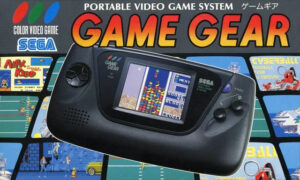
Fischer served as a "utility player" within the Overseas Consumer Products Business Division. His early responsibilities included translating technical repair documents for the Game Gear and naming peripheral components, such as the "Gear-to-Gear" cable. This period also saw Sega’s attempts to align its brand with global pop-culture icons. Fischer acted as a translator and liaison for Michael Jackson during the star’s visits to Tokyo to discuss the development of Moonwalker, and similarly assisted Formula One legend Ayrton Senna. These interactions underscored Sega’s early 1990s strategy: leveraging high-profile celebrity endorsements to differentiate the "cool" Sega brand from the more family-oriented image of Nintendo.

The Transpacific Friction: Sega of Japan vs. Sega of America
In 1994, Fischer transferred to Sega of America (SOA), a move necessitated by family health concerns but one that placed him at the heart of the most successful branch of the company. Under the leadership of Tom Kalinske, SOA had achieved a 55% market share in the United States, largely due to aggressive marketing and the success of the Genesis. However, this success created an underlying tension between the American subsidiary and the Japanese headquarters.
Fischer’s observations highlight a fundamental difference in corporate philosophy. While SOA was focused on maximizing the life cycle of the Genesis, Sega of Japan (SOJ) was eager to move toward the next generation of hardware, the Saturn, partly because the Mega Drive (the Japanese version of the Genesis) had never achieved comparable dominance in its home market.
This friction was exacerbated by an export-driven business model. SOJ acted as the primary manufacturer, shipping hardware and software to SOA. This meant that the Japanese parent company often recognized profits upon shipment, while the American subsidiary bore the risk of inventory management and price protection. When the market eventually peaked and the Saturn underperformed, these structural imbalances led to significant financial strain and contributed to the eventual departure of key American executives.
Technical Hurdles and the Saturn Era
The transition from the 16-bit Genesis to the 32-bit Saturn is widely regarded as the beginning of Sega’s decline as a hardware manufacturer. Fischer’s insights into the Saturn’s development reveal a series of strategic and technical missteps. Unlike the Genesis, which utilized the reliable Motorola 68000 chip, the Saturn employed a complex dual-processor architecture using Hitachi SH-2 chips.
Fischer notes that the documentation for the Saturn was notoriously poor, making it difficult for third-party developers to harness its power. Furthermore, the hardware was heavily optimized for 2D sprites at a time when the industry was rapidly pivoting toward 3D polygons, spurred by the arrival of the Sony PlayStation. Fischer also recalls internal warnings regarding the manufacturing of the Saturn’s casing; hand-painted mock-ups with metallic flakes could not be replicated in mass-produced injection-molded plastic without visible flow lines. These aesthetic and technical compromises signaled a lack of cohesion between the design and manufacturing divisions.
Despite these struggles, other platforms remained profitable. Fischer highlights the Game Gear as a misunderstood success. While it did not outsell the Nintendo Game Boy, its higher price point and shared architecture with the Master System made it a lucrative endeavor for the company throughout its seven-year lifespan.
The Namco Interlude and the PlayStation Ascent
In 1997, Fischer transitioned to Namco, arriving just as the original PlayStation was solidifying its market dominance. His time at Namco coincided with the "glory days" of 3D fighting and racing games, including Tekken, Ridge Racer, and Soul Calibur.
The development of Soul Calibur for the Sega Dreamcast remains a landmark in gaming history. Despite Namco’s close ties to Sony, the company produced a version of Soul Calibur for the Dreamcast that famously surpassed the visual quality of the arcade original. Fischer recounts that the Namco developers achieved this through "inverse kinematics," a method of calculating limb movement that optimized the console’s limited processing power. However, despite the game’s critical and commercial success—selling over one million units—Namco’s internal teams remained hesitant to commit further to the Dreamcast, preferring the broader market reach and easier development environment of the PlayStation 2.
The Return to Sega: Rebuilding and Third-Party Transition
Fischer returned to Sega in the early 2000s, a period marked by the leadership of Peter Moore and the company’s painful exit from the hardware business. His primary task was to transform Sega from a first-party manufacturer into a third-party publisher. This required the delicate task of rebuilding relationships with former rivals, including Sony and Nintendo.
One of the most symbolic moments of this era was the introduction of Sonic the Hedgehog to Nintendo’s headquarters. Fischer describes the scene of the Mario and Sonic mascots embracing as a "tear-eyed" moment for many veterans of the console wars. Strategically, Fischer advocated for a more "mature" portfolio, recognizing that the American market was shifting toward M-rated titles and multiplayer experiences.
However, this transition was met with resistance from legacy creators in Japan. Fischer recalls a particularly volatile confrontation with Yuji Naka, the lead programmer of the original Sonic the Hedgehog. When Fischer presented a "Gamer’s Manifesto" outlining Western trends—such as the importance of multiplayer and the decline of arcade ports—Naka reportedly reacted with hostility, viewing the data as an affront to his creative intuition. This cultural clash between data-driven Western marketing and the auteur-driven Japanese development model would continue to define Sega’s internal struggles for years.
Chronology of Key Events
- 1988: Mike Fischer graduates from Cal Poly SLO; moves to Japan to teach English.
- April 1, 1990: Fischer joins Sega Enterprises Ltd. in Tokyo.
- 1991: Launch of the Game Gear in North America; Sega CD launches in Japan.
- 1991-1993: Development of Sonic the Hedgehog and high-profile celebrity collaborations.
- 1994: Fischer transfers to Sega of America as a Product Manager.
- 1995: The "Surprise" launch of the Sega Saturn at the first E3; the console struggles against the $299 PlayStation.
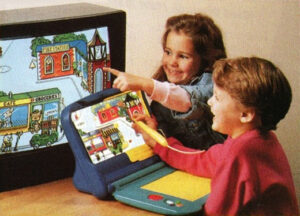
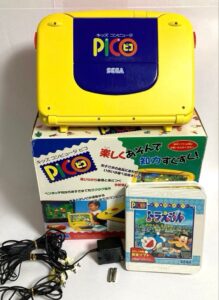
- 1997: Fischer leaves Sega for Namco; Sega Pico continues as a niche success in the US.
- 1999: Launch of the Sega Dreamcast; Namco releases Soul Calibur.
- 2001: Sega officially announces its exit from the hardware business.
- 2002: Fischer returns to Sega under Peter Moore to manage the third-party transition.
- 2004: Fischer joins Microsoft to work on the Xbox platform in Japan.
Legacy and Future Outlook
Today, Sega exists as a subsidiary of Sega Sammy Holdings, and its strategy has evolved significantly under current leadership, including Shuji Utsumi. Fischer expresses optimism regarding Utsumi’s "tough but thoughtful" leadership style, noting that the company is finally finding a balance between respecting its legacy IP and innovating for a modern audience.

The success of the Yakuza (now Like a Dragon) series and the Persona franchise (via Atlus) demonstrates Sega’s ability to find global audiences for deeply Japanese content. However, Fischer suggests that "fresh blood" is needed for the Sonic Team to recapture the creative heights of the 16-bit era. He points to Sonic Mania—a game developed by fans and external collaborators—as the gold standard for the franchise’s modern potential.
The career of Mike Fischer serves as a reminder that the "Console Wars" were not just fought on retail shelves, but in boardroom meetings and translation sessions. The lessons of that era—the importance of developer documentation, the risks of inventory-heavy business models, and the necessity of cross-cultural communication—remain highly relevant in today’s increasingly consolidated gaming industry. As Sega continues to revitalize its classic brands for a new generation, the experiences of those who witnessed its rise and fall provide the essential context for its current resurgence.








