Chalid Lutfie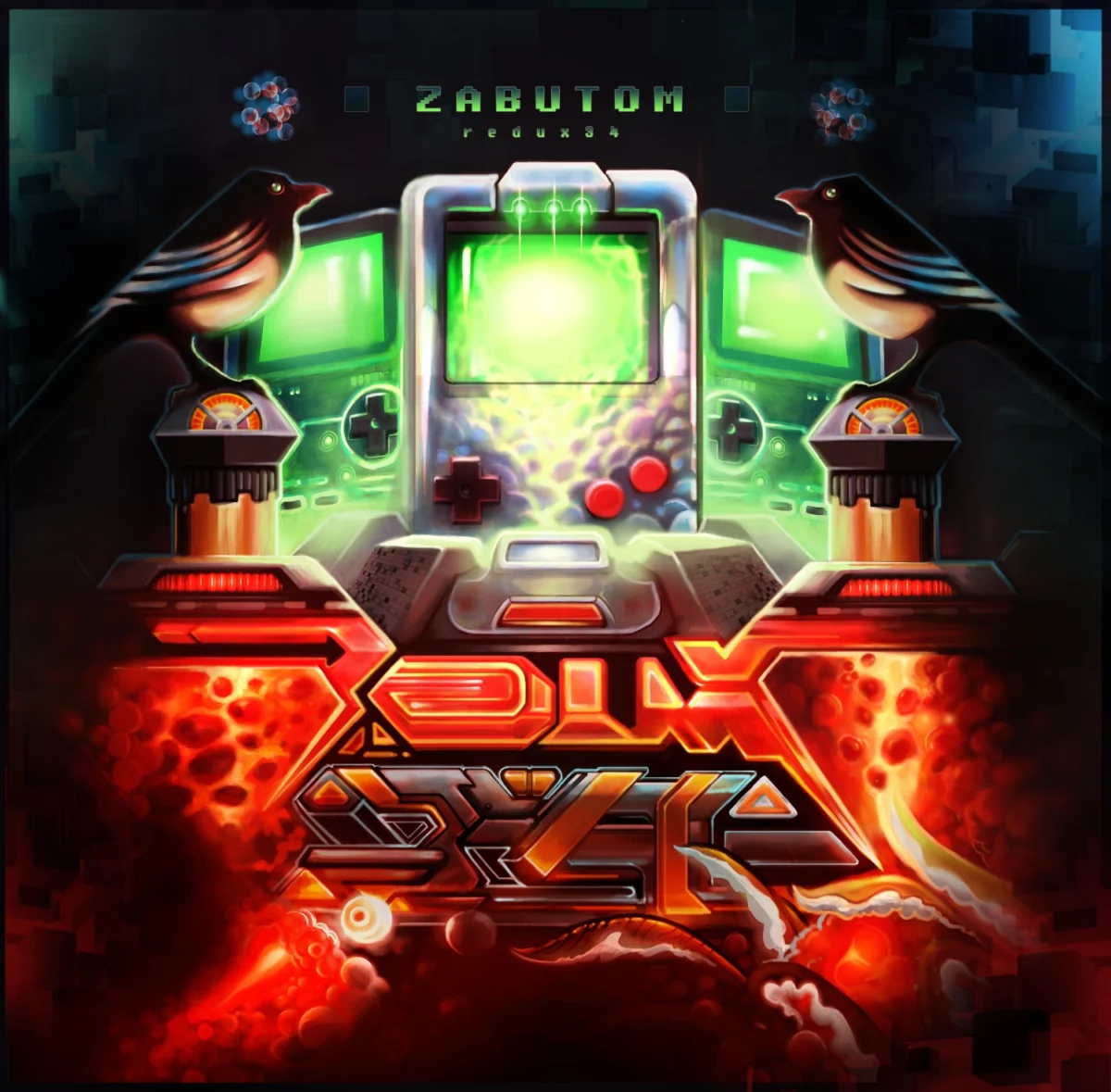
On September 18, 2015, the prominent electronic music label Ubiktune announced the official release of Redux34, the latest full-length studio album from Swedish composer and chip music veteran Niklas Sjövärd, known professionally as zabutom. The album represents a significant stylistic evolution for the artist, moving beyond the traditional constraints of 8-bit synthesis to incorporate a sophisticated palette of progressive rock, Intelligent Dance Music (IDM), and folk-inspired arrangements. By blending the distinctive "bleeps and bloops" of the Nintendo Entertainment System (NES) with live electric guitars, analog synthesizers, and expansive delay textures, Sjövärd has crafted a production that is being recognized for its technical complexity and retro-futuristic narrative.
The Artistic Evolution of Niklas Sjövärd
Niklas Sjövärd, born in 1985, has been a foundational figure in the international chiptune and demoscene communities since the early 2000s. The demoscene—a computer art subculture focused on producing self-contained, sometimes extremely small, computer programs that generate audio-visual presentations—served as the primary training ground for Sjövärd’s early career. Over the years, he has contributed to numerous demoscene releases and compilations, eventually transitioning into live performances at major chiptune festivals worldwide.
Sjövärd’s academic background has played a critical role in the sophisticated composition style found on Redux34. In 2014, he earned a Bachelor’s degree in Composition and Electronic Music from the Academy of Music and Drama at the University of Gothenburg. This formal training in music theory and electronic sound design is evident in the album’s structural integrity and its willingness to experiment with unconventional time signatures and polyphonic textures. Prior to Redux34, Sjövärd’s 2011 debut on Ubiktune, Zeta Force, established him as a master of the "shmup-esque" (shoot ’em up) genre of chiptune, characterized by high-energy, melodic tracks reminiscent of 1980s arcade shooters.
The Genesis of Redux34: A Seven-Year Journey
The production of Redux34 was characterized by a long and often arduous development cycle that began in 2008. During this period, Sjövärd was becoming a regular performer on the global chiptune circuit, utilizing the Nintendo Game Boy and the Little Sound DJ (LSDJ) software as his primary instruments. While he found success in the high-energy dance music typically associated with LSDJ, he felt a creative impulse to expand the genre’s horizons.
The album’s title, Redux34, serves as a direct reference to the technical challenges faced during its creation. The title track was originally composed in 2008 on an LSDJ cartridge. Just as the groundwork for the track was completed, the hardware suffered a catastrophic crash, erasing all saved music data. Sjövärd was forced to recreate the composition from scratch—a process he termed "Redux." The "34" in the title refers to the track’s primary time signature, highlighting the composer’s interest in moving away from the standard 4/4 meter common in electronic dance music.
This theme of loss and reconstruction became a recurring motif throughout the album’s production. Several other tracks suffered from lost patterns, corrupted settings, and lost mixes, requiring Sjövärd to repeatedly rebuild his work. This iterative process, though time-consuming, allowed the artist to refine his production techniques and better integrate his diverse musical interests, including his work with modular live techno (via the Buchla Boys) and his experience as a guitarist and vocalist in acoustic folk acts such as Fowlcloud.
Technical Composition and Sound Design
Redux34 is distinguished by its seamless integration of disparate sonic elements. At its core, the album utilizes the Ricoh 2A03 sound chip found in the NES, which provides the characteristic pulse waves, triangle waves, and noise channels of 8-bit music. However, Sjövärd treats these sounds not as a novelty, but as a foundational layer for a much larger orchestration.

The album features:
- Analog Synthesis: The use of hardware synths adds a warmth and depth that contrasts with the sharp, digital edges of the chiptune elements.
- Live Instrumentation: Electric guitars are used to provide a progressive rock edge, moving the music into territories previously explored by bands like King Crimson or Yes, but filtered through a modern electronic lens.
- Advanced Processing: The use of "spaced out" delay textures and complex reverb creates a sense of physical space, moving the listener through what Sjövärd describes as a "retro-futuristic vision of strange new worlds."
- Genre Blending: While the chiptune element acts as the "glue," the album incorporates the rhythmic complexity of IDM—a genre known for its intricate, often non-danceable beat structures—and the melodic sensibilities of Swedish folk music.
Visual Identity and Collaborative Art
The aesthetic presentation of Redux34 is bolstered by the work of Anders Karlsson, a concept artist and painter based in Norrköping, Sweden. Karlsson’s artwork for the album captures the melancholic yet hopeful atmosphere of the music. The visual narrative presented in the album art aligns with the "retro-futuristic" theme, depicting environments that feel both technologically advanced and strangely ancient.
In the contemporary music market, particularly within niche electronic genres, the visual component is essential for world-building. Karlsson’s contribution ensures that Redux34 is perceived as a cohesive multi-media project rather than a mere collection of tracks. This collaboration reflects a broader trend in the independent music scene where visual artists and musicians work in tandem to create a distinct brand identity.
Strategic Impact on the Chiptune Genre
The release of Redux34 comes at a pivotal moment for chip music. Once considered a limited subgenre defined by hardware constraints, the field has increasingly moved toward "chip-hybrid" music, where the 8-bit aesthetic is combined with professional-grade production and traditional instrumentation. Sjövärd’s work is a benchmark for this transition, demonstrating that the tools of the 1980s can be utilized in a contemporary, academic, and emotionally resonant context.

Industry analysts note that Sjövärd’s path—from demoscene hobbyist to a university-trained composer—mirrors the professionalization of the electronic music industry at large. By releasing the album through Ubiktune, a label known for its curated selection of high-quality "vgm-inspired" (video game music) and progressive electronic music, Sjövärd reaches a global audience of listeners who value technical proficiency as much as melodic accessibility.
Chronology of Key Events
- 1985: Niklas Sjövärd is born in Sweden.
- Early 2000s: Sjövärd becomes active in the demoscene and begins performing as zabutom.
- 2008: Initial composition of "Redux34" begins; hardware crash leads to the loss of original data and the start of the "Redux" process.
- 2011: Release of Zeta Force on Ubiktune, establishing Sjövärd’s reputation in the chiptune community.
- 2014: Sjövärd graduates with a Bachelor’s degree in Composition and Electronic Music from the Academy of Music and Drama in Gothenburg.
- 2014-2015: Final production and mixing of the album, incorporating years of unreleased material and new experiments.
- September 18, 2015: Redux34 is officially released globally.
Distribution and Availability
Redux34 has been made available across all major digital platforms, including streaming services and digital storefronts. In a move that caters to the dedicated collector base within the chiptune community, the album is also available in a physical CD format. The physical release includes the full artwork by Anders Karlsson, emphasizing the project’s status as a complete artistic statement.
As the music industry continues to shift toward digital-only releases, the decision to produce a physical CD reflects the enduring value of tangible media in specialized music circles. For zabutom, Redux34 is more than just a collection of songs; it is a culmination of a decade of technical experimentation, academic study, and personal resilience in the face of technological failure.
Conclusion and Future Implications
The release of Redux34 marks a milestone in the career of Niklas Sjövärd. By successfully bridging the gap between the DIY ethics of the demoscene and the rigorous structures of contemporary composition, he has provided a roadmap for the future of electronic music. The album serves as a testament to the idea that limitations—whether they are the 8-bit constraints of a Nintendo console or the catastrophic loss of data—can serve as the ultimate catalyst for creative breakthrough. As the lines between "retro" and "modern" continue to blur, Redux34 stands as a definitive example of how history can be reconstructed to create something entirely new.