
 Farhan hamdan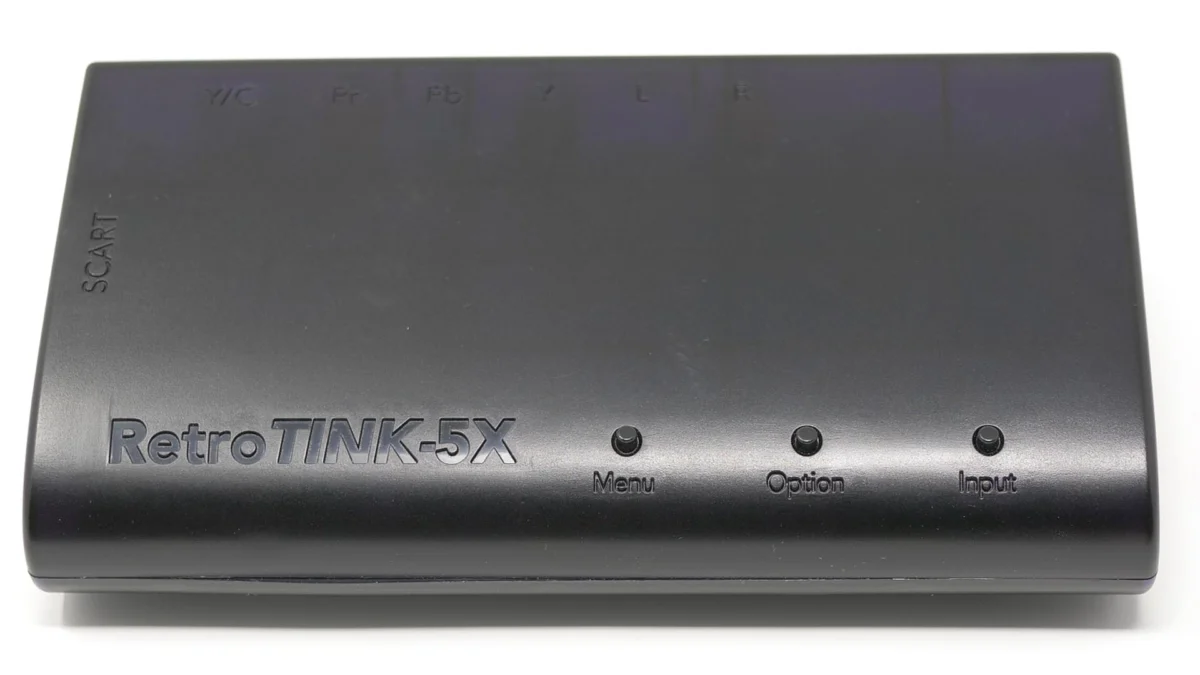
Mike Chi, the visionary behind RetroTINK LLC, has officially released what is widely anticipated to be the definitive Version 3 firmware for the highly acclaimed RetroTINK 5x Pro video scaler. This pivotal update marks the culmination of extensive development and community testing, transitioning previously experimental features into a stable, official release. The firmware introduces a crucial new feature for "pixel perfectionists" – automatic switching to an ultra-sharp, nearest-neighbor vertical scale when specific vertical integer resolutions are selected, alongside significant advancements in 480i deinterlacing and overall system stability. This release solidifies the RetroTINK 5x Pro’s position as a leading device in retro gaming preservation, ensuring classic consoles deliver optimal visual fidelity on modern displays.
The Significance of the Official Release
For the uninitiated, the term "experimental firmware" might suggest instability or risk. However, within the dedicated RetroTINK community, Mike Chi’s experimental builds are renowned for their robustness and serve as a public beta for features that often become industry benchmarks. This official Version 3 release, therefore, serves a dual purpose: it validates the stability and functionality of numerous updates that have been incrementally introduced over time, and it provides reassurance to a broader user base who may have hesitated to engage with non-official software. By formally certifying these advancements, RetroTINK LLC ensures that all users can confidently access a fully optimized experience without trepidation.
The RetroTINK 5x Pro, first launched approximately five years ago, revolutionized how vintage gaming consoles connect to contemporary high-definition televisions and capture cards. Traditional CRT displays natively handled the diverse and often idiosyncratic video signals produced by consoles from the 8-bit to 6th generation eras. Modern flat-panel displays, designed for standardized digital signals, struggle with these legacy formats, leading to issues like input lag, incorrect aspect ratios, blurry images, and display incompatibility. The RetroTINK 5x Pro addresses these challenges by acting as a sophisticated upscaler and deinterlacer, converting analog signals into clean, digital output suitable for HDMI-equipped screens. Its architecture, built around a powerful field-programmable gate array (FPGA), allows for highly customizable and precise video processing, making it a favorite among retro gaming enthusiasts, archivists, and content creators.
A Chronology of Version 3’s Evolution and Key Enhancements
The journey to this final Version 3 firmware has been characterized by continuous innovation, primarily driven by community feedback and Mike Chi’s commitment to pushing the boundaries of video processing. Since its initial official release, the RetroTINK 5x Pro’s firmware has seen a multitude of improvements, many of which are now consolidated and formalized in this latest update.

Advanced 480i Processing: One of the most significant areas of focus for Version 3 has been the enhancement of 480i processing. 480i, an interlaced video signal common in the PlayStation 2, GameCube, and Xbox era, presents a particular challenge for modern displays. Interlacing displays odd and even scanlines in alternating fields, creating a full frame over two cycles. This technique was effective on CRTs but often results in "combing" artifacts or noticeable flicker on progressive scan displays if not handled correctly.
- Improved Motion Adaptive Deinterlacer: The core of the 480i improvements lies in a significantly refined Motion Adaptive Deinterlacer. Unlike simpler "Bob" (which duplicates scanlines, causing vertical jitter) or "Weave" (which combines fields, causing combing artifacts with motion) deinterlacers, a motion-adaptive approach analyzes movement between fields. In static areas, it weaves fields for maximum detail, while in areas with motion, it uses a Bob-like method to prevent combing, resulting in a cleaner, more stable image. The improvements in Version 3 optimize this analysis, leading to fewer artifacts and a more natural presentation of motion.
- "MA Smoother" Option: Building upon the improved deinterlacer, the "MA Smoother" option introduces a nuanced approach to motion areas. Instead of a linear Bob, it applies a "smoothed-Bob" technique. This is reminiscent of the desirable effect achieved by the RetroTINK 2x’s smoother function for 480i content, providing a softer, less harsh appearance to motion without introducing significant blur. This option caters to users who prefer a slightly less aggressive deinterlacing artifact, akin to the visual characteristics of some classic display technologies.
- Inverse 2:2 De-interlacer (IVTC Back-port): A groundbreaking addition to Version 3 is the back-porting of the Inverse Telecine (IVTC) 2:2 de-interlacer from the higher-end RetroTINK 4K Pro. IVTC is critical for video content originally filmed at 24 frames per second (fps) and then converted to an interlaced 60 fields per second (like many film-based games or cutscenes). The 2:2 pulldown process involves repeating frames to match the 60i refresh rate. An IVTC algorithm intelligently detects and reverses this process, reconstructing the original 24p progressive frames. For 480i games that run at a locked 30 frames per second (often due to being derived from 24fps film sources or having a specific game engine cadence), this Inverse 2:2 de-interlacer eliminates the need for any "deinterlacing" artifacts whatsoever. It restores the true progressive scan, offering unparalleled clarity and stability for these specific titles. While not all 480i games benefit from this (as many are native 60i), for those that do, the impact on visual fidelity is substantial, transforming a previously challenging signal into a pristine progressive output.
Other Notable Improvements: Beyond 480i processing, the Version 3 firmware has also addressed several other aspects of the RetroTINK 5x Pro’s functionality:
- VHS Capture Stability: Enhancements have been made to improve the stability of VHS capture, which often involves dealing with inherently noisy and unstable analog signals. This is particularly valuable for archivists and content creators working with vintage video sources.
- Smoother Transitions between 240p and 480i: Many sixth-generation consoles and even some fifth-generation titles dynamically switch between 240p (progressive, used for game modes) and 480i (interlaced, often used for menus or cutscenes). The firmware now ensures these transitions are seamless, reducing momentary display interruptions or glitches.
- Improvements in S-Video Processing: The S-Video input, a popular connection for consoles like the Super Nintendo, Sega Saturn, and Nintendo 64, has also seen refinements, leading to improved color separation and overall image quality.
These cumulative updates underscore RetroTINK LLC’s commitment to continuous improvement, ensuring the 5x Pro remains at the forefront of retro video processing.
The Pixel Purist’s Delight: Automatic Nearest-Neighbor Vertical Scaling
The standout new feature introduced in this final Version 3 firmware is the automatic switching to an ultra-sharp, nearest-neighbor vertical scale. This is a significant addition for "pixel perfectionists" and those involved in high-quality video capture.
Understanding Scaling Algorithms: Digital video scalers employ various algorithms to resize an image.

- Bilinear and Bicubic scaling are common methods that average the color of surrounding pixels to create new ones, resulting in a smoother, more natural-looking image, especially when scaling non-integer ratios. This is often preferred for general viewing, as it minimizes "jaggies."
- Nearest-neighbor scaling, by contrast, simply replicates the closest existing pixel. While this can result in a "blockier" or "pixelated" look if not applied correctly, when used with integer scaling (where the output resolution is an exact multiple of the input resolution), it maintains pixel sharpness and avoids interpolation artifacts. This means each original pixel is perfectly represented by a block of new pixels, preserving the original pixel grid without blurring.
The RetroTINK 5x Pro’s Implementation: The challenge with manual integer scaling is that it requires precise configuration for each game or console. With this new feature, the RetroTINK 5x Pro now intelligently detects when a vertical integer output is selected (specifically for 1080p under/over modes and 1440p modes). Upon detection, it automatically applies the nearest-neighbor vertical scale. This eliminates the need for user interaction, ensuring that "pixel-perfect" clarity is achieved effortlessly in these specific high-resolution output modes.
Who Benefits Most?
- Pixel Purists: Gamers who prioritize the exact, unfiltered representation of original pixels, often to replicate the crispness seen on professional monitors or to avoid any perceived softness from interpolation.
- Content Creators and Archivists: Those capturing gameplay for YouTube, Twitch, or archival purposes will benefit from the uncompromised sharpness, which is crucial for detailed analysis or preservation efforts.
- Large OLED Display Users: On very large, high-resolution displays, even subtle interpolation artifacts can become noticeable. Nearest-neighbor scaling ensures a pristine image, especially given the pixel density of modern OLED panels.
While the article notes that 99.9% of RT5x users might not immediately perceive the difference compared to the standard Bilinear Sharp scaling, for the discerning user, this seemingly minor update represents a significant leap in image fidelity and convenience. The original article includes a comparative image, demonstrating the distinct difference between the RT5x’s standard Bilinear Sharp scaling and the new auto-NN option, emphasizing its appeal to those who appreciate the minutiae of pixel perfect reproduction.
Broader Impact and Future Outlook
The release of the final Version 3 firmware for the RetroTINK 5x Pro has several far-reaching implications for the retro gaming community and the broader landscape of digital preservation.
Unprecedented Hardware Longevity: In an era of planned obsolescence and rapid technological cycles, the continued, free firmware support for a device that is now five years old is remarkable. This commitment to ongoing development significantly extends the lifespan and value proposition of the RetroTINK 5x Pro. It demonstrates that a well-designed piece of hardware, paired with dedicated software updates, can remain highly relevant and competitive for many years, offering an exceptional return on investment for consumers. This approach also fosters a sense of trust and loyalty within the user base, knowing that their initial purchase will continue to evolve and improve.

Setting Industry Standards: RetroTINK LLC, under Mike Chi’s leadership, has consistently pushed the boundaries of what is possible in retro video processing. The RetroTINK 5x Pro, with its robust features and continuous updates, continues to set a high bar for other devices in the market. Its comprehensive handling of diverse input signals, advanced deinterlacing, and flexible scaling options make it a benchmark against which other solutions are often measured. The technical innovations, such as the back-porting of advanced deinterlacing from the RetroTINK 4K Pro, also highlight a synergistic development strategy across the product line, benefiting users of various tiers of RetroTINK hardware.
Paving the Way for Version 4 "CRT Sim Edition": This final Version 3 release is explicitly stated to be a prelude to shifting the primary development focus towards the Version 4 "CRT Sim Edition" firmware. This upcoming iteration is highly anticipated, promising advanced CRT simulation features, including highly customizable scanlines, mask effects, and geometry adjustments designed to authentically replicate the aesthetic of vintage cathode ray tube displays on modern panels. By "buttoning up" Version 3, Mike Chi ensures a stable foundation for existing users while dedicating resources to pioneering new avenues for retro gaming immersion. The community eagerly awaits what new levels of authenticity and visual customization Version 4 will bring, further bridging the gap between nostalgic experience and contemporary technology.
The Economic and Cultural Significance of Preservation: The ongoing development of devices like the RetroTINK 5x Pro plays a crucial role in the preservation of video game history. By making it easier and more visually appealing to play classic games on modern hardware, these scalers ensure that an entire cultural legacy remains accessible and enjoyable for new generations. Without such technology, many vintage consoles and their software would languish in obsolescence, incompatible with the prevailing display technologies. The continuous refinement of features like deinterlacing and pixel-perfect scaling means that the artistic intent and technical specifications of original game developers are honored, allowing players to experience these titles as authentically as possible.
The official release of the RetroTINK 5x Pro Version 3 firmware is more than just a software update; it is a testament to sustained innovation, community engagement, and a profound commitment to preserving the integrity of retro gaming. It ensures that the current generation of users benefits from years of development while simultaneously setting the stage for future advancements that promise to redefine the retro gaming experience. Enthusiasts can access the latest firmware and RetroTINK products via the official channels, ensuring their classic gaming setups are primed for peak performance.








