Johny Imanuel
Starbites, the latest role-playing title published by NIS America, has officially launched across multiple platforms, including the Nintendo Switch, PlayStation 5, Xbox Series X|S, and PC via Steam. Developed as a mid-range budget RPG, the title attempts to blend traditional turn-based mechanics with a unique science-fiction setting centered on mecha-style "Motorbots." However, early technical assessments and player reports indicate a significant disparity in quality between the Nintendo Switch version and its more powerful counterparts. While the game introduces an intriguing premise involving socio-economic struggle on a desolate planet, its execution is currently hampered by severe performance bottlenecks and stability issues on Nintendo’s hybrid hardware.
The Narrative Foundation: Survival on Planet Bitter
The story of Starbites is set on a harsh, desolate world known as Planet Bitter. The planet serves as a backdrop for a society defined by extreme economic disparity, where citizens are born into systemic debt and must navigate a landscape controlled by predatory loan sharks. The primary setting is the city of Delight—a name intended to be ironic given the grim reality of its inhabitants.
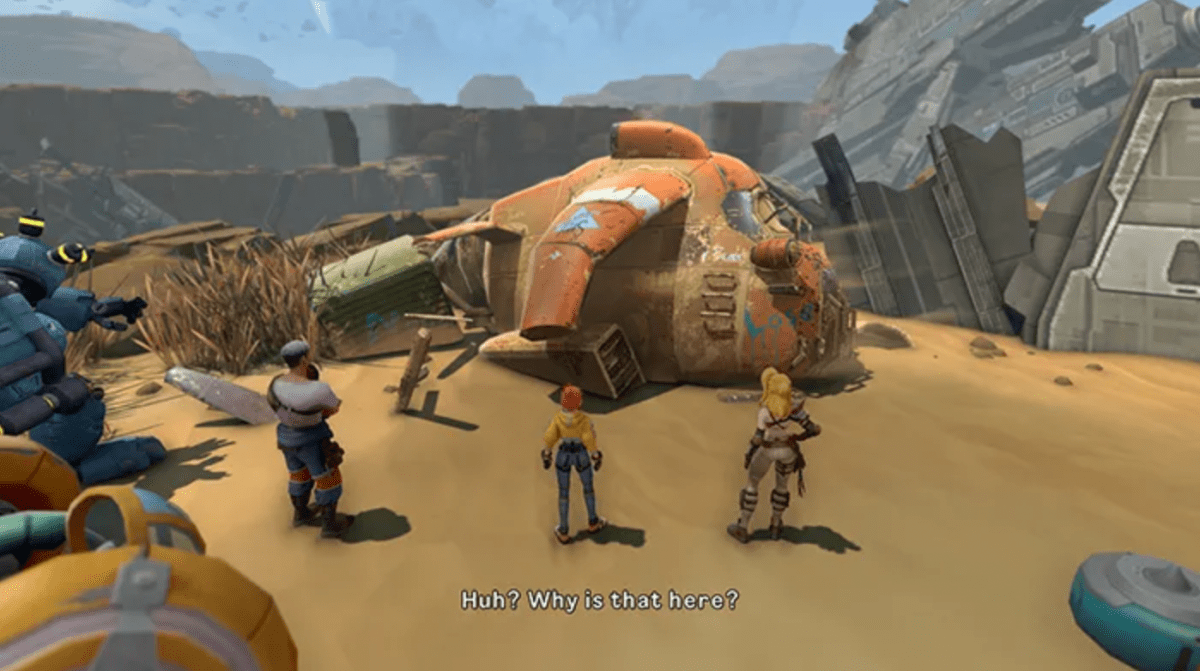
The narrative follows Lukida, a young woman who has spent her life scavenging and saving to purchase a ticket off-planet. Her goal is to escape the cycle of poverty alongside her companions, Badger and Gwendoll. The inciting incident occurs shortly after Lukida secures her passage; while traveling, she is ambushed by an atypically large and aggressive mechanical entity. The encounter results in the destruction of her Motorbot—a specialized mecha unit essential for survival and combat—and the loss of her hard-earned ticket.
Waking up back in Delight, Lukida finds herself burdened with even deeper debt and no immediate means of escape. This setback serves as the catalyst for a larger journey that expands beyond her personal survival, eventually involving the broader political and environmental mysteries of Planet Bitter. While the protagonist has been noted for her resilience, the supporting cast often adheres to established genre tropes, serving specific functional roles within the party’s combat composition.

Combat Mechanics and the Motorbot System
Starbites utilizes a traditional turn-based combat system that incorporates several modern quality-of-life features. Battles are governed by a timeline interface located in the upper-left corner of the screen, which dictates the turn order for both allies and enemies. This allows players to strategize based on upcoming threats, a staple of the tactical RPG genre.
The party consists of Lukida and two active allies, each paired with their own Motorbot. During a turn, players can choose from standard actions:
- Attack: Basic damage tied to the character’s specific weapon type.
- Skill: Specialized abilities that consume resources for higher damage or utility.
- Item: Use of consumables for healing or buffing.
- Guard: A defensive stance to mitigate incoming damage.
A central mechanic in the combat loop is the "Driver’s High" gauge. This meter fills as characters deal and receive damage. Once maximized, it triggers a significant power boost, allowing for more devastating attacks. Additionally, the game employs a "Break" system linked to elemental or type weaknesses. By exploiting an enemy’s vulnerability, players can trigger follow-up attacks from support characters—allies who are assigned to the active combatants but remain off-field until a "Break" occurs.
While standard encounters are designed to be relatively straightforward, boss battles emphasize endurance. These encounters often feature high-health enemies that require precise management of the timeline and resource gauges. Critics have noted that while the systems are functional and familiar, they do not necessarily innovate beyond the established boundaries of the turn-based RPG genre.
Technical Performance and Graphical Fidelity on Nintendo Switch
The most significant point of contention regarding Starbites involves its performance on the Nintendo Switch. Technical analysis reveals that the game struggles to maintain visual clarity and stability on the platform, whether played in docked or handheld mode.
Visual Degradation
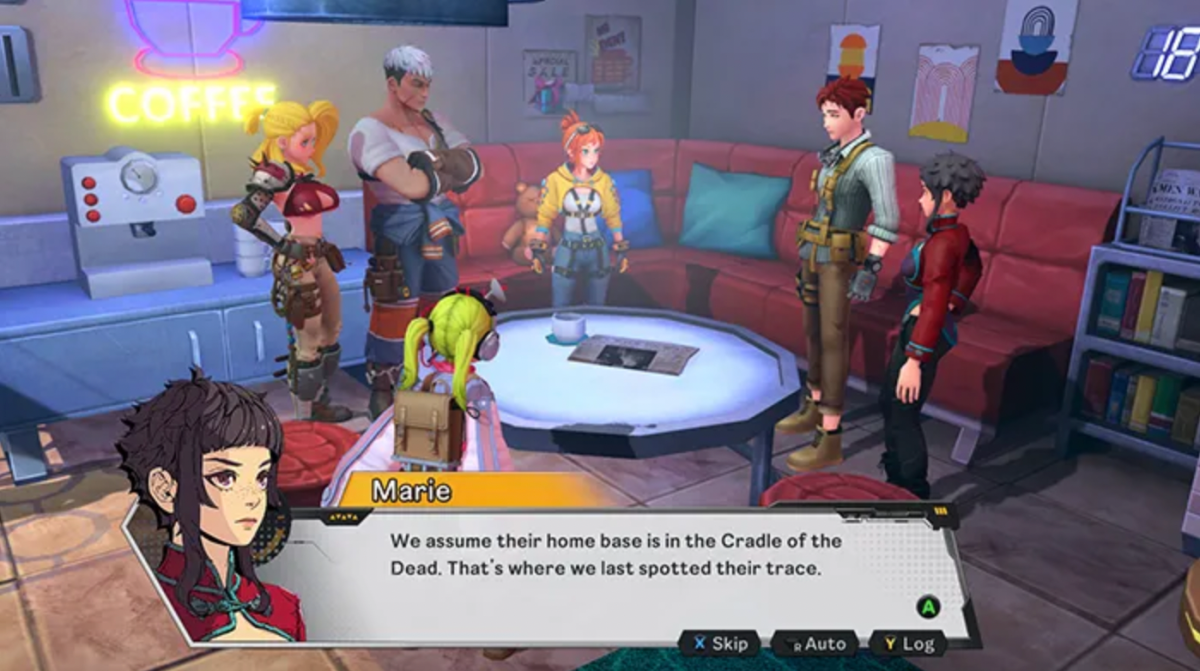
The graphical presentation on the Switch is characterized by low-resolution textures and a pervasive blurriness. This is particularly evident in:
- Environment Textures: The metallic surfaces of Motorbots and the interiors of buildings in Delight lack detail, often appearing as smudged or underexposed assets.
- Character Models: While the primary character designs are distinct in their 2D portraits, the 3D models used during exploration and combat lack the finer details seen in the PC and PlayStation 5 versions. Non-player characters (NPCs) suffer the most, frequently exhibiting "muddy" textures.
- World Map: A significant portion of the game involves traversing the "barren" exterior of Planet Bitter. On the Switch, these environments often feel empty and lack the atmospheric depth intended by the developers, exacerbated by poor draw distances and low-quality lighting effects.
Stability and Frame Rate
Beyond visual concerns, the Switch version faces substantial performance hurdles. Frame rate drops are common during transitions between map regions and during the execution of complex combat animations. More critically, players have reported persistent software crashes. These errors typically occur during area transitions, specifically during the latter half of the game (Acts 3 and 4). These "hard crashes" force the software to close, potentially leading to loss of progress if the player has not saved recently.
Chronology of Development and Launch
The development of Starbites was aimed at capturing the "AA" RPG market—games that sit between high-budget "AAA" titles and smaller indie projects.
- Initial Announcement: The game was revealed as a multi-platform project intended to bring a "junk-punk" aesthetic to the RPG genre.
- Release Window: The game launched in mid-2024 across all major platforms.
- The "Switch 2" Factor: Notably, a version of Starbites for the rumored "Switch 2" (Nintendo’s unannounced successor console) was confirmed to be in development. However, this version has been delayed indefinitely, leading to speculation that the developers are struggling to optimize the current build for existing hardware and are looking toward more powerful specifications to realize their vision.
- Post-Launch Support: Following the initial release, the publisher has acknowledged the need for stability improvements. However, as of the current build, many of the reported crashing issues on the Switch remain unresolved.
Market Positioning and Comparative Analysis
As a "budget RPG," Starbites is positioned as a lower-priced alternative to flagship titles like Final Fantasy or Tales of Arise. In this segment of the market, players often expect a degree of "jank" or less-than-perfect production values. However, the technical state of the Switch port has raised questions about the viability of porting modern, asset-heavy RPGs to the aging Switch hardware without significant optimization or asset redesign.
Compared to other NIS America-published titles, which often feature 2D sprites or stylized "chibi" graphics that run well on Switch, Starbites attempts a more realistic, 3D-heavy aesthetic. This choice appears to be the root of its technical struggles. On platforms like the PlayStation 5 and PC, the game maintains a stable frame rate and higher resolution, suggesting that the core code is functional but poorly adapted for the Switch’s mobile chipset.
Official Responses and Future Outlook
While NIS America has not issued a formal "hotfix" schedule for the specific crashing bugs on the Switch, the company’s history suggests that incremental patches are likely. The delay of the "Switch 2" version is perhaps the most telling piece of information regarding the game’s technical future. It implies that the developers recognize the current hardware’s limitations and may be prioritizing a more stable experience on next-generation hardware rather than attempting a complete overhaul of the existing Switch version.
Industry analysts suggest that the performance of Starbites serves as a case study for the "end-of-life" cycle of the Nintendo Switch. As developers continue to build games for the PS5 and Xbox Series X, the gap between those consoles and the Switch becomes harder to bridge.
Broader Implications for the RPG Genre
The reception of Starbites highlights a growing trend in the gaming industry: the "optimization gap." For niche RPGs, the cost of extensive optimization for a specific platform can sometimes exceed the projected revenue from that platform. However, the Nintendo Switch remains a primary hub for RPG fans, making it a "must-have" platform for publishers like NIS America.
For consumers, the current recommendation is to approach the Switch version with caution. While the core gameplay and story of Starbites provide a competent, if familiar, RPG experience, the technical barriers on the Switch—ranging from aesthetic blurriness to game-breaking crashes—suggest that the PC or PS5 versions are the superior ways to experience the world of Planet Bitter.
In conclusion, Starbites offers a solid foundation for fans of turn-based mecha RPGs, but its potential is currently obscured by technical limitations on Nintendo’s hardware. Future patches may improve the experience, but for now, the title stands as a reminder of the challenges inherent in cross-platform development during a console generational transition. Those interested in Lukida’s journey may find it more rewarding to wait for a performance-stabilizing update or to seek out the game on more robust hardware.