
 Jia Lissa
The evolution of the global video game industry is often viewed through the lens of corporate competition and technological advancement, yet the internal cultural dynamics of the companies involved frequently remain obscured. Mike Fischer, a veteran executive whose career spans leadership roles at Sega, Namco, Microsoft, and Amazon, provides a rare transpacific perspective on the era that defined the modern gaming landscape. Having served at both Sega’s Japanese headquarters and its American subsidiary during the 1990s, Fischer’s experiences illuminate the organizational friction, visionary leadership, and technical challenges that characterized Sega’s transition from a market leader to a software-centric entity.

The Formative Years: Sega Enterprises Ltd. in Tokyo (1990–1994)
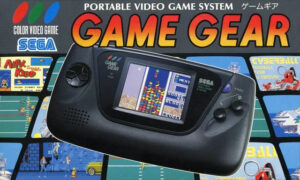
Mike Fischer entered the gaming industry in April 1990, joining the Overseas Consumer Products Business Division at Sega’s headquarters in Otorii, Tokyo. A graduate of California Polytechnic State University with a degree in quantitative economics, Fischer’s entry into the industry was unconventional. After two years teaching English in Japan, he joined Sega at a pivotal moment: the Sega Genesis (Mega Drive) was beginning its ascent in North America, while the Japanese branch was preparing for the launch of the Game Gear and the Sega CD.
During his tenure in Tokyo, Fischer acted as a "utility player," bridging the gap between Japanese development teams and international markets. His responsibilities ranged from technical translations of repair documents to naming consumer products, such as the "Gear-to-Gear" cable for the Game Gear. This period also afforded him the opportunity to serve as a liaison for high-profile figures, including Michael Jackson and Formula One driver Ayrton Senna, during their visits to Sega’s development studios.

Fischer witnessed firsthand the creative process behind the birth of Sonic the Hedgehog. While Yuji Naka is often the primary name associated with the franchise, Fischer emphasizes the critical contributions of character creator Naoto Ohshima and designer Hirokazu Yasuhara. The corporate mandate at the time was clear: Sega required a "Mario-killer" to establish its identity on the global stage. The success of this mascot-driven strategy would eventually propel Sega of America to a dominant market position, though it simultaneously created an internal rift between the Japanese and American branches.
The Transpacific Divide: Sega of America and the Pico Project (1994–1997)
In 1994, Fischer transferred to Sega of America (SOA) as a product manager, a move prompted by family health concerns but facilitated by Sega’s executive leadership. This transition coincided with the peak of the Genesis’s success in the United States, where it held nearly 50% of the market share. However, the corporate culture in Redwood City differed vastly from the frugal, meticulous environment of Sega Japan. Fischer recalls the shock of witnessing the relative abundance and waste in the American office compared to the "scratch paper" culture of the Tokyo headquarters.
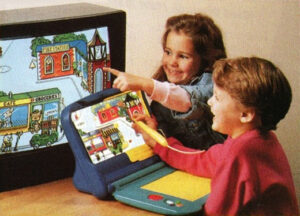
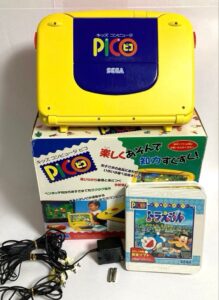
Fischer’s primary focus at SOA was the Sega Pico, an educational "edutainment" system designed for younger children. While the Pico was a significant success in Japan, it struggled in the U.S. market due to pricing pressures and high manufacturing costs. Fischer worked under Lydia Gable and alongside SOA CEO Tom Kalinske, an executive Fischer describes as possessing an unparalleled understanding of the retail and toy industries.
This era highlighted the growing philosophical divide between Sega Enterprises Ltd. (SOJ) and SOA. While Kalinske and his team wanted to extend the lifecycle of the Genesis to capitalize on its massive installed base, SOJ leadership, led by CEO Hayao Nakayama, was eager to move toward the next generation of hardware. This tension was exacerbated by the underperformance of the Mega Drive in Japan, leading to a "tail wagging the dog" dynamic where the subsidiary’s success created resentment at headquarters.
The Saturn Era: Technical Complexity and Market Missteps
The transition to the 32-bit era via the Sega Saturn remains one of the most studied failures in gaming history. Fischer offers technical and organizational context for this decline. The Saturn was an incredibly complex machine, featuring a dual-processor architecture (Hitachi SH-2) that was notoriously difficult for developers to program. Fischer notes that while the Genesis had thrived on the "workhorse" Motorola 68000 chip, the move to a Japanese-made chipset for the Saturn may have been influenced by domestic industrial interests rather than technical efficiency.
Furthermore, the documentation for the Saturn was insufficient, leaving third-party developers struggling to utilize the hardware effectively. Fischer recalls the manufacturing challenges, including a specific instance where the aesthetic design of the Saturn’s shell—intended to have a "sparkly" finish—interfered with the structural integrity of the plastic molding. This resulted in flow lines and visual defects in pre-production units, a metaphor for the broader systemic issues plaguing the console’s launch.
The financial strain was further compounded by inventory management issues. Under the export-driven model of the time, SOJ essentially "sold" hardware and cartridges to SOA. When the market shifted, SOA was left with an excess of inventory that they could not easily liquidate, leading to significant financial losses that were often blamed on American management rather than the rigid corporate structure of the parent company.
The Namco Interlude and the Rise of the PlayStation
Fischer left Sega in 1997 to join Namco during the peak of the original PlayStation’s lifecycle. This period was marked by Namco’s dominance in the arcade-to-console port market, with titles like Tekken, Ridge Racer, and Soul Calibur. Fischer’s time at Namco provided a counter-narrative to Sega’s hardware struggles. Namco’s developers were masters of optimization; for the Dreamcast port of Soul Calibur, they utilized "inverse kinematics" to simulate complex movements without the heavy computational load of calculating every limb individually.
The success of Soul Calibur on the Dreamcast was a significant milestone, yet it also signaled the end of Sega’s hardware aspirations. Despite the game’s critical and commercial success, Namco’s internal teams were increasingly drawn to the PlayStation 2’s potential. The close relationship between Namco and Sony was a strategic pillar of the era, and Namco’s decision to develop for the Dreamcast was a rare departure from an otherwise exclusive alignment.
Returning to a Software-Only Sega (2002–2004)
Fischer returned to Sega in the early 2000s after the company had officially exited the hardware business. Working under Peter Moore, Fischer was tasked with managing Sega’s transition into a third-party publisher. This role required rebuilding relationships with former rivals, including Sony and Nintendo. Fischer describes the poignant moment when the Sonic the Hedgehog mascot was welcomed into Nintendo of America’s headquarters, marking the end of the most famous rivalry in the industry.
However, the "new" Sega was not without its internal challenges. Fischer recounts significant friction with Yuji Naka, who had become a powerful and often difficult figure within the company. Naka’s resistance to American market trends—such as the rise of M-rated games and online multiplayer—created a disconnect between Sega’s development output and consumer demand. Fischer’s attempts to deliver a "Gamer’s Manifesto" regarding these trends were met with hostility from Naka, highlighting the persistent difficulty of aligning Japanese development with Western market realities.
Broader Impact and the Future of Sega
Reflecting on the current state of Sega, Fischer expresses optimism regarding the leadership of Shuji Utsumi, the current CEO of Sega of America and Sega Europe. Utsumi, a veteran of both the Disney and Sega ecosystems, is described as a leader capable of balancing nostalgia with innovation. Fischer emphasizes that while Sega’s legacy IP is a valuable asset, the company cannot rely solely on "recycling nostalgia."

The success of the Yakuza (Like a Dragon) series, led by Toshihiro Nagoshi, serves as a blueprint for this new direction. By innovating within a narrative-driven framework and expanding the scope of the IP, Sega has found a way to appeal to a modern, global audience. Conversely, Fischer notes that the Sonic franchise has often struggled to find its footing in the post-16-bit era, with some of the most successful recent entries, such as Sonic Mania, being developed by external fans-turned-professionals rather than internal teams.
Chronology of Key Events
- 1990: Mike Fischer joins Sega Enterprises Ltd. in Tokyo.
- 1991: Launch of the Game Gear and development of Sonic the Hedgehog.
- 1994: Fischer transfers to Sega of America; launch of the Sega Pico in the U.S.
- 1995: The North American launch of the Sega Saturn.
- 1997: Fischer joins Namco during the PlayStation era.
- 1999: Launch of Soul Calibur on the Sega Dreamcast.
- 2001: Sega announces its exit from the hardware market.
- 2002: Fischer returns to Sega to assist Peter Moore in third-party transition.
- 2004: Fischer joins Microsoft’s Xbox division.
Analysis of Implications
The career of Mike Fischer serves as a case study in the challenges of global corporate integration. Sega’s ultimate failure in the hardware market was not the result of a single misstep, but rather a combination of technical over-engineering, internal cultural friction, and a failure to adapt to the shifting logistics of the global software market. The "spy" mythology—the idea that SOJ and SOA were actively sabotaging one another—is simplified; the reality was a more complex struggle between two branches operating under different economic pressures and management philosophies.
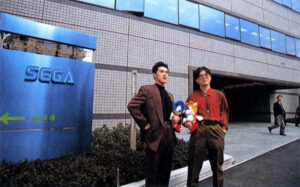
As Sega moves further into the 21st century, its ability to remain relevant depends on its capacity to empower new creative voices while maintaining the "ragtag" spirit that allowed it to challenge Nintendo decades ago. The transition from a hardware-first to a software-first company is now complete, but the lessons of the 1990s remain vital for any organization navigating the intersection of technology, culture, and global commerce.








