Farhan hamdan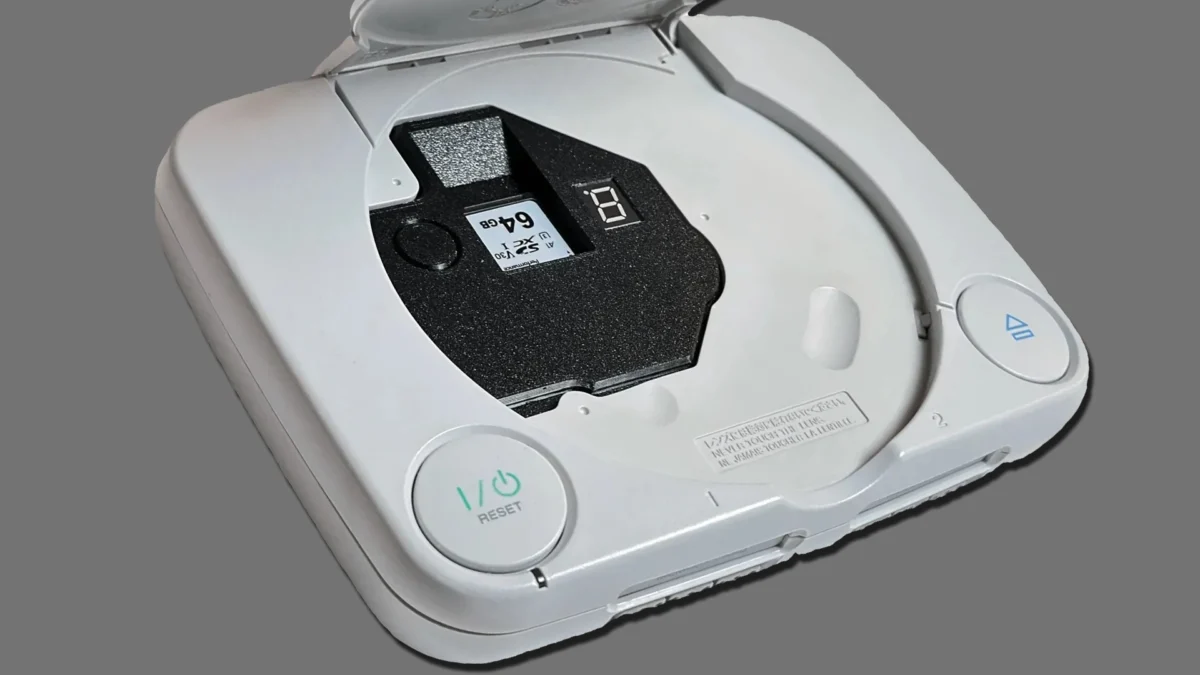
Pre-orders have officially commenced for the ArcStation, a novel Optical Drive Emulator (ODE) designed for the original Sony PlayStation 1 console. This new device distinguishes itself with a solder-less installation method, directly replacing the console’s aging optical drive assembly, and boasts compatibility with both the standard PlayStation 1 and the more compact PSOne model. Priced at approximately 7,291.20 Ukrainian Hryvnia (UAH), which translates to around $165 USD including shipping, the ArcStation is slated for initial shipment in September or potentially sooner, positioning itself as a significant contender in the burgeoning retro gaming preservation market.
The Imperative of Console Preservation: Why Optical Drive Emulators Matter
The Sony PlayStation, launched in 1994, revolutionized the video game industry, ushering in the era of 3D gaming and optical disc media. Over its lifespan, it sold over 102 million units, leaving an indelible mark on popular culture. However, like all electronic devices, the PlayStation 1 is susceptible to the ravages of time. A primary point of failure for these consoles is the optical drive, a complex mechanical component responsible for reading game discs. Lasers degrade, motors wear out, and plastic gears become brittle, leading to disc read errors, slow loading times, or complete drive failure.
For enthusiasts and collectors, the degradation of original hardware presents a significant challenge to game preservation. While software emulation on modern PCs offers one avenue for experiencing classic titles, many purists prefer playing on original hardware for an authentic experience, free from potential emulation inaccuracies or input lag. This desire fuels the demand for hardware modifications that can extend the life of these venerable consoles. Optical Drive Emulators (ODEs) have emerged as a leading solution, allowing users to load games directly from digital media (like SD cards) rather than relying on the fragile optical drive. By circumventing the mechanical drive, ODEs ensure consistent performance, faster load times, and often add quality-of-life features not present in the original hardware. They represent a critical technological advancement in the ongoing effort to preserve gaming history and ensure future generations can experience these seminal titles as they were originally intended.
ArcStation’s Unique Approach: Solder-Less Installation and RF Signal Emulation
The ArcStation enters a market that already features several established PlayStation 1 ODE solutions, yet it aims to carve out its niche through distinctive features. Its most prominent selling point is the solder-less installation. Unlike many existing ODEs that require intricate soldering, often demanding specialized tools and skills, the ArcStation is designed for a straightforward, plug-and-play replacement. Users simply unbolt the original optical drive assembly and substitute it with the ArcStation unit, which comes pre-integrated into a custom 3D-printed enclosure. This ease of installation significantly lowers the barrier to entry for many retro gaming enthusiasts who may be hesitant to perform complex modifications on their valuable vintage consoles.
Beyond its user-friendly installation, the ArcStation also employs a sophisticated method of RF signal emulation. This technical approach means the device does not merely intercept data streams but actively mimics the radio frequency (RF) signals that the console’s motherboard would ordinarily receive from a spinning CD-ROM. The significance of this lies in its potential for near-perfect compatibility. By emulating the low-level RF signals, the PlayStation console is designed to perceive the ArcStation as an authentic optical disc, eliminating many of the compatibility issues that can sometimes plague other ODEs which might operate at a higher level of abstraction. If this emulation proves robust in real-world testing, it suggests that the ArcStation could offer unparalleled game compatibility, running titles that might be problematic for other solutions. This advanced emulation strategy underscores a commitment to fidelity and broad compatibility, aiming to provide an experience virtually indistinguishable from playing an original disc.
Technical Specifications, Compatibility, and Known Limitations
While the ArcStation promises broad compatibility, it is important to note certain distinctions, particularly concerning the PSOne model. The developers have indicated that while the ArcStation is fully compatible with the smaller PSOne, some advanced features, such as a Virtual Memory Card function and a direct "reset to menu" option, may not be available on this specific console revision. These limitations are likely due to hardware differences between the original PlayStation 1 models (SCPH-100x to SCPH-900x) and the later, streamlined PSOne (SCPH-10x) revision, which often had different internal layouts or reduced functionality in certain subsystems. Prospective buyers of PSOne consoles should factor these specific limitations into their purchasing decision.
The core functionality of the ArcStation, including its ability to load games from digital media and its RF signal emulation, remains consistent across compatible models. The device’s integrated 3D-printed enclosure ensures a clean, professional look and protects the internal electronics. Further technical details, such as supported file formats (e.g., ISO, BIN/CUE), maximum storage capacity, and specific user interface features, are expected to be elaborated upon as the product nears its shipping date and independent reviews become available. The promise of "no compatibility issues" hinges on the effectiveness of its RF signal emulation, a claim that will be rigorously tested by the retro gaming community upon release.
Pricing, Availability, and the Dynamics of Early Adoption

The ArcStation is currently available for pre-order at a price point of approximately 7,291.20 UAH, which converts to around $165 USD, inclusive of shipping costs. This pricing is explicitly labeled as a "pre-order bonus," indicating that the cost is subject to increase after the initial batches have been sold. This common sales strategy aims to incentivize early adopters and help fund initial production runs. The estimated shipping window for these pre-orders is September or potentially earlier, depending on production schedules and logistics.
Purchasing new hardware projects, particularly from smaller developers, always carries a degree of risk. As with "all new projects," buying early means investing before extensive, independent reviews are widely available. Early adopters essentially contribute to the project’s funding and provide crucial feedback, but they also take on the risk that the final product might not perform exactly as advertised, or that unforeseen issues might arise. Many consumers prefer to wait for detailed analyses, performance benchmarks, and long-term reliability reports from trusted reviewers before committing to a purchase. However, for those who are enthusiastic about supporting innovation in the retro gaming space and are willing to accept the inherent risks, the current pre-order bonus offers a financial incentive. The developer’s strategy appears to balance the need for early capital with the understanding that robust, independent validation will be key to broader market acceptance.
A Broader Look at the PlayStation 1 Preservation Landscape
The PlayStation 1 ODE market is not new, and the ArcStation enters a competitive field. Two of the most prominent existing solutions are the PSIO (PlayStation I/O) and the XStation.
- PSIO: One of the earliest and most well-regarded PS1 ODEs, the PSIO is known for its high compatibility and robust feature set. However, its installation typically requires soldering a custom board to the console’s parallel I/O port, a task that can be intimidating for novices. It also requires an "SD card solution" that plugs into the parallel port. While highly effective, its availability and installation complexity have limited its reach.
- XStation: The XStation emerged as a strong competitor, offering excellent compatibility and often faster loading times than PSIO. Its installation involves replacing the console’s CD-ROM controller board, which also requires significant soldering skills, often involving fine-pitch components. The XStation has gained popularity for its performance and continuous developer support.
The ArcStation differentiates itself primarily through its solder-less installation, aiming to democratize the ODE upgrade process. While PSIO and XStation target users comfortable with advanced modifications, ArcStation aims for a broader audience, including those with minimal technical expertise. This ease of installation could significantly expand the market for PS1 ODEs, bringing the benefits of digital game loading to a wider array of console owners. Its RF signal emulation approach, if proven effective, could also position it as a leader in compatibility, potentially even surpassing some existing solutions in specific edge cases. The competition among these devices ultimately benefits the consumer, driving innovation and offering a range of options to suit different skill levels and preferences.
The Future of Retro Gaming Hardware and Community Engagement
The emergence of products like the ArcStation highlights a vibrant and growing segment within the retro gaming community: the hardware modification and preservation scene. As consoles from the 1990s and early 2000s continue to age, the demand for reliable, long-term solutions to keep them operational will only increase. ODEs are not merely about playing pirated games; they are fundamental tools for ensuring that legitimate game libraries remain accessible and playable for decades to come, independent of the dwindling supply of working optical drives and physical media.
The development of the ArcStation, reportedly originating from Ukraine, also underscores the global nature of this community and the ingenuity found across various regions. The initial payment flagging issue, a common occurrence for international transactions from less frequently traded regions, serves as a minor logistical note rather than an impediment, eventually resolved by the user’s confirmation.
The broader implications extend beyond individual consoles. These innovations foster a culture of hardware literacy, encouraging users to understand the internal workings of their systems and empowering them to maintain and upgrade their own equipment. Community figures, such as Bob from RetroRGB, play a crucial role in validating these new products through rigorous testing and detailed reviews. His announced intention to perform a livestream or full video review upon receiving his unit is typical of the collaborative spirit within the retro gaming world, where independent verification is highly valued. The success of the ArcStation, like its predecessors, will depend not only on its technical prowess but also on its acceptance and endorsement by this passionate and discerning community.
Conclusion
The ArcStation represents an exciting new development in PlayStation 1 hardware preservation. Its solder-less installation and advanced RF signal emulation strategy promise a user-friendly experience with potentially high compatibility, addressing key pain points for retro gaming enthusiasts. While the pre-order model carries inherent risks for early adopters, the potential benefits of extending the life of beloved consoles and ensuring access to classic titles are substantial. As the estimated September shipping date approaches, the retro gaming community will eagerly await independent reviews to validate its performance and confirm its position as a valuable addition to the evolving landscape of console preservation technologies. The ArcStation stands as a testament to the ongoing dedication to keeping gaming history alive, accessible, and playable for generations to come.