Vera Clarissa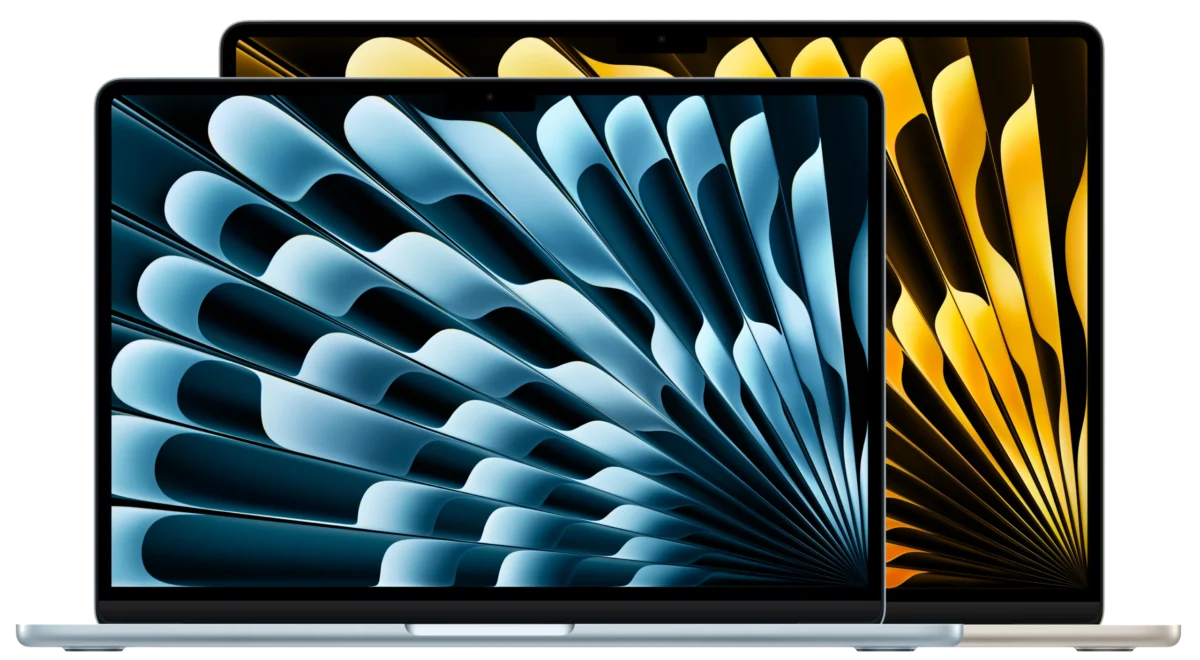
The landscape of ultraportable computing has been dramatically reshaped with the March 3rd, 2026 introduction of the M5 MacBook Air. While outwardly appearing similar to its predecessors, this latest iteration marks a significant evolutionary step, primarily driven by the integration of Apple’s advanced M5 chip. This processor heralds a new era for MacBook Air workflows, fundamentally altering the user experience and pushing the boundaries of what was previously thought possible in a fanless design.
The journey of the MacBook Air, powered by Apple Silicon, has been one of consistent, and often surprising, advancement. Five generations into this transition, the difference between the original models and the M5 MacBook Air is nothing short of revolutionary. Gone are the days when the MacBook Air was characterized by underpowered CPUs and comparatively weak integrated graphics. The M5 chip fundamentally redefines the performance envelope, delivering capabilities that rival, and in some aspects exceed, devices that historically required active cooling.

Performance Benchmarks: Bridging the Gap with Pro Models
A key indicator of the M5 MacBook Air’s prowess lies in its performance relative to its more powerful sibling, the M5 MacBook Pro. Even without the benefit of active cooling systems, the M5 MacBook Air demonstrates remarkable efficiency and power. In rigorous testing, specifically a Cinebench GPU benchmark, the M5 Air achieved approximately 92% of the performance of the M5 MacBook Pro. This translates to a score of around 22,000 for the Air, closely trailing the Pro’s approximately 24,000. While year-over-year chip upgrades often yield incremental improvements, the M5 chip’s GPU represents a substantial leap forward compared to the M4 generation, highlighting Apple’s accelerated development in graphics processing for its mobile silicon.
This leap in graphical capability is not merely an academic exercise; it directly translates into tangible benefits for users. Tasks such as high-resolution photo editing, casual video creation, and even some light 3D modeling, previously considered outside the purview of the MacBook Air, are now within reach. The ability to maintain such high performance without thermal throttling is a testament to the architectural innovations within the M5 chip and Apple’s sophisticated power management strategies.

Storage and Connectivity: Enhanced Capacity and Next-Generation Networking
Beyond the core processing power, the M5 MacBook Air introduces significant upgrades in storage and wireless connectivity. The base storage configuration has been substantially increased to 512 GB, addressing a long-standing demand for more ample onboard storage in the entry-level model. Furthermore, the storage capacity can now be expanded to an impressive 4 TB, though this comes at a premium of an additional $1200. This increased storage flexibility caters to a wider range of users, from students and casual users to professionals who require significant local storage for their projects.
A notable innovation is the inclusion of Apple’s proprietary N1 wireless networking chip. This chip is engineered to support Wi-Fi 7, Bluetooth, and Thread, promising a more integrated and efficient wireless experience. The N1 chip is particularly adept at reducing battery consumption during location tracking activities, a feature that enhances both privacy and power efficiency. In terms of raw speed, Wi-Fi 7 connectivity, with theoretical speeds reaching up to 46 Gb/s, has the potential to match or even surpass the performance of Thunderbolt 4 connections, offering a glimpse into the future of high-speed wireless data transfer.

Memory and Power Delivery: Optimized for Performance and Efficiency
The M5 MacBook Air also sees an enhancement in its memory subsystem. The memory bandwidth has been increased to 153 GB/s, utilizing cutting-edge mobile memory technology with 4800 MHz LPDDR5X-9600. This substantial increase in memory bandwidth is crucial for handling the demands of the M5 chip’s processing power, enabling smoother multitasking and faster data access for demanding applications.
Complementing these internal upgrades is a new 40-Watt dynamic charger, capable of a maximum output of 60W. This replaces the previous 35-Watt Dual USB-C compact adapter, indicating a need for increased power delivery to support the more potent M5 chip and its enhanced capabilities, particularly during intensive tasks.

A Testament to Evolution: M5 Air vs. M1 Pro Performance
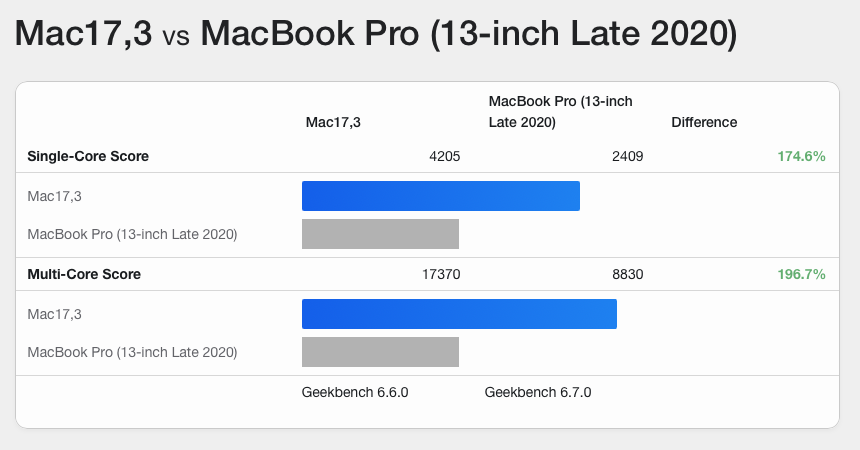
To truly appreciate the advancement represented by the M5 MacBook Air, a direct comparison to earlier generations is illuminating. Apple’s own metrics suggest that the M5 chip offers performance roughly equivalent to two M1 chips combined. This statement, while seemingly hyperbolic, is supported by benchmark data. A comparison between a 13-inch M5 MacBook Air and a 13-inch M1 MacBook Pro reveals that the M5 Air is approximately 174% as fast as the M1 Pro. While not quite reaching the 200% mark, this figure underscores the remarkable progress achieved by Apple Silicon in just five years. The M5 MacBook Air, a device designed for portability and everyday use, now offers performance levels that previously belonged to more powerful, actively cooled Pro models.
The Era of Apple Intelligence: Ubiquitous AI on Apple Devices
The launch of the M5 MacBook Air coincides with the continued rollout and integration of Apple Intelligence across Apple’s ecosystem. macOS now fully supports Apple Intelligence on any Mac equipped with Apple Silicon, including the new M5 MacBook Air. This advanced AI capability is also extending to other devices, with support on most M-chip-equipped iPads and iOS devices running iOS 18 and later with an A17 Pro chip or better. This includes models such as the iPhone 15 Pro/Pro Max and all iPhone 16 models. The ubiquity of Apple Intelligence signifies a strategic push towards integrating sophisticated AI features directly into the user experience, enhancing productivity, creativity, and interaction with devices.
Key Features and Specifications of the M5 MacBook Air
- Closed Lid Mode: All MacBook models, including the M5 MacBook Air, continue to support "clamshell" or closed-lid mode. This feature allows users to operate their MacBook with the built-in display turned off, dedicating all unified memory to one or two external displays. To enable this mode, the MacBook must be connected to AC power, an external display, and an external USB or Bluetooth mouse and keyboard. Once the desktop appears on the external display, closing the lid will allow the MacBook to enter sleep mode, but it can be instantly awakened by using the mouse or keyboard. The internal display remains inactive until the external display is disconnected and the lid is opened.
- Battery Life: Apple claims up to 15 hours of wireless web browsing and up to 18 hours of video streaming for the M5 MacBook Air, maintaining its reputation for exceptional battery endurance.
Under the Hood: A Deeper Dive into the M5 Chip Architecture

The core of the M5 MacBook Air’s performance lies within the M5 chip itself. While specific details on the M5 chip’s internal architecture remain proprietary, general specifications provide insight into its capabilities:
- CPU Cache Configuration: All M5 chips share a consistent memory configuration for their CPU caches, including:
- L1 Instruction Cache (L1i): 128 KB
- L1 Data Cache (L1d): 64 KB
- System Level Cache (SLC): 128 MB
This substantial SLC is a critical component for high-performance computing, allowing the CPU to access frequently used data with minimal latency.
-
Memory: The M5 MacBook Air features 4800 MHz LPDDR5X-9600 memory, contributing to the impressive 153 GB/s memory bandwidth. This ensures that the processor has rapid access to the data it needs, minimizing bottlenecks in demanding applications.

-
Drives: The M5 MacBook Air supports PCIe-based SSD storage, with configurations ranging from 512 GB up to 4 TB.
-
Expansion: While specific expansion ports are not detailed in the provided snippet, it is typical for MacBook Air models to feature Thunderbolt/USB 4 ports, offering versatile connectivity for peripherals and external displays.
-
Physical: The physical dimensions and weight of the M5 MacBook Air are consistent with previous generations, maintaining its hallmark portability and sleek design.

Implications for the Market and Future of Portable Computing
The M5 MacBook Air’s release is not just an iterative update; it represents a significant milestone in the evolution of portable computing. By bringing Pro-level performance to a fanless, ultraportable design, Apple is blurring the lines between different product tiers and raising user expectations across the board.
The substantial improvement in GPU performance, coupled with enhanced storage and next-generation wireless capabilities, makes the M5 MacBook Air a compelling option for a broader range of users than ever before. Creative professionals, developers, and even power users who previously relied on MacBook Pro models may find the M5 MacBook Air to be a perfectly capable and more portable alternative.

The integration of Apple Intelligence further solidifies Apple’s commitment to a software-hardware ecosystem that leverages AI to enhance user experience. This move towards more intelligent and responsive devices suggests a future where computing is not just about raw power but also about intelligent assistance and seamless integration.
The M5 MacBook Air, therefore, stands as a powerful testament to Apple’s continued innovation in silicon design and its ability to push the boundaries of portable computing. It redefines what users can expect from an ultraportable laptop, setting a new benchmark for performance, efficiency, and intelligent functionality in the market.