Jia Lissa
Strategic Expansion and the Birth of Sonic Co., Ltd.
The development of Landstalker was inextricably linked to the institutional growth of Climax Entertainment. Following the commercial success of Shining in the Darkness in early 1991, Climax co-founders Hiroyuki Takahashi and Kan Naitō sought to expand their production capabilities. In June 1991, this ambition materialized as Sonic Co., Ltd., a joint venture between Climax and Sega. This new entity was designed to streamline the RPG development process by recruiting specialists from diverse fields, including marketing and fine arts, to bolster Sega’s presence in the competitive RPG market of the early 1990s.
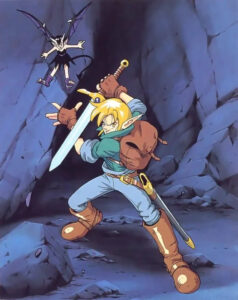
While Hiroyuki Takahashi led the team developing Shining Force, Kan Naitō took charge of a secondary group. This team was tasked with creating what was tentatively titled Hero Lancelot: Legend of Shining. Naitō, a programmer with a long-standing obsession with 3D environments dating back to his work on the MSX and PC-6001, felt that the first-person corridors of Shining in the Darkness were merely a stepping stone. He envisioned a world where players could move not just forward and backward, but diagonally and vertically, creating a "diorama" effect that would offer a movie-like sense of immersion similar to the Indiana Jones films he admired.
The Diamond-Shaped Dimension System: Engineering the DDS520
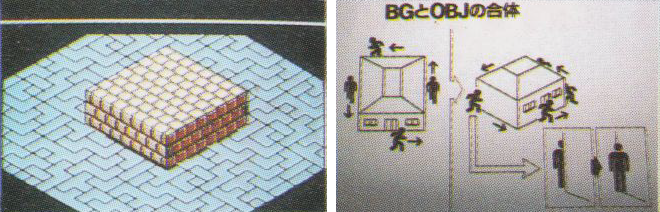
The primary obstacle to Naitō’s vision was the Sega Mega Drive’s hardware architecture, which was designed for horizontal and vertical tile-based scrolling. Implementing an oblique, isometric perspective required a complete overhaul of how image data was stored in Video Random Access Memory (VRAM). Naitō’s solution was the creation of the Diamond-Shaped Dimension System (DDS), an engine that utilized 64×64 pixel diamond panels to compose the game’s surface.

The "520" in the engine’s final name, DDS520, originally referred to the target number of maps the game would include. However, as the scope of the project expanded, the engine was optimized to handle an increasingly massive amount of data. By the time development concluded, the game featured over 850 individual maps, which Naitō estimated would be the size of the Tokyo Dome if laid out continuously. To maintain performance, Naitō developed specialized formulas that treated these diamond shapes as vectors, reducing the computational overhead and preventing the "blast processing" of the Mega Drive’s Motorola 68000 CPU from slowing to a crawl during complex diagonal scrolling.
One of the most contentious technical decisions during this period was the omission of character shadows. While shadows would have aided spatial awareness during the game’s notorious platforming sections, Naitō determined that the processing power required to render shadows for every character, enemy, and moving trap would have necessitated cutting the game’s vertical depth by half. He opted for environmental complexity over visual aids, a choice that continues to define the game’s high difficulty curve and unique aesthetic.
Narrative Construction and the "Training Camp" Methodology
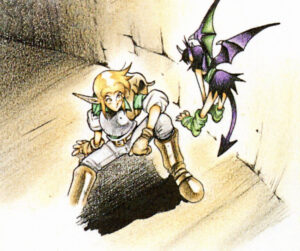
The creative process for Landstalker was characterized by intense "training camps" at the Yomiuri Land Hotel. These sessions, inspired by Naitō’s time at Chunsoft, involved 24-hour work cycles where programmers, planners, and designers would debate mechanics and story beats until a consensus was reached. It was during these sessions that Yoshitaka Tamaki, the lead character designer, refined the protagonist Nigel (Lyle in Japan) and his companion Friday.
Tamaki sought to distance the project from Nintendo’s The Legend of Zelda by emphasizing Nigel’s role as a treasure hunter rather than a traditional hero. Nigel was designed as a forest elf with a self-serving streak, driven by the pursuit of wealth rather than the rescue of royalty. Friday, originally a nameless fairy, was transformed into a nymph with a tragic backstory involving the enslavement of her tribe by King Nole. This shift in tone allowed the writers, including Shinya Nishigaki, to inject a more cinematic and often humorous narrative style. Nishigaki, who would later create the cult classics Blue Stinger and Illbleed, utilized his background in advertising and film to ensure the world of Mercator Island felt populated and reactive.

The game’s scenario was famously flexible. For instance, the character of Princess Lara was only added after a map designer created a tall tower that "needed" a prisoner at the top. This iterative approach, which the team dubbed the "flexible scenario method," allowed the game world to grow organically, resulting in nearly 150 scripted events ranging from major plot points to minor environmental interactions.
Map Design and the Contribution of Yasuhiro Ōhori
As the technical capacity of the DDS520 grew, the task of filling the game world with meaningful content fell to map designers like Kenji Orimo and Yasuhiro Ōhori. Ōhori, a veteran of the fanzine scene and the co-founder of Matrix Software, joined the project in the autumn of 1991. His experience in puzzle design was instrumental in transforming the game’s 3D environments into intricate, trap-filled dungeons.

To visualize character movement within these maps before they were digitized, the team used a low-tech but effective solution: transparent plastic wrap. Designers would place a piece of wrap with a character-sized paper marker over full-sized diamond-grid blueprints. By sliding the wrap across the map, they could estimate jump distances and enemy sightlines. This physical prototyping was essential because the proprietary graphics tool, Mirage III, was in a constant state of revision by its programmer, Yasuhiro Kumagi.
The Auditory Identity: Motoaki Takenouchi’s Score
The soundtrack for Landstalker was composed by Motoaki Takenouchi, a protégé of the legendary Koichi Sugiyama. Takenouchi sought to create a score that blended orchestral grandiosity with rhythmic elements that pushed the limits of the Mega Drive’s Yamaha YM2612 FM synthesis chip. Unlike many contemporary RPG soundtracks that relied on short, looping motifs, Takenouchi composed longer, more complex pieces, such as "A Ballad for Princess Loria," which runs for nearly two minutes and features piano-style arrangements that avoided standard data compression techniques.

Takenouchi’s involvement also highlighted internal complexities within Climax. He later noted that the project was originally discussed under the title Shining Rogue, suggesting that Landstalker was initially intended to be a direct spin-off of the Shining series. The eventual decision to market it as a new intellectual property remains a point of historical debate, with some sources citing creative differences between Naitō and Takahashi, while Naitō himself has maintained that the game’s gameplay was simply too divergent from the Shining formula to bear the name.
Chronology of Key Development Milestones
- February 1991: Kan Naitō begins preliminary work on a 3D spatial engine.
- June 1991: Sonic Co., Ltd. is established as a joint venture between Climax and Sega.
- October 1991: Yoshitaka Tamaki begins character designs for the protagonist Nigel.
- Autumn 1991: Yasuhiro Ōhori joins the team to oversee map and trap design.
- February 1992: Motoaki Takenouchi begins composing the soundtrack.
- June 11, 1992: The game is officially unveiled to the press at the Tokyo Prince Hotel under the title Landstalker.
- September 1992: The final 16Mb ROM is mastered after 12 major revisions of the DDS520 engine.
- October 30, 1992: Landstalker is released in Japan, selling approximately 35,000 units in its first week.
- 1993: The game is localized for North American and European markets.
Legacy and the Evolution of the Isometric RPG
While Landstalker never received a direct sequel, its DNA survived in several spiritual successors. Most notably, Yasuhiro Ōhori’s Matrix Software developed Alundra for the Sony PlayStation in 1997, which many fans consider the true mechanical heir to Nigel’s adventure. Kan Naitō continued to iterate on isometric designs with Dark Savior on the Sega Saturn in 1996, though it lacked the cohesive charm and commercial impact of his 16-bit masterpiece.
In 2005, Climax Entertainment attempted to revive the franchise for the PlayStation Portable (PSP) with a full 3D remake. A playable demo was showcased at the Tokyo Game Show, but the project was ultimately canceled due to shifting internal priorities and the eventual decline of the studio. Climax Entertainment officially ceased operations in 2014, leaving the Landstalker IP in the hands of Sega.
Today, Landstalker is recognized as a hallmark of the "Golden Age" of 16-bit RPGs. Its inclusion in the Sega Mega Drive Mini and various digital collections ensures that Naitō’s "electronic diorama" remains accessible to new generations of players. The game stands as a testament to a period when technical limitations were viewed not as barriers, but as invitations to innovate, resulting in a title that remains as architecturally impressive today as it was in 1992.