Chalid Lutfie
The release of Still Flying by the artist known as C-Jeff represents a pivotal moment in the evolution of the 8-bit music scene, particularly within the niche but highly influential community surrounding the ZX Spectrum microcomputer. Originally composed in 2002, the album serves as a technical and artistic showcase of what can be achieved using the AY-3-8912 sound chip, a hardware component that defined the auditory landscape of early home computing. Written entirely on original hardware using the Pro Tracker 3 music editor, Still Flying was marketed under the evocative tagline "lyric music novels," a description that highlights the composer’s intent to move beyond simple rhythmic loops toward complex, narrative-driven instrumental arrangements.
Technical Foundation and the Pro Tracker 3 Environment
To understand the significance of Still Flying, one must analyze the technical constraints under which C-Jeff operated during the 2002 production cycle. The ZX Spectrum, a 1980s-era machine, does not possess the native capability to play high-fidelity digital audio. Instead, composers like C-Jeff utilized "trackers"—software that sequences musical notes via hexadecimal code, controlling the frequency, noise, and envelope of the machine’s internal sound chip.
Pro Tracker 3 (PT3) was the industry standard for the Russian and Eastern European demoscene during this period. It offered three channels of sound, meaning the composer could only have three simultaneous notes or sound effects playing at any given time. C-Jeff’s ability to create a sense of depth, harmony, and "lyricism" within these rigid three-channel confines is cited by historians of the genre as a masterclass in optimization. The album’s production involved a meticulous process of "multiplexing" or rapid note switching to simulate chords, a technique that requires both mathematical precision and a keen musical ear.
Chronology of Development and Competitive Debuts
The timeline of Still Flying is inextricably linked to the demoscene—an international computer art subculture focused on producing "demos," which are non-interactive audiovisual presentations that run in real-time on specific hardware. The tracks featured on the album were not merely studio recordings but were competitive entries in some of the most prominent demoparties of the early 2000s.
In mid-2002, C-Jeff submitted the track "My Mind is Free" to the CAFe 2002 demoparty. CAFe, held in Kazan, Russia, was a major hub for enthusiasts of the ZX Spectrum and other legacy platforms. Due to what the artist later described as a lack of English language proficiency at the time, the track was originally registered under the title "My mind free." Despite the minor linguistic error, the composition resonated with the audience and judges, securing 13th place in the highly competitive ZX Spectrum AY Music competition. Following the event, the track was integrated into the Still Flying tracklist, serving as a cornerstone of the album’s identity.
Later that same year, the track "Lonely Soul" was composed. While it was not part of the initial conceptualization of the album, its stylistic alignment with the "lyric music novel" theme made it an inevitable addition. "Lonely Soul" was entered into the Paradox 2002 demoparty, where it achieved significant critical success, earning 2nd place in the ZX Spectrum AY Music category. The success of these individual tracks provided the momentum necessary to compile the full-length project.
The 2003 Musicdisk Release and Collaborative Infrastructure
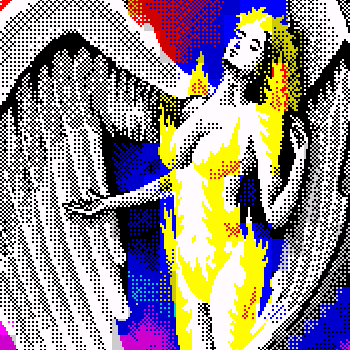
While the music was completed in 2002, the public’s primary method of experiencing Still Flying on original hardware came approximately 18 months later through the release of a "musicdisk." In the context of the demoscene, a musicdisk is a piece of software designed specifically to play an album’s tracks while displaying custom graphics and interface elements.
The Still Flying musicdisk was a collaborative effort involving several key figures in the scene:
- Vortex: Responsible for the coding and programming of the software interface, ensuring the music played accurately across various ZX Spectrum clones.
- Schafft: Provided the visual artwork and aesthetic design for the disk interface, translating the "lyric" nature of the music into a visual medium.
- Poisoned CyberJack: Acted as the "packer," optimizing the data to ensure the entire collection could fit within the limited memory and storage constraints of the platform.
This software-based release allowed users to load the album into their ZX Spectrum systems, providing an "authentic" listening experience that accounted for the specific hardware quirks of the AY-3-8912 chip, such as its unique distortion and clock speed.
Compositional Credits and Production Standards
The credits for Still Flying reflect a professionalized approach to chip-tune production that was rare for the era. While C-Jeff served as the primary composer and producer, the involvement of other specialists ensured a high-quality final product.
The role of MmcM (Sergey Kosov) in the mastering process is particularly noteworthy. MmcM is a legendary figure in the Russian chip-tune scene, known for his own prolific output and his technical mastery of the AY chip. By having a contemporary like MmcM handle the mastering, C-Jeff ensured that the levels and frequencies were balanced for both hardware playback and eventual digital recording. The artwork by Schafft further solidified the album’s branding, moving it away from the perception of "computer beeps" and toward the status of a legitimate musical publication.
Analytical Perspective: The Lyric Music Novel Concept
C-Jeff’s branding of the album as a series of "lyric music novels" suggests a departure from the high-tempo, "game-like" music usually associated with 8-bit hardware. Journalistic analysis of the tracks reveals a focus on melody and emotional resonance rather than technical bravado for its own sake.
In tracks like "Lonely Soul," the use of the AY chip’s envelope generator creates "breathing" sounds and soft decays that mimic acoustic instruments. This approach helped define a sub-genre of chip-tune that prioritizes atmosphere. The "novel" aspect refers to the structural complexity of the songs; rather than simple verse-chorus structures, the tracks often feature long, evolving movements that suggest a narrative progression, mirroring the experience of reading a short story or novella.
Broader Impact and Modern Implications
The legacy of Still Flying extends far beyond its initial 2002-2003 release window. It stands as a historical record of the Russian ZX Spectrum scene, which remained vibrant long after the computer was considered obsolete in Western Europe and North America.
For modern listeners, the album serves as an entry point into the world of tracker music. Its subsequent availability on platforms like Bandcamp has allowed a new generation of electronic music fans to discover the nuances of the AY-3-8912 sound. From a journalistic standpoint, Still Flying is a testament to the "limitations breed creativity" philosophy. By working within the 128KB memory limit and the three-channel audio ceiling of the ZX Spectrum, C-Jeff produced a work that many contemporary artists with unlimited digital workstations struggle to replicate in terms of emotional depth.
The album also highlights the importance of digital preservation. Because it was released as a musicdisk, the code for Still Flying has been archived in databases like Pouet and Demozoo, ensuring that it remains playable on emulators and original hardware for decades to come. This intersection of music, software engineering, and community-driven competition remains a unique hallmark of the 2002 era, with Still Flying remaining one of its most polished and enduring artifacts.
In conclusion, Still Flying is more than a debut album; it is a document of a specific technological moment. It captures the transition of chip-tune from a hobbyist pursuit into a sophisticated form of digital art. Through the collaborative efforts of C-Jeff, Vortex, Schafft, and MmcM, the project transcended its hardware limitations to become a "lyric music novel" that continues to fly in the digital age.