Jia Lissa
The evolution of Climax Entertainment stands as a pivotal chapter in the history of 16-bit role-playing games, marked by a daring departure from established norms to create a title that remains a technical marvel decades after its debut. In late 1991, following the success of Shining in the Darkness and during the production of Shining Force, the studio began work on a project that would eventually be known as Landstalker. This title was not merely another entry in the burgeoning RPG genre; it represented a radical shift in gameplay perspective, narrative focus, and technical engineering. Led by programmer and co-founder Kan Naito, the development of Landstalker pushed the Sega Mega Drive to its absolute limits, introducing an isometric, pseudo-3D world that both enchanted and challenged the gaming public.
The Epiphany of the Diagonal Perspective
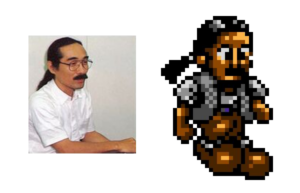
The conceptual origin of Landstalker was rooted in Kan Naito’s long-standing obsession with three-dimensional environments. Having previously worked on first-person dungeon crawlers, Naito felt restricted by the claustrophobic corridors of titles like Shining in the Darkness. He sought a way to express verticality, depth, and diagonal movement, but the path forward was unclear until a mundane morning in March 1991. While gazing from the window of his 10th-floor apartment, Naito observed the diagonal flow of traffic and pedestrians below. This "bird’s-eye" perspective offered a sense of immersion and realism that he likened to the cinematography of the Indiana Jones films.
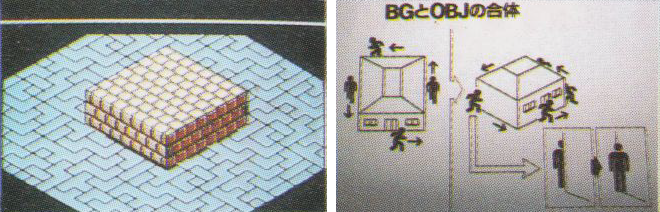
Realizing that true 3D was impossible on the hardware of the era, Naito turned to an oblique, isometric angle. This approach, while common on European home computers like the Amiga, was exceedingly rare on Japanese consoles due to the immense strain it placed on Video Random Access Memory (VRAM). The Mega Drive’s hardware was designed for horizontal and vertical scrolling; an oblique system required constant, complex calculations to manage overlapping sprites and background layers. Despite the technical "impossibility" of the task, Naito began a grueling research phase to build a dedicated engine from scratch.

Engineering the Diamond-Shaped Dimension System 520
The technical backbone of Landstalker was the Diamond-Shaped Dimension System (DDS), a name Naito chose for its modern, sophisticated sound. The initial goal was to support 520 individual maps, though this number would nearly double by the end of production. The DDS engine utilized 64×64 pixel diamond-shaped panels to compose the game world. This allowed for a simulated 3D environment where characters could move behind buildings, climb stairs, and navigate multi-leveled dungeons.
Programming this system required overcoming the "bottleneck" of processing speed. To ensure the game did not slow to a crawl, Naito developed formulas that represented the diamonds as vectors rather than static image data. This optimization was critical for maintaining the fluid diagonal movement that the Mega Drive’s directional pad facilitated. However, the system introduced a notorious challenge: spatial awareness. Without shadows to indicate a character’s position while jumping, many players found the platforming sections infuriating. Naito later revealed that shadows were tested in early builds but were ultimately removed because they halved the number of height steps the engine could process, which would have significantly diminished the complexity of the game’s world.
The Development Timeline and the Role of Sonic Co. Ltd.
The development of Landstalker was inextricably linked to the formation of Sonic Co. Ltd. in June 1991, a joint venture between Climax and Sega. This partnership allowed Climax to expand its staff and manage multiple high-profile projects simultaneously. While Hiroyuki Takahashi focused on the tactical battles of Shining Force, Naito’s sub-team dedicated themselves to what was then tentatively titled "Hero Lancelot: Legend of Shining."
The project followed a rigorous chronology:

- February 1991: Naito begins programming the initial 3D spatial engine.
- October 1991: Artist Yoshitaka Tamaki begins character designs for the protagonist, Nigel (Lyle in Japan).
- Autumn 1991: Map designer Yasuhiro Ohori joins the team, bringing arcade-inspired combat logic to the isometric world.
- Spring 1992: The DDS520 engine is finalized after twelve major revisions.
- June 1992: The game is officially unveiled to the press as Landstalker, distancing it from the Shining series.
- October 1992: Landstalker is released in Japan to critical acclaim.
Designing a New Breed of Hero
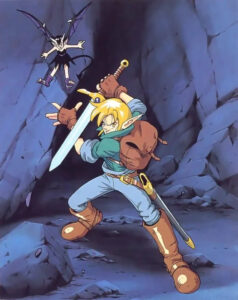
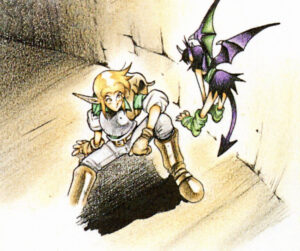
Artist Yoshitaka Tamaki was tasked with creating a protagonist who broke the "chosen one" archetype prevalent in early 90s RPGs. Nigel was designed as a forest elf and a professional treasure hunter—a nimble, free-spirited adventurer driven by profit and curiosity rather than a sense of divine duty. To provide a narrative anchor, Tamaki introduced Friday, a palm-sized nymph who served as Nigel’s guide and conscience.
The dynamic between Nigel and Friday was intentionally reminiscent of Western adventure films. The duo faced off against a colorful cast of rivals, most notably the mercenary Kayla and her bumbling henchmen, Wally and Ink. This character-driven approach was supported by what the team called the "flexible scenario method." Under the direction of Kenji Orimo and writer Shinya Nishigaki, the story was often adjusted to fit the maps. If a designer created a beautiful courtyard, the writers would invent a gardener character to populate it, leading to a world that felt lived-in and organic.

A Treasure of an Audio Score
The auditory identity of Landstalker was crafted by Motoaki Takenouchi, a protege of Dragon Quest composer Koichi Sugiyama. Takenouchi was tasked with creating a soundtrack that matched the game’s cinematic ambitions. Moving away from the traditional chiptune sounds of the era, he utilized a blend of orchestral arrangements and rhythmic elements.
One of the most distinctive aspects of the score was its use of character themes as narrative tools. For instance, "A Ballad for Princess Loria" was written as a two-minute piano piece that required no player input, encouraging the audience to simply listen and absorb the emotional weight of the scene. Takenouchi’s meticulous attention to detail extended to the sound driver itself; he worked closely with sound programmer Yasuhiro Taguchi to ensure the Mega Drive’s FM synthesis chip could handle the nuances of his compositions without excessive noise.

The Identity Crisis: Shining Rogue vs. Landstalker
One of the most debated aspects of the game’s history is its separation from the Shining franchise. Internal documents and early press releases refer to the project as "Shining Spirit" or "Shining Rogue." Early concept art by Tamaki even featured monsters from Shining in the Darkness, such as Chestbeaks and Kromeballs.
While the official reason for the name change was that the gameplay had diverged too far from the Shining series’ tactical and first-person roots, industry insiders have hinted at "internal friction" within Climax. Composer Motoaki Takenouchi later alluded to frictions that led to the game becoming its own entity. This split eventually saw the studio divide into two camps: one under Hiroyuki Takahashi (which would become Camelot Software Planning) and the other under Kan Naito. This creative divergence allowed Landstalker to establish its own legacy, free from the mechanical expectations of its predecessors.
Market Reception and the Legacy of Isometric Design
Upon its release on October 30, 1992, Landstalker was a commercial success, selling approximately 35,000 units in its first week in Japan. Critics praised its visual depth and the ingenuity of its puzzles, though some noted the steep learning curve associated with its diagonal controls. The game’s success prompted Sega to pursue a global release, and it eventually became a staple of the Mega Drive’s library in North America and Europe.
The impact of Landstalker’s design can be seen in several subsequent titles. Map designer Yasuhiro Ohori would go on to co-found Matrix Software, where he applied the lessons learned from Landstalker to the PlayStation classic Alundra. Climax itself attempted to replicate the formula with Ladystalker on the Super Famicom and the Saturn title Dark Savior, which served as a spiritual successor.
Broader Impact and Implications for the Genre
Landstalker remains a landmark achievement in the "pseudo-3D" era of game development. It proved that 16-bit hardware could simulate complex spatial relationships through clever programming and artistic direction. However, the game’s history is also a cautionary tale about the difficulties of maintaining a franchise. A planned remake for the PlayStation Portable (PSP) was famously canceled after a promising engine demo at the 2005 Tokyo Game Show, and Climax Entertainment eventually ceased operations in 2014.
Today, Landstalker is frequently cited as a "must-play" for fans of the action-RPG genre. Its inclusion in various Sega "mini" consoles and digital collections ensures that new generations of players can experience the island of Mercator. The game stands as a testament to a time when developers were willing to risk project stability to pioneer new ways of seeing and interacting with digital worlds. Nigel and Friday’s quest for King Nole’s treasure may have concluded decades ago, but the technical and creative blueprints they left behind continue to influence the architecture of modern adventure games.