
 Farhan hamdan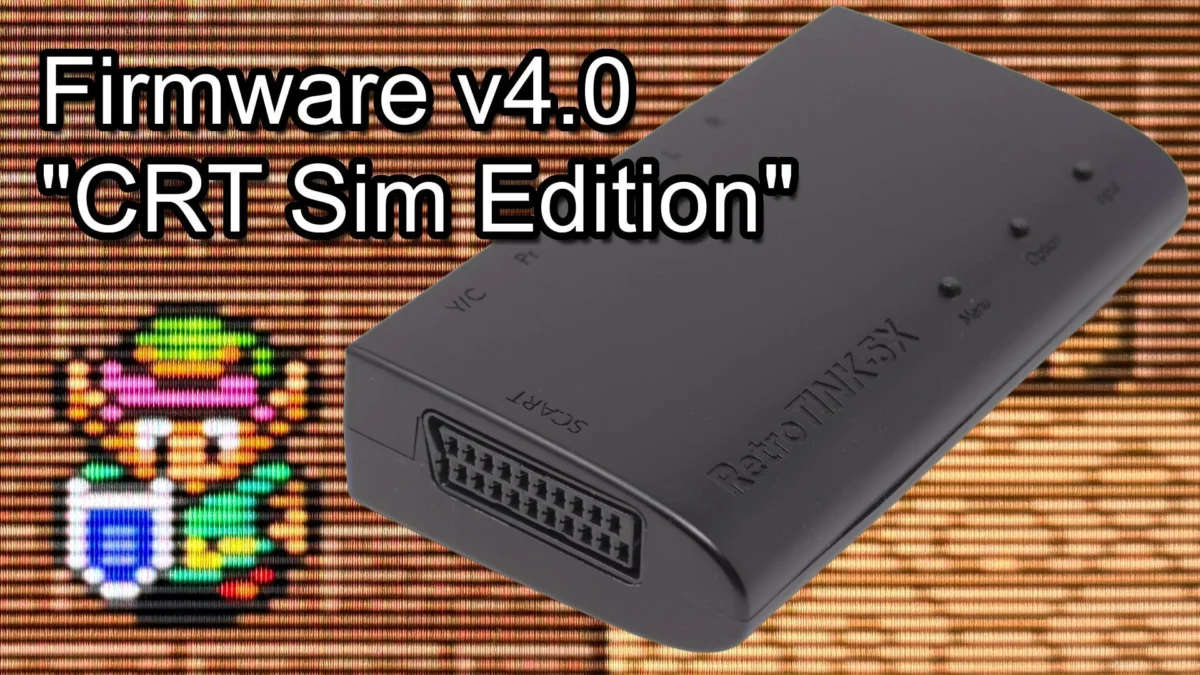
Nearly five years to the day since its initial release, the acclaimed RetroTINK 5x, a cornerstone device for retro gaming enthusiasts, has received its fourth completely revamped firmware update, designated v4.x. Developed by creator Mike Chi, this significant update represents a strategic "branch" from the existing v3.x firmware line, specifically engineered to cater to users prioritizing advanced CRT (Cathode Ray Tube) mask emulation. While not intended as a complete replacement for all use cases at this juncture, the v4.x firmware introduces a suite of sophisticated features derived from the higher-end RetroTINK 4K, promising an unprecedented level of visual fidelity for classic games on modern displays.
The RetroTINK 5x Pro, often simply referred to as the RT5x, has long been a pivotal piece of hardware in the retro gaming community. Its primary function is to convert and upscale the low-resolution, often interlaced, analog video signals from vintage game consoles into digital formats compatible with contemporary high-definition and 4K televisions. This process is far more complex than simple signal conversion; it involves sophisticated algorithms to deinterlace, scale, and enhance the image, often aiming to replicate the distinctive visual characteristics of CRT displays that were native to these older systems. Mike Chi, through his company RetroTINK LLC, has garnered widespread acclaim for his innovative solutions that bridge the technological gap between classic gaming hardware and modern display technology, effectively preserving the authentic visual experience of retro games for a new generation of enthusiasts. The ongoing development of firmware updates, especially significant revisions like v4.x, underscores a continuous commitment to refining this experience and pushing the boundaries of what is possible with retro video processing.
A Chronology of Innovation and Iterative Improvement
The journey of the RetroTINK 5x began approximately five years ago, with its introduction marking a significant leap forward in retro video scaling technology. Since then, Mike Chi has consistently released firmware updates, each building upon the last, to address user feedback, introduce new features, and improve overall performance. The v3.x firmware series, in particular, has been celebrated for its robust performance, especially in handling 480i sources and its advanced Motion Adaptive Deinterlacing (MADI). The release of v4.x, however, marks a distinct evolutionary path. It is presented as an experimental branch, signaling a deliberate focus on a specific aspect of visual emulation – the intricate replication of CRT shadow and aperture masks. This approach allows for the dedicated development of highly specialized features without necessarily disrupting the stable and broadly compatible performance of the v3.x line, which remains recommended for users whose primary focus is 480i deinterlacing without CRT mask simulation.
A key advantage for RetroTINK 5x users is the inherent flexibility of the device’s firmware architecture. Users are not locked into any single firmware version, and the process of switching between v4.x and previous iterations (such as v3.97) is straightforward and carries no risk of voiding the product’s warranty. This user-friendly policy encourages experimentation and allows individuals to select the firmware that best suits their specific gaming setup and visual preferences, ensuring that the device remains adaptable to evolving needs and display technologies. This commitment to user choice and non-destructive updates has been a hallmark of RetroTINK products and contributes significantly to their popularity within the enthusiast community.
Advanced Processing Pipeline and HDR Integration
The v4.x firmware brings substantial advancements to the RetroTINK 5x’s core processing capabilities, fundamentally altering how it handles video signals and generates visual effects. A significant portion of the RetroTINK 4K’s cutting-edge processing pipeline has been backported to the 5x. This includes the adoption of the same 12 bits per component (12bpc) RGB 4:4:4 Linear Light pipeline found in the RT4K. This upgrade means the 5x now processes video data with a much higher color depth and precision, enabling a more accurate and nuanced representation of colors and gradients. The Linear Light processing further refines how brightness and color are handled, leading to a more natural and perceptually accurate image, especially when simulating the complex light emissions of a CRT.
Beyond internal processing, the v4.x firmware integrates real Rec. 2020 HDR10 capabilities. This is a groundbreaking addition for the RetroTINK 5x, moving beyond previous "injection" methods for CRT effects. With true HDR10 support, the device can now produce CRT effects that are not only brighter but also exhibit superior color accuracy and dynamic range. HDR (High Dynamic Range) allows for a much wider range of luminance and color information compared to Standard Dynamic Range (SDR), making it possible to emulate the vibrant, glowing characteristics of CRT phosphors with remarkable realism. For retro games, which often featured bold colors and stark contrasts, this HDR implementation can significantly enhance the visual impact, providing an experience closer to how these games would have appeared on their original display medium. The adoption of Rec. 2020, a wide-gamut color space, ensures that the expanded color capabilities of modern displays are fully utilized, resulting in a richer and more immersive visual output.
Enhanced Scanline Engine and "Quasi-4K" Modes

A central focus of the v4.x update is the dramatic improvement to the RetroTINK 5x’s scanline and CRT mask emulation. The updated scanline engine now supports "energy normalizing scanlines," a feature previously highlighted in the RetroTINK 4K. Energy normalization is a sophisticated technique that dynamically adjusts the brightness of scanlines to maintain a consistent perceived luminance across the entire image. Traditional scanline filters can sometimes make the image appear darker due to the introduction of black lines. Energy normalizing scanlines counteract this by slightly brightening the active scanlines, ensuring that the overall image brightness remains faithful to the source while still providing the characteristic scanline effect. This results in a more authentic and visually pleasing CRT simulation, avoiding the dimming that can occur with simpler scanline implementations.
Furthermore, the v4.x firmware introduces advanced RGB CRT masks, designed for a more accurate and detailed representation of the pixel structure seen on genuine CRT displays. These masks emulate the distinct patterns of red, green, and blue phosphors that constitute a pixel on a CRT, adding another layer of authenticity to the retro gaming experience. The quality of these masks is directly tied to the hardware revision of the RetroTINK 5x unit, as discussed below.
To leverage the high detail of these new CRT masks, the v4.x firmware also features "Quasi-4K" modes. These innovative output modes allow the RetroTINK 5x to send resolutions with a 4K width (e.g., 3840 pixels) but a 1080p height (e.g., 960 or 1080 pixels) to compatible televisions. The benefit of this approach is significant: by rendering the horizontal detail at 4K resolution, the RT5x can deliver incredibly sharp and detailed CRT mask patterns. The vertical scaling, which typically involves softer interpolation, is then handled by the television itself. This allows for the intricate horizontal mask details to be preserved at a high resolution, while still relying on the TV’s processing for the vertical dimension, optimizing the overall visual quality for CRT mask enthusiasts. For users with 4K displays, this means experiencing CRT masks with unprecedented clarity, enhancing the illusion of playing on a true CRT.
Hardware Revisions and Compatibility Considerations
While the v4.x firmware offers significant advancements, its full capabilities are influenced by the hardware revision of the RetroTINK 5x unit. Mike Chi has transparently outlined these distinctions:
- Rev. A Units (Launch Units): These early units may experience instability when attempting to output resolutions above 1080p. Full stability for higher resolutions awaits further rework of the Gen Lock code.
- Rev. B Units (Sold before mid-2022): These units exhibit degraded shadow mask quality compared to later revisions. While they can utilize the new mask features, the fidelity may not be optimal.
- Rev. C Units (Sold after mid-2022): These are the most capable units, featuring no inherent limitations and providing full RGB 4:4:4 shadow mask support. Users with Rev. C hardware will experience the v4.x firmware’s CRT mask emulation at its absolute best.
This distinction is crucial for users to understand when evaluating the potential benefits of the v4.x update. While all units can be updated, the visual impact of the new mask features will vary depending on the hardware revision.
Software Trade-offs and Strategic Choices
The development of the v4.x firmware as a distinct "branch" highlights a strategic decision to focus on specific enhancements, which entails certain trade-offs. For users primarily concerned with the highest quality deinterlacing for 480i sources without a strong emphasis on CRT mask simulation, the v3.97 firmware remains the recommended choice. This is because v3.97 includes a fully-powered, edge-interpolated Motion Adaptive Deinterlacing (MADI) algorithm, which is particularly adept at handling interlaced signals from consoles like the PlayStation 2 or Sega Saturn, producing a smooth and artifact-free image.
Conversely, the v4.x firmware currently drops support for Inverse Telecine. Inverse Telecine (IVTC) is a process used to convert video content that was originally filmed at 24 frames per second (like movies) and then converted to 30 frames per second interlaced video (like NTSC DVDs or some video games with cinematic sequences) back to its original progressive film rate. The absence of IVTC in v4.x means that content originating from film or film-like sources might exhibit judder or motion artifacts. This trade-off underscores the specialized nature of v4.x, which prioritizes real-time CRT mask rendering over other video processing functionalities. Users must weigh their primary use cases – whether accurate film-to-video conversion or highly authentic CRT mask emulation – when deciding between firmware versions.
Initial User Impressions and Visual Impact

Early testing and user feedback regarding the v4.x firmware indicate an immediately noticeable improvement in visual quality, particularly concerning the CRT mask emulation. While capturing high-dynamic-range (HDR) content or specific "Quasi-4K" resolutions (such as 3840×960) presents technical challenges for direct screenshot capture, anecdotal evidence suggests a significant enhancement. Initial impressions, often conveyed through informal means like cellphone photographs of displays, highlight the increased detail and accuracy of the CRT masks. For instance, close-up examinations of game characters, such as Link, reveal a higher density and more distinct rendering of vertical mask "lines" on elements like his head, contributing to a more granular and authentic CRT aesthetic. These observations, though informal, point towards a tangible improvement that resonates with retro gaming enthusiasts seeking the most faithful visual representation of their classic titles. Mike Chi’s "Quick Start" suggestion, while its specific contents were not detailed in the original announcement, is likely intended to guide users through optimal initial settings to quickly experience these visual enhancements.
Broader Impact and Future Implications
The release of the v4.x firmware for the RetroTINK 5x represents more than just another update; it signifies a continued commitment to pushing the boundaries of retro video processing and display fidelity. By backporting advanced features from the RetroTINK 4K, Mike Chi is democratizing high-end emulation techniques, making them accessible to a wider segment of the retro gaming community. This iterative development model, characterized by responsive updates and specialized branches, ensures that RetroTINK products remain at the forefront of the industry.
The advancements in CRT mask emulation and HDR integration contribute significantly to the broader goal of video game preservation. As original CRT displays become scarcer and more challenging to maintain, sophisticated upscalers like the RetroTINK 5x become indispensable tools for experiencing classic games as their creators intended, or even in ways that surpass the capabilities of original displays in certain aspects (e.g., color accuracy with HDR). The flexibility to switch between firmwares also empowers users, allowing them to tailor their experience to specific games or consoles, thereby maximizing the utility and longevity of their hardware investment.
Looking ahead, this development suggests a future where the line between emulation and native hardware experience continues to blur. As display technologies evolve, so too will the methods of rendering retro content, with devices like the RetroTINK 5x leading the charge in ensuring that the rich visual heritage of video games is not only preserved but also celebrated with unprecedented accuracy and beauty on modern screens. The ongoing dialogue between hardware developers like Mike Chi and the passionate retro gaming community will undoubtedly continue to drive further innovations, shaping the future of how classic games are enjoyed.
Access and Resources
For enthusiasts eager to explore these new capabilities, the RetroTINK 5x v4.x experimental firmware is now available. Users can find more information and download the firmware package from the official RetroTINK LLC website. Additionally, information on purchasing RetroTINK products, including the RetroTINK 5x, can be found via the provided links. The non-restrictive firmware update policy ensures that users can confidently experiment with v4.x, reverting to previous versions if their specific needs are better met by the v3.x series, making this a low-risk opportunity to experience the cutting edge of retro video processing.
Purchase RetroTINK Products: https://www.retrorgb.com/retrotink.html
RT5x Experimental Firmware: https://retrotink-llc.github.io/firmware/5x-experimental.html








