Chalid Lutfie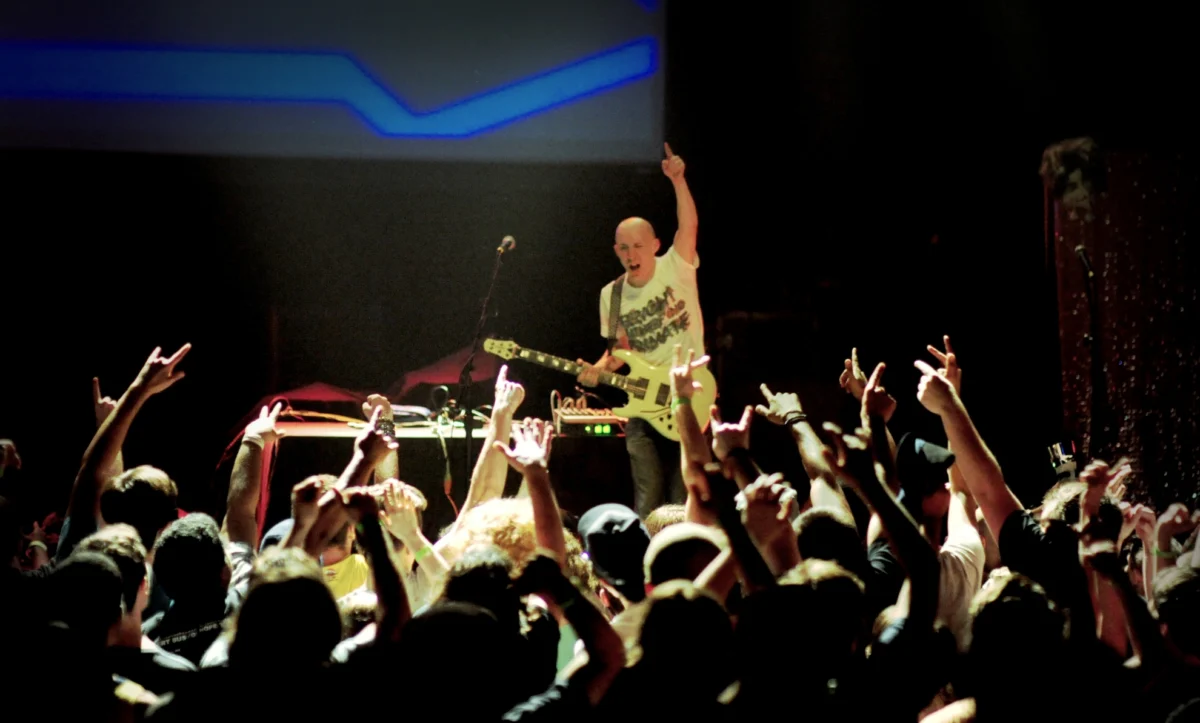
The contemporary chiptune landscape is set for a significant shift as Danimal Cannon, the stage name of Buffalo-based composer and multi-instrumentalist Dan Behrens, announces his latest full-length studio album titled Lunaria. Scheduled for a global release on March 11, the project marks a pivotal moment in the artist’s career, representing the culmination of a five-year technical and creative evolution. Following his 2011 solo debut Roots and his 2013 collaborative effort Parallel Processing with the artist Zef, Lunaria is positioned as the most comprehensive realization of Behrens’ signature sound: a high-fidelity marriage of 8-bit synthesis and virtuosic progressive metal guitar.
The announcement comes after a period of intense production and experimentation. While Behrens has long been recognized within the video game music (VGM) and chiptune communities for his high-energy live performances—where he frequently plays guitar alongside a Nintendo Game Boy—translating that synergy to a studio environment has historically proven challenging. Lunaria serves as the definitive answer to a long-standing request from his global fanbase, providing a studio-quality record that mirrors the intensity of his live stage presence while pushing the boundaries of the chiptune genre through complex, progressive arrangements.
The Technical Evolution of Chiptune and Guitar Integration
The primary hurdle in the development of Lunaria was the sonic reconciliation of two disparate audio worlds. The Nintendo Game Boy, utilizing software such as Little Sound DJ (LSDJ), produces sound via a four-channel programmable sound generator (PSG). These sounds—consisting of two pulse wave channels, one programmable wave channel, and one noise channel—occupy a specific frequency range that often clashes with the dense harmonic overtones of a distorted electric guitar.
Behrens noted that during the production of his 2011 album Roots, the integration of these elements was in its infancy. In that earlier work, the difficulty of mixing the two instruments led to many tracks being released as pure chiptune compositions. The intervening years between Roots and Lunaria were characterized by a rigorous study of frequency management and compositional layering. According to Behrens, the goal for Lunaria was to ensure the Game Boy and the guitar functioned as a cohesive "band lineup" rather than two competing sound sources. This required a sophisticated approach to equalization and arrangement, ensuring that the chiptune elements provided a rhythmic and melodic foundation that could support the weight of progressive metal riffs without being overshadowed.
A Conceptual Foundation in Planetary Science
Beyond its technical achievements, Lunaria is a concept album rooted in the "giant impact hypothesis," a scientific theory regarding the origin of the Moon. The hypothesis suggests that approximately 4.5 billion years ago, a Mars-sized body referred to as Theia collided with the early Earth. The resulting debris from this cataclysmic event eventually coalesced to form the Moon.
Behrens, a self-described science enthusiast, chose to personify this astronomical event through the character of Lunaria. The title itself serves a dual purpose: it refers to the celestial body while also acting as a linguistic portmanteau of "Lunar" and "Aria," signifying a vocal-centric piece or a "song of the moon." This thematic depth provides a narrative framework for the album’s aggressive yet melodic structure, moving from the violence of the initial impact to the serene formation of the lunar orbit.
Strategic Collaborations and Guest Contributions
To achieve the "aria" component of the album’s concept, Behrens enlisted the talents of professional vocalist Emily Yancey. Yancey, who possesses a background in operatic performance, provides a tonal contrast to the jagged edges of the 8-bit synths and distorted guitars. Behrens selected Yancey specifically for her classical training, believing that a refined, operatic timbre was necessary to convey the "celestial goddess" persona required for the album’s narrative arc. This marks a departure from standard chiptune conventions, which rarely incorporate high-level classical vocal techniques.
In addition to Yancey’s vocal contributions, the album features a guest appearance by Samuel Ascher-Weiss, better known in the electronic and VGM communities as Shnabubula. Ascher-Weiss is widely regarded for his exceptional proficiency in both chiptune composition and jazz piano. For Lunaria, he provided a piano rendition of the track "Axis." Behrens described "Axis" as the most compositionally challenging piece on the record. By tasking Shnabubula with a piano arrangement, the project highlights the versatility of the underlying compositions, demonstrating that the complex melodies written for the Game Boy can be successfully translated into a traditional acoustic medium.
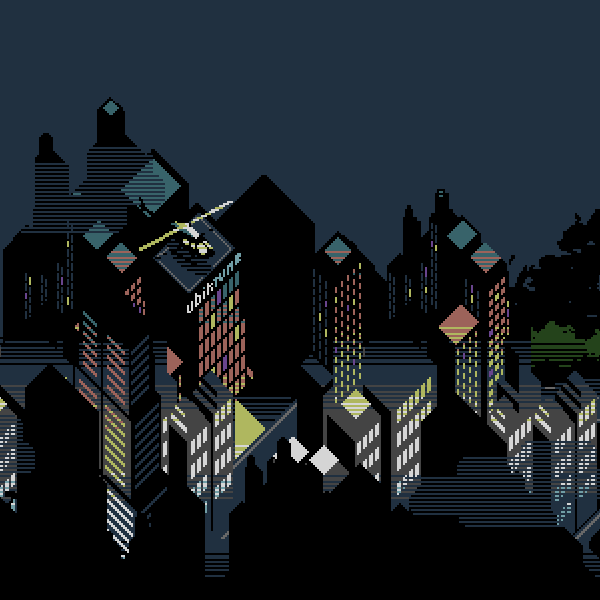
The visual identity of the album was handled by artist Minerva Mopsy, whose artwork serves to bridge the gap between the scientific inspiration of the "giant impact" and the fantastical elements of the Lunaria character. The physical release of the album on CD will include a dedicated poster featuring this artwork, emphasizing the project’s status as a complete multimedia experience.
Chronology of Development: 2011 to 2016
The timeline leading to the release of Lunaria reflects the deliberate pace of an artist prioritizing quality over frequency of output.
- 2011: Release of Roots. The album established Behrens as a leading figure in the "Nintendocore" and chiptune-metal scenes but featured limited guitar integration.
- 2012–2013: Behrens focused on live performances and the collaborative album Parallel Processing with Zef. This period allowed him to road-test the integration of live guitar with Game Boy hardware.
- 2014–2015: Primary writing and recording phase for Lunaria. During this time, Behrens refined his production techniques to solve the "masking" issues between 8-bit audio and high-gain guitar.
- Early 2016: Final mastering and the release of the lead single, "Behemoth."
- March 11, 2016: Official global release date for Lunaria.
This five-year gap between solo albums allowed for a significant shift in influence. While Behrens’ earlier work was more strictly focused on the limitations of the Game Boy, Lunaria draws from a broader palette. The artist cites a diverse array of influences ranging from the industrial textures of Nine Inch Nails and KMFDM to the orchestral sensibilities of Mozart and modern choral composer Eric Whitacre. The influence of contemporary indie rock, specifically the duo Buke and Gase, also played a role in the album’s rhythmic complexity.
Broader Implications for the Chiptune Genre
The release of Lunaria is expected to have a lasting impact on the niche but growing chiptune community. For years, the genre was often dismissed as a nostalgic novelty, limited to the recreation of 1980s video game aesthetics. However, artists like Danimal Cannon are part of a movement that treats 8-bit hardware as a legitimate instrument for modern composition.
By incorporating elements of progressive metal—characterized by odd time signatures, complex polyrhythms, and high-level technical proficiency—Lunaria elevates the Game Boy from a nostalgic tool to a professional synthesizer. The inclusion of operatic vocals and acoustic piano further legitimizes the medium, suggesting that chiptune can coexist with traditional and classical musical forms.
Furthermore, the album’s success on platforms like Bandcamp signals a robust market for physical media within the independent electronic scene. Despite the dominance of streaming, the demand for CDs and high-quality artwork posters for Lunaria indicates that the fanbase values the tangible aspects of music ownership, particularly when it is tied to a cohesive conceptual narrative.
Industry Outlook and Distribution
Lunaria is currently available for pre-order via Bandcamp, a platform that has become the primary hub for independent chiptune artists. The album will be distributed digitally across all major streaming platforms, but the focus remains on the artist-direct relationship facilitated by Bandcamp.
As the March 11 release date approaches, the lead single "Behemoth" has already begun to generate traction within the progressive metal and electronic music press. The track serves as a microcosm of the album’s goals: it features aggressive guitar work, intricate LSDJ programming, and a level of production clarity that sets a new standard for the genre.
In conclusion, Lunaria is more than just a collection of songs; it is a technical manifesto for Danimal Cannon. It represents half a decade of experimentation and a successful attempt to harmonize the digital constraints of the past with the expansive musical possibilities of the present. As the "giant impact" of its release nears, the album stands as a testament to the enduring potential of 8-bit music in a modern professional landscape.