Johny Imanuel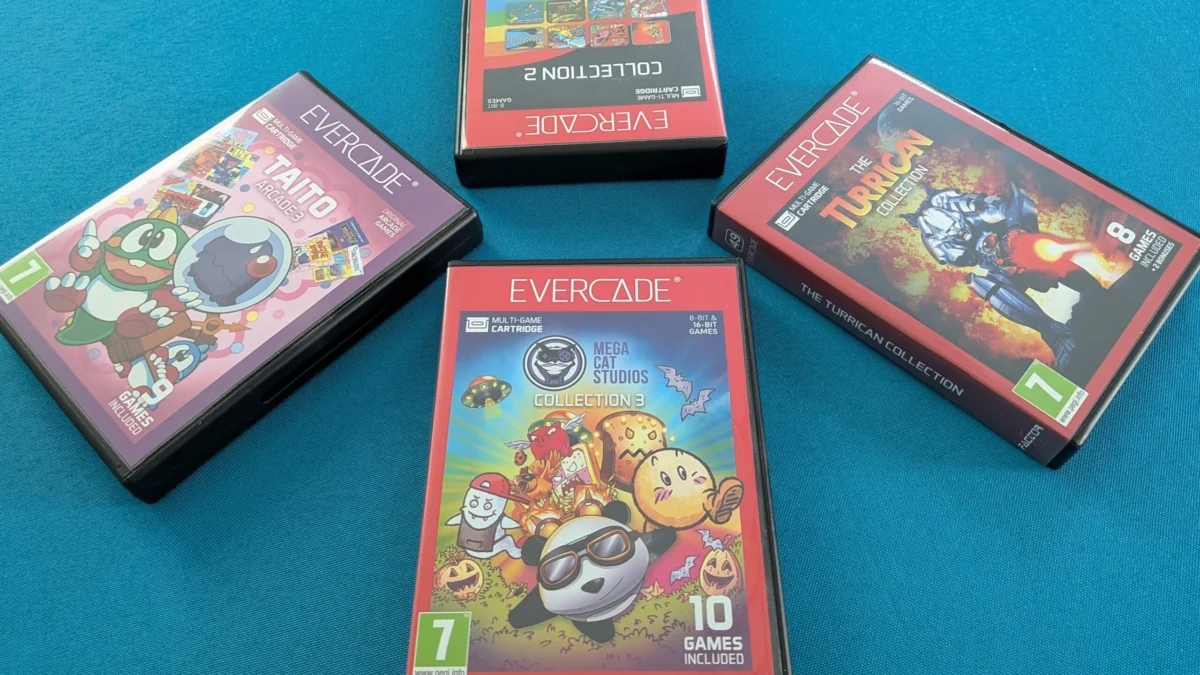
Blaze Entertainment has officially expanded the Evercade ecosystem with a significant release wave, headlined by the Mega Cat Studios Collection 3. This latest addition to the Evercade library reinforces the platform’s commitment to "modern retro" titles—newly developed games designed for vintage hardware—while simultaneously bolstering its catalog of classic arcade and console hits through partnerships with Taito, Activision, and the creators of the Turrican series. The release strategy continues to prioritize physical media, offering curated cartridges that include multiple titles, color manuals, and physical cases, a model that has carved out a distinct niche in a gaming industry increasingly dominated by digital distribution.
The centerpiece of this update, Mega Cat Studios Collection 3, serves as a testament to the thriving indie scene that develops software specifically for legacy consoles like the Nintendo Entertainment System (NES), Sega Genesis (Mega Drive), and Game Boy. This collection features ten distinct titles, ranging from puzzle-platformers to scrolling shooters, illustrating the versatility of modern development tools when applied to 8-bit and 16-bit constraints. By providing a commercial platform for these "homebrew" developers, Blaze Entertainment has positioned the Evercade as a vital bridge between the nostalgic past and contemporary independent creativity.
Detailed Overview of Mega Cat Studios Collection 3
The third volume from Mega Cat Studios highlights the technical ingenuity required to develop for older architecture. Among the most notable inclusions is Plyuk, a traversal puzzle game that draws comparisons to Nintendo’s BoxBoy! series. The gameplay mechanics are defined by strict limitations: the player character cannot jump or perform traditional actions but must instead navigate levels by spawning clones beneath them. This requires meticulous resource management, as players are restricted by a clone limit and must navigate increasingly complex environments where mismanaged clones can inadvertently block the path to the exit.
Another visual standout in the collection is Rocket Panda, a colorful mascot-driven title designed for the Sega Genesis. The game emphasizes accessibility, utilizing a streamlined one-button and D-pad control scheme. Players guide a jetpack-equipped panda through levels to rescue caged badgers while navigating hazards. The title is noted for its authentic 16-bit aesthetic and a soundtrack that leverages the distinct FM synthesis of the Genesis hardware. In an unusual addition for a mascot platformer, the developers included a variant of the arcade classic Asteroids as a built-in mini-game.
The collection also explores the high-difficulty "black box" arcade style with Flap Happy, an NES-based platformer. Utilizing physics-based flapping mechanics reminiscent of Joust or Flappy Bird, the game challenges players to land on specific two-square platforms to progress. The difficulty curve is steep, with later stages introducing moving hazards and environments with minimal vertical clearance, testing the precision of the NES’s input latency.
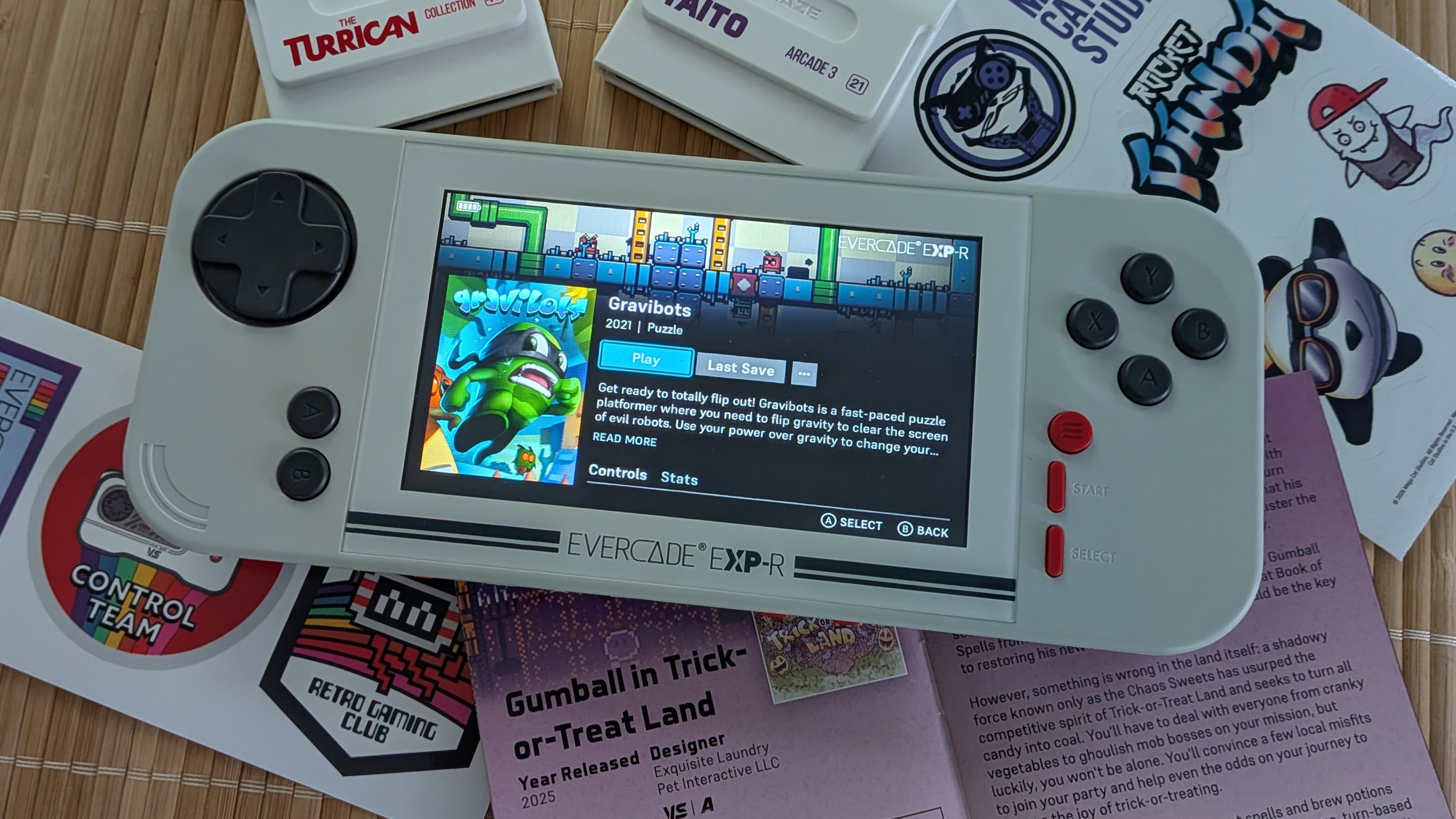
For fans of exploration and flight physics, Machine Cave offers an interconnected world on the NES. Unlike the single-screen challenges of Flap Happy, Machine Cave focuses on atmospheric navigation through a mechanical labyrinth. Similarly, Gravibots brings gravity-swapping puzzle mechanics to the Sega Genesis. The game requires players to guide enemies into traps using environmental tools, blending elements of Lemmings and ChuChu Rocket! with a visual style that mirrors early 1990s puzzle titles.
The remaining titles in the collection further diversify the genre offerings:
- GunTneR: An 8-bit scrolling shooter that balances mid-80s arcade sensibilities with modern bullet-pattern influences.
- Kudzu: A Game Boy adventure title heavily inspired by the top-down exploration of The Legend of Zelda: Link’s Awakening.
- The Meating: A unique NES platformer featuring a ghost minotaur.
- Gumball in Trick-or-Treat Land: A role-playing game developed for the Game Boy Color.
- Super Fanger: A competitive "tag" style game designed for the Super Nintendo Entertainment System (SNES).
Strategic Expansion of the Arcade and Legacy Library
Parallel to the indie-focused Mega Cat release, Blaze Entertainment has launched three additional cartridges that target established fanbases of 20th-century gaming giants. The Taito Arcade 3 collection continues a long-standing partnership between Blaze and the Japanese arcade pioneer. This volume is characterized by its historical breadth, featuring titles from the early 1980s alongside 1990s hits.
Key inclusions in the Taito collection are Cameltry, a physics-based maze game where the player rotates the environment rather than the character, and Puzzle Bobble (also known as Bust-a-Move). The inclusion of Puzzle Bobble is particularly significant for the Evercade handheld audience, as the tile-matching genre remains highly popular for portable play. The collection also features foundational arcade titles such as Qix and Lunar Rescue, providing a chronological look at Taito’s evolution as a developer.
The Turrican Collection brings one of the most technically celebrated European action franchises to the platform. Originally developed by Factor 5 and Manfred Trenz, the Turrican games were renowned for pushing the Commodore 64 and Amiga hardware to their absolute limits, featuring large-scale levels, complex parallax scrolling, and high-quality orchestral soundtracks. The Evercade release includes "Director’s Cut" versions and score attack modes, catering to enthusiasts who value the technical preservation of these hardware-pushing titles.
Rounding out the current release cycle is Activision Collection 2. This cartridge focuses primarily on the Atari 2600 library, featuring 15 games from the era that defined the home console market. While it includes ubiquitous classics like Pitfall II: Lost Caverns—noted for its advanced DPC chip which allowed for multi-channel music on the Atari 2600—it also features more obscure titles such as Plaque Attack and Checkers.
The Evolution of the Evercade Ecosystem: A Chronology
Since its debut in 2020, the Evercade platform has undergone a rapid evolution, moving from a niche handheld device to a multi-hardware ecosystem. The chronology of the platform’s development highlights its growing influence in the retro gaming market:
- May 2020: Launch of the original Evercade Handheld, featuring a 4.3-inch screen and a proprietary cartridge system.
- December 2021: Release of the Evercade VS, a home console version allowing for four-player local multiplayer and featuring dual cartridge slots.
- December 2022: Launch of the Evercade EXP, an upgraded handheld featuring a higher-resolution screen, built-in Wi-Fi, and "TATE" mode for vertical arcade gaming.
- 2023-2024: Expansion into "SuperPockets" (budget-friendly handhelds) and the Evercade Alpha (tabletop arcade units), further diversifying how users can access the cartridge library.
This steady cadence of hardware and software releases has allowed Blaze Entertainment to secure licensing agreements with major industry players, including Capcom, Namco Bandai, and Atari, while maintaining a low entry price for consumers. Most cartridges are priced at approximately $19.99 (£17.99 / €19.99), a strategy designed to encourage the "collect-them-all" mentality that defined the cartridge era of the 1980s and 90s.
Market Analysis and Industry Implications
The success of the Evercade model provides several insights into the current state of the gaming industry. First, it demonstrates a resilient demand for physical media. In an era where digital storefronts can close—resulting in the loss of access to purchased content—the Evercade’s "offline-first" approach appeals to preservationists and collectors. Each cartridge contains the full game data, requiring no downloads or internet patches to function, ensuring that the games remain playable as long as the hardware exists.
Second, the platform has become a critical revenue stream for "New Retro" developers. By including indie games like those from Mega Cat Studios alongside giants like Taito, Blaze Entertainment elevates the visibility of modern indie developers. This creates a symbiotic relationship where the nostalgia of the classic brands draws players in, while the innovation of the new titles keeps the ecosystem fresh.
Industry analysts suggest that the Evercade’s growth is also a reaction to the complexity and high cost of modern AAA gaming. The "pick-up-and-play" nature of the 8-bit and 16-bit titles featured in these collections offers a lower barrier to entry for casual players and older demographics who may find contemporary control schemes overwhelming.
Broader Impact on Retro Preservation
The release of collections like the Turrican and Taito sets serves a dual purpose: commercial entertainment and digital preservation. By licensing these titles and ensuring they run accurately via emulation on modern ARM-based hardware, Blaze Entertainment helps prevent these games from falling into "abandonware" status. The inclusion of physical manuals with historical context and control schemes further aids in the educational aspect of gaming history.
As the Evercade library continues to grow, it faces the challenge of balancing popular, high-demand licenses with more niche offerings. The inclusion of titles like Checkers in the Activision collection has prompted discussions among the community regarding "filler" content; however, the inclusion of such games is often a requirement of broader licensing deals that aim to preserve an entire era’s output rather than just the highlights.
With the release of Mega Cat Studios Collection 3, Taito Arcade 3, The Turrican Collection, and Activision Collection 2, Blaze Entertainment has reaffirmed its position as a leader in the retro-revival space. The platform now boasts over 500 games across more than 50 cartridges, representing one of the most comprehensive physical libraries of gaming history available on modern hardware. As the company moves toward the latter half of 2024 and into 2025, the focus remains on securing more "world-class" arcade licenses while continuing to champion the independent developers who keep the spirit of the 8-bit and 16-bit eras alive.