Retno Hari Mulyono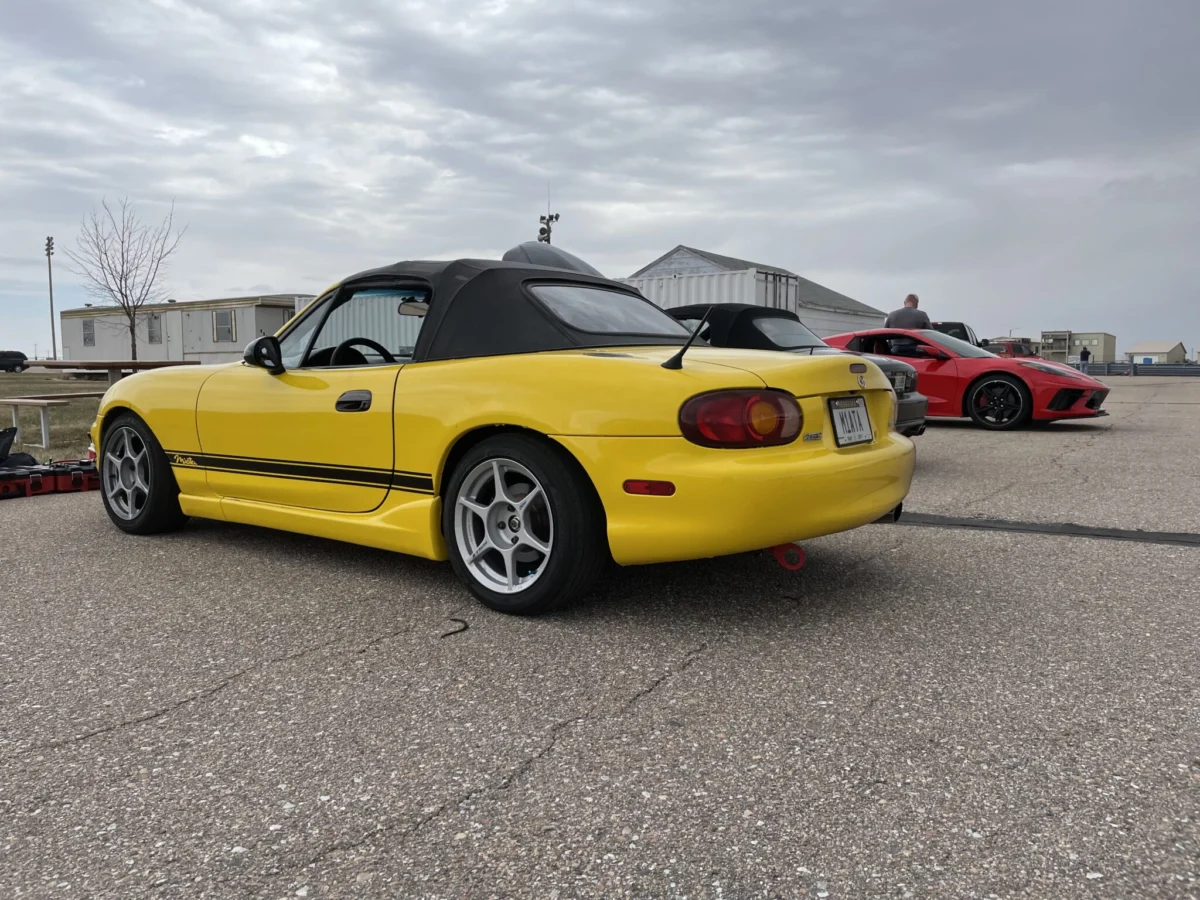
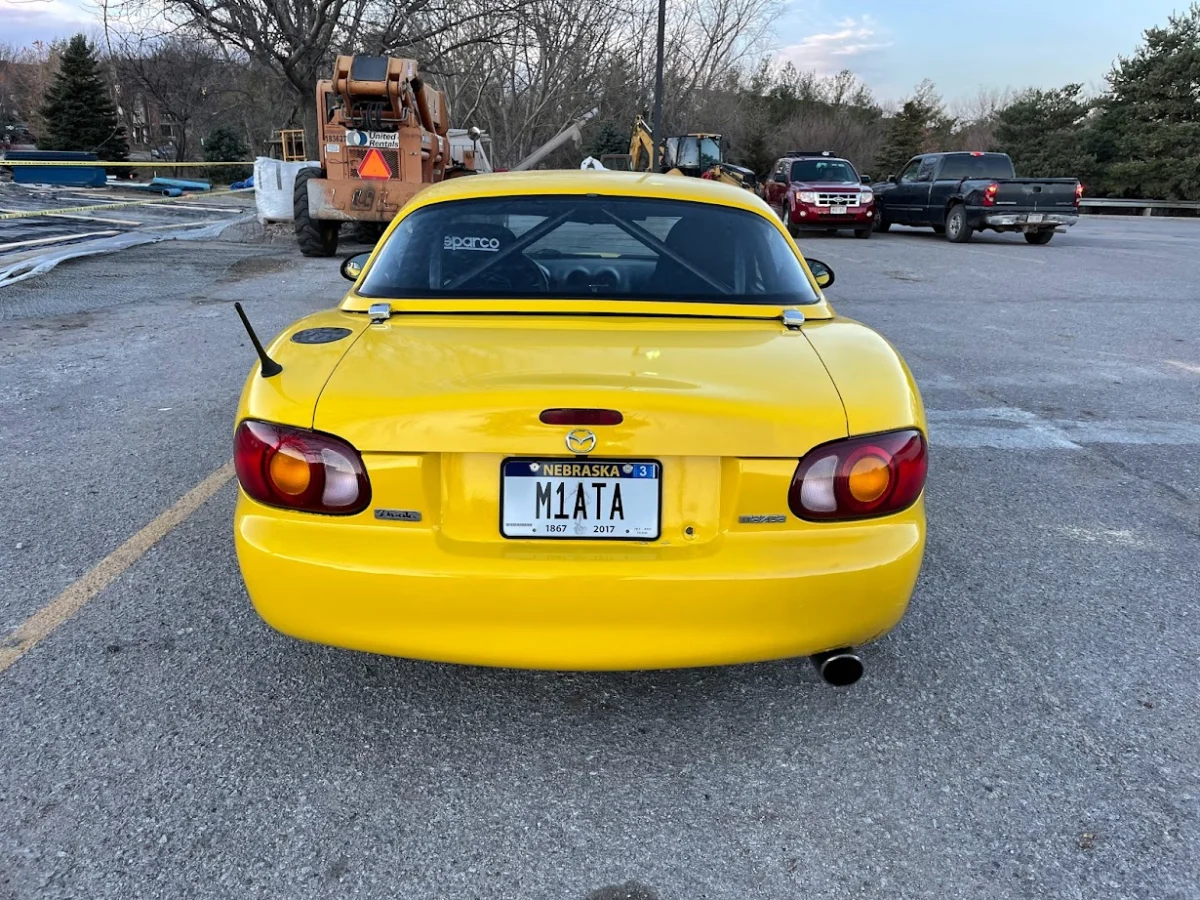
The second generation of the Mazda MX-5, known internally as the NB chassis, has long served as a primary platform for grassroots motorsports enthusiasts seeking a balance of mechanical simplicity and rear-wheel-drive dynamics. Between March 2022 and March 2023, a longitudinal study of a specific NB Miata project highlighted the significant performance gains achievable through a combination of iterative mechanical upgrades, data-driven tuning, and dedicated driver development. Over the course of twelve months, the vehicle underwent a radical transformation from a street-oriented convertible into a specialized track-focused machine, yielding an 11.29-second improvement in lap times at Raceway Park of the Midlands. This progression serves as a technical benchmark for the "Spec Miata" and "Track Night in America" communities, illustrating how modern engine management and aerodynamic packages can revitalize 25-year-old automotive architecture.
Performance Metrics and Engine Optimization
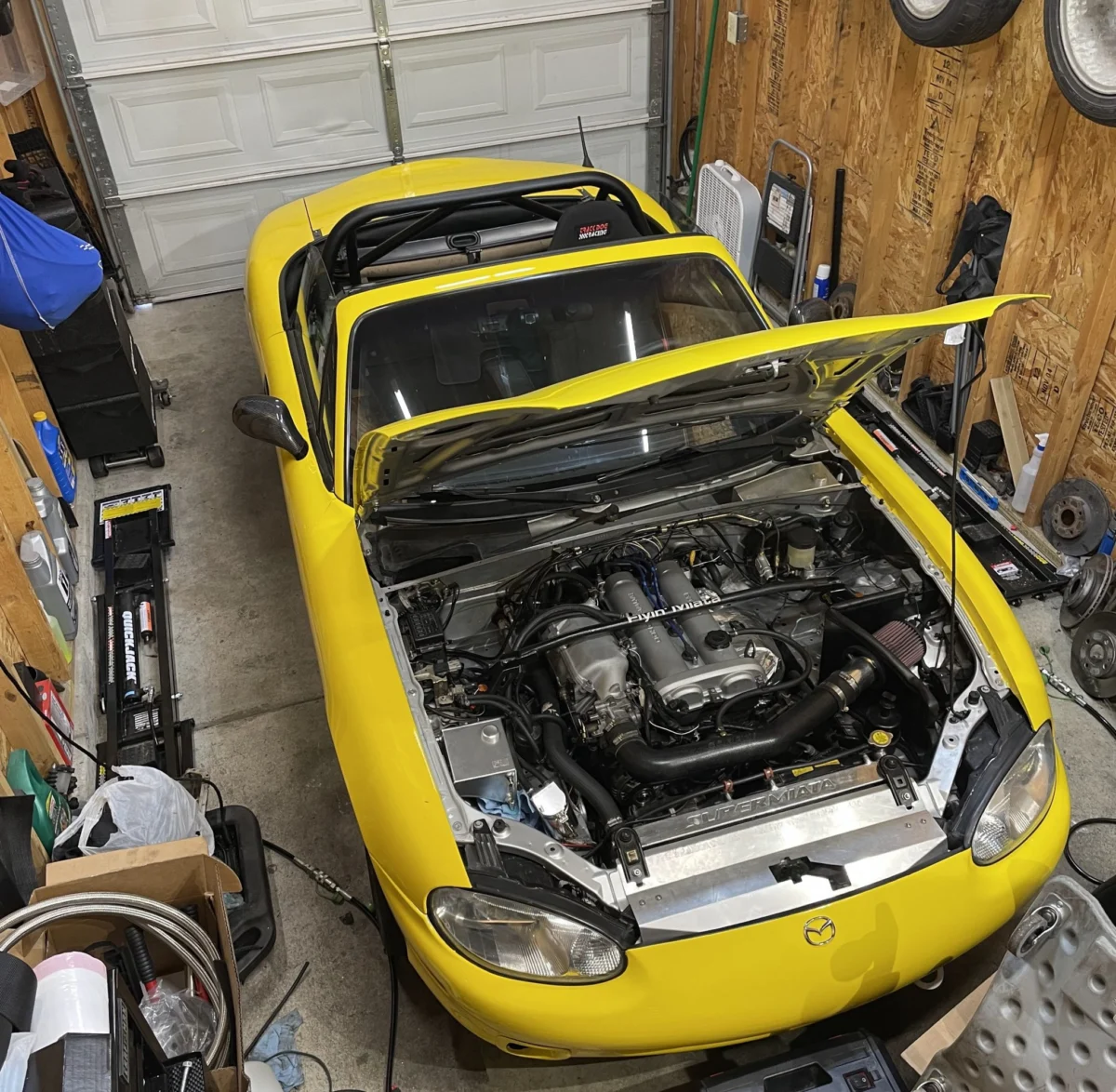
At the core of this developmental cycle was a rigorous focus on power-to-weight optimization and thermal efficiency. In August 2021, the vehicle—an NB1 generation Miata equipped with the 1.8-liter BP4W engine—produced 115 wheel-horsepower (whp) and 106 lb-ft of torque. These figures are consistent with a healthy, lightly modified stock engine of that era. However, by July 2022, following the implementation of a Megasquirt standalone ECU, a "squaretop" intake manifold, and a transition to E85 ethanol fuel, the vehicle’s output rose to 136 whp and 119 lb-ft of torque.
This 18.2% increase in horsepower is significant for a naturally aspirated, small-displacement engine. The use of E85 provided a higher octane rating and superior cooling properties, allowing for more aggressive ignition timing without the risk of detonation. Industry analysts note that the NB Miata’s BP4W cylinder head is particularly responsive to intake manifold swaps, as the "squaretop" design (originally found in non-US markets) eliminates the restrictive Variable Resonance Induction System (VRIS) in favor of a larger plenum and shorter runners, optimizing high-RPM airflow.
Chronology of Track Development
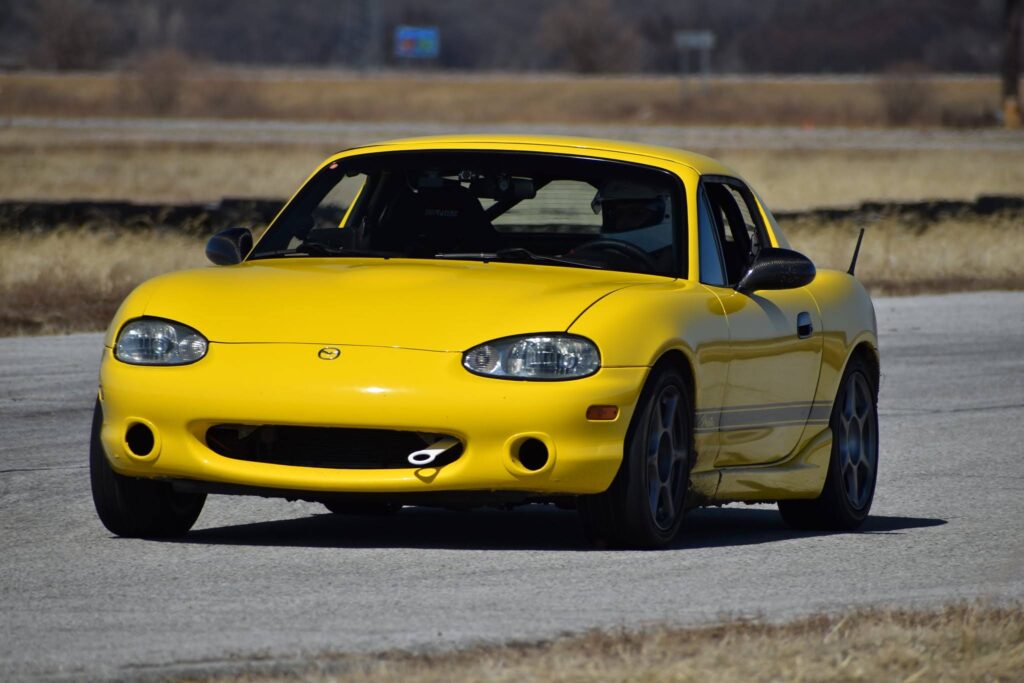
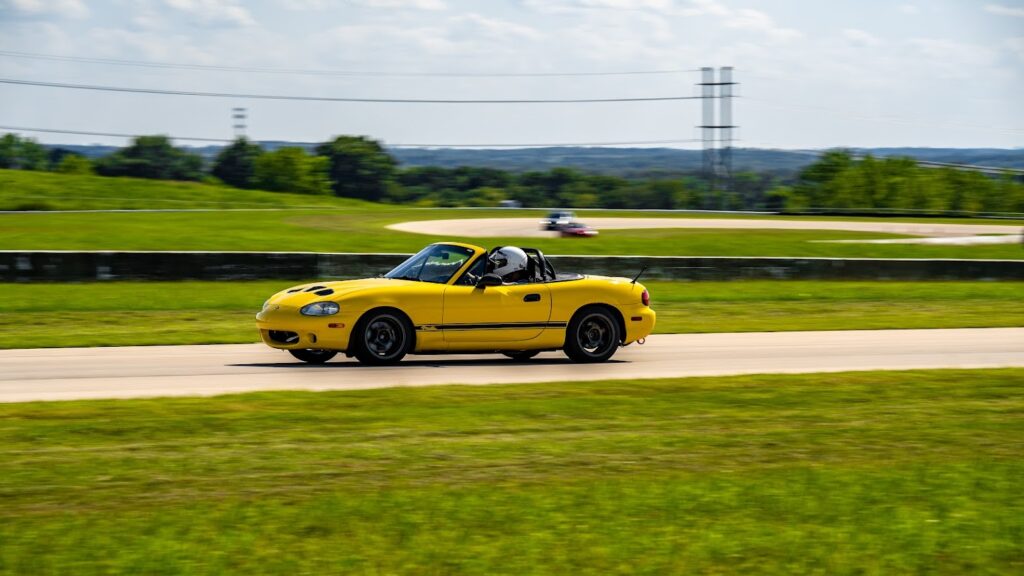
The operational year began on March 19, 2022, at Raceway Park of the Midlands (RPM) in Iowa. This facility is characterized by a high-commitment, 2.23-mile road course known for its abrasive surface and technical complexity. The initial outing established a baseline for the season, which would eventually encompass eight separate track events at this location alone.
In April 2022, the project expanded to Motorsports Park Hastings (MPH) in Nebraska. This venue offered a contrasting data set; unlike the bumpy and patched surface of RPM, MPH features a recently repaved, smooth asphalt surface and superior paddock infrastructure. The technical comparison between these two tracks allowed for a deeper understanding of suspension loading. While RPM tests a car’s ability to remain settled over mid-corner bumps, MPH rewards mechanical grip and high-speed stability.
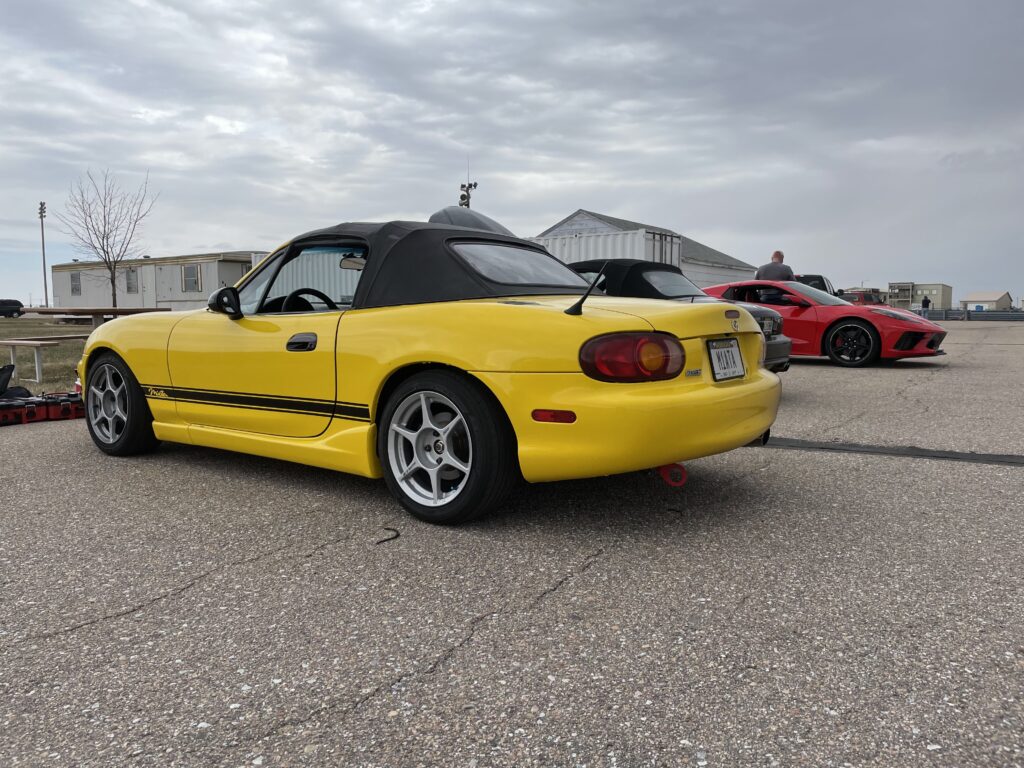
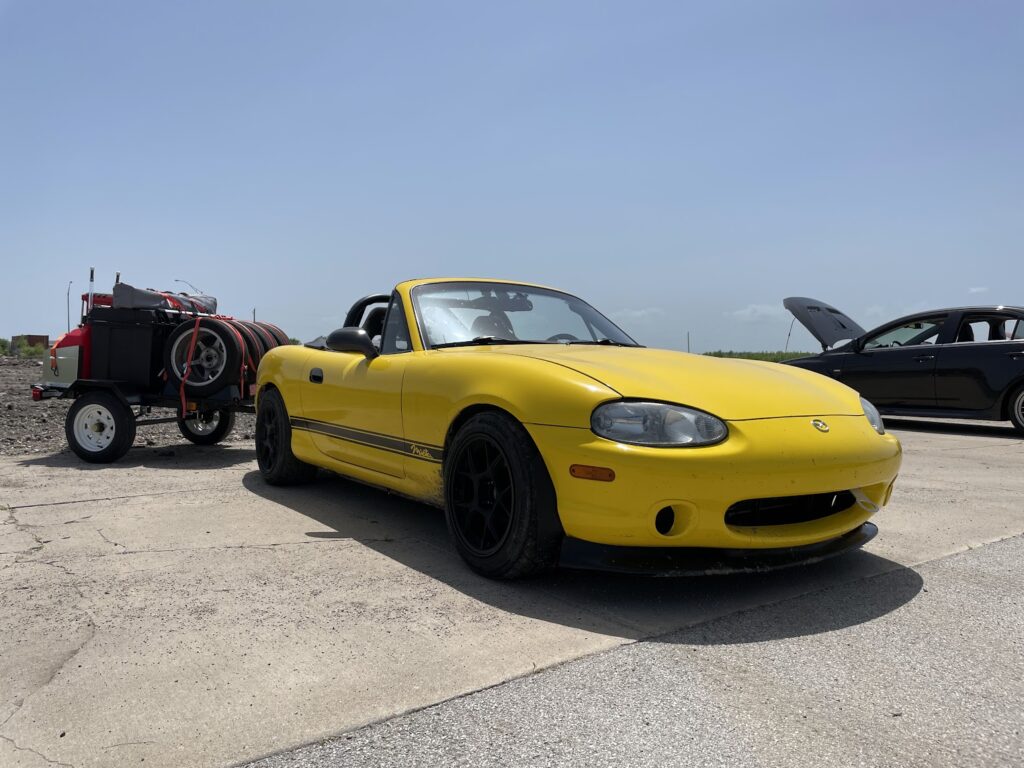
By the height of the summer driving season, the vehicle’s performance had reached a plateau that required logistical innovation. The Miata’s inherent lack of cargo space necessitated the construction of a custom 40×48-inch tire trailer. Capable of carrying four track tires, fuel jugs, tools, and a paddock canopy, the trailer added approximately 700 lbs of towing weight. This modification reflects a broader trend in the amateur racing community where "arrive and drive" capability is prioritized, allowing drivers to utilize dedicated racing slicks or 200-treadwear tires without compromising the vehicle’s streetability for the transit to the circuit.
Structural and Aerodynamic Enhancements
The final quarter of 2022 and the beginning of 2023 saw the most aggressive mechanical overhauls. In December, the vehicle’s suspension was stripped to the subframes. While the previous year had utilized IL Motorsports rubber bushings—designed to provide a stiffer-than-stock feel while maintaining some vibration damping—the new configuration moved toward a zero-deflection philosophy. A1 Ground Control Nylatron bushings were installed in a fresh set of control arms.
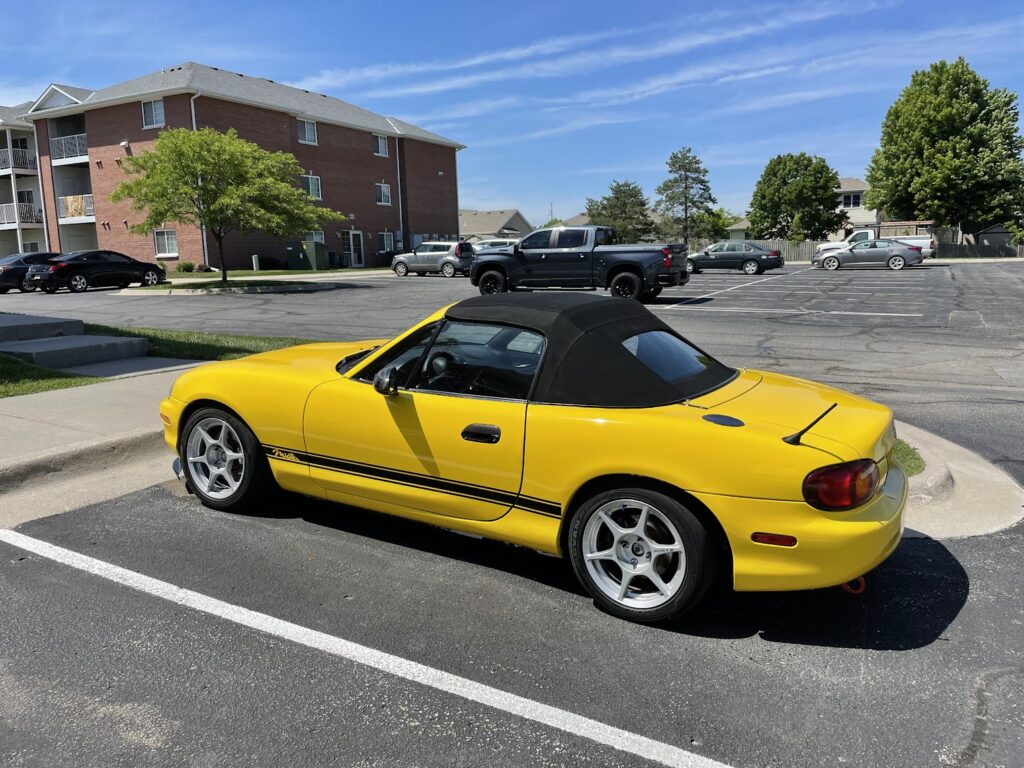
Nylatron, a nylon derivative infused with molybdenum disulphide, offers a self-lubricating, high-strength alternative to traditional polyurethane. Unlike polyurethane, which can bind under heavy lateral loads, Nylatron provides a low-friction pivot point that ensures the suspension geometry remains consistent throughout the cornering phase. To further refine the alignment, Paco Motorsports adjustable rear upper control arms were integrated, allowing for precise camber and toe adjustments that are often limited on stock NB hardware.
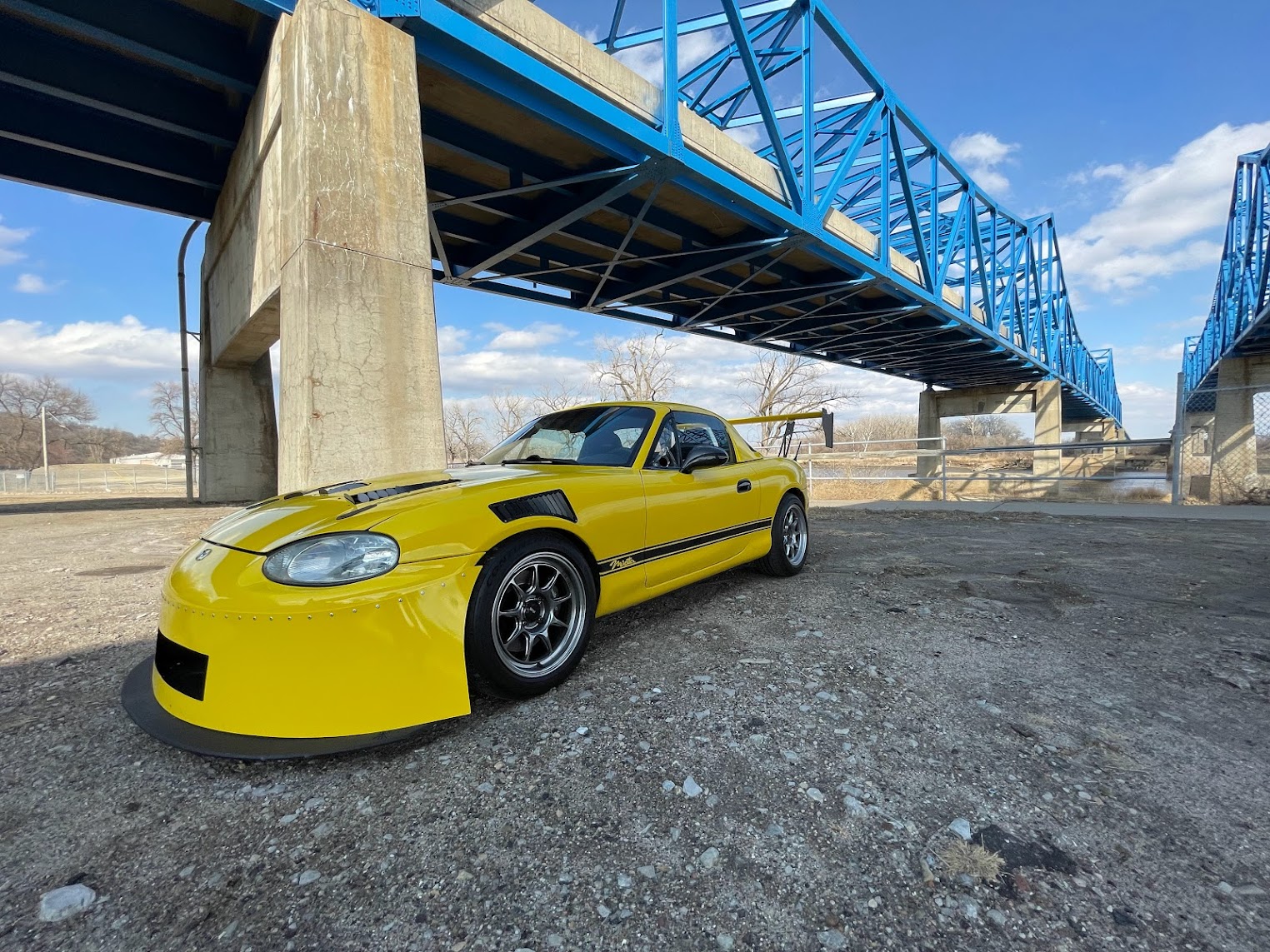
In February 2023, the vehicle received a Medium Downforce Aero Kit from Nine Lives Racing. The kit, centered around a single-element aluminum rear wing and a front air dam/splitter combination, addresses the NB Miata’s natural tendency toward aerodynamic lift at high speeds. Engineering data suggests that a properly tuned rear wing on the NB chassis can produce several hundred pounds of downforce at 80-100 mph, significantly increasing rear-axle stability during high-speed transitions. The owner noted that the car felt "planted" at speeds where it previously felt "floaty," a direct result of the pressure differential created by the airfoil.
Incident Analysis: The Turn 10 Impact
Motorsports development is rarely without setbacks. On October 29, 2022, during the final track day of the season at Raceway Park of the Midlands, the vehicle suffered a significant off-track excursion. While navigating Turn 10, a high-speed section of the course, the vehicle exceeded its mechanical grip limit. Despite a successful initial correction of the oversteer, the vehicle understeered off the grass and impacted a tire wall at approximately 60 mph.
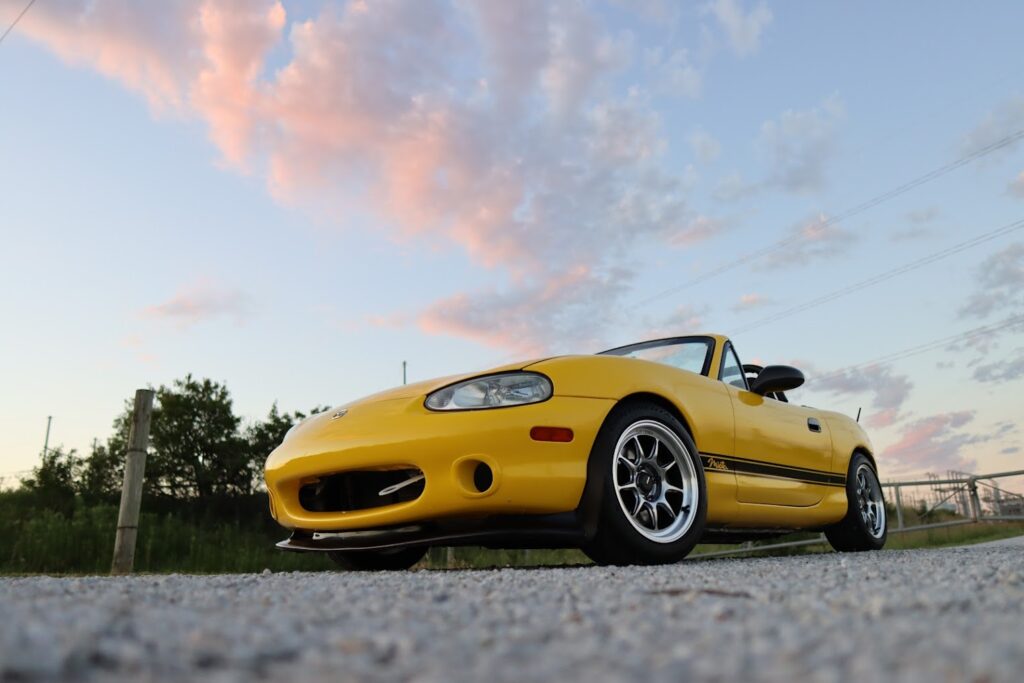
The incident serves as a testimonial to the safety efficacy of modern tire barriers. The energy-absorbing nature of the stacked tires prevented structural damage to the Miata’s frame rails. Damage was confined to the "soft" exterior components: the hood, front bumper, left fender, and headlight assembly. Remarkably, the vehicle remained mechanically sound and was driven home under its own power. The subsequent repair process involved a complete replacement of the damaged panels and a re-application of the vehicle’s yellow vinyl wrap, demonstrating the cost-effectiveness of vinyl over traditional automotive paint for track-driven vehicles.
Comparative Data: Lap Time Progression
The most objective measure of the project’s success is the documented reduction in lap times at Raceway Park of the Midlands. The data reveals a consistent downward trend:
- March 2022: Baseline established (Initial season entry).
- October 2022: Final timed session before the crash.
- Total Improvement: 11.29 seconds.
While the 136 whp engine tune and the transition to E85 contributed to higher straight-line speeds, professional driving instructors suggest that the majority of an 11-second gain is found in "driver mod"—the improvement of the operator’s vision, braking points, and corner-entry speeds. The transition from the "slow" run group to the "fast" run group within a single season indicates a rapid maturation of driving technique facilitated by the predictable handling of the NB platform.
Broader Implications for the Enthusiast Market
The trajectory of this NB Miata project mirrors the current state of the used sports car market. As the earlier NA (1990-1997) Miatas become increasingly collectible and expensive, the NB (1999-2005) has become the "sweet spot" for enthusiasts. It offers a stiffer chassis, a more powerful 1.8L engine as standard, and better suspension geometry than its predecessor, while remaining largely analog and easy to maintain.
The integration of a BP6D engine (the 2001-2005 Variable Valve Timing motor) and a 6-speed transmission in early 2023 signals the next phase of this vehicle’s evolution. The "VVT swap" is a common upgrade path that provides a broader torque curve, making the car more competitive in SCCA and NASA time-trial classes.
Conclusion and Future Outlook
As of March 2023, the vehicle stands as a highly evolved example of the NB chassis, balancing high-end suspension components with functional aerodynamics. The project demonstrates that through systematic upgrades—addressing the ECU, fueling, bushings, and aero—a decades-old platform can remain competitive against modern performance cars.
The next twelve months are expected to focus on the calibration of the VVT engine and the optimization of the Nine Lives Racing aero package. With the structural repairs complete and the suspension refined to a competition-grade standard, the focus shifts from "building" to "refining." The project remains a prominent case study in the Midwest regional racing scene, proving that with a disciplined approach to maintenance and a willingness to push mechanical limits, the Mazda Miata continues to be the definitive answer for grassroots motorsports.