Vera Clarissa
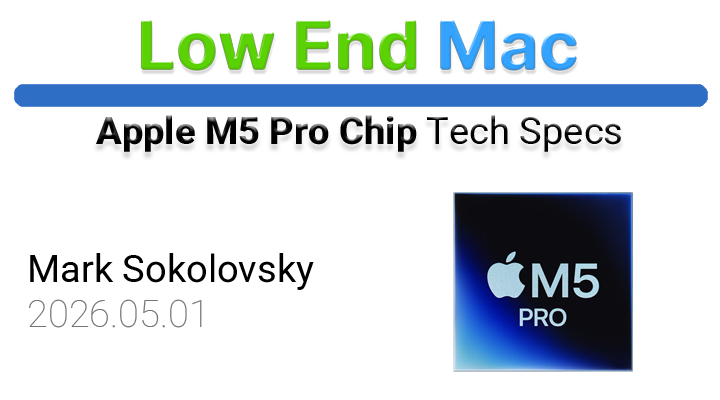
The Apple Silicon M5 Pro chip represents a significant evolutionary leap in Apple’s custom silicon design, pushing the boundaries of performance, efficiency, and artificial intelligence capabilities. Launched on March 3rd, 2026, this processor, codenamed internally by Apple, is engineered to power the next generation of Mac computers and potentially other Apple devices, offering a robust platform for demanding professional workflows and cutting-edge AI applications. This article provides an exhaustive hardware profile of the M5 Pro, analyzing its architecture, performance metrics, and the implications of its advanced technologies.
Architectural Prowess and Core Configurations
At the heart of the M5 Pro lies a sophisticated System on a Chip (SoC) architecture, built on TSMC’s advanced 3-Nanometer-P fabrication process. This cutting-edge manufacturing technology allows for greater transistor density, leading to improved performance and energy efficiency. While the exact transistor count remains proprietary, it is expected to be substantially higher than its predecessors, enabling the integration of more specialized cores and advanced features.
The M5 Pro is configured with a heterogeneous CPU design, featuring a combination of high-performance and high-efficiency cores. The chip offers configurations with either 15 or 18 overall CPU cores. The "Super Cores" (S-Cores), designed for maximum processing power, operate at a clock speed of 4.61 GHz and are available in quantities of 5 or 6. Complementing these are the "Performance Cores" (P-Cores), which deliver exceptional performance for everyday tasks and multithreaded workloads, clocking in at 3.05 GHz. These performance cores are available in either 10 or 12 units, bringing the total core count to 15 or 18, respectively. This flexible core arrangement allows the M5 Pro to intelligently allocate tasks to the most appropriate cores, optimizing for both raw power and energy conservation.
The caching system is equally critical to the M5 Pro’s performance. The Super Cores boast an L1 Instruction (L1i) cache of 192 KB per core, totaling 960 KB or 1152 KB across the available cores. Their L1 Data (L1d) cache is 128 KB per core, resulting in a combined 640 KB or 768 KB. The Performance Cores feature an L1i cache of 128 KB per core, leading to a total of 1.28 MB or 1.53 MB, and an L1d cache of 64 KB per core, summing up to 640 KB or 768 KB. Further enhancing performance, the M5 Pro incorporates a substantial L2 cache for its Super Cores at 32 MB and for its Performance Cores at 8 MB. A system-level cache of 24 MB further aids in reducing memory latency and improving overall data access speeds.
Memory Subsystem and Bandwidth
The memory subsystem of the M5 Pro is designed to keep pace with its powerful processing cores. It features a 256-bit memory bus width, supporting a total of 16 memory channels, each operating at 16-bit precision. This configuration utilizes LPDDR5X memory, clocked at an impressive 9600 MT/s (equivalent to 4800 MHz). This advanced memory technology, combined with the wide bus, delivers an exceptional memory bandwidth of approximately 307.2 GB/s. This massive bandwidth is crucial for data-intensive applications such as video editing, 3D rendering, and complex scientific simulations, ensuring that the CPU and GPU are never starved for data.
The M5 Pro supports memory capacities of 24 GB, 48 GB, and 64 GB, catering to a wide spectrum of professional needs. The availability of larger memory configurations directly translates to improved multitasking capabilities and the ability to handle larger datasets and more complex projects without performance degradation.
Graphics and AI Acceleration
The graphical prowess of the M5 Pro is managed by an integrated GPU with configurations offering either 16 or 20 cores. Each GPU core is equipped with 16 SIMD (Single Instruction, Multiple Data) Execution Units (EUs), leading to a total of 256 or 320 EUs respectively. This translates to a formidable number of FP32 (Single-Precision Floating-Point) Arithmetic Logic Units (ALUs), with 2048 or 2560 units available. Operating at a clock speed of 1620 MHz, the GPU can deliver theoretical peak performance of 6.64 TFLOPS (teraflops) in its 16-core configuration and 8.29 TFLOPS in its 20-core variant. These figures underscore the M5 Pro’s capability for handling graphically intensive tasks, including high-resolution video playback, complex visual effects, and demanding game rendering.

Beyond traditional graphics, the M5 Pro places a significant emphasis on artificial intelligence. It incorporates 16 dedicated AI Cores, capable of performing over 38 TOPS (Trillions of Operations Per Second) in AI computations. This substantial AI acceleration is designed to power a new wave of intelligent features across Apple’s software ecosystem, from advanced machine learning models for creative applications to more sophisticated on-device natural language processing and image recognition.
The chip also boasts robust media hardware acceleration, supporting a wide array of modern video codecs including H.264, HEVC, ProRes, ProRes RAW, and the increasingly important AV1. This built-in acceleration offloads demanding video encoding and decoding tasks from the CPU and GPU, significantly improving efficiency and performance for video professionals and content creators.
The Thermal Design Power (TDP) of the M5 Pro is estimated to range between 50W and 60W. This relatively low TDP for its performance class highlights Apple’s continued focus on power efficiency, allowing for sustained performance in thinner and lighter Mac designs without excessive heat generation.
Context and Timeline of Apple Silicon Development
The M5 Pro is the latest iteration in Apple’s ambitious transition away from Intel processors to its own custom-designed silicon. This strategic shift began in late 2020 with the introduction of the M1 chip, marking a paradigm shift in Mac performance and efficiency. Subsequent generations, including the M1 Pro, M1 Max, M1 Ultra, and the M2, M2 Pro, M2 Max, M2 Ultra series, consistently demonstrated significant gains in CPU and GPU performance, alongside remarkable power efficiency.

The M3 and M3 Pro/Max/Ultra chips, introduced in late 2023, further refined this approach with a move to a 3nm process and enhanced GPU architectures. The M4 series, which began rolling out in early 2025, saw an increased focus on AI capabilities, hinting at the direction for future silicon. The M5 Pro, launched in March 2026, builds upon this trajectory, representing what Apple describes as a "next big leap in AI performance for Apple Silicon," as indicated in a press release from October 2025.
The release of the M5 Pro can be contextualized within Apple’s typical product cycle, where new chip architectures are often introduced with a new generation of MacBook Pros, Mac Studios, or Mac Pros, followed by their integration into other Mac models. The March 3rd, 2026 release date suggests it may have debuted in updated MacBook Pro or Mac Studio models, aiming to capture professionals and power users seeking the latest in performance and AI-driven features.
Analysis of Implications and Broader Impact
The M5 Pro’s advanced specifications have significant implications for the computing landscape. For professionals, the enhanced CPU and GPU performance, coupled with the substantial memory bandwidth, means that complex tasks can be completed faster and more efficiently. This could translate to quicker rendering times for 3D artists, smoother editing for video professionals working with high-resolution footage, and more responsive performance for developers and data scientists running demanding simulations.
The substantial increase in AI capabilities is particularly noteworthy. As AI becomes increasingly integrated into software applications, the M5 Pro’s dedicated AI cores and high TOPS performance will empower on-device machine learning. This can lead to more intelligent and personalized user experiences, enhanced productivity tools, and the development of entirely new AI-driven applications that can run efficiently without constant reliance on cloud processing. This focus on on-device AI also aligns with Apple’s long-standing commitment to user privacy, as sensitive data can be processed locally.

The continued refinement of the fabrication process to TSMC’s 3-Nanometer-P node signifies Apple’s ability to push the boundaries of miniaturization and efficiency. This not only leads to more powerful chips but also enables thinner, lighter, and more power-efficient devices, extending battery life and improving thermal management.
The competitive landscape of high-performance computing is continually evolving. The M5 Pro’s capabilities are expected to further solidify Apple’s position as a leader in integrated SoC design, offering a compelling alternative to traditional x86-based processors. Its performance and efficiency benchmarks will likely set new standards and challenge competitors to innovate at a similar pace, particularly in the realm of integrated AI acceleration.
The M5 Pro’s specifications, including its advanced CPU and GPU core counts, high clock speeds, extensive cache, and massive memory bandwidth, underscore Apple’s commitment to delivering unparalleled performance for its professional user base. The emphasis on AI acceleration signals a clear strategic direction towards future computing paradigms, where intelligent processing will be paramount. As this chip finds its way into Apple’s product lineup, it is poised to redefine user expectations for performance, efficiency, and the integration of artificial intelligence in personal computing. The continued development of Apple Silicon, exemplified by the M5 Pro, suggests a future where powerful, efficient, and intelligent computing is more accessible than ever before.