Cecilia Chamidah Nur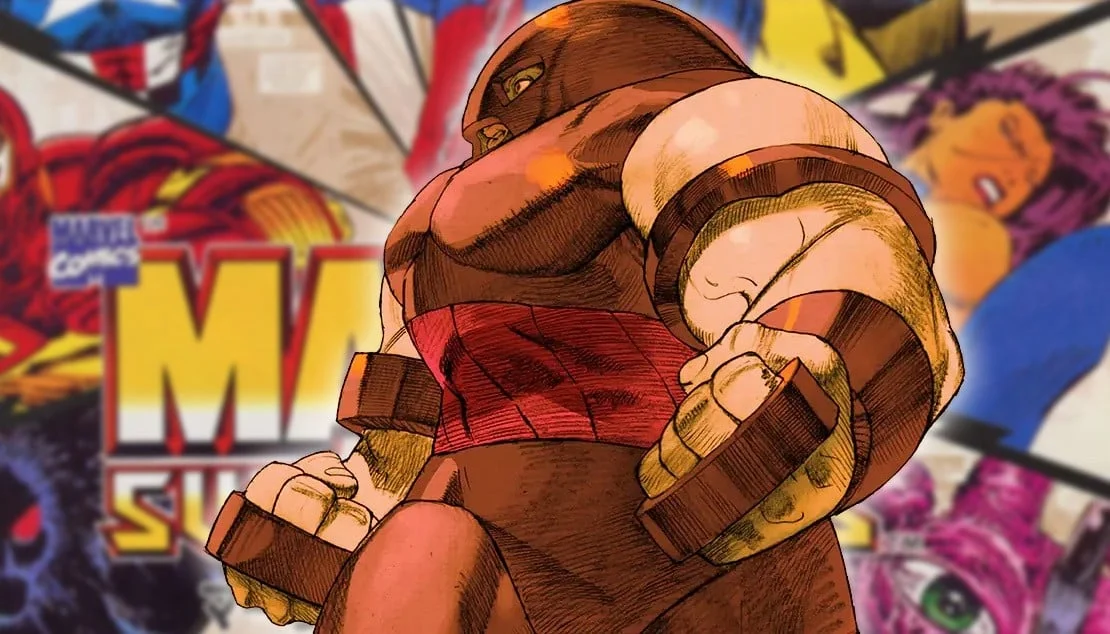
The 1990s bore witness to the forging of one of gaming’s most indelible alliances: the collaboration between Japanese arcade titan Capcom and the revered American comic book giant, Marvel Entertainment. This partnership, which ultimately birthed a series of critically acclaimed and commercially successful fighting games, was not, however, without its formidable early challenges. A recent interview with Tom Shiraiwa, a former localisation lead at Capcom and a pivotal intermediary in these formative discussions, has shed new light on the strenuous negotiations and specific creative demands that characterized the genesis of this iconic gaming franchise.
The Genesis of a Groundbreaking Partnership
In the early to mid-1990s, the video game industry was undergoing a significant transformation. Arcade cabinets remained a dominant force, particularly in the burgeoning fighting game genre, where Capcom reigned supreme with titles like Street Fighter II. Concurrently, Marvel Comics, while a cultural powerhouse, faced fluctuating financial fortunes, making its intellectual property (IP) an increasingly valuable asset to protect and leverage. The prospect of combining Capcom’s innovative fighting game mechanics with Marvel’s universally recognized pantheon of superheroes represented a monumental opportunity for both entities.
Capcom had demonstrated an unparalleled ability to translate diverse source material into compelling gameplay experiences, a skill that caught Marvel’s attention. The idea of bringing characters like Wolverine, Spider-Man, and Captain America to the arcade screen, rendered with Capcom’s distinctive pixel art and fluid animation, held immense appeal. Yet, the path to actualizing this vision was paved with significant creative friction, primarily stemming from Marvel’s intense protectiveness over its characters and their established lore.
Early Hurdles and the "Juggernaut Can’t Jump" Conundrum
Shiraiwa, speaking to Time Extension, recounted the initial difficulties faced by Capcom. "When we started working with Marvel Comics," he explained, "I remember it was pretty challenging. Because they had very, very specific rules about their characters, like their behaviours and their personalities, right?" This strict adherence to character canon meant that every proposed animation, every move, and every character inclusion required meticulous scrutiny and approval from Marvel.
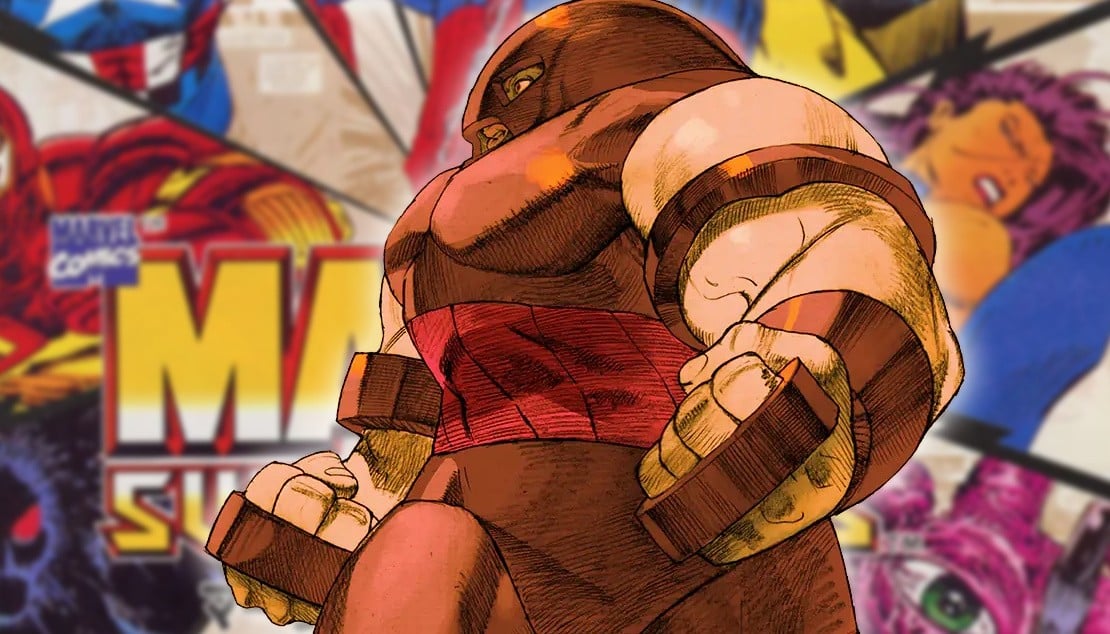
One of the most striking examples of this stringent oversight involved the development of 1994’s X-Men: Children of the Atom, Capcom’s pioneering Marvel fighting game. After extensive discussions in New York, where Marvel dictated which characters Capcom could utilize, the development team proceeded with animating the chosen roster. Upon submitting the animation reels for the formidable X-Men antagonist, Juggernaut, Capcom received an unexpected directive: "No, Juggernaut can’t jump. He’s too heavy."
This seemingly minor detail presented a significant design conundrum for Capcom. In a head-to-head fighting game, the ability to jump is a fundamental mechanic, integral to evasion, offensive maneuvers, and navigating the game space. Removing this basic function for a single character would not only make Juggernaut an anomaly but potentially compromise his viability in a competitive setting.
Juggernaut: A Deep Dive into the Lore Behind the Mandate
To fully appreciate Marvel’s stance, it’s crucial to understand the character of Juggernaut within the Marvel Comics universe. Cain Marko, Professor Charles Xavier’s stepbrother, first appeared in X-Men #12 in July 1965. Unlike most X-Men characters who are mutants, Juggernaut’s powers derive from the mystical Crimson Gem of Cyttorak, transforming him into an unstoppable force. His primary abilities include colossal super strength, imperviousness to most physical attacks, and, most famously, an unstoppable momentum once he begins moving. Lore dictates that once Juggernaut starts running, virtually nothing can halt his charge.
Marvel’s insistence that Juggernaut could not jump was a direct reflection of this established lore, particularly his immense mass and the concept of his "unstoppable momentum." From a comic book perspective, a character of Juggernaut’s physical magnitude and mystical properties would logically be unable to defy gravity in the manner of lighter, more agile characters. His movement is characterized by brute force and a relentless forward thrust, not aerial acrobatics.
Shiraiwa, acting as the crucial liaison, found himself in the unenviable position of bridging these two distinct creative philosophies. He humorously recalled his attempt to reason with Marvel: "Okay, but what’s he gonna do when he finds a big hole in front of him? Like a big gap? Will he be able to jump then?" Marvel’s response remained unyielding, rooted firmly in their established character logic: "No, in that case, he will simply fall into the hole and just keep running when he lands." This exchange vividly illustrates the chasm between strict IP adherence and the practicalities of game design.
Capcom’s Expertise vs. IP Integrity: A Creative Tug-of-War
Capcom, at the time, was at the zenith of its fighting game development. Its arcade titles were renowned for their precise controls, deep combat systems, and iconic character rosters. The idea of releasing a fighting game where a prominent character was fundamentally handicapped by a lore-driven restriction was anathema to their design principles. Shiraiwa’s persistent advocacy was ultimately successful, and Marvel eventually conceded, allowing Juggernaut to jump. This decision was a critical victory for gameplay over rigid lore, demonstrating a nascent understanding from Marvel that adaptation sometimes necessitates creative interpretation.
X-Men: Children of the Atom launched with Juggernaut as a non-playable boss character, embodying his immense power and presence. Later, in Marvel Super Heroes (1995) and X-Men vs. Street Fighter (1996), he became a fully playable character, complete with his signature ground-shaking attacks and, crucially, the ability to jump, albeit with animations that still conveyed his immense weight and power. This evolution showed Capcom’s skill in integrating character essence while maintaining gameplay integrity.
The Turning Point: Success Breeds Trust and Flexibility
The early struggles, however, were just that—early. Shiraiwa’s account highlights a significant shift in Marvel’s approach as the Capcom-developed games garnered widespread acclaim and commercial success. "The funny thing is… after Capcom released maybe one or two Marvel head-to-head fighting games, and they were extremely successful, they were like, ‘Anything goes. You can do whatever you want.’" This dramatic pivot underscored a fundamental truth in the entertainment industry: proven success often trumps initial caution.
The critical and financial triumph of titles like X-Men: Children of the Atom (which received accolades for its faithful rendition of the X-Men universe and innovative gameplay) and especially Marvel Super Heroes and X-Men vs. Street Fighter (which introduced revolutionary tag-team mechanics and larger-than-life special moves) fundamentally altered the dynamic of the partnership. These games were not merely adaptations; they were defining experiences that brought Marvel characters to a new generation of fans and cemented their place in popular culture. Their success provided Marvel with undeniable proof that Capcom could be trusted with their valuable IP, leading to greater creative freedom for subsequent titles, including the highly influential Marvel vs. Capcom: Clash of Super Heroes (1998).
Broader Implications for Licensing and Game Development
The "Juggernaut can’t jump" anecdote serves as a microcosm of the inherent tensions in IP licensing and adaptation. For licensors like Marvel, the primary concern is the preservation of brand integrity, character consistency, and established lore. Any deviation is seen as a potential dilution of their valuable assets. For developers like Capcom, the imperative is to create an engaging, fun, and mechanically sound game, which sometimes requires bending or reinterpreting existing rules to fit the interactive medium.
This delicate balance is a recurring theme in the history of licensed video games. Successful adaptations often find a harmonious middle ground, respecting the source material while innovating for gameplay. The Capcom-Marvel partnership ultimately thrived because both parties learned to navigate this complex terrain. Marvel learned to trust Capcom’s creative judgment and expertise in game design, recognizing that minor deviations from lore could lead to superior gameplay and, consequently, greater commercial success and exposure for their characters. Capcom, in turn, demonstrated its commitment to understanding and respecting the core essence of Marvel’s heroes and villains.
The Enduring Legacy of an Iconic Collaboration
The fruits of this partnership extended far beyond the arcade. The Marvel vs. Capcom series became a cornerstone of competitive fighting games, influencing subsequent titles and establishing a legacy that endures to this day. The unique blend of Capcom’s flashy, combo-driven combat and Marvel’s vibrant, diverse cast created a formula that resonated deeply with players worldwide.
Shiraiwa’s reflection that "money changes everything" provides a candid, albeit cynical, summary of the industry’s realities. While artistic integrity and character fidelity are paramount, the commercial success of a project often dictates the level of creative autonomy granted in future endeavors. The early "headaches" endured by Capcom’s localization and development teams ultimately paved the way for a period of unprecedented creative freedom, allowing them to craft some of the most beloved fighting games ever made.
The journey from a strict "no jumping" mandate to "anything goes" encapsulates the evolution of a partnership that transcended mere licensing. It became a benchmark for how two creative powerhouses, initially at odds over fundamental character interpretations, could ultimately collaborate to produce a legendary series that continues to captivate audiences and inspire new generations of gamers and comic fans alike. The struggles behind the scenes, such as the debate over Juggernaut’s aerial capabilities, are now seen not as roadblocks, but as essential chapters in the story of how a legendary gaming franchise was born.