Cecilia Chamidah Nur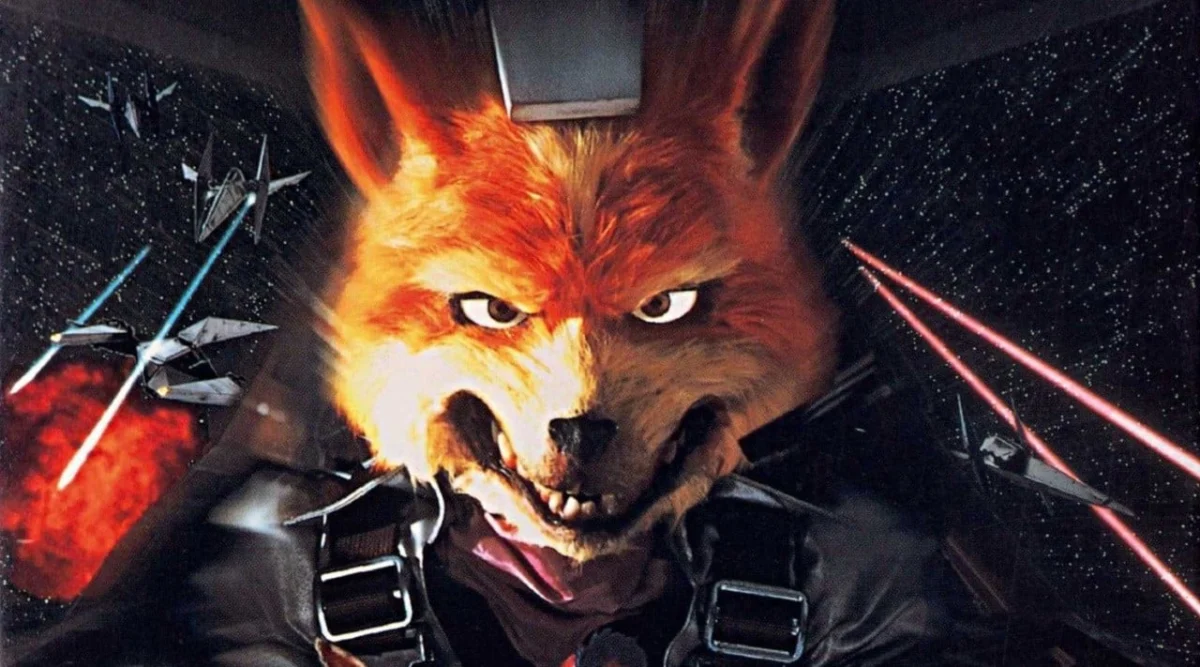
The decades-long enigma surrounding the fate of the iconic live-action puppets used in the original 1993 Super Nintendo Entertainment System (SNES) marketing campaign for Star Fox has finally been resolved, with their creator, Takashi Yamazaki, confirming their destruction and clarifying details about their production. Yamazaki, now a celebrated director known for films like Godzilla Minus One, revealed on social media that a single set of puppets was created and digitally manipulated for various promotional materials, dispelling previous theories of multiple sets or their preservation in Nintendo archives. This definitive statement puts to rest a persistent question that has long captivated fans and retro gaming historians.
A Marketing Icon: The Genesis of the Star Fox Puppets
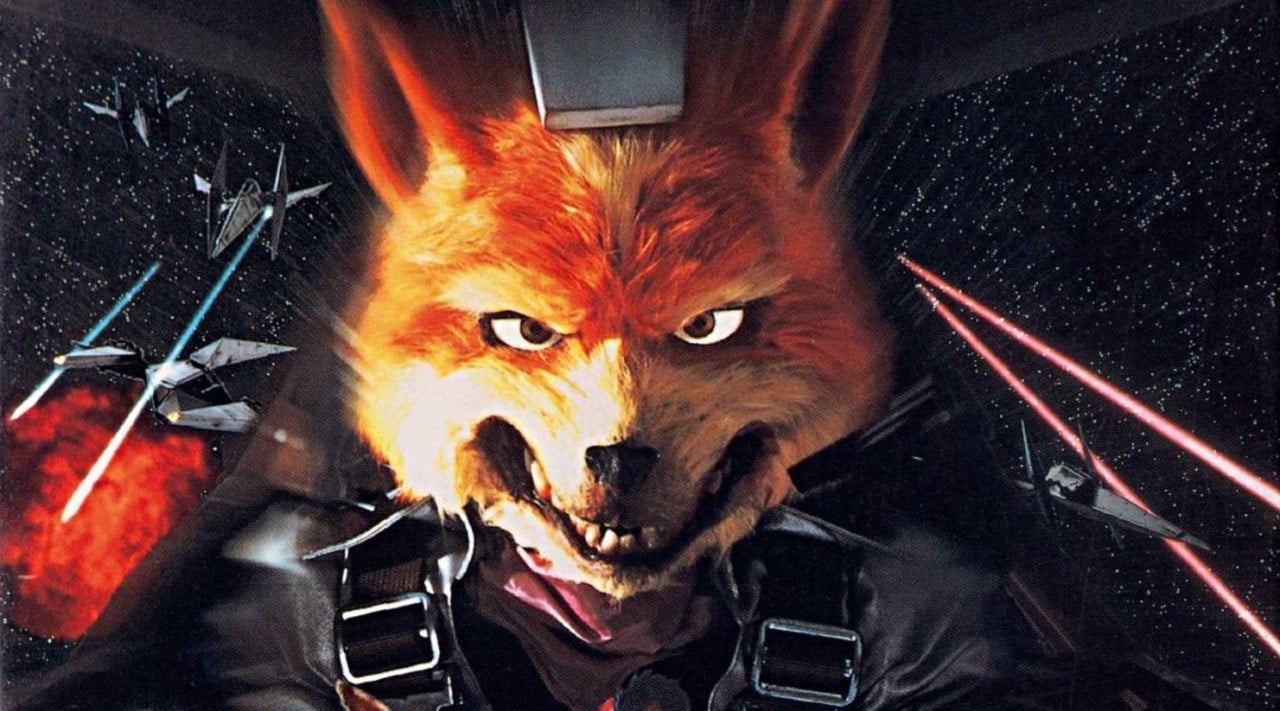
In the early 1990s, as Nintendo Co., Ltd. (NCL) prepared for the highly anticipated launch of Star Fox (known as Star Wing in PAL regions), the company embarked on an ambitious marketing strategy designed to showcase the game’s revolutionary 3D graphics and unique character designs. Central to this campaign was the creation of a tangible, live-action representation of the game’s heroic anthropomorphic animal squadron: Fox McCloud, Slippy Toad, Falco Lombardi, and Peppy Hare. These meticulously crafted puppets became the face of the game, appearing prominently in print advertisements across numerous gaming magazines, in-store promotional displays, the game’s official box art, and even the cover of strategy guides.
The use of physical puppets was a common and effective marketing technique in an era predating sophisticated CGI, allowing for a tactile and relatable connection with potential consumers, particularly younger audiences. The puppets imbued the Star Fox team with a tangible presence, bridging the gap between the nascent polygonal graphics of the game and the established visual language of Saturday morning cartoons and blockbuster films. Their expressive poses and detailed craftsmanship left an indelible mark on the memories of a generation of gamers, fostering a deep sense of nostalgia that has persisted for over three decades.
The Initial Quest: Tracing the Puppets’ Whereabouts
The question of "What happened to the Star Fox puppets?" has echoed through the retro gaming community for years. Their sudden disappearance after the initial marketing blitz inevitably led to speculation: Were they carefully preserved in a hidden Nintendo vault in Kyoto, or had they met a less dignified end? Driven by this persistent curiosity, the team at Time Extension initiated a formal investigation in April 2026, compiling leads and contacting key individuals involved in the game’s original development.
The initial outreach included conversations with Star Fox programmer Dylan Cuthbert and designer Takaya Imamura. Cuthbert provided a tantalizing but vague lead, recalling a sighting "about 15 years ago in a storage kind of room within Nintendo." He admitted his memory was "a little vague" and suggested Imamura might know more. However, Imamura, responding in Japanese, cast doubt on their survival, stating he had never seen the puppets in person and was told they had been destroyed. These conflicting accounts highlighted the difficulty of piecing together events from decades past, especially concerning physical props that often have a limited lifespan after their primary use.
Unmasking the Creators: The Shirogumi Connection
With direct developer accounts offering limited clarity, the investigation shifted towards identifying the creators of the puppets themselves. This proved to be a significant challenge, as the production company had never officially claimed public credit. A crucial breakthrough emerged from an old photograph circulating online, depicting a young Takashi Yamazaki posing with a Fox McCloud puppet in the early 1990s. This image strongly suggested that the Japanese special effects company Shirogumi, where Yamazaki began his career, might have been responsible for their creation. Yamazaki’s later ascent to directorial fame with critically acclaimed works like Godzilla Minus One underscored his expertise in visual effects and model work, lending further credibility to the Shirogumi hypothesis.
With the assistance of Japanese-to-English translator Liz Bushouse, Time Extension drafted an inquiry to Shirogumi, seeking confirmation of their involvement. The response from the studio was prompt and seemingly conclusive, delivered in a message that underscored the ephemeral nature of such creations:
"Thanks for your email. The Fox puppets created at our company were made by gluing fur and feathers to natural rubber, so they deteriorate simply by being exposed to air. Because of that, we had to destroy them after production was finished."
This statement appeared to provide a definitive answer: the puppets were indeed destroyed due to the inherent degradation of their materials. Natural rubber, while pliable and versatile for puppet construction, is susceptible to environmental factors like oxygen, light, and humidity, leading to hardening, cracking, and decay over time. The combination of fur and feathers, while visually effective, would also pose significant challenges for long-term preservation without specialized, climate-controlled storage—conditions rarely afforded to temporary marketing props.
The "Multiple Puppets" Theory and Lingering Doubts
Despite Shirogumi’s seemingly definitive confirmation, Dylan Cuthbert’s vague recollection of seeing "a different set of models" in 2011 continued to nag at the investigators. This led to the development of a new theory: perhaps there were multiple sets of puppets. Closer examination of various promotional materials revealed subtle visual discrepancies. For instance, the puppets featured in in-store cockpit scenes appeared to lack full lower bodies, consistent with a puppet designed to be seen from the waist up, such as the one in the photo with Takashi Yamazaki. Conversely, the box art depicted fully realized characters, suggesting a separate, more complete set, or perhaps extensive post-production work.
Further research unearthed evidence of a Fox McCloud model kit, based on the 1993 design, that had been released at the Japanese event Wonder Fest four years prior to Cuthbert’s purported sighting. While unlikely to be mistaken for the original puppets, it presented another potential, albeit distant, explanation for what Cuthbert might have encountered in Nintendo’s storage. However, when re-contacted with these new findings, Cuthbert could not offer further specifics, reiterating, "Hmm.. maybe it was a different set of models I saw then. My memory is hazy for sure. It’s all a long time ago." The mystery, though seemingly solved by Shirogumi, still contained threads of uncertainty regarding the specifics of production and the number of puppets involved.
The Breakthrough: Takashi Yamazaki’s Revelation
The final, conclusive piece of the puzzle arrived on May 1st, 2026, when Takashi Yamazaki himself responded directly to a social media post discussing Time Extension’s investigation. His series of tweets, published on Twitter/X in response to Japanese Kigurumi cosplayer @ayano_harumaki, offered an unprecedented glimpse into the production process and the ultimate fate of the beloved puppets. Liz Bushouse once again provided the crucial translation of Yamazaki’s comments:
"If I recall correctly, we photographed the moving puppets from the commercial, then touched those up for the package and poster. I feel like we used Macs with Photoshop, dividing the 2K images and processing them, then finally putting them together."
This statement was a game-changer. It directly contradicted the "multiple puppets" theory, confirming that only one set of puppets was created. The distinct appearances in various materials were not due to different physical models but rather sophisticated digital manipulation for the time. Yamazaki’s mention of "Macs with Photoshop" and "2K images" highlights the cutting-edge technology employed in 1993, showcasing an early blend of practical effects and digital post-production that was revolutionary for game marketing. This technique allowed for greater flexibility and consistency across different promotional assets without the need for multiple, costly physical models.
Yamazaki further elaborated on his experience, revealing a poignant detail about the campaign:
"Back then, I hungered for that kind of work, so I was really excited to make the commercial and send it in (production was done by Todoroki-kun, who now works with Anno-san), but it ended up being shelved. The reasoning was that it was too realistic and might have made children think the actual game looked like that. I get that, but it’s still sad."
This revelation unveiled a previously unknown aspect of the Star Fox marketing strategy. A longer, more elaborate commercial featuring the puppets was produced but ultimately rejected by Nintendo. The reasoning—that it was "too realistic" and could mislead children about the game’s actual graphics—speaks volumes about Nintendo’s commitment to managing consumer expectations, even at the expense of shelving creative work. In an era where game graphics were rapidly evolving but still far from photorealistic, Nintendo likely sought to avoid any potential backlash from disappointed children expecting the game to look exactly like the high-quality puppet footage. The commercial was eventually replaced by one featuring actual game footage, which can still be viewed today.
Finally, Yamazaki provided the definitive answer to the puppets’ fate:
"So the muppets that were made then can only be seen on the game package and the poster included in the magazine."
This statement, read in conjunction with Shirogumi’s earlier response, unequivocally confirms that the puppets were destroyed after production. They exist now only in the photographic and video records of the marketing campaign. Cuthbert’s memory, though genuinely held, was likely a misremembering or a glimpse of something else, given the conclusive statements from both the creator and the production company. The "one set" was created, used, digitally enhanced for various media, and then, due to material fragility, disposed of.
Legacy and Implications
The resolution of the Star Fox puppet mystery offers several insights into the history of video game marketing, special effects, and artifact preservation. It underscores the passion and skill of artists like Takashi Yamazaki, who, even in the early stages of their careers, contributed significantly to pop culture phenomena. Yamazaki’s journey from crafting Star Fox puppets to directing Oscar-winning films like Godzilla Minus One is a testament to his talent and the foundational skills developed in practical effects.
The story also highlights the transient nature of many physical props used in media production. Unlike film sets or costumes that might be preserved for archives or museums, marketing props, especially those made from perishable materials, are often discarded once their utility is exhausted. This makes the images and videos of these puppets all the more valuable as historical records.
Moreover, Nintendo’s decision to shelve a "too realistic" commercial reflects an early awareness of the ethical considerations in advertising, particularly when marketing to children. It illustrates a cautious approach to avoid misrepresentation, a principle that continues to be relevant in today’s highly scrutinized media landscape.
While the physical puppets are long gone, their digital likenesses endure on box art, in-store promos, and strategy guides, forever etched into the nostalgia of Star Fox fans. The mystery, which has fueled countless discussions and fan theories, has finally been laid to rest, providing a definitive answer courtesy of the very artist who brought the Star Fox team to life in a tangible, albeit fleeting, form. The enduring appeal of these characters, coupled with the craftsmanship behind their early live-action representations, ensures that the legacy of the Star Fox puppets will continue to resonate, even if only in memory and pixels.