Vera Clarissa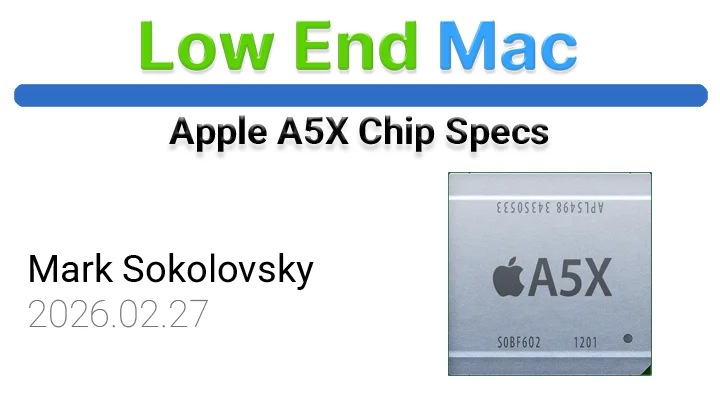
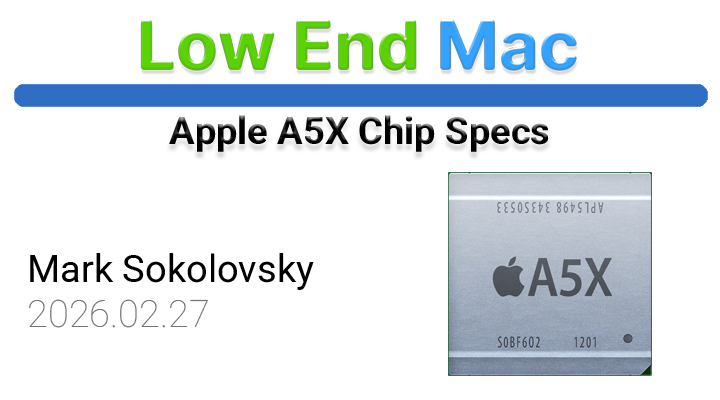
The Apple A5X System-on-a-Chip (SoC) represents a significant milestone in mobile processing, particularly for its role in enhancing the graphical capabilities of Apple’s tablet devices. This detailed hardware profile delves into the architecture, specifications, and historical context of the A5X, a chip that powered a pivotal generation of iPads and showcased Apple’s evolving prowess in custom silicon design. Manufactured by Samsung on a 45-nanometer fabrication process, the A5X was officially released on March 16th, 2012, carrying the codename APL5498 and part number S5L8945. While the exact transistor count remains undisclosed, its performance and feature set firmly positioned it as a leader in the mobile SoC market of its era.
Architectural Foundation and Core Specifications
At its heart, the Apple A5X is built upon the ARMv7 instruction set architecture, operating in a 32-bit mode. The central processing unit (CPU) is a dual-core configuration, with both cores operating at a clock speed of 1 GHz. These are designated as "Performance Cores," indicating their primary role in executing demanding tasks. Notably, the A5X does not feature efficiency cores, a design choice that prioritized raw performance for the demanding applications of its time.
The cache hierarchy provides crucial data access speed. Each performance core is equipped with a 32 KB L1 instruction cache (L1i) and a 32 KB L1 data cache (L1d), resulting in a total of 64 KB for each of these cache types per core. Cumulatively, this provides 64 KB of L1i and 64 KB of L1d cache across both performance cores. The A5X also features a unified 1 MB L2 cache, shared between the two performance cores. This configuration was designed to minimize latency and maximize throughput for the CPU, enabling smoother multitasking and quicker application responsiveness. Unlike later Apple Silicon designs, the A5X does not feature dedicated efficiency cores or a system-level cache, reflecting the architectural trends of early mobile SoCs.

Graphics Prowess: The "X" Factor
The "X" in A5X denotes a significant upgrade in graphics processing power compared to its predecessor, the A5. The A5X boasts a quad-core GPU, a substantial leap that directly addressed the increasing demands of high-resolution displays and graphically intensive applications. This GPU is characterized by 8 SIMD (Single Instruction, Multiple Data) execution units and 64 FP32 (Floating-Point 32-bit) Arithmetic Logic Units (ALUs). Operating at a clock speed of 200 MHz, the GPU delivers an estimated 25.6 Gigaflops (GFLOPS) of raw computational power. This enhanced graphics engine was a key enabler for the Retina display introduced with the second-generation iPad, allowing for sharper visuals and more fluid animations. The absence of dedicated AI cores and associated AI operations metrics in the A5X further underscores its focus on traditional graphical and computational tasks.
Memory Subsystem: Bandwidth for Performance
The memory subsystem of the A5X is equally critical to its overall performance. It utilizes a 128-bit memory bus width, a relatively wide interface for its time, enabling high data transfer rates. This bus is configured into four independent channels, each operating at 32 bits. The memory type is LPDDR2-800, running at an effective clock speed of 400 MHz. This combination of wide bus, multiple channels, and efficient memory type results in an impressive theoretical memory bandwidth of approximately 12.8 GB/s. The A5X is equipped with 512 MB of RAM, a capacity that, when paired with the robust memory bandwidth, provided sufficient resources for the operating system and applications of 2012. This generous allocation of memory and bandwidth was instrumental in handling the higher pixel counts of the Retina display and the complex graphical assets of mobile games and productivity applications.

Historical Context and Impact
The Apple A5X was first integrated into the third-generation iPad, released on March 16th, 2012. This device was a significant upgrade, most notably for its introduction of the Retina display, boasting a resolution of 2048×1536 pixels. Achieving smooth performance on such a high-resolution screen required a substantial boost in graphical processing power, which the A5X delivered. The chip’s quad-core GPU was a direct response to this need, enabling Apple to market the iPad as a device capable of delivering near-desktop-class graphics performance in a mobile form factor.
Prior to the A5X, mobile SoCs often compromised on graphics to achieve battery efficiency or reduce manufacturing costs. The A5X marked a deliberate shift for Apple, demonstrating a commitment to pushing the boundaries of visual fidelity and computational power in its mobile devices. This emphasis on graphics would become a hallmark of Apple’s silicon strategy, with subsequent generations of A-series chips continuing to prioritize GPU performance alongside CPU advancements.

The A5X’s performance was not merely about raw numbers; it was about the user experience it enabled. Applications ran more smoothly, graphics-intensive games were more immersive, and the crispness of the Retina display was fully realized. This contributed to the iPad’s continued dominance in the tablet market, solidifying its reputation as a premium device with leading-edge technology.
Manufacturing and Supply Chain
The fabrication of the A5X was handled by Samsung Electronics, a strategic partner for Apple during this period. The 45-nanometer manufacturing process was a mature and cost-effective technology at the time, allowing for a balance between performance, power consumption, and yield. While Apple has since diversified its manufacturing partners, Samsung played a crucial role in producing many of Apple’s early A-series chips, including the A5X. The codename APL5498 and part number S5L8945 are internal identifiers that shed light on the chip’s specific revision and integration within Apple’s product lines. The precise transistor count for the A5X is not publicly disclosed, a common practice for Apple’s custom silicon, but it was undoubtedly a complex piece of engineering for its time.

Analysis of Implications and Broader Impact
The introduction of the A5X and its integration into the third-generation iPad had several significant implications for the mobile technology landscape:
- Elevated Display Standards: The A5X’s graphics capabilities directly enabled the widespread adoption of high-resolution "Retina" displays in tablets. This forced competitors to also invest in higher-resolution screens, pushing the overall quality and visual experience of mobile devices forward.
- GPU as a Key Differentiator: The emphasis on GPU performance in the A5X highlighted the growing importance of graphics processing beyond basic rendering. It demonstrated that a powerful GPU could unlock new categories of applications, from advanced gaming to sophisticated creative tools. This paved the way for the use of GPUs in machine learning and other computational tasks, though dedicated AI cores were not yet a feature of such chips.
- Apple’s Vertical Integration Strategy: The development and manufacturing of custom SoCs like the A5X were central to Apple’s strategy of controlling its hardware and software ecosystem. This allowed Apple to optimize performance, power efficiency, and features specifically for its devices, creating a distinct advantage over competitors relying on off-the-shelf components.
- Benchmark for Mobile Performance: The A5X set a high bar for mobile SoC performance, particularly in graphics. It spurred innovation among other chip manufacturers to improve their own offerings, leading to a rapid advancement in the capabilities of smartphones and tablets across the industry.
While the A5X has since been superseded by more advanced Apple Silicon, its contribution to the evolution of mobile computing remains undeniable. It was a pivotal chip that powered a generation of groundbreaking devices, demonstrating a clear vision for the future of mobile performance and user experience. The focus on graphics, combined with a robust CPU and memory subsystem, made the A5X a cornerstone of the iPad’s early success and a testament to Apple’s engineering capabilities. The legacy of the A5X is not just in its technical specifications, but in the tangible impact it had on the devices we use and the digital experiences they enable. The data presented here, sourced from detailed hardware analysis and historical product information, underscores the A5X’s significance as a powerful and influential piece of mobile technology.