
 Farhan hamdan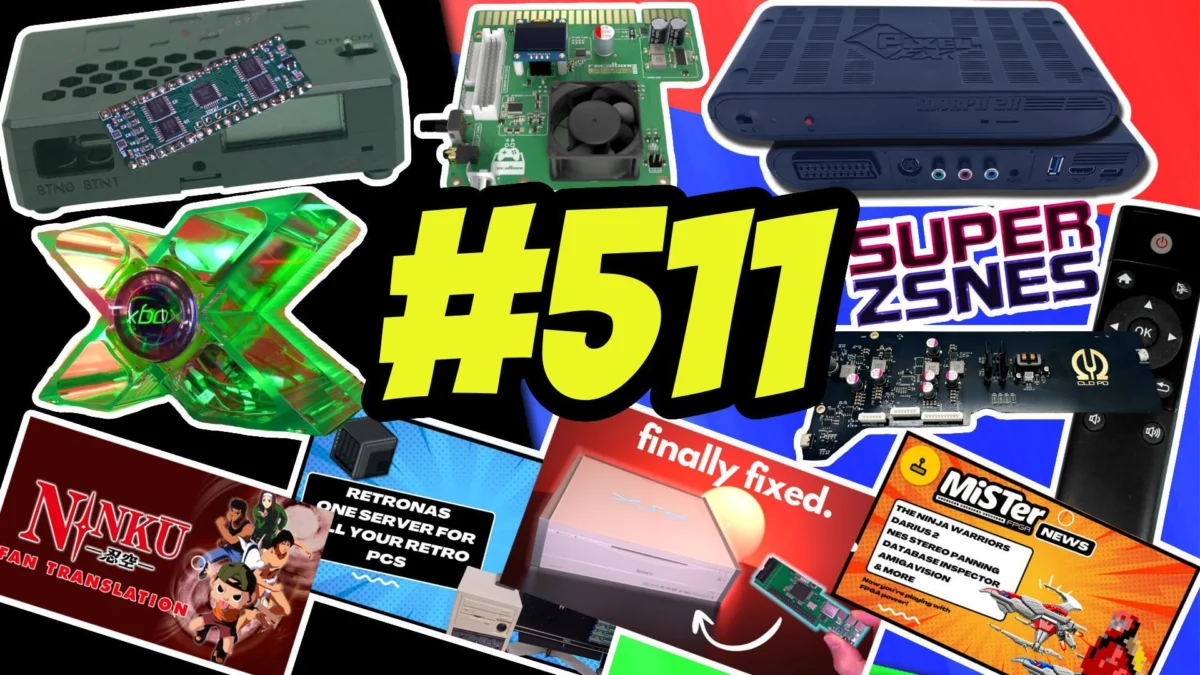
The retro gaming and hardware enthusiast community witnessed a dynamic week concluding April 29th, 2026, marked by significant advancements in console preservation, emulation technology, and hardware modifications. From long-awaited fan translations breathing new life into classic titles to innovative solutions enhancing the usability and longevity of vintage systems, the period highlighted the ongoing dedication of developers and hobbyists alike. Key announcements included a fan translation for the Sega Saturn fighter Ninku, the unveiling of PixelFX’s next-generation video scaler, the Morph 2K, and a slew of updates for the popular MiSTer FPGA platform, further solidifying its position as a cornerstone of modern retro gaming. The collective efforts underscore a vibrant ecosystem continually pushing the boundaries of what’s possible in preserving and experiencing gaming history.
Fan Translation Revitalizes Sega Saturn’s Ninku
A major highlight for Sega Saturn aficionados emerged with the release of a fan translation for the Japanese-exclusive fighting game, Ninku. Originally launched in 1995 by Sega, Ninku captivated a niche audience with its unique character designs and fast-paced combat mechanics, directly inspired by the popular manga series by Koji Kiriyama. Despite its engaging gameplay and vibrant anime aesthetic, the game remained largely inaccessible to international players due to its inherent language barrier, preventing a full appreciation of its narrative elements and character lore. The recent fan translation project, meticulously undertaken by a dedicated team of linguistic experts and ROM hackers, has successfully localized the game’s menus, character dialogue, and intricate story sequences. This monumental effort now opens up the title to a global audience for the very first time, allowing non-Japanese speaking players to delve into its world without impediment.
This initiative is part of a broader, ongoing movement within the retro gaming community to preserve and make accessible games that were either region-locked, never officially translated, or faced limited distribution. The significance of such projects extends beyond mere gameplay accessibility; they contribute fundamentally to the cultural preservation of video game history. By breaking down linguistic barriers, these fan translations allow a new generation of players to experience titles previously out of reach, while providing veteran enthusiasts with a deeper, more nuanced appreciation for these forgotten gems. The technical process involved in such a translation typically includes extensive reverse engineering of game code, graphic asset manipulation to insert translated text, and rigorous testing to ensure both accuracy and stability across the entire game. This intricate work is a testament to the passion, technical prowess, and collaborative spirit that define the retro gaming community, collectively enriching the global gaming archive.
Enhanced User Experience with New Kodi/MiSTer USB Remote
In the realm of user convenience for modern retro setups, a new compact USB remote control specifically designed for Kodi and MiSTer FPGA systems garnered significant attention. Kodi, a widely used free and open-source media player software, and MiSTer FPGA, a hardware platform renowned for its highly accurate, cycle-accurate recreations of classic arcade and console systems, often serve as central hubs for digital entertainment and retro gaming in contemporary home environments. While both platforms offer various input methods, including keyboards and game controllers, a dedicated, compact USB remote streamlines navigation and control, particularly for users integrating these sophisticated systems into a living room or home theater setup.
The remote’s plug-and-play functionality and intuitive button layout promise a more seamless and less cumbersome user experience, effectively eliminating the need for full-sized keyboards or generic game controllers for basic media playback and menu interactions. This development reflects a growing trend towards optimizing the user interface and overall accessibility of sophisticated retro setups, making them more approachable for a wider audience beyond hardcore technical enthusiasts. The dual integration with both Kodi and MiSTer speaks directly to the convergence of media consumption and retro gaming within contemporary entertainment centers, highlighting a clear demand for integrated, user-friendly control solutions that simplify complex systems. Community feedback often points to the desire for simplified interfaces, and this remote directly addresses that need, enhancing the daily usability of these powerful platforms.
PixelFX Announces Next-Generation "Morph 2K" Video Scaler
Perhaps one of the most anticipated announcements came from PixelFX, a prominent and highly respected name in high-quality video upscaling solutions for retro consoles, with the official unveiling of the "1080p Morph," also referred to as the Morph 2K. PixelFX has firmly established itself as a leader in providing crisp, lag-free video output for vintage gaming systems on modern displays, addressing a critical challenge for enthusiasts seeking the best possible visual fidelity from their classic hardware. The Morph 2K is strategically positioned as the successor to their highly acclaimed previous offerings, promising enhanced features, superior performance, and broader compatibility.
While specific technical details are still emerging, the "2K" designation strongly suggests capabilities beyond standard 1080p, potentially supporting 1440p or even initial 4K scaling for specific applications, although 1080p remains the primary focus for optimal retro game presentation given the original pixel art resolutions. This new scaler is expected to feature advanced processing algorithms, significantly improved input latency, and a wider compatibility matrix with an even greater array of classic consoles and diverse video standards. The announcement has generated considerable excitement across the retro hardware community, as high-quality video scaling is absolutely essential for accurately translating the often-unconventional resolutions and refresh rates of retro consoles into a format perfectly compatible with modern HDMI displays without introducing visual artifacts or undesirable input delay. The Morph 2K is poised to set a new benchmark for video fidelity in the retro gaming space, continuing PixelFX’s legacy of innovation in digital video signal processing and further cementing their reputation for excellence.
Lu’s MiSTer FPGA Updates Bring New Cores and Amiga Enhancements
The MiSTer FPGA platform, a recognized cornerstone for hardware-accurate emulation and digital preservation, received a substantial suite of updates courtesy of dedicated developer Lu. These updates notably included the release of new cores for the classic arcade titles Darius 2 and The Ninja Warriors, alongside a "huge AmigaVision update." The addition of Darius 2 and The Ninja Warriors significantly expands MiSTer’s already impressive arcade library, offering meticulously crafted, cycle-accurate recreations of these iconic games. Darius 2, a horizontally scrolling shooter renowned for its unique multi-screen arcade cabinet setup, and The Ninja Warriors, a side-scrolling beat ’em up distinguished by its distinctive triple-screen presentation, represent significant technical achievements in FPGA development. Replicating the intricate complexities of these original arcade boards, including their custom hardware architectures and specialized sound chips, demands immense effort and precision from developers.
The "AmigaVision update" is particularly noteworthy, signaling a major overhaul or substantial expansion of MiSTer’s Amiga computer emulation capabilities. The Amiga platform, celebrated for its multimedia prowess and vast software library, continues to be a vital part of retro computing history, holding a special place for many enthusiasts. This update likely brings improved compatibility with a wider range of Amiga software, enhanced performance for more demanding applications, or introduces new features that further bridge the gap between the original Amiga hardware experience and its FPGA recreation. These continuous, community-driven developments highlight MiSTer’s dynamic evolution, driven by a dedicated global network of developers committed to preserving digital history with unparalleled accuracy and providing an authentic retro experience.

Zaxour’s LaserActive PSU Replacement Pre-orders Announced
For owners of the highly unique and somewhat enigmatic Pioneer LaserActive, an important hardware preservation effort was announced: Zaxour’s CLD-PD Spring 2026 pre-orders for a new Power Supply Unit (PSU) replacement. The LaserActive, originally released in the early 1990s, was a multimedia behemoth that ambitiously combined a LaserDisc player with various "PAC" modules, allowing it to play Sega Genesis, PC Engine, and Karaoke discs. Its inherent complexity and proprietary nature have made maintenance and repair increasingly challenging as the original hardware ages. The power supply unit is a notoriously common point of failure in vintage electronics due to the inevitable degradation of electrolytic capacitors and other component wear over time.
Zaxour’s initiative to produce and offer modern, reliable PSU replacements is absolutely crucial for keeping these rare, valuable, and historically significant machines operational. The pre-order system allows the creator to accurately gauge demand and secure the necessary funding for production, ensuring that these vital components are manufactured efficiently and reach the hands of those who need them. This effort is a prime example of the retro community’s unwavering commitment to hardware preservation, recognizing that software emulation alone, while valuable, cannot fully replicate the unique experience of owning and operating original, physical hardware. Ensuring the continued functionality of consoles like the LaserActive, which hold a distinct place in gaming history, is paramount for dedicated collectors, hardware historians, and preservationists alike. The structured Spring 2026 pre-orders indicate a well-planned approach to addressing a critical hardware vulnerability for a niche but passionately devoted segment of the retro computing and gaming community.
Recalbox JAMMA 2 Bridges Emulation with Arcade Hardware
Bridging the gap between classic arcade hardware and modern emulation, the Recalbox RGB JAMMA 2 project was unveiled, generating considerable excitement among arcade enthusiasts. Recalbox is a popular free and open-source emulation front-end and operating system, enabling users to play a vast library of retro games on various hardware platforms, most commonly Raspberry Pi devices. The JAMMA standard (Japan Amusement Machine Manufacturers’ Association) is a universal wiring harness historically used in arcade cabinets, allowing operators to easily swap out game boards. The Recalbox RGB JAMMA 2 system is specifically designed to integrate the powerful Recalbox software with authentic JAMMA arcade cabinets, providing a seamless and highly authentic way to run a multitude of emulated arcade games on original arcade monitors and controls.
This second iteration of the JAMMA solution likely brings significant improvements over its predecessor, such as enhanced compatibility with a broader range of arcade monitors, better signal processing for pristine RGB output, or simplified installation procedures. For arcade enthusiasts who own or are building their own cabinets, this solution offers the best of both worlds: the vast library and unparalleled convenience of modern emulation combined with the authentic feel, responsive controls, and unique display characteristics of genuine arcade hardware. It represents a significant step in making modern emulation more accessible and enjoyable for dedicated arcade collectors, allowing them to preserve the tactile and visual experience of coin-op gaming while simultaneously leveraging contemporary software flexibility and expansive game libraries. The project reflects a growing trend of integrating the precision of modern emulation with the irreplaceable feel of original hardware.
NeoPico HD Adds 720p Support for Enhanced Visuals
Further enhancing the visual output for specific consoles, NeoPico HD announced the addition of 720p support. While the exact console or system this refers to is not explicitly stated in the summary, "NeoPico" strongly suggests a connection to the venerable Neo Geo family of systems, renowned for its high-quality arcade-perfect home conversions and impressive graphical capabilities for its era. Many early HDMI modification kits for retro consoles initially focused on 480p or 576p output, which, while a significant improvement over composite or S-video, still falls short of modern display resolutions. The introduction of 720p support means that games from the target system can now be output at a higher, native HD resolution that is perfectly compatible with the vast majority of modern televisions and monitors.
This enhancement provides a noticeably sharper image, effectively reduces scaling artifacts often introduced by contemporary displays, and generally offers a cleaner, more vibrant visual experience. For systems like the Neo Geo, which boasted impressive graphical fidelity and intricate pixel art for their time, presenting their visuals in high definition without blurring or distortion is highly valued by purists and enthusiasts alike. This development demonstrates the ongoing refinement of existing hardware modifications, as dedicated developers continually seek to extract the best possible performance and visual fidelity from classic gaming platforms, ensuring they look their absolute best on modern screens.
Lumacode Cable Length and A/V Switch Testing Results Shared
Investigations into optimal signal integrity for retro video setups continued with detailed testing of Lumacode cable length and its performance when routed through various A/V switches. Lumacode refers to a specific method or component often associated with improving color and brightness accuracy in analog video signals, particularly high-quality RGB connections. The inherent challenge with analog video signals, especially when transmitted over longer cable runs or when routed through multiple switching devices, is the significant potential for signal degradation, electromagnetic interference, and subsequent loss of fidelity. This new round of testing focused on comprehensively understanding how Lumacode performs under varying cable lengths and when passing through different types of A/V switching devices.
The findings from such meticulous tests are invaluable for the retro gaming community, offering practical, evidence-based guidance on how to build and optimize complex video setups for maximum clarity. Users frequently employ A/V switches to connect a multitude of classic consoles to a single modern display, and understanding precisely how different switches affect overall signal quality is crucial for maintaining a pristine image. The report likely provides detailed recommendations on








