Farhan hamdan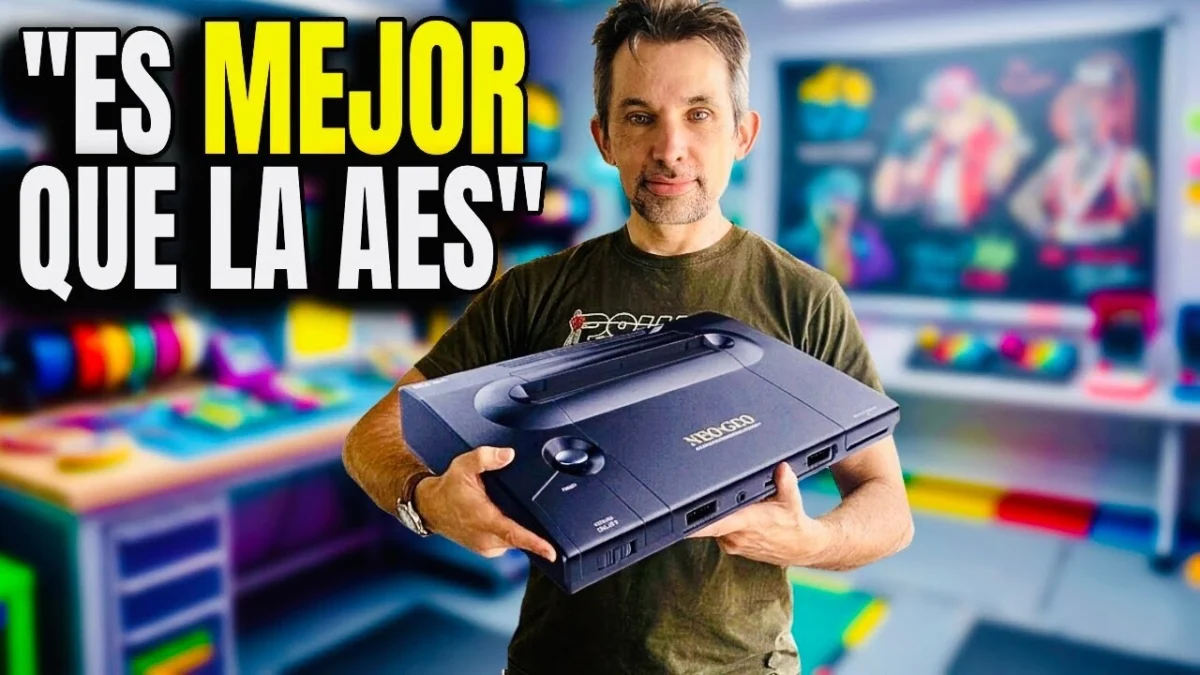
The retro gaming community is abuzz following an exclusive interview with prominent FPGA developer Jotego, who shed significant light on the technical underpinnings and authenticity efforts behind Plaion’s highly anticipated Neo Geo AES+ console. Conducted by Creativo en Japón, the interview has largely alleviated prior skepticism, painting a picture of a meticulously engineered system poised to deliver an unparalleled experience faithful to the original SNK hardware. Jotego’s revelations, particularly concerning the console’s ASIC design, audio-visual fidelity, and lag-free input, suggest that the AES+ is shaping up to be a landmark release in the officially licensed retro hardware market.
The Legacy of the Neo Geo and the Quest for Authenticity
To fully appreciate the significance of Jotego’s disclosures, one must understand the unique position of the Neo Geo in gaming history. Launched by SNK in 1990, the Neo Geo Advanced Entertainment System (AES) was an unprecedented home console, essentially bringing the arcade experience into living rooms. Unlike its competitors, which offered scaled-down versions of arcade games, the Neo Geo AES played identical cartridges to its arcade counterpart, the MVS (Multi Video System). This direct parity came at a steep price, making the Neo Geo a luxury item – often dubbed the "Rolls Royce of consoles." Its library boasts iconic titles like Metal Slug, King of Fighters, Samurai Shodown, and Fatal Fury, renowned for their intricate sprite work, fluid animation, and challenging gameplay.
For decades, enthusiasts have sought ways to experience these games with the utmost fidelity. Software emulation, while widely accessible, often introduces compromises in accuracy, timing, and most critically, input latency. This pursuit of pixel-perfect and lag-free gameplay led to the rise of Field-Programmable Gate Array (FPGA) technology in retro gaming. FPGA devices can be reconfigured to mimic the exact behavior of original hardware components at a transistor level, offering a level of accuracy far superior to software emulation. Projects like the MiSTer FPGA have become paragons of this approach, providing highly accurate recreations of numerous classic systems, including the Neo Geo. Jotego himself is a cornerstone of the MiSTer community, known for his meticulous and highly regarded FPGA cores for various arcade and console systems.
Plaion’s Entry into Premium Retro Hardware
Plaion, a global publisher and distributor of video games and entertainment products, signaled its intent to enter the premium retro hardware space with the announcement of the Neo Geo AES+. Known for titles like Dead Island and Saints Row, and its extensive distribution network, Plaion’s move into hardware development, particularly with a revered and complex system like the Neo Geo, raised eyebrows. Initial community reactions ranged from cautious optimism to outright skepticism, largely due to a history of "officially licensed" retro consoles that have often fallen short of enthusiast expectations in terms of accuracy, build quality, or latency. Many feared a rebadged emulator box or a system with significant compromises. However, Plaion’s decision to collaborate with respected FPGA developers like Jotego and Furrtek (another highly regarded figure in hardware reverse engineering and FPGA design) immediately injected a strong dose of credibility into the project.
The initial announcement detailed three editions: a standard edition, a limited edition, and an "Ultimate Edition," with pre-orders opening in various regions. For US consumers, pre-orders were made available via Amazon for the standard and limited editions, while the Ultimate Edition was listed on Plaion’s direct retail site. A minor hiccup arose when US customers reported issues ordering the Ultimate Edition due to shipping fee discrepancies. Plaion Americas swiftly addressed these concerns via social media, clarifying that the edition was not sold out and that the shipping issue was being resolved, advising customers to check back by the end of May. This proactive communication helped maintain a degree of trust within the community.
Jotego’s Deep Dive: An ASIC Derived from MiSTer
The core revelation from Jotego’s interview with Creativo en Japón is that the Neo Geo AES+ will be powered by an Application-Specific Integrated Circuit (ASIC) that is a direct "spin-off" from the highly acclaimed MiSTer FPGA Neo Geo core. This is a crucial distinction. While FPGA allows for flexibility and iterative development, ASICs are custom-designed chips optimized for a specific function. Once an FPGA core is thoroughly validated for accuracy and stability, it can be "hardened" into an ASIC.
Jotego elaborated on this, drawing an analogy to the Sega Genesis 1 and Genesis 2. The Genesis 2, while a cost-reduced redesign, remained fundamentally the same console as the Genesis 1. Similarly, the AES+ ASIC integrates multiple components into a single, efficient chip, but without altering the fundamental architecture or behavior of the original Neo Geo. This transition from FPGA to ASIC offers several advantages for a commercial product: reduced manufacturing costs, lower power consumption, smaller form factor, and potentially greater reliability in a mass-produced unit compared to a general-purpose FPGA board. For the end-user, it promises the same high level of accuracy established by the MiSTer core, but within a sleek, dedicated console package.
The involvement of both Jotego and Furrtek underscores the project’s commitment to authenticity. Furrtek, known for his extensive reverse-engineering work on various retro hardware, including the Neo Geo, complements Jotego’s FPGA development expertise. Their combined knowledge ensures that the core design faithfully replicates the intricacies of SNK’s original hardware down to the smallest detail.
Uncompromising Audio-Visual Fidelity and Lag-Free Performance

One of the most critical aspects for retro enthusiasts is the accuracy of the audio and visual output. Jotego confirmed that the Neo Geo AES+ will feature RGB output via its "A/V" port, a standard highly valued for its superior picture quality over composite or S-video. More importantly, he stated that significant effort was invested to ensure the colors rendered by the AES+ would be as accurate as possible to the original Neo Geo. This means meticulous calibration to match the original palette and signal characteristics, avoiding the common pitfalls of inaccurate color reproduction seen in many emulation-based solutions. For purists, this commitment to original color fidelity is paramount, preserving the artistic intent of SNK’s pixel artists.
The audio circuit received similar attention. Jotego detailed how the sound hardware was specifically tailored to replicate the distinctive audio signature of the original Neo Geo. The Neo Geo’s sound chip (Yamaha YM2610) produced a unique blend of FM synthesis, ADPCM samples, and SSG sounds, which is often difficult to reproduce perfectly. The AES+ aims to capture these nuances, delivering an authentic auditory experience that complements the visual accuracy. This attention to both visual and auditory fidelity highlights a holistic approach to recreating the original system, rather than just focusing on gameplay.
Perhaps the most significant technical assurance provided by Jotego concerns input latency. He unequivocally confirmed that the Neo Geo AES+ is designed to be a "lagless solution." This is achieved by wiring the controller pins directly to the custom ASIC, which processes the input signals in real-time, just like the original Neo Geo hardware. This direct connection and processing ensure that the time from a button press to the corresponding on-screen action via the analog video output will be virtually identical to that of an original AES console. This eliminates the input lag that plagues many modern emulation systems and even some official retro re-releases, which can severely impact the playability of fast-paced, precision-dependent games like those found on the Neo Geo.
While Jotego did not provide specific details on the latency or supported resolutions for the HDMI output, he alluded to its performance being akin to the MiSTer core. The MiSTer FPGA system is renowned for its extremely low HDMI latency, often achieving sub-frame input lag, making it a benchmark for modern display compatibility. It is reasonable to infer that Plaion and the development team are aiming for a similarly optimized HDMI experience for the AES+, likely offering options for various scaling modes and resolutions to suit modern displays while minimizing processing delays.
Broader Implications and Market Impact
The Neo Geo AES+, as detailed by Jotego, stands to set a new benchmark for officially licensed retro console re-releases. Its foundation on a proven MiSTer FPGA core, hardened into an ASIC, combines the best of both worlds: the accuracy and low latency demanded by enthusiasts, packaged in a consumer-friendly, mass-producible console. This approach could influence future retro hardware development, potentially encouraging other companies to adopt similar strategies of partnering with established FPGA developers and leveraging highly accurate open-source cores.
The target audience for the AES+ is clearly the discerning retro gamer and collector who prioritizes authenticity and performance above all else. While the price point for the original Neo Geo was exorbitant, and even retro consoles today can be pricey, the AES+ offers a modern, reliable, and authentic alternative to sourcing and maintaining increasingly rare and fragile original hardware. It enters a market populated by various solutions, from expensive original systems to MiSTer setups, and other "mini" or emulation-based consoles. By offering a meticulously crafted, officially licensed product, Plaion positions the AES+ as a premium offering that justifies its likely higher price point compared to basic emulation boxes.
This initiative also signals Plaion’s strategic diversification into high-end retro hardware. By aligning with top-tier FPGA developers, they are building a reputation for quality and authenticity, which could open doors for future ventures into other classic console recreations.
A Glimpse into the Future: Another Console on the Horizon?
Adding another layer of intrigue, Jotego concluded his interview with a tantalizing hint: "there’s another console on the way," though he was unable to disclose any further details. This cryptic statement immediately sparked speculation within the retro gaming community. Given Jotego’s extensive work on MiSTer cores for various systems, possibilities range from other SNK platforms like the Neo Geo CD or Pocket, to entirely different iconic consoles from the 16-bit or 32-bit eras. This tease suggests a long-term vision for Plaion in the retro hardware space, potentially establishing a series of high-fidelity, FPGA/ASIC-based consoles.
Conclusion: A Shift from Caution to Full Excitement
The detailed insights provided by Jotego have fundamentally transformed the perception of the Neo Geo AES+. What began with "cautious excitement" among many enthusiasts has now largely shifted to genuine anticipation. The confirmation of an ASIC derived from the renowned MiSTer core, coupled with explicit assurances regarding RGB video output, accurate color and audio reproduction, and a truly lag-free input experience for analog output, addresses virtually all the major concerns of the retro gaming community.
This project appears to be a testament to the power of collaboration between commercial entities and dedicated, expert developers from the enthusiast community. By embracing the principles of hardware-level accuracy and low latency, Plaion’s Neo Geo AES+ is poised not just to revisit the past, but to redefine what an official retro console re-release can achieve, setting a high standard for authenticity and player experience in the modern era. The stage is set for what promises to be an exceptional tribute to one of gaming’s most legendary systems.