
 Farhan hamdan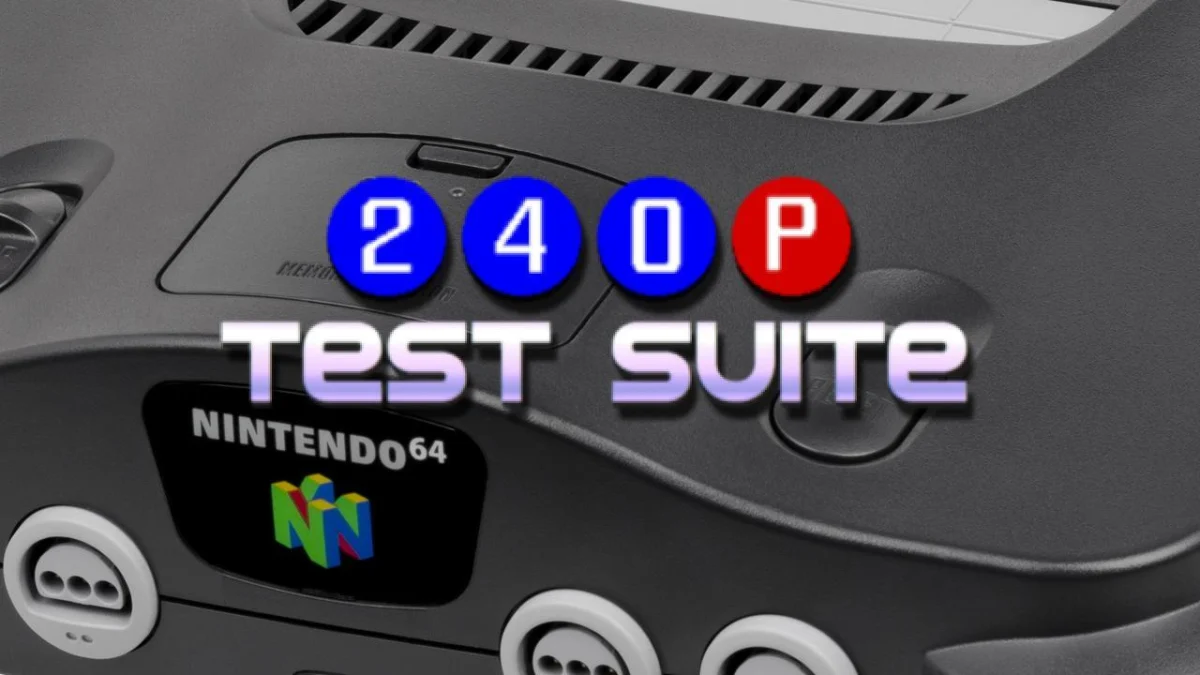
The release, currently available in its NTSC iteration, addresses a long-standing need within the Nintendo 64 community for a robust and comprehensive calibration tool. The 240p Test Suite is widely recognized as an indispensable diagnostic and calibration utility, essential for optimizing the display of classic console games on both vintage Cathode Ray Tube (CRT) televisions and modern upscaling solutions. Its arrival for the N64 is poised to profoundly impact how players experience and fine-tune their retro setups, offering unparalleled precision in video output configuration.
The Genesis of a Crucial Tool: Understanding the 240p Test Suite
To fully appreciate the significance of this release, it is vital to understand the foundational role of the 240p Test Suite. Developed by Artemio Urbina, this software tool provides a series of meticulously crafted test patterns designed to evaluate and calibrate video output from classic gaming consoles. The "240p" in its name refers to the progressive scan resolution commonly used by many fourth, fifth, and sixth-generation consoles, particularly prevalent on NTSC systems. This resolution, often mistakenly perceived as 480i due to its interlace nature on some displays, is in fact a progressive signal where each frame is drawn entirely, leading to a crisp, artifact-free image when rendered correctly on a compatible display, typically a CRT.
The suite includes a variety of patterns: geometry grids to check for distortion and overscan, color bars for accurate color reproduction, scrolling patterns to detect tearing and judder, pluge patterns for black level calibration, and pixel perfect patterns for sharpness and scaling analysis. For retro gamers, these tools are critical for ensuring that their classic hardware outputs the most accurate and visually pleasing image possible. This is especially true when integrating consoles with modern displays via scalers like the OSSC (Open Source Scan Converter) or RetroTINK, where precise timing and signal integrity are paramount. Urbina’s previous work on versions for the Super Nintendo Entertainment System (SNES), Sega Genesis, Sony PlayStation, and other platforms has cemented the 240p Test Suite as the de facto standard for retro video calibration. Its consistent use across multiple systems has built a reputation for reliability and comprehensive testing capabilities, making the N64 version a highly anticipated addition to this esteemed lineage.
Nintendo 64: A Unique Challenge and Opportunity for Video Output
The Nintendo 64, released in 1996, presents a particularly complex challenge for video output and calibration compared to its contemporaries. Unlike the SNES or Genesis, which offered relatively clean RGB output (often requiring simple modifications), the N64’s native video output was primarily composite video or S-video, both of which suffer from varying degrees of signal degradation, color bleeding, and blur. Its distinctive anti-aliasing filter, while intended to smooth out polygons, often resulted in a characteristically soft or blurry image, even on CRT displays. For enthusiasts seeking pristine image quality, extensive hardware modifications, such as RGB mods, were often necessary to bypass these limitations and extract a higher-quality signal.
This inherent blurriness and the variability of video output methods (composite, S-video, RGB mods, HDMI mods) made precise calibration a daunting task for N64 owners. The absence of a dedicated, comprehensive test suite meant that gamers and modders often relied on subjective visual assessments or rudimentary patterns found within games themselves, which lacked the scientific rigor of the 240p Test Suite. The N64’s native resolution, often 320×240 or 640×480 (interlaced) depending on the game, directly relates to the 240p standard. Therefore, a specialized tool that can accurately assess and help mitigate the N64’s specific video characteristics is not merely a convenience but a necessity for achieving optimal visual fidelity on this iconic console. The community’s long-standing desire for such a tool underscores its importance, as it promises to demystify and standardize the calibration process for the console’s diverse array of video setups.
Technical Foundations: Libdragon, Tiny3D, and Community Collaboration
The development of the N64 240p Test Suite was made possible through the utilization of cutting-edge tools for Nintendo 64 homebrew development and the invaluable contributions of the retro gaming community. Key among these are libdragon and tiny3D.
Libdragon is a modern, open-source Software Development Kit (SDK) for the Nintendo 64. Unlike the original, proprietary Nintendo 64 SDKs, libdragon offers a more accessible and feature-rich environment for contemporary developers to create new applications and games for the console. It provides robust libraries for graphics, audio, input, and memory management, significantly streamlining the development process. Its existence has breathed new life into the N64 homebrew scene, enabling projects that would have been far more challenging, if not impossible, just a few years ago. For the 240p Test Suite, libdragon likely provided the foundational framework for managing the N64 hardware, allowing Artemio to interface directly with the console’s video processing unit.
Tiny3D, as its name suggests, is a lightweight 3D graphics library specifically designed for the Nintendo 64. While the 240p Test Suite primarily deals with 2D patterns, the N64 is fundamentally a 3D console. tiny3D would have been instrumental in efficiently rendering the various test patterns, ensuring pixel-perfect accuracy and smooth display without taxing the N64’s relatively limited processing power. Its optimization for the N64’s unique architecture is crucial for generating stable and reliable visual output for calibration purposes.
The development also credits "awesome members of the retro gaming community." This highlights the collaborative spirit inherent in the retro gaming scene. Many homebrew projects benefit from collective knowledge sharing, bug testing, and specialized expertise from individuals who possess deep understanding of specific console hardware. This community-driven approach is a hallmark of the retro gaming preservation and enhancement movement, where passionate individuals volunteer their time and skills to advance the collective experience. The synergy between advanced development tools and community support has been a critical factor in bringing the N64 240p Test Suite to fruition.
The NTSC Signal Standard and Keith Raney’s Revelation
A particularly intriguing aspect of the N64 240p Test Suite’s development comes from the insights shared by Keith Raney. He noted that the N64 version served as the basis for redesigning all other 240p Monoscopes. This statement is profound because it implies a foundational quality in the N64’s video output capabilities that was previously underappreciated. Raney’s observation centers on the N64’s ability to produce a signal "really close to 100% of the NTSC signal."
To understand this, one must delve into the nuances of the NTSC (National Television System Committee) standard. NTSC defines the composite video signal used primarily in North America, Japan, and parts of South America. It dictates aspects like frame rate (approximately 29.97 frames per second), scanning lines (525 lines, with 480 visible), and color encoding. Achieving a "100% NTSC signal" implies a video output that adheres almost perfectly to these specifications, with minimal deviation in timing, voltage levels, and color encoding. Many consoles, while producing an NTSC-compatible signal, might have subtle inaccuracies or variations that, while often imperceptible to the casual viewer, can throw off precise calibration.
Raney’s revelation suggests that the N64, despite its reputation for blurry native output, possesses an underlying video generation architecture that is exceptionally compliant with the NTSC standard. This "purity" of the NTSC signal makes it an ideal reference point. By developing the 240p Test Suite on the N64 first, Artemio and his collaborators could establish a benchmark for how test patterns should ideally look when generated by a console that adheres so closely to the standard. This N64-derived benchmark could then be used to refine and improve the test patterns for other consoles, ensuring that the 240p Monoscopes across all platforms are as accurate and effective as possible. This insight elevates the N64 version from merely another console port to a foundational reference tool for the entire 240p Test Suite ecosystem.
From Digital Release to Physical Preservation: The Mega Cat Studios Partnership
The initial release of the N64 240p Test Suite is available as a digital ROM, accessible via Artemio Urbina’s itch.io page. This immediate digital availability ensures that retro gamers can quickly download and utilize the software on their N64 flash carts or emulators. However, a significant development on the horizon is the planned physical cartridge release by Mega Cat Studios.

Mega Cat Studios is a prominent publisher and developer specializing in creating new games and utilities for classic consoles. They have gained a strong reputation within the retro gaming community for their commitment to quality, authenticity, and the production of physical cartridges that often mimic the packaging and aesthetics of original releases. Their involvement with the 240p Test Suite underscores the importance of this utility and the retro community’s desire for tangible, long-lasting access to such tools.
The decision to release a physical cartridge, though currently in the "release candidate stage," speaks to several critical aspects of retro gaming. Firstly, it offers a level of permanence and accessibility that digital files alone cannot always guarantee. A physical cartridge ensures that the test suite can be used on original N64 hardware without the need for a flash cart, appealing to purists and those who prefer physical media. Secondly, it provides a valuable collector’s item, reinforcing the cultural significance of the software. Finally, it aligns with Mega Cat Studios’ mission to support and expand the retro gaming ecosystem by providing professionally produced physical media. The transition from a digital ROM to a physical cartridge further solidifies the 240p Test Suite’s status as an essential piece of software for the N64. Updates regarding the physical release will be eagerly anticipated by the community.
Regional Differences: NTSC vs. PAL Considerations
While the current release of the N64 240p Test Suite is focused on the NTSC standard, plans are in place for a future PAL version. This distinction highlights the enduring challenges posed by regional video standards in retro gaming.
NTSC and PAL (Phase Alternating Line) are the two primary analog color television standards that dominated the world before the widespread adoption of digital broadcasting. The key differences lie in their frame rates and line counts:
- NTSC: Used primarily in North America, Japan, and parts of South America. Features a frame rate of approximately 29.97 frames per second (or 60 fields per second) and 525 scanning lines, with typically 480 visible lines.
- PAL: Used in Europe, Australia, parts of Asia, and Africa. Features a frame rate of 25 frames per second (or 50 fields per second) and 625 scanning lines, with typically 576 visible lines.
These fundamental differences mean that software developed for one standard cannot simply be run on a console designed for the other without potential issues like incorrect display timing, distorted aspect ratios, or color inaccuracies. A PAL N64 console, for instance, operates at a different refresh rate and expects a higher line count, necessitating specific adjustments to the software’s video output routines.
Developing a separate PAL version of the 240p Test Suite is crucial for serving the global retro gaming community. PAL users require patterns generated at their console’s native resolution and refresh rate to accurately calibrate their displays. This ensures that European and other PAL region gamers can benefit from the same precise calibration capabilities as their NTSC counterparts. The commitment to releasing a PAL version demonstrates Artemio Urbina’s dedication to providing a universally accessible and effective tool, acknowledging the diverse technical landscapes of retro gaming worldwide. The development for the PAL version will involve adapting the timing, resolution, and possibly the color encoding of the test patterns to perfectly match the PAL N64’s video output characteristics.
Sustaining Innovation: The Importance of Creator Support
The availability of the 240p Test Suite as free software, while immensely beneficial to the community, underscores a critical aspect of independent development: the need for creator support. Artemio Urbina, like many other dedicated homebrew developers, invests countless hours of personal time, expertise, and often financial resources into these projects.
The article explicitly states that while the ROMs are free, supporting the creators is important. Tips via the download page and monthly support via platforms like Patreon are highlighted as the best ways to sustain such projects. This is not merely a request for charity but a recognition of the labor involved in developing complex software for vintage hardware. Independent development in the retro gaming space often operates outside traditional commercial models. Developers are driven by passion, a desire to contribute to the community, and the intellectual challenge of working with older technology.
Patreon, a subscription-based crowdfunding platform, provides a stable, recurring income stream for creators. This stability allows developers like Artemio to dedicate more consistent effort to their projects, ensuring ongoing maintenance, feature development, and the initiation of new endeavors. Direct tips offer immediate appreciation and support for specific releases. Without this financial backing from the community, many ambitious and highly valuable projects, such as the N64 240p Test Suite, might never reach completion or receive ongoing support. The ecosystem of independent retro development thrives on this symbiotic relationship: creators provide invaluable tools and experiences, and the community, in turn, provides the resources to make that possible, ensuring the continued vibrancy and innovation within the scene.
Broader Impact and Future Implications for Retro Gaming
The release of the N64 240p Test Suite carries significant implications for the broader retro gaming community, extending beyond mere console calibration.
Firstly, it dramatically enhances the ability of enthusiasts to achieve optimal visual fidelity from their Nintendo 64 consoles. For those using original CRTs, the suite will enable precise adjustments for geometry, color, and black levels, combating the natural degradation and inconsistencies of aging displays. For users employing modern upscalers and high-definition televisions, the suite becomes an indispensable tool for fine-tuning scaling parameters, ensuring pixel-perfect representations, correct aspect ratios, and minimal input lag. This elevated level of visual accuracy contributes significantly to the authenticity and enjoyment of retro gaming.
Secondly, the suite serves as a powerful diagnostic tool for hardware modifications and repairs. Modders can use the various patterns to test the integrity of RGB mods, troubleshoot video output issues, and verify the correct functioning of de-blur kits or other video enhancements. Its ability to generate specific, controlled signals makes it invaluable for isolating and resolving hardware-related problems, thereby empowering the community to maintain and upgrade their consoles more effectively.
Thirdly, this project contributes to the ongoing efforts in retro gaming preservation and education. By providing a standardized and reliable method for analyzing and calibrating N64 video output, the suite helps document the console’s video capabilities and challenges. It serves as an educational resource for new entrants into the hobby, teaching them the principles of video signals and display calibration. The open-source nature of tools like libdragon and tiny3D, combined with Artemio’s work, also fosters a culture of technical understanding and community-driven development that is crucial for the long-term health of the retro gaming scene.
Finally, the N64 240p Test Suite reinforces the vitality of the homebrew development community. It demonstrates that even decades after a console’s initial release, dedicated individuals can still push boundaries, create essential tools, and enhance the retro gaming experience in profound ways. This continuous innovation inspires new developers and ensures that classic consoles remain relevant and enjoyable for generations to come.
In conclusion, Artemio Urbina’s release of the Nintendo 64 240p Test Suite is far more than just a software update; it is a landmark event that addresses a critical need, leverages cutting-edge homebrew technology, draws upon community insights, and promises to elevate the N64 retro gaming experience to unprecedented levels of accuracy and enjoyment. Its digital availability and forthcoming physical release ensure its widespread adoption, cementing its place as an indispensable utility for any serious Nintendo 64 enthusiast.








