Chalid Lutfie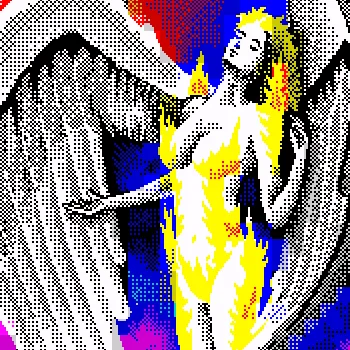
The release of Still Flying marked a significant milestone in the career of Dmitry Zhemkov, known professionally as C-Jeff, serving as his debut full-length album and a definitive statement in the evolution of AY-chip music. Composed entirely during the year 2002, the project was conceptualized and executed on original ZX Spectrum hardware, utilizing the Pro Tracker 3 software environment to push the technical boundaries of the Zilog Z80-based architecture. Defined by its creator as a collection of "lyric music novels," the album transitioned from a purely digital composition to a collaborative software release, eventually being packaged as an executable musicdisk for the ZX Spectrum platform. This release not only showcased C-Jeff’s emerging melodic sensibility but also reflected the vibrant, competitive nature of the global demoscene during the early 21st century.
Technical Foundation and Compositional Environment
To understand the significance of Still Flying, one must examine the constraints and capabilities of the hardware used in its creation. The ZX Spectrum, a 8-bit home computer released in the 1980s, remained a powerhouse for underground electronic music in Eastern Europe and Russia long after it was considered obsolete in the West. C-Jeff’s choice to use a "real" ZX Spectrum rather than modern emulation highlights a commitment to the authentic timbre and hardware limitations of the AY-3-8910 (or the compatible YM2149) programmable sound generator.
The AY chip is characterized by its three-channel square-wave synthesis and a single envelope generator, a set of constraints that requires immense creativity to produce complex arrangements. Within this framework, C-Jeff utilized Pro Tracker 3, a sophisticated pattern-based sequencer that allowed for the manipulation of ornaments, samples, and noise effects. The "lyric music novels" tagline suggests that despite the rigid, mathematical nature of tracker sequencing, the focus of Still Flying was on narrative depth and emotional resonance, a departure from the more aggressive or purely technical "chiptune" styles of the era.
The Evolution of the Musicdisk Release
Approximately 18 months after the initial composition phase, Still Flying was elevated from a collection of tracks to a formal demoscene production. This took the form of an executable musicdisk, a software package designed to play the album’s tracks within a custom graphical user interface on the ZX Spectrum. This transition required a multidisciplinary team to bring the vision to fruition.
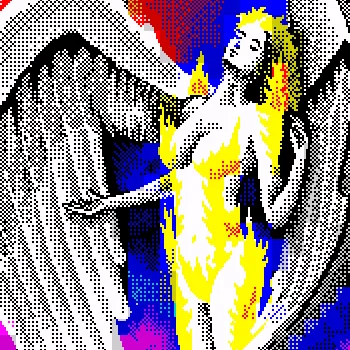
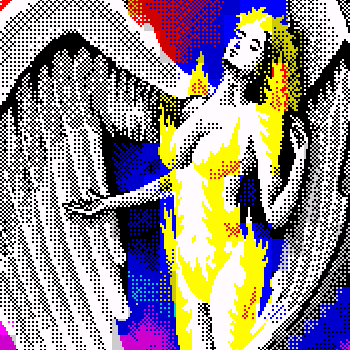
The coding for the musicdisk was handled by the developer known as Vortex, whose engine provided the stability and playback fidelity required for the complex Pro Tracker 3 modules. Visual identity was provided by the artist Schafft, whose graphics defined the aesthetic tone of the software, while Poisoned CyberJack managed the packing and compression of the data to ensure the entire experience could fit within the limited memory of the Spectrum hardware. This collaborative effort transformed the album into a historical artifact of the demoscene, bridging the gap between independent music production and software engineering.
Chronology of Competitive Success and Track Development
The development of Still Flying was closely tied to the "demoparty" circuit, where computer enthusiasts gathered to compete in various creative categories. Two of the album’s most prominent tracks, "My Mind is Free" and "Lonely Soul," serve as anchors for the project’s timeline and illustrate the artist’s growth during this period.
CAFe 2002 and the Origins of My Mind is Free
"My Mind is Free" was originally composed for the CAFe 2002 demoparty, an event held in Kazan, Russia. The track was entered into the ZX Spectrum AY Music competition, a high-stakes environment where composers were judged by their peers on both technical mastery and melodic innovation. At the time of the competition, the track was famously released under the title "My mind free." This grammatical oversight was later attributed to the artist’s developing proficiency in English at the age of the release. Despite the titling error, the track resonated with the audience and judges, securing 13th place in a highly competitive field. Following the party, the track was polished and integrated into the Still Flying tracklist, serving as a core component of the album’s narrative.
Paradox 2002 and the Inclusion of Lonely Soul
While "Lonely Soul" was not part of the initial album concept, its creation occurred within the same chronological window as the rest of the Still Flying material. The track shared the same melancholic, "lyrical" DNA as the other pieces, making it a natural fit for the final collection. "Lonely Soul" was submitted to the Paradox 2002 demoparty, where it achieved significant critical acclaim. The track earned 2nd place in the ZX Spectrum AY Music competition, solidifying C-Jeff’s reputation as a top-tier composer within the scene. Its eventual inclusion in the album added a layer of prestige and provided a more comprehensive look at the artist’s output during his 2002 creative peak.
Supporting Data and Production Credits
The production of Still Flying involved a specific hierarchy of roles common in the demoscene but rare in traditional music publishing. The credits for the album reflect a community-driven approach to art:
- Composer and Producer: C-Jeff (Dmitry Zhemkov)
- Artwork and Graphics: Schafft
- Mastering: MmcM (Sergey Reshetnikov)
- Software Coding: Vortex
- Data Packing: Poisoned CyberJack
The involvement of MmcM in the mastering process is particularly noteworthy. As one of the most respected figures in the Russian chiptune scene, MmcM’s contribution ensured that the audio levels and frequency balances were optimized for both the hardware’s internal speaker and external audio systems. This level of professional polish was a rarity for 8-bit music at the time and contributed to the album’s longevity.
Broader Impact and Industry Implications
Still Flying represents more than just a debut album; it is a snapshot of a transitional period in digital music history. In 2002, the world was moving toward high-fidelity MP3s and DAW-based (Digital Audio Workstation) production, yet C-Jeff and his contemporaries remained dedicated to the "limitations as strengths" philosophy of 8-bit hardware.
Cultural Context in Eastern Europe
In the early 2000s, the ZX Spectrum community in the CIS (Commonwealth of Independent States) was one of the most active in the world. Due to economic factors, the Spectrum remained a primary tool for computer education and creative expression long after it had been replaced by PCs in other regions. Still Flying is a product of this unique cultural pocket, where the "tracker" subculture flourished. The album’s success helped pave the way for the "chiptune" revival of the mid-2000s, where 8-bit sounds began to influence mainstream pop and electronic music.
The Legacy of C-Jeff
The skills C-Jeff honed during the creation of Still Flying served as the foundation for a prolific career. Following this release, he would go on to found the Ubiktune label, a prominent platform for chiptune and progressive electronic music. His technical expertise eventually led him to the video game industry, where he has contributed to soundtracks for major titles, including work for Ubisoft. Still Flying remains a point of reference for fans of the genre, illustrating the potential of the AY-3-8910 chip to produce music that is not merely "bleeps and bloops" but complex, emotive compositions.
Analysis of the Musicdisk Format
The release of Still Flying as a musicdisk highlights a specific era of digital distribution. Before the ubiquity of streaming platforms like Spotify or Bandcamp, musicdisks were a primary way for demoscene artists to distribute their work. These were essentially "visual albums" where the listener would boot a disk on their computer (or an emulator) and navigate a menu to play tracks while viewing synchronized visuals or reading "scrolly-texts" (horizontal scrolling messages from the authors).
This format enforced a specific type of engagement. The listener was not just hearing a song; they were interacting with a piece of software. The collaboration between C-Jeff, Vortex, and Schafft ensured that Still Flying was a cohesive multimedia experience. The preservation of this musicdisk on platforms like Pouet.net and Demozoo ensures that the original hardware-bound experience remains accessible to historians and new fans alike.
Conclusion and Current Availability
Decades after its initial release, Still Flying continues to be recognized for its contribution to the 8-bit canon. The album has been archived and re-released on modern platforms, including Bandcamp, allowing a new generation of listeners to experience the "lyric music novels" of 2002. While the tools used to create it—the ZX Spectrum and Pro Tracker 3—are now vintage curiosities to many, the melodic complexity and emotional honesty of the tracks remain timeless.
The story of Still Flying is one of technical ingenuity and the power of community. It serves as a reminder that artistic expression is not limited by the sophistication of the tools, but rather by the vision of the creator. As C-Jeff’s first major work, it remains a cornerstone of his discography and a vital piece of the global demoscene’s musical heritage. All rights to the material remain with the artist, under the original copyright established in 2002, marking a persistent legacy in the ever-evolving landscape of electronic music.