
 Farhan hamdan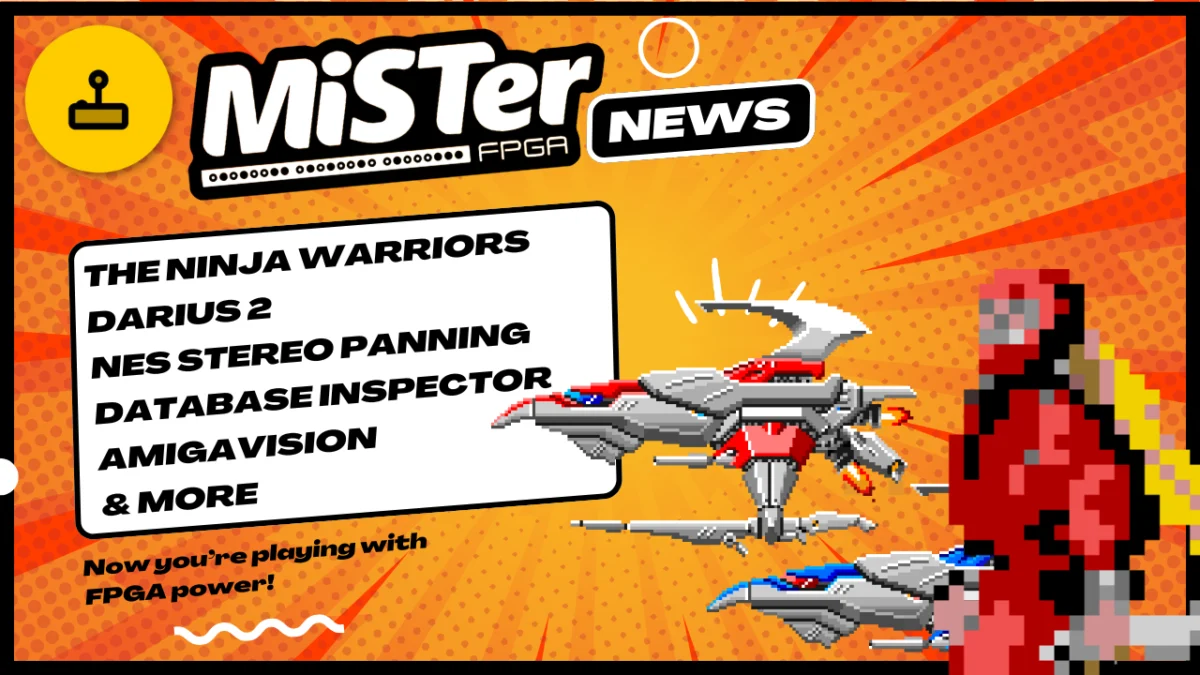
The MiSTer FPGA platform, a highly regarded open-source project dedicated to hardware-accurate emulation of classic computers and video game consoles, has recently experienced a surge of significant updates and new developments. These advancements span across core functionality, user experience tools, and the introduction of highly anticipated cores for iconic arcade titles, further solidifying MiSTer’s position as a premier solution for digital preservation and retro gaming. From the integration of achievement systems to the painstaking recreation of complex multi-screen arcade hardware, the MiSTer community continues to push the boundaries of what is possible in hardware emulation.
RetroAchievements Arrive on MiSTer FPGA
One of the most exciting recent developments is the successful integration of RetroAchievements into numerous MiSTer FPGA cores. This feature, which has long been a staple of software emulators, brings a new layer of engagement and challenge to retro gaming on the MiSTer platform. Users can now earn achievements, akin to Xbox achievements or PlayStation Trophies, for completing specific tasks and milestones in classic games. This functionality is currently available for popular cores such as NES, SNES, N64, and Neo Geo.
To access RetroAchievements, users are required to download alternate MiSTer Main versions and unofficial core files, typically sourced from community-driven GitHub repositories. Once enabled, the system displays on-screen display (OSD) alerts, providing instant gratification and personal incentives as players progress through their favorite titles. This integration represents a significant step in blending the purist appeal of hardware-accurate emulation with modern gaming conveniences, offering a fresh perspective on revisiting beloved classics. The concept of RetroAchievements itself, born from a passionate community of developers and enthusiasts, adds a gamified layer to the often solitary pursuit of retro gaming, fostering competition and camaraderie among players globally. It transforms mere completion into a structured quest, encouraging deeper exploration and mastery of game mechanics that might otherwise go unnoticed. The technical challenge of integrating such a dynamic, real-time system into FPGA cores, which prioritize cycle-accurate hardware replication, highlights the ingenuity and dedication of the MiSTer development community.
MiSTer Companion Goes Mobile: Android Early Access
In a move to enhance accessibility and user convenience, a mobile version of MiSTer Companion for Android has entered early access. This application aims to extend the functionality of the popular desktop MiSTer Companion app, providing users with remote control and management capabilities for their MiSTer setup directly from their mobile devices. While the desktop application will steadfastly remain free and open source, the mobile version is expected to carry a nominal cost of €2.99.
This strategic decision to monetize the mobile app is accompanied by a commitment that all profits generated will be reinvested directly into the ongoing development of the MiSTer Companion suite. This sustainable funding model is crucial for open-source projects, ensuring continued innovation and support without relying solely on voluntary contributions. The introduction of a mobile app addresses a long-standing desire within the MiSTer community for greater convenience, allowing users to browse game libraries, configure settings, and initiate games without needing to be physically present at their setup. It reflects a growing trend in consumer electronics towards integrated smart device control, making the sophisticated MiSTer platform more user-friendly and accessible to a broader audience. Users can anticipate features such as remote core loading, game browsing, configuration adjustments, and potentially real-time system monitoring, transforming the MiSTer experience into a more seamless and intuitive interaction. The early access phase will allow developers to gather crucial feedback, refine features, and address any potential bugs, ensuring a robust and polished final release.
Darius 2 and The Ninja Warriors: Classic Taito Arcades Emerge on MiSTer
The MiSTer FPGA platform continues its impressive track record of preserving iconic arcade titles, with significant progress being made on cores for two legendary Taito games: Darius II and The Ninja Warriors. Both projects are spearheaded by Umberto Parisi, the prolific developer previously responsible for the highly acclaimed original Darius core.
Darius II, the sequel to Taito’s innovative multi-screen shooter, is currently deep in development. Early glimpses of the core have surfaced on YouTube, showcasing the game’s attract screen running on MiSTer hardware. While initial footage showed the game’s background elements and stages with sprites notably absent or incomplete, it represented a crucial first step in replicating the complex hardware. Subsequent updates have demonstrated steady progress, with sprites beginning to appear, albeit with some initial glitchiness. This iterative development process is characteristic of complex FPGA core creation, where developers meticulously map out and translate the intricate logic of original arcade boards into configurable hardware descriptions. Darius II is particularly challenging due to its unique multi-monitor setup, requiring precise synchronization and rendering across multiple virtual displays to recreate the original arcade experience accurately.
Concurrently, Umberto Parisi is also diligently working on bringing The Ninja Warriors to MiSTer. This 1987 beat ’em up by Taito is renowned for its distinctive aesthetic and, like the Darius series, its innovative multi-screen configuration. The Ninja Warriors achieved its triple-wide screen effect by physically situating a central display between projected images of two other screens, creating an expansive, immersive visual field. A video posted online showcases the game booting and running through its attract screen, exhibiting similar sprite anomalies seen in the early stages of the Darius II core development. This parallel development highlights Parisi’s expertise in tackling Taito’s often elaborate and custom arcade hardware. The eventual release of these cores will be a significant boon for arcade preservationists and fans, allowing for unparalleled hardware-accurate experiences of these historically important titles on modern displays. The meticulous work involved in replicating these multi-CPU, multi-display systems underscores the commitment of the MiSTer community to faithful digital preservation, often overcoming technical hurdles that far exceed the complexities of single-screen console emulation.
NES Stereo Panning and Enhanced Audio Channels
The audio experience for NES enthusiasts on MiSTer FPGA has received a substantial upgrade with the release of a new unofficial NES core. This enhanced core introduces stereo panning per audio channel, a feature that significantly enriches the soundscapes of classic 8-bit games. Beyond stereo capabilities, the core also supports additional audio channels, such as those provided by the VRC6 sound chip, famously utilized in the Japanese version of Castlevania 3: Dracula’s Curse.
The original Nintendo Entertainment System (NES) primarily produced mono audio, with its limited sound capabilities often leading to a flat auditory experience by modern standards. The introduction of stereo panning allows individual audio channels (pulse waves, triangle wave, noise, DPCM) to be positioned in the stereo field, adding depth and spatiality to game music and sound effects. This enhancement revitalizes the audio of countless NES titles, offering a fresh perspective on their iconic soundtracks. Furthermore, support for expansion audio chips like the Konami VRC6 is critical for accurately playing Japanese-exclusive titles and fan translations that leverage these additional sound capabilities. The VRC6, for example, added two pulse waves and a saw wave channel, dramatically expanding the sonic palette available to composers. Users must manually install this unofficial build, typically obtained from dedicated MiSTer forums threads, showcasing the vibrant and proactive nature of the community in pushing the boundaries of core functionality beyond official releases. This development underscores the platform’s commitment not only to visual accuracy but also to providing the most authentic and enhanced audio experience possible for retro games.
Database Inspector for MiSTer Updaters: Enhanced Transparency
In a move to empower users and streamline troubleshooting, theypsilon has released a novel web-based database inspector specifically designed for MiSTer updaters. This innovative tool offers unprecedented transparency into the often complex process of updating MiSTer setups, allowing users to understand precisely what happens behind the scenes.
The MiSTer updater scripts, while highly convenient, operate by downloading and parsing various databases to determine which files need to be updated, installed, or removed. Before this inspector, understanding the nuances of these operations, especially when encountering issues, could be challenging. The new web-based tool visualizes these downloader databases, enabling users to inspect file metadata, test filters, and debug update-related problems without the necessity of running the updaters themselves on their MiSTer hardware. This means users can examine the contents, tags, and metadata of various cores, firmwares, and assets directly through a web browser. For instance, if a user’s updater is failing to download a specific core, they can use the inspector to verify if the core’s metadata or tag filters are correctly configured in the database. This not only aids in personal troubleshooting but also fosters a deeper understanding of the MiSTer ecosystem, benefiting both end-users and core developers alike. It reduces the barrier to entry for debugging and contributes to a more robust and self-sufficient community, allowing users to diagnose issues more effectively and even contribute to solutions.
AmigaVision Unleashes Its Biggest Release Yet
AmigaVision, a comprehensive and curated experience for the MiSTer FPGA Amiga core, has launched its most substantial release to date. While specific details of the update were summarized, the significance lies in the sheer scale of the content and improvements delivered. AmigaVision typically bundles a vast collection of Amiga games, demos, and applications, often pre-configured for seamless playback via WHDLoad, a popular Amiga hard drive installer system.
This "biggest release yet" likely encompasses a massive expansion of its existing library, potentially adding hundreds of new titles across various genres, from classic platformers and adventure games to intricate simulations and productivity software. Users can also expect significant updates to the underlying system configurations, improving compatibility with a wider array of Amiga software and potentially enhancing performance for demanding titles. Interface refinements, bug fixes, and updated system configurations are standard in such major releases, aimed at providing an even more polished and user-friendly experience. The Amiga, with its rich history in computing, multimedia, and gaming, holds a special place in the hearts of many retro computing enthusiasts. AmigaVision on MiSTer allows for the faithful recreation of this iconic platform, offering an unparalleled opportunity to explore its vast software library with modern conveniences. The continuous evolution of AmigaVision underscores the enduring appeal of the Amiga and the dedication of the MiSTer community to preserving and celebrating its legacy. Such releases are critical for maintaining interest and attracting new users to the rich tapestry of Amiga computing.
An Insightful Interview with Core Developer srg320
The readonlymemo.com website recently published an in-depth interview with srg320, one of the most impactful and respected core developers within the MiSTer FPGA scene. srg320‘s contributions have been pivotal in expanding the platform’s capabilities, particularly through the development of complex and highly anticipated cores.
Among his notable achievements are the SNES and Sega Saturn cores, both of which presented significant technical challenges due to their custom chipsets and intricate architectures. The SNES, with its Super FX chip and other enhancement co-processors, required meticulous replication, while the Sega Saturn, notorious for its multi-CPU design, pushed the boundaries of what was thought possible on FPGA. The interview delves into the development history of these cores, detailing the initial hurdles, the iterative process of debugging, and the eventual triumph of achieving highly accurate recreations. Furthermore, the discussion touches upon the highly anticipated 3DO core, for which test builds are already available. The 3DO Interactive Multiplayer, a console known for its advanced multimedia capabilities for its time but also for its complex hardware design, presents a unique set of challenges for FPGA development. srg320 provides insights into the current functionality of the 3DO core, its known limitations in its present state, and the formidable technical challenges he has encountered and overcome. Such interviews are invaluable to the MiSTer community, offering a rare glimpse into the mind of a top-tier developer, sharing lessons learned, and inspiring others to contribute to the open-source project. They highlight the dedication, problem-solving skills, and passion that drive the preservation efforts within the retro gaming hardware community.
PICO-8 Hybrid Core Update: Embracing Fantasy Console Creativity
The PICO-8 hybrid core for MiSTer FPGA has received a recent update, enhancing its capabilities and solidifying its place within the platform’s diverse offerings. PICO-8 is not a traditional retro console but a "fantasy console" – a virtual machine with deliberately harsh limitations designed to encourage small but expressive game designs. It serves as a creative platform for making, sharing, and playing tiny games and other computer programs, fostering a vibrant indie development community.
The concept of a "hybrid core" on MiSTer often implies a combination of hardware acceleration for specific functions and software emulation for others, providing an optimal balance of performance and compatibility. For PICO-8, this means offering a highly accurate and low-latency environment for running PICO-8 cartridges, allowing users to experience this unique ecosystem directly on their MiSTer setup. While the specific features of the update were not detailed in the original summary, typical updates for such cores include improved performance, expanded controller support, enhanced compatibility with the ever-growing library of community-created PICO-8 cartridges (known as "carts"), and bug fixes. The appeal of PICO-8 lies in its retro aesthetic, simple tools, and the creative constraints that paradoxically inspire innovation. Its integration into MiSTer allows enthusiasts to delve into this modern retro-style development scene with the same hardware-accurate ethos that defines the MiSTer platform. It’s a testament to MiSTer’s versatility, extending beyond strict historical preservation to embrace contemporary movements that celebrate the spirit of classic computing. The updated core ensures that the MiSTer platform remains a relevant and comprehensive hub for all facets of retro-inspired digital entertainment.
Conclusion: A Thriving Ecosystem of Preservation and Innovation
The recent wave of updates and developments across the MiSTer FPGA ecosystem paints a clear picture of a thriving, community-driven platform dedicated to both digital preservation and continuous innovation. From the gamification of retro experiences with RetroAchievements to the meticulous recreation of complex arcade classics like Darius II and The Ninja Warriors, the MiSTer project consistently delivers advancements that excite enthusiasts and expand the possibilities of hardware emulation.
The introduction of user-centric tools like the MiSTer Companion mobile app and the Database Inspector underscores a commitment to improving accessibility and transparency, empowering users to engage more deeply with their setups. Meanwhile, the ongoing refinement of existing cores, such as the NES audio enhancements, and the embrace of new frontiers like the PICO-8 fantasy console, demonstrate the project’s breadth and ambition. The insights shared by pivotal developers like srg320 further highlight the intellectual rigor and passion that fuel this remarkable endeavor. As the MiSTer FPGA platform continues to evolve, it not only preserves the rich history of video games and computing but also actively shapes the future of how these digital legacies are experienced and celebrated.








