Farhan hamdan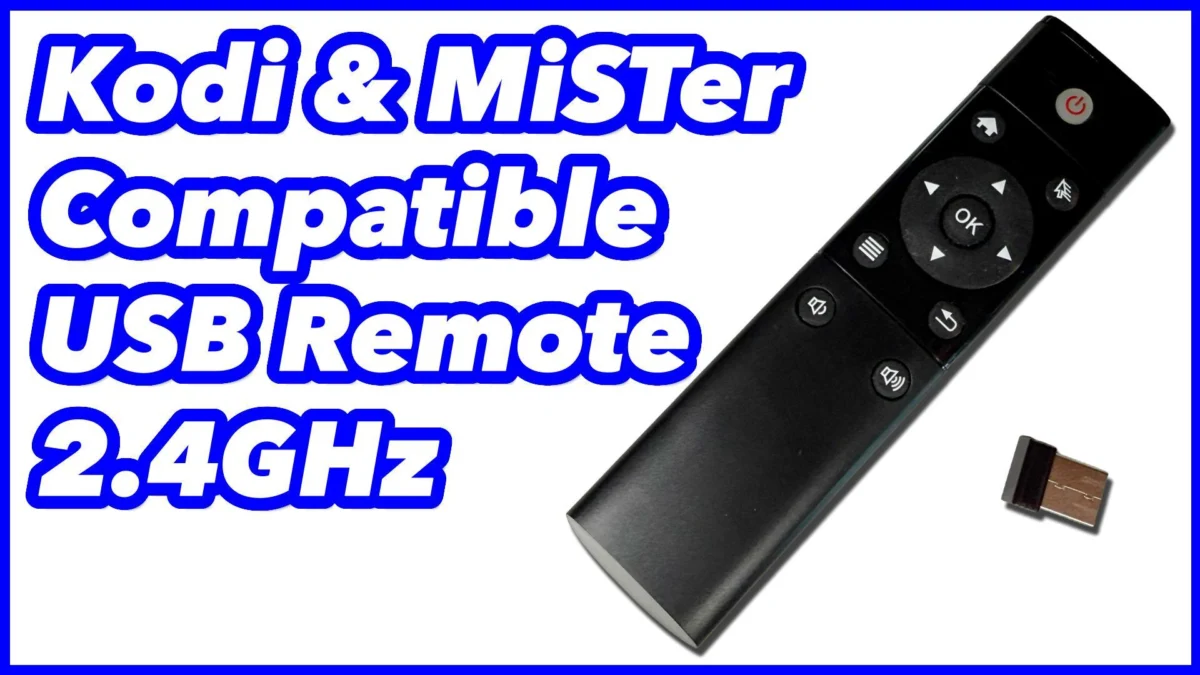
A new, affordable 2.4GHz wireless remote control featuring a dedicated USB receiver has emerged as a highly compatible and efficient solution for navigating popular media and retro gaming platforms. Identified for its "minimalist" design, this remote has demonstrated flawless functionality with Kodi across various operating systems, including Windows and Raspberry Pi-based setups. Furthermore, it has proven effective with the MiSTer FPGA project, offering a much-needed convenience for users, particularly those who frequently interact with the MiSTer user interface while utilizing specialized accessories like SNAC (Serial Native Accessory Converter) controllers. This discovery highlights a growing demand for streamlined, intuitive input devices in the evolving landscape of home entertainment and specialized computing.
Deep Dive: Understanding the Technology and Its Implications
The remote’s primary mode of operation is via a 2.4GHz wireless connection, a widely adopted standard for short-range communication. Unlike traditional infrared (IR) remotes, 2.4GHz devices do not require a direct line of sight between the remote and the receiver, offering greater flexibility in placement and usage. This technology typically provides a more robust and responsive connection, making it ideal for navigating complex menus and media libraries. The USB receiver acts as a standard Human Interface Device (HID) to the host system, meaning it is generally plug-and-play compatible with most operating systems without the need for specific drivers. This universal compatibility is a significant advantage, allowing the remote to function seamlessly across diverse platforms like Windows PCs, Linux-based Raspberry Pis, and the MiSTer FPGA, which often runs a Linux-based operating system.
However, a notable characteristic of this particular remote is the deliberate absence of IR control capabilities. For some users, especially those accustomed to universal remotes that can simultaneously control a television’s power and volume, this might be perceived as a limitation. Traditional IR remotes often offer the convenience of consolidating control over multiple devices, simplifying the home theater experience. For instance, being able to power on a TV and adjust its master volume directly from the same remote used for Kodi is a common expectation. Yet, for a significant segment of users, particularly those who deploy these devices across a wide array of displays—from dedicated monitors to various smart TVs—the lack of IR is often a non-issue. These users frequently rely on their display’s native remote for power and input switching, preferring a dedicated input device for their specific media or gaming platform. Crucially, the 2.4GHz remote does retain the ability to control the software-level volume within Kodi and MiSTer, providing immediate audio adjustment, a vital feature for unexpected loud audio spikes, often referred to as "jump scare loud" moments in media playback. This nuanced design choice reflects a focus on core functionality for the target platforms rather than attempting to be an all-encompassing universal remote.
Kodi: Streamlining the Home Theater PC Experience
Kodi, originally known as XBMC (Xbox Media Center), has evolved into a powerhouse open-source media player software. Since its inception in 2002, it has become a cornerstone for home theater PC (HTPC) enthusiasts worldwide, allowing users to play and view most streaming media, videos, music, podcasts, and other digital media files from local and network storage media and the internet. Its cross-platform compatibility, supporting Windows, macOS, Linux, Android, iOS, and single-board computers like the Raspberry Pi, has led to its widespread adoption.
The user experience with Kodi is heavily reliant on an intuitive control interface. While traditional keyboards or even game controllers can be used, a dedicated remote significantly enhances the HTPC experience. Navigating extensive media libraries, pausing playback, skipping tracks, or accessing settings becomes far more natural with a remote designed for media consumption. The integration of this 2.4GHz remote with Kodi on Raspberry Pi systems, in particular, is noteworthy. Raspberry Pi devices are incredibly popular for building low-cost, energy-efficient HTPCs, and a simple, effective remote eliminates the need for bulky keyboards or complex smartphone applications, making the setup more akin to a traditional media player. The reported seamless functionality across Windows and Raspberry Pi underscores the remote’s robust HID emulation, ensuring a consistent user experience regardless of the underlying operating system. This shift from generic input devices like wireless USB keyboards to purpose-built remotes marks a significant improvement in usability for the average Kodi user, allowing them to fully immerse themselves in their media without technical distractions.
MiSTer FPGA: Bridging Retro Gaming and Modern Convenience
The MiSTer FPGA (Field-Programmable Gate Array) project represents a significant leap forward in the realm of retro gaming and hardware preservation. Unlike software emulation, which simulates classic hardware through code, FPGA technology allows for the physical recreation of classic console and arcade hardware at a transistor level. This results in incredibly accurate, low-latency reproductions of vintage gaming experiences, free from the input lag and timing inaccuracies often associated with software emulators. The MiSTer platform, typically built around a DE10-Nano FPGA board, has garnered a dedicated following among retro gaming enthusiasts who prioritize authenticity and performance.
However, interacting with the MiSTer’s user interface (UI) and on-screen display (OSD) can sometimes present challenges. When setting up cores, loading games, or adjusting system settings, users often rely on a keyboard. A particular pain point arises for those who utilize SNAC (Serial Native Accessory Converter) controllers. SNAC adapters allow users to connect original retro controllers (e.g., NES, SNES, Sega Genesis) directly to the MiSTer’s USB ports, providing an authentic, zero-latency input experience. The issue is that these adapters occupy USB ports, potentially leaving fewer available for other input devices like a keyboard. Having to disconnect a SNAC controller to plug in a keyboard, navigate menus, and then reconnect the controller can be cumbersome and interrupt the gaming flow. The 2.4GHz USB remote offers a direct solution to this dilemma. By providing a compact, dedicated input device that works over a single USB receiver, it frees up valuable USB ports and eliminates the need for constant peripheral swapping. This convenience is a substantial benefit for MiSTer users, enhancing the overall accessibility and enjoyment of the platform. The ability to quickly access the MiSTer UI, adjust settings, or select games without interrupting a gaming session or struggling with an unwieldy keyboard significantly improves the user experience for this niche but passionate community.

Market Context and Alternatives
The market for specialized input devices for media players and single-board computers has been steadily growing. As more consumers adopt HTPCs, streaming boxes, and retro gaming solutions, the demand for controls that offer both simplicity and functionality increases. The reported "cheap" price point of this 2.4GHz remote positions it competitively against a range of alternatives.
Historically, users of Raspberry Pi and MiSTer often resorted to wireless USB keyboards, frequently the compact "mini-keyboard" variety, which integrate a small QWERTY layout with a touchpad. While these offer comprehensive input capabilities, they can be overkill for simple menu navigation and media playback. The physical size can also be inconvenient for casual couch usage. Other alternatives include universal IR remotes, which, as discussed, may not integrate perfectly with non-IR devices, and smartphone apps, which, despite their versatility, require users to have their phone unlocked and an app open, adding friction to the experience.
The specific remote highlighted, the Fm4 USB 2.4Ghz Remote Control, represents a category of minimalist, dedicated media remotes. Its design focuses on essential navigation buttons (directional pad, OK, back, home, volume) without the clutter of a full keyboard. The article also points to several alternatives, including:
- Remote With Keyboard: This suggests a remote that might have a minimalist front for media control and a full QWERTY keyboard on the reverse side, offering a hybrid solution for those who occasionally need text input.
- Minimalist Front, Keyboard Back: Similar to the above, this design philosophy aims to combine the best of both worlds – dedicated media buttons for common tasks and a hidden keyboard for less frequent text entry.
- USB Keyboard (Long-term use): This refers to the traditional wireless USB keyboard solution that the author had been using for years, highlighting the pain points this new remote aims to solve.
The continued availability of these varied options underscores the diverse needs within the HTPC and retro gaming communities. The minimalist 2.4GHz remote carves out a niche by prioritizing simplicity, direct compatibility, and cost-effectiveness, appealing to users who value a focused control experience over multi-functionality. Data from market research firms often indicates a rising trend in accessory sales for DIY tech platforms, reflecting the customization and personalization that users seek for their specialized setups. The global market for smart home devices, which includes media streamers and their accessories, is projected to grow significantly, further solidifying the relevance of such peripheral innovations.
Expert Analysis and Community Impact
The introduction of such an effective yet affordable peripheral has broader implications for the DIY tech community. It signifies a trend where manufacturers are increasingly recognizing the specific needs of niche markets, moving beyond generic solutions to offer tailored products. For years, enthusiasts building HTPCs with Raspberry Pi or assembling MiSTer FPGA systems have often had to adapt general-purpose peripherals, leading to compromises in user experience. This new remote, by contrast, appears to be almost custom-suited for these environments.
Industry experts often emphasize that user interface and interaction are critical components of any successful technology platform, regardless of its complexity. For platforms like Kodi and MiSTer, which are often community-driven and open-source, the ease of use directly impacts adoption rates and user satisfaction. A simple, reliable remote reduces the barrier to entry for new users and enhances the daily experience for veterans. The "stupid for being cheap" sentiment expressed by the original discoverer encapsulates a common frustration: sometimes investing a small amount in a purpose-built accessory can dramatically improve a setup, outweighing the perceived savings of making do with less ideal alternatives.
The implications extend to how communities share and recommend solutions. When a product like this remote gains traction, it quickly becomes a recommended accessory in forums, subreddits, and tutorial videos dedicated to Kodi, Raspberry Pi, and MiSTer. This organic endorsement within the community is a powerful driver of adoption and reinforces the value proposition of specialized, well-integrated peripherals. The continuous evolution of these platforms also means that accessory manufacturers must remain agile, offering solutions that keep pace with new features and hardware iterations. The focus on 2.4GHz connectivity over IR further suggests an acknowledgment of the increasingly digital and connected nature of modern media setups, where traditional analog controls are less relevant.
Conclusion: A Small Device, Significant Convenience
In conclusion, the emergence of this affordable, minimalist 2.4GHz wireless USB remote control marks a significant step forward in optimizing the user experience for Kodi and MiSTer FPGA platforms. Its seamless compatibility, particularly with Raspberry Pi and the MiSTer UI challenges, addresses long-standing needs within these communities. While its lack of IR control might be a design trade-off for some, its core functionality—providing reliable, intuitive navigation and essential volume control—positions it as an indispensable tool for a wide array of users. This device exemplifies how targeted, cost-effective peripheral innovations can profoundly enhance the accessibility and enjoyment of specialized tech ecosystems, proving that sometimes, the simplest solutions yield the greatest convenience. As home entertainment and retro gaming setups continue to diversify, the demand for such user-centric input devices is only expected to grow, cementing the role of well-designed accessories in a rapidly evolving technological landscape.