Vera Clarissa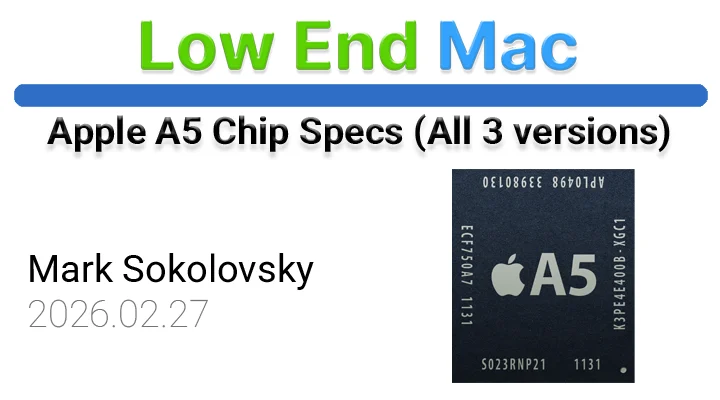
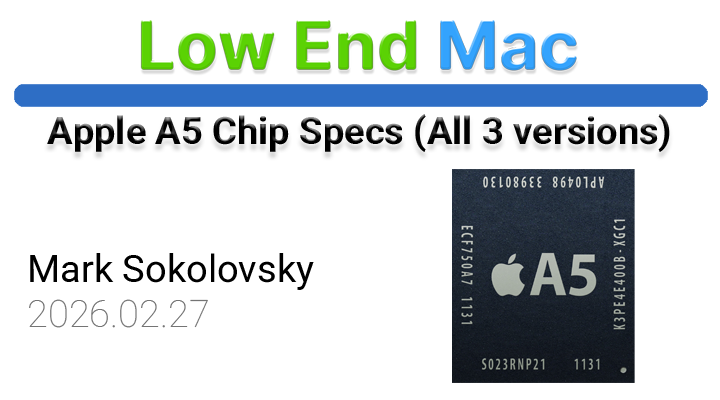
The Apple A5 chip, a pivotal component in the evolution of Apple’s mobile and media device ecosystem, represented a significant leap in processing power and efficiency upon its release. This article provides a comprehensive hardware profile of the Apple A5 series, exploring its technical specifications, manufacturing, architectural design, and its impact on the devices it powered. There are three distinct variations of the A5 chip that have been identified, each tailored for specific applications within Apple’s product lines.
Genesis of the A5: A Strategic Advancement
The introduction of the Apple A5 chip on March 11, 2011, marked a strategic move by Apple to enhance the performance capabilities of its flagship products, particularly the iPad 2 and the iPhone 4S. Developed by Samsung, a key manufacturing partner for Apple at the time, the A5 was designed to deliver a noticeable upgrade in speed and responsiveness, crucial for the increasingly demanding applications and user experiences of the era. The codename "APL0498" and the part number "S5L8940" are specific identifiers associated with this generation of Apple Silicon.
The fabrication process employed for the A5 chip varied, initially utilizing a 45-nanometer process and later transitioning to a more advanced 32nm High-K dielectric metal gate process. This miniaturization and refinement in manufacturing allowed for increased transistor density, improved power efficiency, and higher clock speeds, all while maintaining a compact form factor essential for mobile devices. While the exact transistor count for the A5 remains undisclosed by Apple, the architectural enhancements suggest a substantial increase over its predecessors, contributing to its enhanced performance.
Architectural Prowess: The Dual-Core Core
At the heart of the Apple A5 chip lies its dual-core CPU architecture, based on the ARMv7 instruction set, which operates in 32-bit mode. This was a significant departure from earlier single-core processors, enabling the A5 to handle multiple tasks concurrently with greater efficiency. The chip features two high-performance cores, with clock speeds ranging from 800 MHz to 1 GHz. This dual-core configuration provided a substantial boost in computational power, allowing for smoother multitasking, faster application loading, and more fluid graphics rendering.
The A5’s CPU core design included dedicated L1 caches for both instructions (L1i) and data (L1d). Each performance core was equipped with 32 KB of L1i cache and 32 KB of L1d cache, totaling 64 KB for each type of cache per core. Across the two cores, the total L1i cache amounted to 64 KB, and the total L1d cache was also 64 KB. This on-chip memory is crucial for speeding up data access and reducing latency, directly impacting the responsiveness of the device.
Beyond the L1 caches, the A5 also incorporated a unified L2 cache. This shared cache memory served both CPU cores, providing a larger pool of fast access memory for shared data and instructions. The A5 chip featured a 1 MB L2 cache. This design choice aimed to optimize cache utilization and further enhance overall performance by minimizing the need to access slower main memory. Unlike later Apple Silicon designs that introduced efficiency cores, the A5 exclusively focused on performance cores for its dual-core configuration.
A Note on the Apple TV Gen 3 Variant
A notable variation of the A5 chip was implemented in the third-generation Apple TV. In this specific application, the A5 chip was configured with a single CPU core, effectively disabling one of the two performance cores. The cache architecture was also adjusted accordingly for this single-core implementation. The L1i cache was reduced to 32 KB, and the L1d cache was also 32 KB. The L2 cache remained at 1 MB. This single-core configuration was deemed sufficient for the media playback and streaming tasks expected of the Apple TV, allowing for power savings and cost optimization.

Memory Subsystem: Fueling the Performance
The A5 chip’s performance was further augmented by its robust memory subsystem. It utilized LPDDR2-800 memory, operating at a frequency of 400 MHz. This type of RAM is known for its power efficiency and high bandwidth, making it ideal for mobile devices. The memory interface was designed with a 64-bit memory bus width, supporting a dual-channel configuration. Each channel had a 32-bit width, collectively providing a theoretical memory bandwidth of approximately 6.4 GB/s.
The A5 chip was typically paired with 512 MB of RAM. This amount of memory was considered generous at the time of its release and was crucial for handling the multitasking capabilities enabled by the dual-core CPU and the increasingly complex iOS applications. The combination of fast LPDDR2 memory and a wide memory bus ensured that the CPU and GPU had rapid access to the data and instructions they needed, minimizing bottlenecks and contributing to a seamless user experience.
Graphics Powerhouse: The Imagination PowerVR SGX543MP2
The graphical capabilities of the Apple A5 chip were handled by the Imagination PowerVR SGX543MP2 GPU. This dual-core graphics processor was a significant upgrade, capable of delivering richer and more detailed visuals for games, applications, and the overall user interface. The GPU featured two cores, each equipped with 4 SIMD (Single Instruction, Multiple Data) execution units. In total, across both cores, there were 32 FP32 (Floating Point 32-bit) Arithmetic Logic Units (ALUs).
The GPU was clocked at 200 MHz, and this configuration allowed the A5 to achieve a theoretical peak performance of approximately 12.8 GFLOPs (Giga Floating-point Operations Per Second). This level of graphical horsepower was instrumental in enabling the iPad 2 to showcase features like the gyroscope and advanced gaming experiences, and it also significantly improved the visual fidelity and responsiveness of the iPhone 4S. The SGX543MP2 was a well-regarded mobile GPU of its time, known for its efficiency and performance in handling complex 2D and 3D graphics.

The A5 in Devices: A Transformative Impact
The Apple A5 chip powered a range of highly successful Apple devices, solidifying its importance in the company’s product roadmap. Its debut in the iPad 2 in March 2011 set a new standard for tablet performance, offering a fluid and responsive experience that was unmatched by competitors. The A5’s capabilities allowed for the smooth execution of demanding applications, including sophisticated games and productivity tools, contributing to the iPad’s dominance in the tablet market.
Later that year, in October 2011, the iPhone 4S was released, featuring the A5 chip. This marked a significant performance leap for Apple’s smartphone line, enabling features like the improved camera, Siri (Apple’s voice assistant), and enhanced gaming experiences. The dual-core processor, combined with the improved GPU and increased RAM, made the iPhone 4S one of the most powerful smartphones of its generation.
The aforementioned variant of the A5 chip found its place in the third-generation Apple TV, released in March 2012. This device, focused on media consumption and streaming, benefited from the chip’s efficient processing power for its core functions, while the single-core configuration likely contributed to thermal management and power efficiency considerations specific to a set-top box.
Manufacturing and Supply Chain Considerations
The manufacturing of the Apple A5 chip by Samsung was a critical aspect of its successful rollout. This partnership, while seemingly straightforward, was part of a larger, complex global supply chain that Apple meticulously managed. The dual-sourcing strategy, where Apple would often work with multiple manufacturers for key components to mitigate risks, was already becoming a hallmark of Apple’s operational strategy. However, for the A5, Samsung was the primary, if not sole, manufacturer during its initial production runs. This close relationship between Apple and Samsung in chip manufacturing also laid the groundwork for future collaborations and, concurrently, for increased competition in the semiconductor industry.

The transition from a 45nm to a 32nm fabrication process was a testament to the rapid advancements in semiconductor manufacturing technology. This transition allowed for smaller, more power-efficient, and potentially more cost-effective production of the A5 chip. The ability to scale up production of these advanced chips was crucial for meeting the immense demand for Apple’s popular devices.
Broader Implications and Legacy
The Apple A5 chip was more than just a collection of specifications; it was a catalyst for innovation and a testament to Apple’s growing expertise in custom silicon design. Its dual-core architecture set a precedent for future Apple Silicon, establishing a clear trajectory towards more powerful and integrated mobile processors. The A5 demonstrated that Apple could deliver performance-defining chips that not only met but exceeded the expectations of consumers and developers alike.
The success of the A5 also underscored the importance of integrating hardware and software. Apple’s tight control over both the iOS operating system and the underlying hardware allowed it to optimize performance in ways that were difficult for competitors relying on off-the-shelf components. The A5, therefore, played a crucial role in shaping the user experience that became synonymous with Apple products – smooth, responsive, and powerful.
While newer generations of Apple Silicon have since surpassed the A5 in raw performance, its historical significance cannot be overstated. It was a bridge between the single-core era and the multi-core future of mobile computing, paving the way for the even more sophisticated and powerful chips that would later define the iPhone, iPad, and eventually, the Mac. The A5 chip stands as a key milestone in Apple’s journey to become a leading designer and manufacturer of its own high-performance processors.

Conclusion
The Apple A5 chip, with its dual-core ARMv7 CPU, PowerVR SGX543MP2 GPU, and efficient LPDDR2 memory, represented a significant technological leap at its introduction. Manufactured by Samsung using advanced fabrication processes, it powered iconic devices like the iPad 2 and the iPhone 4S, delivering unprecedented performance and a superior user experience. The existence of a single-core variant for the Apple TV Gen 3 further highlights Apple’s strategic approach to tailoring its silicon for specific product needs. The legacy of the A5 lies not only in its technical achievements but also in its role as a foundational element in Apple’s ongoing dominance in the mobile computing landscape, setting the stage for the powerful custom silicon that defines its products today.