Vera Clarissa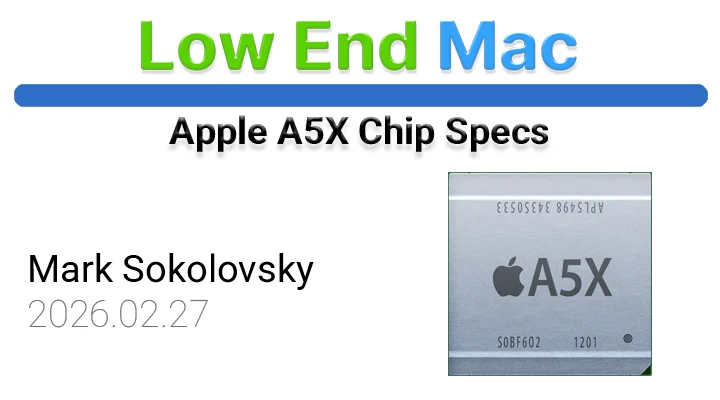
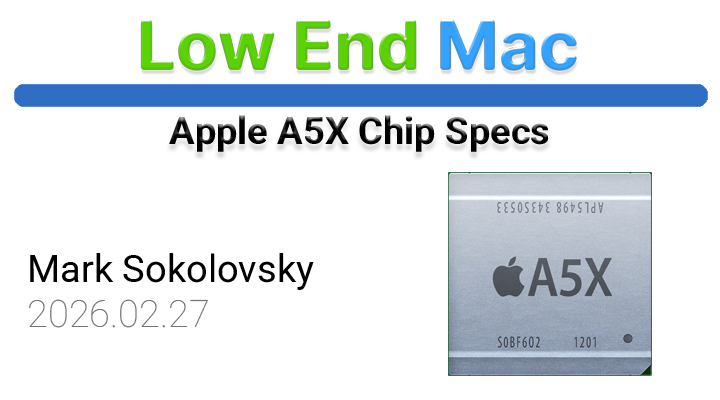
The Apple A5X, a significant System on a Chip (SoC) developed by Apple Inc. and manufactured by Samsung, marked a pivotal advancement in mobile processing power upon its release. Detailed hardware specifications reveal a sophisticated design aimed at delivering enhanced performance, particularly for graphical tasks. This chip was first integrated into Apple’s third-generation iPad, launched on March 16, 2012, a device that quickly set new benchmarks for tablet computing.
Technical Specifications and Architecture
The Apple A5X SoC is built upon a 45-nanometer fabrication process, a relatively advanced manufacturing node for its time, enabling a balance of performance and power efficiency. While the exact transistor count remains undisclosed by Apple, its complexity is evident in its dual-core CPU architecture and a powerful quad-core GPU. The CPU operates using the ARMv7 instruction set, supporting 32-bit processing. It features two high-performance cores, each clocked at approximately 1 GHz. These cores are complemented by a substantial L1 cache configuration, with 32 KB of instruction cache (L1i) and 32 KB of data cache (L1d) per core, totaling 64 KB for each cache type across the dual cores. Furthermore, a unified 1 MB L2 cache serves both performance cores, crucial for reducing memory latency and boosting overall processing speed. Notably, the A5X does not feature efficiency cores, indicating a design prioritized for peak performance rather than extreme power saving in its CPU configuration.
Graphics Processing Powerhouse
A key differentiator for the A5X was its significantly enhanced graphics capabilities. It integrates a quad-core PowerVR SGX543MP4 graphics processing unit (GPU). This GPU features 8 Shader Execution Units (SEUs) and 64 FP32 Arithmetic Logic Units (ALUs), operating at a clock speed of 200 MHz. This configuration delivers an estimated 25.6 Giga Floating-point Operations Per Second (GFLOPS) of processing power. This was a substantial leap from its predecessor, the A5, which featured a dual-core GPU. The A5X’s graphics prowess was instrumental in enabling the Retina display on the third-generation iPad, allowing for sharper text, more detailed images, and smoother animations in demanding applications and games.
Memory Subsystem and Bandwidth
The memory subsystem of the A5X is designed to keep pace with its processing and graphics demands. It employs a 128-bit wide memory bus, featuring four channels, each operating at 32 bits. The system utilizes LPDDR2 memory, specifically LPDDR2-800, which runs at an effective frequency of 400 MHz. This memory configuration provides a theoretical peak memory bandwidth of approximately 12.8 GB/s. The A5X is equipped with 512 MB of RAM, a capacity that was considered generous for mobile devices in 2012 and essential for handling the high-resolution assets required by the Retina display and complex graphical applications. This substantial bandwidth was critical for feeding the quad-core GPU and the dual-core CPU with data efficiently, preventing bottlenecks that could otherwise limit performance.
Manufacturing and Timeline
The Apple A5X SoC was manufactured by Samsung Electronics, a long-standing partner of Apple in chip production. The decision to utilize Samsung’s 45nm process was likely driven by a combination of manufacturing capacity, cost-effectiveness, and the maturity of the technology at the time of its development and release. The chip itself carries internal identifiers such as APL5498 for its codename and S5L8945 as its part number, indicative of Apple’s internal tracking and designation system for its custom silicon.

The A5X was officially introduced with the third-generation iPad on March 7, 2012, and the device became available for purchase on March 16, 2012. This timeline placed the A5X at the forefront of mobile SoC technology for its era, particularly in the tablet market. It represented a significant step up in performance from the A5 chip found in the iPad 2 and iPhone 4S, especially in its graphical capabilities.
Context and Significance
The release of the Apple A5X was directly tied to Apple’s strategy of enhancing user experience through powerful, integrated hardware. The third-generation iPad, often referred to as the "iPad with Retina Display," was a landmark product that redefined expectations for tablet screen quality. The A5X’s enhanced GPU was a critical enabler of this experience, allowing the device to render the millions of pixels on the Retina display with fluidity and responsiveness.
Prior to the A5X, mobile processors were often criticized for their limitations in handling graphically intensive tasks. Apple’s investment in custom silicon, exemplified by the A-series chips, allowed them to tailor performance characteristics to their specific product needs. The A5X’s emphasis on graphics power over raw CPU core count was a strategic choice, reflecting the primary use cases of a high-end tablet at the time, which included media consumption, gaming, and visually rich applications.

Broader Impact and Analysis
The A5X’s success demonstrated the viability of quad-core GPUs in mobile SoCs and set a precedent for future mobile processor designs. Its performance, particularly in graphics, allowed developers to create more sophisticated and visually engaging applications, pushing the boundaries of what was possible on mobile devices. This also fueled a competitive response from other chip manufacturers, who subsequently accelerated their own development of more powerful mobile GPUs.
The A5X’s architecture, with its balanced approach to CPU and GPU performance, also highlighted Apple’s system-level design philosophy. By tightly integrating hardware and software, Apple could optimize performance and power efficiency in ways that were more challenging for competitors relying on off-the-shelf components. The 512 MB of RAM, while seemingly modest by today’s standards, was carefully managed by iOS to provide a smooth multitasking experience.
The manufacturing relationship with Samsung for the A5X was also a significant aspect of the global semiconductor supply chain at the time. Apple’s reliance on Samsung for its most critical components was a subject of ongoing industry analysis, especially given the competitive landscape between the two companies in the smartphone and tablet markets.

Evolution and Legacy
While the A5X was a powerful chip for its time, it was quickly followed by more advanced iterations. The A6X, released later in 2012 with the fourth-generation iPad, further improved CPU and GPU performance. However, the A5X remains a significant milestone in Apple’s silicon development journey. It was a testament to Apple’s ability to design and integrate complex SoCs that could drive innovative user experiences and redefine product categories. The architectural choices made with the A5X, particularly its focus on graphics, laid the groundwork for subsequent generations of Apple’s A-series chips, which continue to set industry standards for performance and efficiency in mobile computing. The chip’s specific hardware configuration, with its dual high-performance cores and quad-core GPU, represented a balanced approach to mobile processing that was well-suited for the demanding applications and high-resolution displays of its era. Its impact on the tablet market, enabling the Retina display and a richer multimedia experience, cannot be overstated.
Technical Specifications Summary
- Chip Name: Apple A5X
- Manufacturer: Samsung
- Release Date: March 16, 2012
- Codename: APL5498
- Part Number: S5L8945
- Fabrication Process: 45-Nanometer
- CPU ISA: ARMv7 (32-Bit)
- CPU Cores: 2 Performance Cores
- CPU Clock Speed: 1 GHz
- L1i Cache: 32 KB per core (64 KB total)
- L1d Cache: 32 KB per core (64 KB total)
- L2 Cache: 1 MB (Unified for Performance Cores)
- GPU: Quad-Core PowerVR SGX543MP4
- GPU Clock Speed: 200 MHz
- Graphics Performance (FP32 FLOPS): ~25.6 GFLOPS
- Memory Type: LPDDR2-800 (400 MHz)
- Memory Bus Width: 128-Bit (4 x 32-bit channels)
- Memory Bandwidth: ~12.8 GB/s
- RAM Capacity: 512 MB
This detailed profile underscores the technical achievements of the Apple A5X, a chip that played a crucial role in shaping the capabilities and user experience of mobile devices in the early 2010s, particularly within the burgeoning tablet market.