Farhan hamdan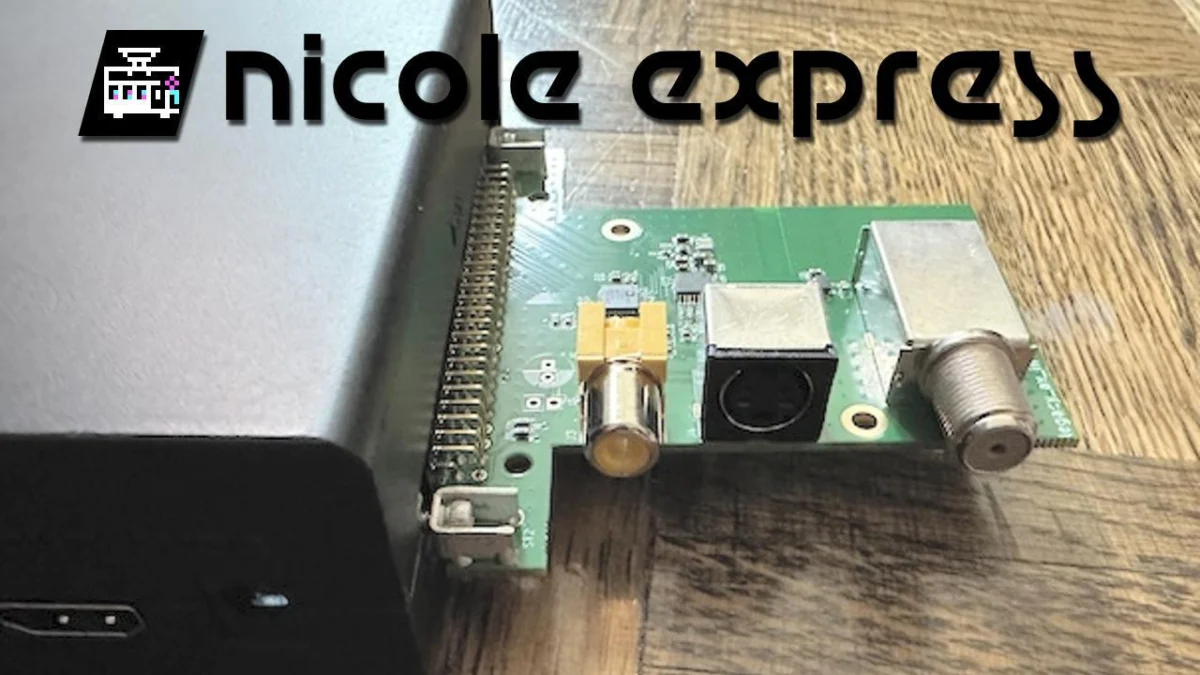
A recent comprehensive review by prominent retro gaming hardware analyst Nicole Express has spotlighted Markus’s Legacy AV with RF Input module for the OSSC Pro, declaring it potentially the "best solution" available for integrating vintage consoles utilizing radio frequency (RF) output with modern display technologies. The detailed analysis, published on Nicole Express’s blog, provides an invaluable technical deep dive into the module’s functionality, performance, and its significant implications for the retro gaming community, particularly those committed to preserving and experiencing early console generations in their most authentic yet visually enhanced forms. This endorsement is poised to significantly impact the adoption of the module among enthusiasts seeking to overcome the inherent challenges of RF signals.
Initial Assessment: A Landmark Review
Nicole Express, a respected voice in the specialized field of retro hardware analysis, provided an exhaustive evaluation of the Legacy AV with RF Input module. Her assessment meticulously detailed the module’s operational mechanics, showcasing its ability to process notoriously difficult RF signals from classic consoles. The review goes beyond mere superficial observation, delving into the technical intricacies that enable the module to deliver a superior video output. For enthusiasts and preservationists who have long grappled with the limitations of RF, Nicole’s article has quickly become an essential reference, offering clarity and practical insights into a complex technical problem. The module’s integration with the OSSC Pro’s advanced scaling capabilities was a particular point of focus, suggesting a synergistic relationship that elevates the final visual experience far beyond what was previously achievable with RF output.
Understanding the OSSC Pro Ecosystem
To fully appreciate the significance of the Legacy AV with RF Input module, it is crucial to understand its foundational platform: the OSSC Pro. The Open Source Scan Converter Professional (OSSC Pro) is a high-performance, open-source video upscaler designed by enthusiasts for enthusiasts. It represents the pinnacle of retro video processing, engineered to convert analog video signals from classic game consoles into digital HDMI signals, suitable for modern high-definition and 4K displays. Unlike many commercial upscalers or simple analog-to-digital converters, the OSSC Pro is renowned for its near-zero latency, exceptional image quality, and extensive customization options. It supports a wide array of input signals, including composite, S-Video, component, and various RGB formats (SCART, VGA). Its primary function is to deinterlace and scale these signals without introducing visual artifacts or lag, thereby providing a crisp, vibrant, and authentic retro gaming experience on contemporary screens. The OSSC Pro builds upon the legacy of the original OSSC, introducing enhanced processing power, greater input flexibility, and more robust output options, firmly establishing itself as a benchmark device in the retro gaming hardware landscape. The Legacy AV module, in both its original and RF-enabled iterations, extends the OSSC Pro’s capabilities, demonstrating the platform’s modular and forward-thinking design philosophy.
The Enduring Challenge of Radio Frequency (RF) Signals
The integration of RF input into the OSSC Pro ecosystem addresses one of the most persistent and vexing challenges in retro gaming: the inherent limitations of radio frequency (RF) video output. In the early days of home video game consoles, RF was the most common and often the only available video output method. Consoles like the Atari 2600, NES, Sega Master System, and early models of the Super Nintendo and Sega Genesis primarily relied on RF modulators to convert their video and audio signals into a standard broadcast television channel (typically channel 3 or 4 in North America). This signal was then fed into a television’s antenna input, allowing it to be "tuned in" like a regular TV station.
While convenient for the era, RF video suffered from numerous drawbacks:
- Poor Image Quality: RF signals are highly susceptible to noise, interference, and signal degradation. The process of modulating and demodulating the signal inevitably introduces blurriness, color bleeding, and "dot crawl" artifacts.
- Limited Bandwidth: RF channels have limited bandwidth, which restricts the amount of visual detail that can be transmitted. This results in a significantly softer and less defined image compared to direct video outputs like composite, S-Video, or RGB.
- Noise and Static: RF signals are prone to picking up electromagnetic interference from other household electronics, leading to static, wavy lines, or flickering on the screen.
- Compatibility Issues: Modern televisions often lack an analog RF tuner or, if they do, their digital tuners are not optimized for the noisy, low-resolution analog RF signals from vintage consoles. This can lead to difficulties in tuning, poor picture quality, or even no signal detection.
- Hardwired RF: Many early consoles, particularly the Atari 2600, had their RF modulator hardwired internally, meaning there was no simple way to bypass it for a cleaner output without significant internal modifications.
These challenges have historically made enjoying RF-only consoles on modern displays a frustrating experience, often relegated to the realm of low-fidelity novelty. The development of dedicated hardware solutions to properly process and upscale RF signals has therefore been a long-standing desire within the retro gaming community.
Nicole Express’s Deep Dive: Key Findings and Technical Validation
Nicole Express’s review provides a pivotal validation for Markus’s Legacy AV with RF Input module. Her detailed exposition covered not only the basic functionality but also the technical underpinnings that allow the module to achieve its remarkable performance. A critical aspect highlighted in her review was the module’s ability to handle consoles with hardwired RF outputs. This is a significant breakthrough, as these consoles previously presented the greatest hurdle for high-quality display.
Nicole emphasized the importance of using a fully-shielded coax cable, suggesting that while the module is robust, optimizing the input signal quality is paramount for the best results. Her analysis indicated that by minimizing external interference and signal loss at the cable level, the module can perform its demodulation and processing with greater fidelity. This recommendation, while seemingly minor, underscores a nuanced understanding of analog signal integrity that is crucial for retro hardware.
The most impactful statement from her review was the declaration that, "I think, combined with the OSSC Pro’s scaler mode, this is probably the best solution I’ve used for RF on vintage consoles, period." This is not a casual commendation but a professional judgment from an expert with extensive experience evaluating various retro video solutions. The phrase "combined with the OSSC Pro’s scaler mode" is particularly telling. It implies that the module is not merely a signal converter but an integral component of a sophisticated video processing chain. The module excels at converting the RF signal to a cleaner composite or S-Video equivalent, which the OSSC Pro then expertly deinterlaces, scales, and enhances to a pristine digital output. This synergistic approach effectively mitigates the inherent weaknesses of RF, transforming a once-blurry and noisy signal into a surprisingly clear and stable image on modern displays.
Innovations in Signal Processing: Why This Module Stands Out
The effectiveness of the Legacy AV with RF Input module stems from its innovative approach to processing a challenging analog signal. Traditional RF demodulators, often found in older VCRs or dedicated RF-to-composite converters, typically offer a rudimentary conversion that retains much of the original signal’s noise and artifacts. Markus’s module, however, appears to incorporate more advanced signal processing techniques.
While the specific proprietary algorithms are not publicly detailed, the performance observed by Nicole Express suggests several key innovations:

- Advanced Demodulation: The module likely employs a highly optimized RF demodulator circuit designed to extract the video and audio carriers with minimal distortion and maximum signal integrity. This is crucial for minimizing noise introduced at the earliest stage of conversion.
- Noise Reduction and Filtering: Post-demodulation, the analog video signal is subjected to sophisticated noise reduction and filtering stages. These might include adaptive comb filters to separate luminance and chrominance information more effectively than standard composite decoders, reducing common artifacts like dot crawl and color bleeding.
- Precise Analog-to-Digital Conversion: The cleaned analog signal is then digitized by high-quality analog-to-digital converters (ADCs). The OSSC Pro ecosystem is known for using excellent ADCs, ensuring that the digital representation of the signal is as faithful as possible, preserving fine details and color accuracy.
- Seamless Integration with OSSC Pro: The module is designed to integrate flawlessly with the OSSC Pro’s main board, leveraging its powerful FPGA-based processing capabilities. This allows the OSSC Pro to apply its renowned deinterlacing, line doubling, and scaling algorithms to the now-cleaner signal, resulting in a low-latency, high-resolution output. This direct integration bypasses the need for multiple external converters, each potentially adding lag or further signal degradation.
These combined elements represent a significant leap forward from prior RF solutions. Instead of simply making an RF signal viewable, the Legacy AV with RF Input module makes it genuinely enjoyable on modern screens, effectively bridging a critical gap in retro console connectivity.
Implications for Retro Gaming Preservation and Accessibility
The advent of the Legacy AV with RF Input module carries profound implications for the retro gaming community, particularly concerning game preservation and accessibility.
- Enhanced Preservation: Many early consoles, such as the Atari 2600, Intellivision, and ColecoVision, had RF as their primary or sole video output. For purists and historians, playing these consoles on original hardware is paramount. This module ensures that these systems can be accurately represented and experienced on contemporary displays, facilitating digital archival and historical documentation. It allows for the capture of higher-quality footage directly from original hardware, which is invaluable for researchers and content creators.
- Increased Accessibility: Prior to this module, the barrier to entry for experiencing RF-only consoles was high. Enthusiasts either needed an old CRT TV, which are increasingly difficult to find and maintain, or had to settle for suboptimal solutions like VCRs, which offered poor image quality. The module significantly lowers this barrier, making these classic systems accessible to a wider audience who may only possess modern HDMI-enabled displays. This could introduce a new generation of gamers to the foundational titles of video game history.
- Completing the Retro Setup: For many retro gaming setups, the absence of a reliable RF solution was a glaring omission. With this module, a single OSSC Pro setup can now handle virtually every major retro console video output type, from the earliest RF systems to the later RGB-capable machines. This simplifies cable management and configuration, offering a unified and high-quality solution for an entire collection.
- Validation of Community-Driven Development: The success of this module, designed by Markus and reviewed by Nicole Express, highlights the power of the retro gaming community. It demonstrates how dedicated individuals can identify unmet needs, develop innovative solutions, and contribute significantly to the broader hobby, often surpassing the efforts of commercial entities.
Alternative Solutions and Their Limitations
While the Legacy AV with RF Input module offers a superior solution, it’s important to acknowledge that other methods for converting RF signals have existed. However, these alternatives typically come with significant compromises.
- VCR as a Converter: As mentioned in the original article, using an old VCR as an RF-to-composite converter is a common and often inexpensive workaround. VCRs have built-in RF tuners and composite video outputs.
- Pros: Readily available, very cheap (often free), simple to connect.
- Cons: Introduces another layer of analog processing, often resulting in further signal degradation, noise, and blurriness. VCRs themselves can be bulky, unreliable (due to aging components), and add significant input lag. The quality of the composite output from a VCR is generally mediocre, and then that composite signal still needs to be upscaled by another device for modern displays.
- Dedicated RF Modulator/Demodulator Boxes: Various standalone RF demodulators have been produced over the years.
- Pros: More compact than a VCR, potentially better quality than a very cheap VCR.
- Cons: Many are still basic converters, not designed for high-fidelity output. They typically output composite video, which then still requires a separate upscaler to look good on an HDTV. They also lack the advanced processing capabilities and customization of the OSSC Pro ecosystem.
- Internal Console Modifications (RGB/Composite Mods): For many consoles that originally outputted only RF, enthusiasts have developed internal modification kits to add composite, S-Video, or even RGB outputs.
- Pros: Can provide the absolute best possible image quality for that console, bypassing the RF entirely.
- Cons: Requires advanced soldering skills and technical knowledge, can void warranties, and carries the risk of damaging rare hardware. It’s also an irreversible modification in many cases and might not be suitable for those who prefer their hardware untouched.
Compared to these alternatives, the Legacy AV with RF Input module for the OSSC Pro offers a non-invasive, high-quality, and integrated solution that maximizes picture fidelity without requiring internal console modifications or relying on aging, suboptimal consumer electronics.
Product Development and Community Engagement: The Case Conundrum
The article also touched upon practical aspects of the module’s availability and integration, specifically addressing the issue of a protective case. A 3D-printed case for the Legacy AV module exists, but it is currently out of stock and, critically, lacks an opening for the RF port. This highlights a common challenge in niche hardware development: balancing functionality with aesthetics and manufacturing practicalities.
The community’s desire for an injection-molded case that visually matches the OSSC Pro’s sleek design is understandable. An injection-molded case would offer superior durability, a more polished appearance, and better heat dissipation compared to typical 3D-printed alternatives. However, the investment required for injection molding tooling is substantial, often running into tens of thousands of dollars, making it a significant financial risk for a product with a potentially smaller market than the flagship OSSC Pro.
This situation underscores the iterative nature of product development within the retro hardware scene. Initial releases often rely on more accessible manufacturing methods like 3D printing, with refinements and more professional enclosures potentially following based on demand and financial viability. The feedback regarding the missing RF port cutout is a prime example of community input directly influencing future product revisions. It is highly probable that as demand for the RF module grows, a revised case design, possibly even an injection-molded one, will become available.
Chronology of the OSSC Pro and Legacy AV Module
The development and evolution of the OSSC Pro and its accompanying modules represent a continuous effort to push the boundaries of retro video processing:
- 201x (Early Days): The original OSSC (Open Source Scan Converter) gains widespread recognition, revolutionizing how retro consoles connect to modern displays with its low-latency line-doubling capabilities.
- Late 2010s: Development begins on the OSSC Pro, aiming for enhanced processing power, broader input/output support, and greater modularity.
- Early 2020s: The OSSC Pro is released, quickly establishing itself as a premium upscaling solution with its advanced FPGA, expanded input options, and 4K output capabilities.
- Mid-2020s: Markus introduces the original Legacy AV module for the OSSC Pro, expanding its input capabilities to include composite and S-Video, catering to consoles that lacked RGB output.
- Late 2020s (Estimated): The Legacy AV with RF Input module is developed and released, specifically addressing the challenging RF signal conversion. This marks a significant milestone in offering a complete, high-quality solution for virtually all vintage console video outputs.
- April 2026 (As per article’s embedded image date): Nicole Express publishes her definitive review of the Legacy AV with RF Input module, providing expert validation and technical insights that further solidify its position as a top-tier retro gaming accessory.
- Ongoing: Continuous community feedback, potential case revisions, and further software/firmware enhancements for both the OSSC Pro and its modules.
This timeline illustrates a steady progression towards increasingly comprehensive and high-fidelity retro gaming experiences, driven by dedicated developers and informed by expert analysis.
Industry Reactions and Community Outlook
The positive reception of the Legacy AV with RF Input module, particularly Nicole Express’s strong endorsement, is expected to resonate throughout the retro gaming hardware industry and community.
- Developer (Markus): The creator, Markus, is likely to feel a sense of validation and pride in his work. Such an expert review confirms the technical prowess and practical utility of his module, reinforcing his commitment to addressing niche but critical needs within the retro community. This positive feedback often fuels further innovation and development.
- Retailers and Distributors: Vendors of OSSC Pro and its accessories are likely to see an uptick in interest and sales for the Legacy AV with RF Input module. Nicole’s review acts as a powerful testimonial, encouraging fence-sitters to invest in a proven solution.
- RetroRGB (Bob): As a prominent figure and advocate for quality retro hardware, Bob from RetroRGB would undoubtedly welcome such a thorough and positive review. His platform often champions devices that genuinely improve the retro gaming experience, and an expert validation from Nicole Express serves to amplify his message and further educate his audience. He likely sees this as another step towards making retro gaming more accessible and enjoyable.
- Retro Gaming Community: The community’s reaction is expected to be overwhelmingly positive. Many enthusiasts have been searching for a definitive RF solution, and Nicole Express’s review provides the confidence and technical detail needed to make informed purchasing decisions. This could lead to a broader adoption of the module, enabling more gamers to revisit their favorite RF-only classics with unprecedented visual clarity. Forums and social media channels dedicated to retro gaming are likely to be abuzz with discussions, setup guides, and shared experiences related to the module.
The Future of Retro Console Connectivity
The Legacy AV with RF Input module, in conjunction with the OSSC Pro, represents a significant milestone in the ongoing quest for optimal retro console connectivity. It underscores a broader trend in the retro gaming community: a move towards highly specialized, high-performance hardware solutions that prioritize accuracy, low latency, and superior image quality. As technology advances, the gap between vintage analog signals and modern digital displays widens. Devices like the OSSC Pro and its modules are crucial bridges, ensuring that the rich history of video gaming remains accessible and enjoyable for generations to come. This continuous innovation, driven by passionate developers and supported by expert reviewers, ensures that the retro gaming landscape remains vibrant, dynamic, and ever-improving, promising an exciting future for the preservation and enjoyment of classic video games.