Farhan hamdan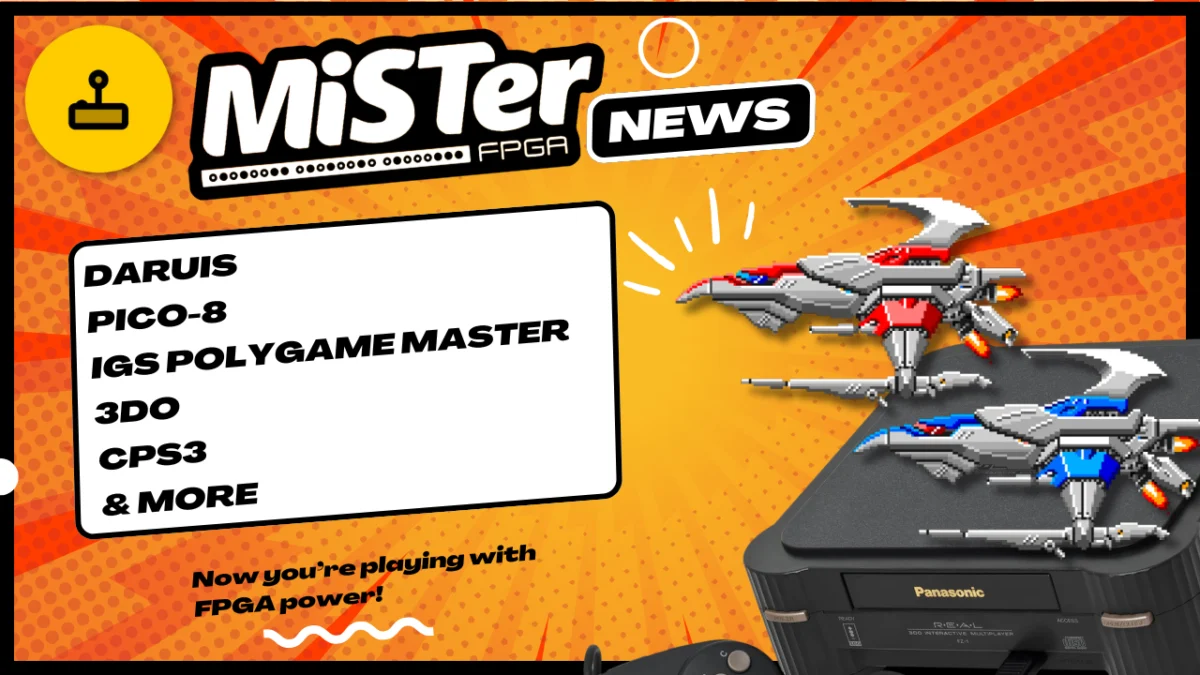
The MiSTer FPGA ecosystem continues its robust expansion, with a flurry of new core releases, crucial updates, and user-centric enhancements demonstrating the platform’s enduring vitality and the dedicated efforts of its global developer community. These developments span a wide spectrum, from the preservation of complex arcade hardware and historically significant home consoles to innovative computational applications and tools designed to streamline the user experience, solidifying MiSTer’s position as a leading force in digital retro preservation and FPGA-driven computing.
Pioneering New Frontiers: Expanding Beyond Traditional Gaming
One of the more unique recent additions to the MiSTer FPGA library is the Mandelbrot Fractal Core, dubbed "MiSTerbrot." Developed by catallo on GitHub, this core represents a fascinating departure from the platform’s primary focus on video game emulation. Described as a "real-time Mandelbrot fractal core for MiSTer FPGA," it delivers a native resolution of 320×240 pixels, leveraging eight parallel hardware iterators to render intricate fractal patterns with remarkable speed and fluidity. The core also boasts an impressive array of 47 distinct palettes and an "attract mode" that dynamically zooms to 25 predefined Points of Interest, accompanied by continuous color cycling. This project is intentionally designed as a "spiritual successor to digital eye candy from the 90s," harkening back to an era when fractal generation software was a popular demonstration of computing power and a source of captivating visual art. The MiSTerbrot core not only offers a nostalgic journey for those who recall the early days of personal computing graphics but also highlights the sheer versatility of the MiSTer FPGA architecture, proving it capable of tasks far beyond merely replicating vintage gaming hardware. It stands as a testament to the creative potential unleashed when powerful, reconfigurable hardware is placed in the hands of innovative developers.
Further expanding the platform’s horizons is the enhanced support for PICO-8, the popular "fantasy console." Thanks to the efforts of MiSTer Organize, users can now enjoy this unique indie development platform on their MiSTer FPGA setup with authentic retro display features. For the uninitiated, PICO-8 is a virtual console designed with deliberate limitations, encouraging developers to craft compact yet profoundly creative games within its constrained environment. This philosophy has fostered a thriving community and an extensive library of original titles, all accessible through the official PICO-8 website. The MiSTer FPGA implementation of PICO-8 employs a sophisticated hybrid approach: the FPGA itself is tasked with handling all video timing and output, ensuring zero-lag performance crucial for CRT displays, while the MiSTer’s integrated ARM CPU runs the software emulator for the PICO-8’s virtual CPU. This division of labor optimizes performance and delivers an exceptionally faithful experience, complete with support for CRT displays, scanlines, and shadow masks, which are essential for replicating the visual aesthetics of vintage gaming. This integration bridges the gap between contemporary indie game development and the retro hardware experience, offering a unique sandbox for both players and creators. Detailed installation instructions for the PICO-8 core are readily available on the MiSTer Organize GitHub page, facilitating easy setup for interested users.
Intensified Efforts in Arcade Preservation
The MiSTer FPGA continues to be a crucial platform for the preservation of arcade classics, and recent updates underscore this commitment. A significant addition to the growing arcade library is the core for Taito’s iconic 1987 horizontal shooter, Darius. This highly anticipated core is now available for download, and its developer has confirmed robust functionality, running the full game from start to finish across all five known ROM sets: World, US, Japan Rev 1, Japan, and the Extra Version. The technical fidelity of this core is particularly noteworthy, as it meticulously implements both dual audio chips, a common feature in complex arcade boards of the era, and seamlessly composes the output from the original triple-monitor arcade cabinet into an 864-pixel virtual screen. The original Darius arcade setup was renowned for its expansive, immersive display, and accurately replicating this unique visual experience on a standard monitor through FPGA requires considerable engineering prowess. The successful implementation of Darius not only adds a beloved classic to the MiSTer’s ever-expanding arcade collection but also showcases the platform’s capability to tackle the most intricate and multi-faceted arcade hardware architectures.
Looking to the future of arcade preservation, a dedicated team is laying the groundwork for an IGS PGM (International Game System PolyGame Master) core. This project, spearheaded by developer Martin Donlon and supported by the teams behind the successful AmigaVision and 0MHz Dos Collection projects, aims to bring the often-overlooked IGS PGM arcade platform to the MiSTer. The IGS PGM, while perhaps not as globally ubiquitous as Capcom’s CPS boards or SNK’s Neo Geo, hosted a compelling library of games, including notable titles like Oriental Legend and Knights of Valour, particularly popular in Asian markets. The development team has already launched PGMCenter, a placeholder website intended to serve as a central hub for future updates and information regarding the core’s progress. While the core itself is still in its nascent stages of development, with "a lot of work left to do," the formal announcement and the establishment of a dedicated online presence signify a serious commitment to this challenging undertaking. The IGS PGM platform presents its own unique architectural complexities, and its accurate replication on FPGA would be a significant achievement, further diversifying MiSTer’s arcade offerings and ensuring the longevity of another important slice of arcade history.
Another prominent developer, Jotego, provided an update on the progress of the highly anticipated CPS3 (Capcom Play System 3) core. CPS3, the successor to Capcom’s celebrated CPS1 and CPS2 hardware, powered late-90s arcade masterpieces like the Street Fighter III series, known for its stunning 2D graphics and deep gameplay. This hardware is notoriously difficult to emulate due to its powerful RISC CPU and sophisticated memory protection schemes. Jotego’s latest report showcased the first graphical elements successfully displayed by the core: the Score Screen layer, a specific component previously mentioned in a Patreon update. While seemingly a minor visual output, this milestone represents a substantial amount of foundational work, as "a lot of the system architecture had to be implemented" to reach this stage. The developer noted that while sprites were a hopeful feature to show, more work is required before they can be rendered accurately. Crucially, the core currently compiles for MiSTer, but it is not yet fully operational; the displayed screenshot was generated from a simulation environment. Jotego expressed confidence in showing further progress in the coming weeks, a promising sign for a core that tackles one of the most challenging arcade platforms to replicate on FPGA. The eventual completion of the CPS3 core would be a monumental achievement, securing the preservation of a pivotal era in arcade fighting game history.
Finally, the QIX & QIX 2 core, developed by RodimusFVC, is also making steady progress. This core aims to bring Taito’s classic 1981 arcade game Qix, and its successor Qix 2, to the MiSTer platform. Qix introduced a unique "draw-and-claim" gameplay mechanic that challenged players to enclose portions of the screen while avoiding dangerous enemies. The core’s development is reported to be "progressing well" and now supports "more games," indicating a robust and adaptable design. Test cores and corresponding MRA (MiSTer ROM Archive) files for several supported games are available on the core’s GitHub page, allowing enthusiastic users to participate in the testing and refinement process. The addition of these early 80s arcade gems further enriches MiSTer’s library, providing access to foundational titles that influenced decades of game design.
Console Classics Become More Accessible
Accessibility remains a key focus for the MiSTer FPGA community, particularly concerning complex console hardware. A significant breakthrough has been achieved with the in-development 3DO Interactive Multiplayer core, which can now run on a single SDRAM stick. The 3DO, launched in 1993 by Panasonic, was a powerful but expensive multimedia console that, despite its technological ambitions, struggled to gain mainstream traction. Its complex architecture has made it a challenging target for FPGA replication. The ability for the core to function with a single SDRAM stick is a crucial development because many MiSTer users operate with a single SDRAM module, making dual SDRAM setups less common or requiring additional hardware investment. This change dramatically broadens the potential user base for the 3DO core, making this historically significant console accessible to a much larger segment of the MiSTer community. The development team is providing constant updates to the core, and users interested in following its progress and downloading test builds are encouraged to visit the dedicated 3DO thread on the MiSTer FPGA forums or join the MiSTer FPGA Discord server. This increased accessibility is vital for comprehensive retro console preservation and allows more enthusiasts to experience the 3DO’s unique library.
Beyond mere replication, the MiSTer platform is also embracing modern enhancements to classic console experiences. Support for MD+ (Mega Drive Plus) is now being integrated into the Genesis/Megadrive core. MD+ is an innovative homebrew format that allows developers to modify original Sega Genesis/Mega Drive cartridge games to incorporate CD-quality audio playback. This means classic 16-bit titles can be experienced with vastly improved musical scores, often featuring arranged soundtracks that elevate the entire gameplay experience. A growing number of Genesis cartridge games have already been ported to the MD+ format by the homebrew community, offering these enhanced audio tracks. With this support coming to the MiSTer FPGA, users will soon be able to enjoy these modernized versions of their favorite Genesis games, blending the authenticity of FPGA hardware with the fidelity of contemporary audio. For those eager to test this feature immediately, the necessary files and instructions are available on the MiSTer FPGA forums, inviting community participation in the final stages of integration. This development highlights MiSTer’s role not just in preserving the past, but also in enhancing it through community-driven innovation.
Enhancing the User Experience: Streamlined Management and Onboarding
As the MiSTer FPGA platform grows in complexity and capability, tools that simplify its management and improve user accessibility become increasingly important. MiSTer Companion, a graphical user interface (GUI) utility designed for managing and maintaining MiSTer FPGA systems, has received a new round of updates. MiSTer Companion aims to provide a user-friendly interface for common maintenance tasks, eliminating the need for users to interact directly with the Linux terminal. This is a significant benefit for users who may be less comfortable with command-line operations, lowering the barrier to entry and making the MiSTer experience more approachable. While the specific list of recent updates was not detailed in the provided snippet, such utilities typically include features for updating cores and firmware, managing ROM sets, configuring system settings, and performing backup and restore operations. Users can review the full change log, detailing all added features and fixes, on MiSTer Companion’s GitHub page. The continuous refinement of tools like MiSTer Companion is crucial for fostering broader adoption of the MiSTer platform, ensuring that its powerful capabilities are accessible to a diverse audience, from seasoned Linux users to casual retro gaming enthusiasts.
Complementing these management tools is the release of a SuperStation One New User Guide. Taki Udon, a prominent figure in the MiSTer community, has published a comprehensive video guide specifically tailored for new users of the SuperStation One. While the exact nature of "SuperStation One" isn’t fully detailed in the snippet, it can be inferred to be a popular pre-configured MiSTer FPGA system or a specific bundle/accessory setup that aims to provide a ready-to-use MiSTer experience. The guide covers "everything a new user would want to know to get up and running," suggesting it addresses initial setup, core and ROM installation, basic configuration, and perhaps troubleshooting. The decision to host this guide on YouTube makes it highly accessible, offering a visual and easy-to-follow resource for individuals awaiting the arrival of their SuperStation One units. This type of detailed onboarding documentation is invaluable for new entrants to the MiSTer ecosystem, helping to demystify the initial setup process and ensuring a smooth, enjoyable first experience. By providing clear guidance, the community actively works to expand its base and support new enthusiasts in their journey with the MiSTer FPGA.
Broader Impact and Future Implications
The collective developments within the MiSTer FPGA community underscore a dynamic and continuously evolving platform that extends far beyond simple emulation. The introduction of cores like MiSTerbrot highlights the FPGA’s potential as a flexible computing platform for digital art and scientific visualization, while the PICO-8 integration demonstrates its ability to bridge modern indie development with retro aesthetics. The relentless pursuit of arcade preservation, exemplified by the Darius core and the ongoing, challenging work on IGS PGM and CPS3, reaffirms MiSTer’s role as a critical tool for digital archiving and the accurate re-creation of historically significant hardware.
Furthermore, efforts to enhance accessibility, such as the 3DO core running on single SDRAM and the MD+ support for Genesis, ensure that these preserved experiences are available to a wider audience and can even be enjoyed with modern quality-of-life improvements. The continued refinement of user experience tools like MiSTer Companion and comprehensive new user guides are vital for lowering the barrier to entry, fostering community growth, and ensuring the platform’s long-term sustainability.
In essence, the MiSTer FPGA is not just a device; it is a collaborative project driven by a passionate global community. These recent updates showcase the platform’s commitment to both technical excellence and user-centric design, solidifying its position at the forefront of retro gaming, digital preservation, and the broader application of FPGA technology. As developers continue to push the boundaries of what is possible, the MiSTer FPGA promises an exciting future, continually expanding its reach and capabilities for enthusiasts worldwide.