Retno Hari Mulyono
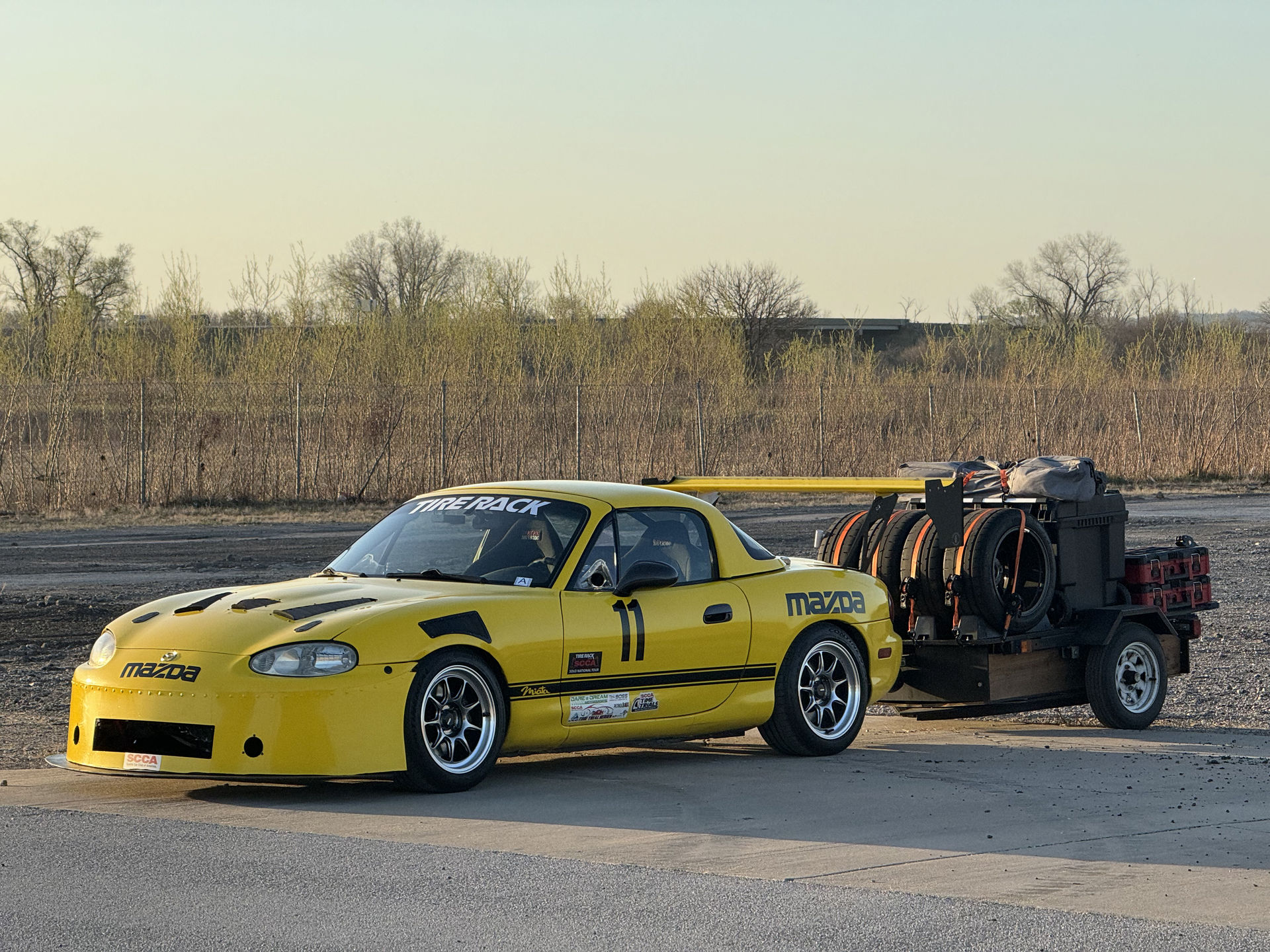
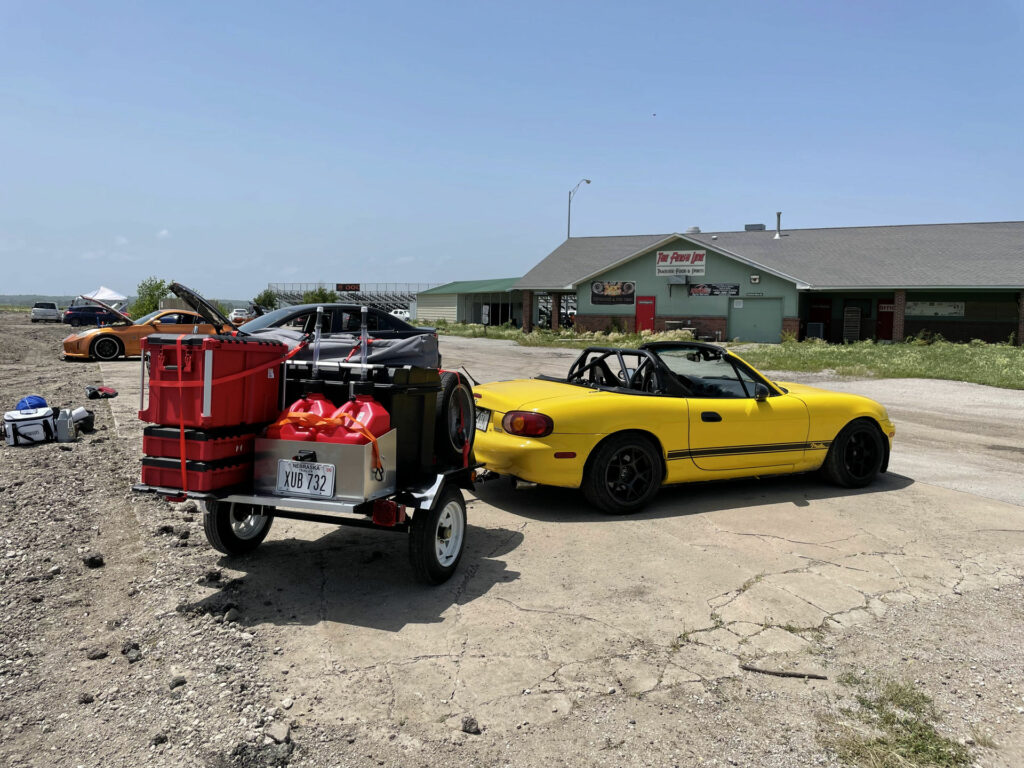
The evolution of grassroots motorsports has necessitated a shift in how enthusiasts manage equipment, particularly regarding high-performance tire logistics. For drivers of compact sports cars, such as the Mazda Miata or Honda S2000, the transition from standard street tires to specialized track rubber presents a significant logistical hurdle. While larger vehicles can often accommodate a spare set of wheels within their cabin or trunk, lightweight platforms lack the internal volume required for such transport. The emergence of the "tire trailer" has provided a specialized solution, allowing drivers to maintain the streetability of their vehicles while ensuring peak performance at the circuit.
The Technical Challenge of High-Performance Rubber
The primary motivation for utilizing a tire trailer stems from the specific chemical and physical properties of modern track tires. Most enthusiasts participating in track days or autocross events utilize tires with a Treadwear (TW) rating of 200 or lower. While these tires are technically Department of Transportation (DOT) approved for street use, they are engineered for a very narrow operating window.
Tire longevity in a racing context is rarely measured by total mileage; instead, it is dictated by heat cycles. A heat cycle occurs when a tire is brought up to operating temperature and then allowed to cool. Each cycle gradually hardens the rubber compound, reducing its ability to provide maximum grip. Driving these tires on the street for extended commutes to distant tracks subjects them to unnecessary heat cycles and friction, prematurely aging the compound before the car even reaches the paddock.
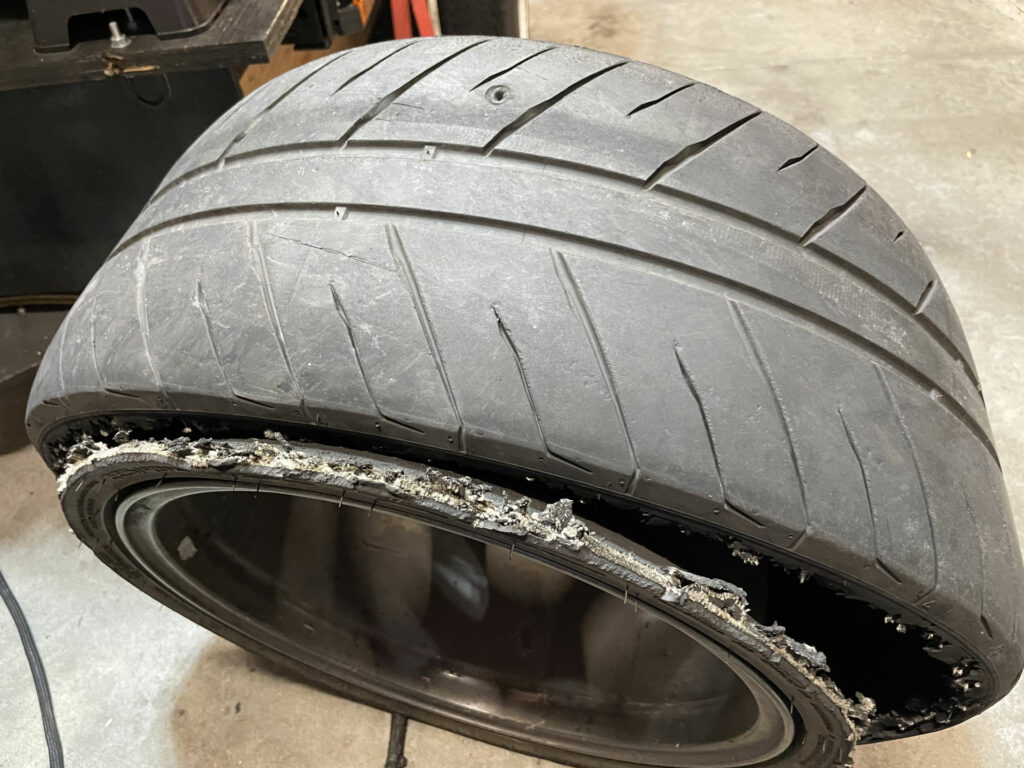
Furthermore, the physical design of 200TW tires makes them suboptimal for daily transit. These tires often feature large tread blocks and minimal siping to maximize the contact patch. In wet conditions, this design significantly increases the risk of hydroplaning. Industry data suggests that high-performance summer tires lose a substantial percentage of their lateral grip when temperatures drop below 40 degrees Fahrenheit, as the rubber compound becomes brittle and prone to "glass cracking." By utilizing a tire trailer, drivers can travel on safer, all-weather street tires and swap to track-specific rubber only when they arrive at the venue.
Engineering a Solution: The DIY Tire Trailer Framework
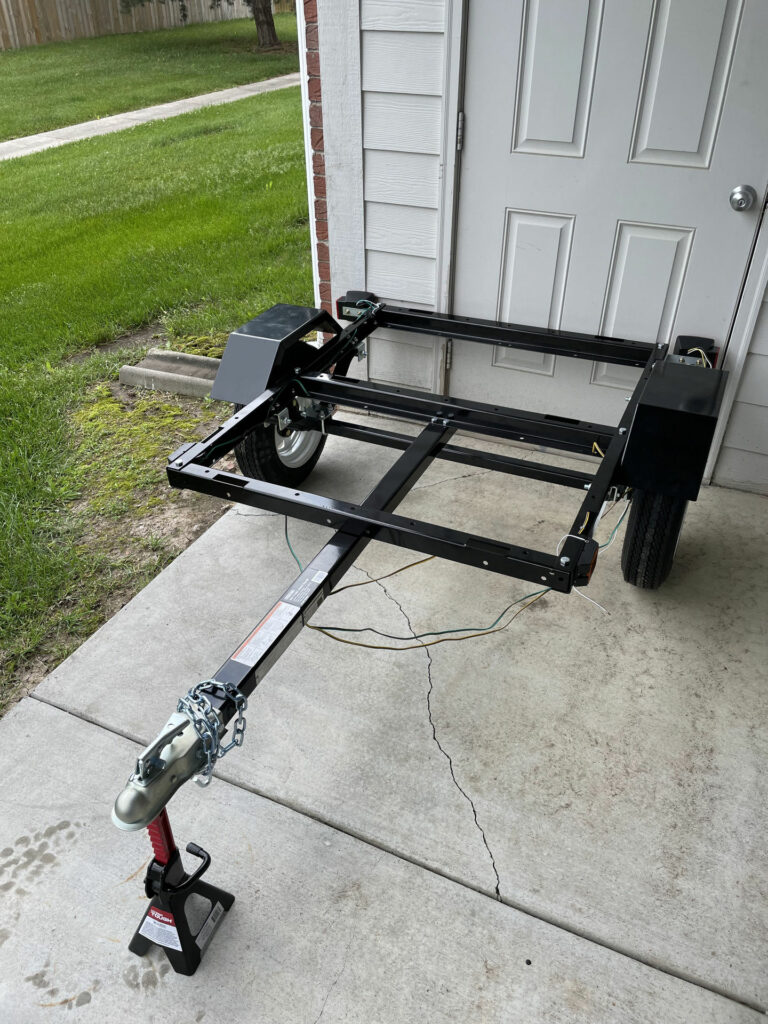
The construction of a tire trailer typically begins with a lightweight utility frame. Popular options in the North American market include the 40-inch by 48-inch frames provided by retailers such as Northern Tool or Harbor Freight. These kits are generally shipped in a knocked-down format, requiring the end-user to perform the assembly of the steel chassis, leaf spring suspension, and axle.

Frame Selection and Assembly
While the 40"x48" frame is the standard for small cars like the Miata, some builders opt for the larger 4’x8′ folding trailers. The larger footprint allows for more flexible weight distribution, though it adds to the overall footprint in a garage. For those with higher budgets, companies like Leroy Engineering offer bespoke, pre-assembled tire trailers. These premium versions often feature independent torsion axles, high-speed radial tires, and integrated mounting systems, providing a more robust alternative to the basic utility frame.
Weight Distribution and Safety
A critical aspect of tire trailer engineering is the center of gravity and tongue weight. For a vehicle as light as a Miata, an improperly balanced trailer can lead to "trailer sway," a dangerous oscillation that can result in a loss of vehicle control. Builders typically aim for a tongue weight that is approximately 10% to 15% of the total trailer weight. This is achieved by placing the heaviest components—usually the wheel set and fuel jugs—directly over or slightly forward of the axle.
Chronology of a Custom Build: From Plywood to Performance
The development of a highly functional tire trailer often occurs in phases, as drivers identify specific needs during consecutive track seasons.
Phase One: The Basic Deck and Storage
The initial build typically focuses on creating a stable platform. High-density plywood, such as 3/4-inch Sande plywood, is commonly used for the deck. To ensure durability, the wood is often treated with weather-resistant paint or bedliner spray. Mounting the deck to the frame involves recessed carriage bolts to maintain a flat loading surface.
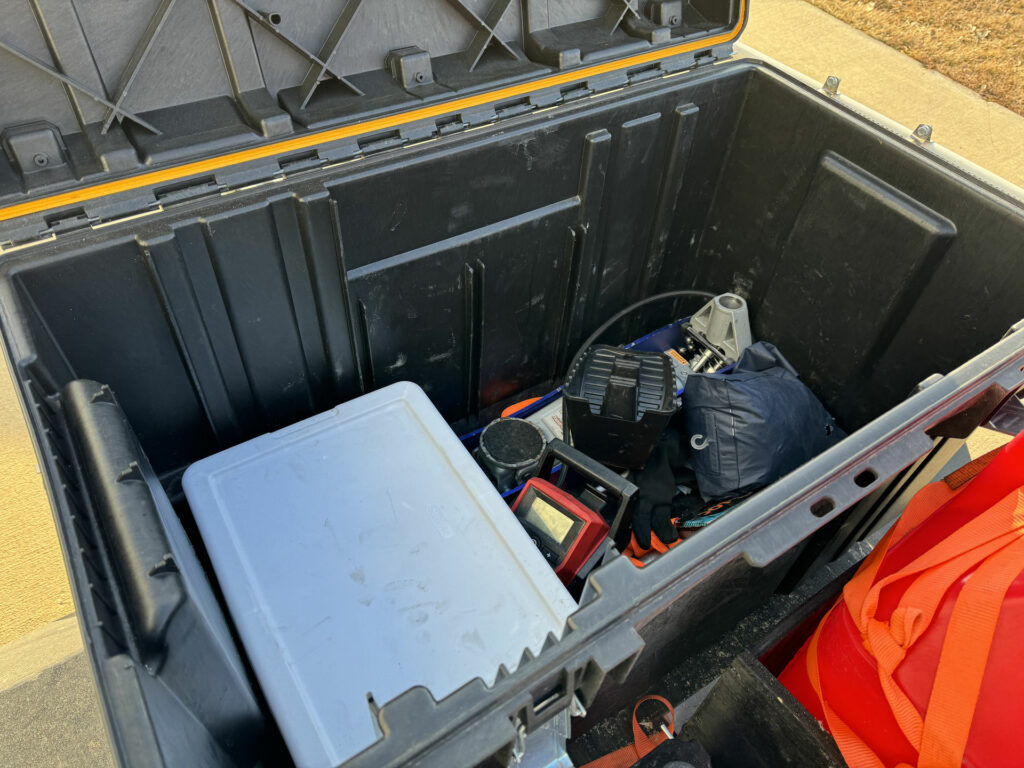
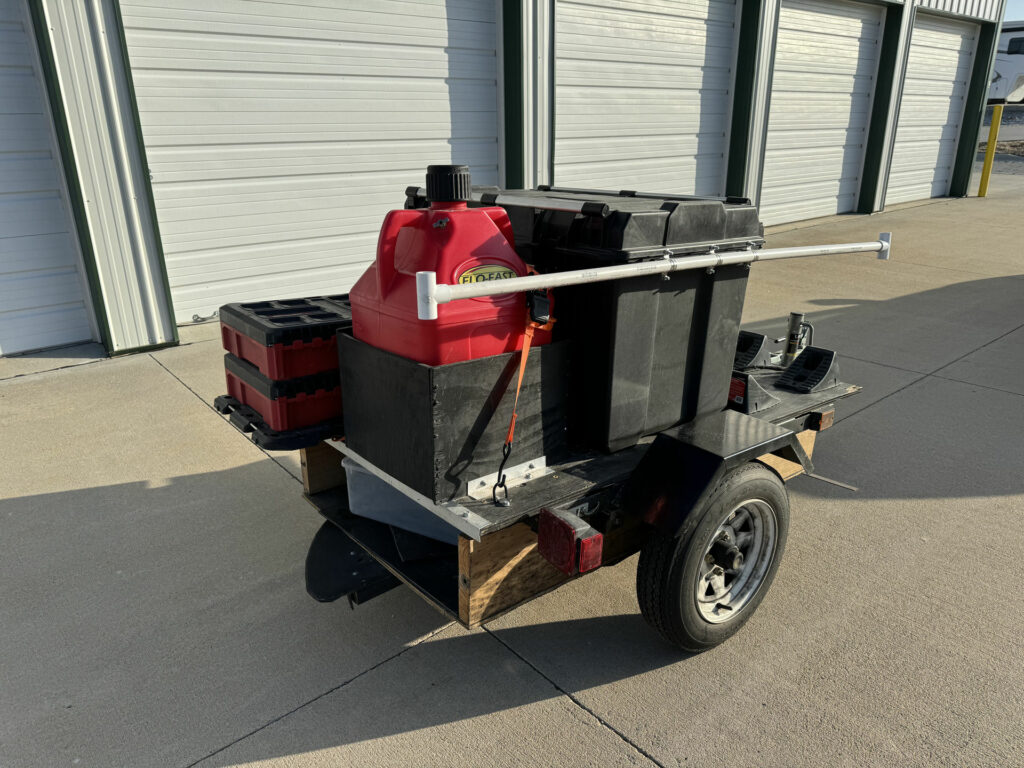
Storage is the next priority. Heavy-duty, weather-tight toolboxes, such as the DeWalt DWST38000, are frequently bolted to the center of the deck. These boxes serve as a mobile paddock station, housing essential tools such as:
- Long-reach floor jacks
- Torque wrenches and impact guns
- Tire pressure gauges and pyrometers
- Spare brake pads and rotors
- Basic hand tools for trackside repairs
Phase Two: Specialized Component Mounting
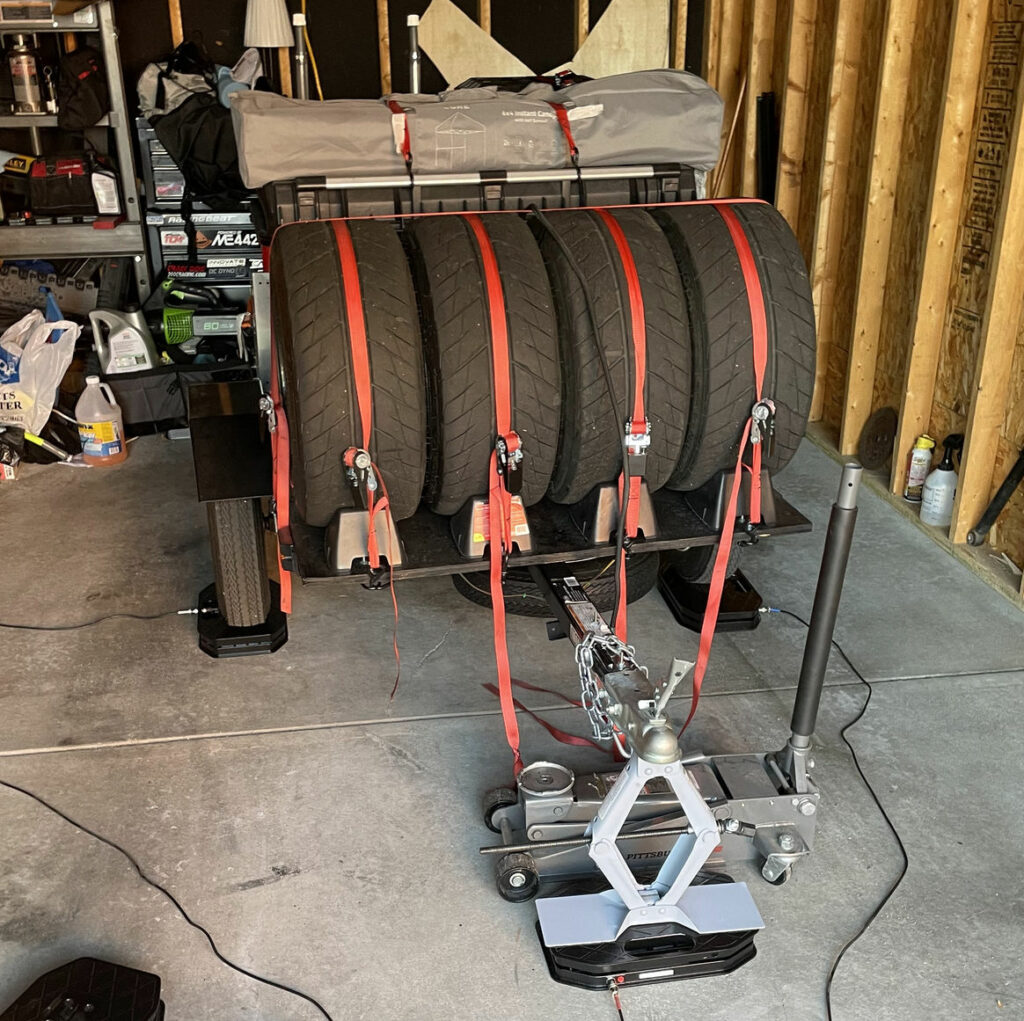
To secure the track wheels, builders often use a combination of methods. A vertical or horizontal tire rack is constructed, sometimes using a heavy-duty ratchet strap passed through the center bores of the wheels. This ensures that the wheels remain stationary even under heavy braking or cornering loads.
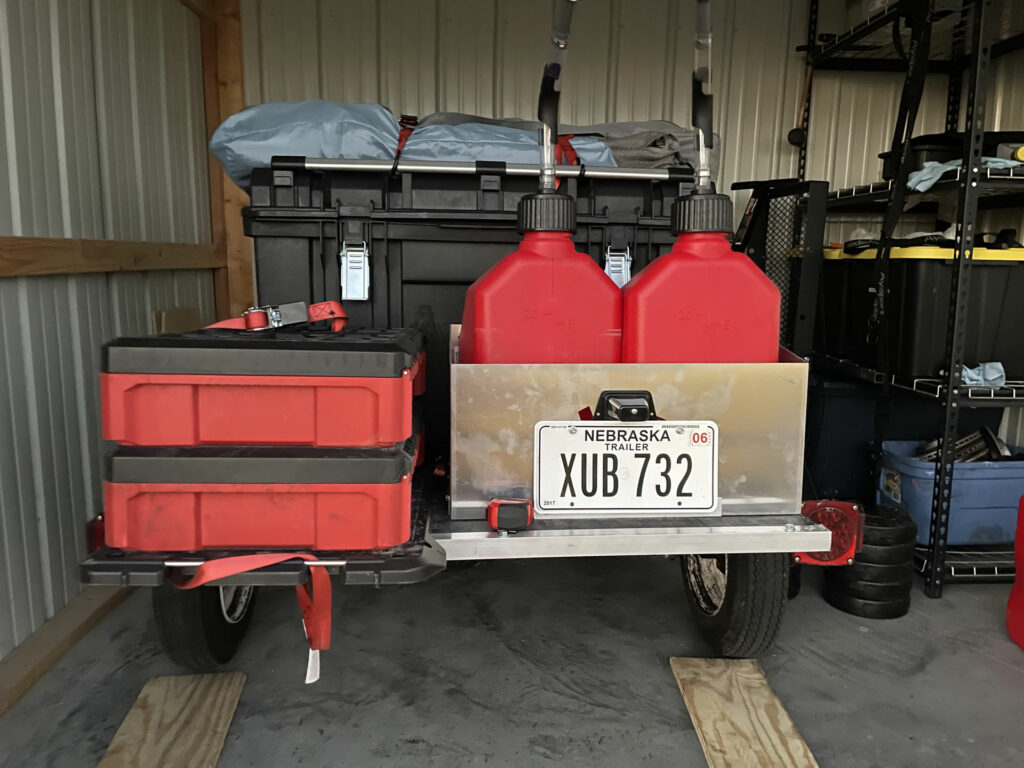
Fuel management is another critical factor. Many track-focused cars are tuned to run on E85 or high-octane racing fuel, which may not be available at or near every circuit. The integration of specialized mounts for VP Racing fuel jugs or larger 15-gallon Flo-Fast containers allows drivers to carry their own fuel supply, mitigating the risk of being stranded without the correct propellant.
Phase Three: Advanced Modifications and Ergonomics
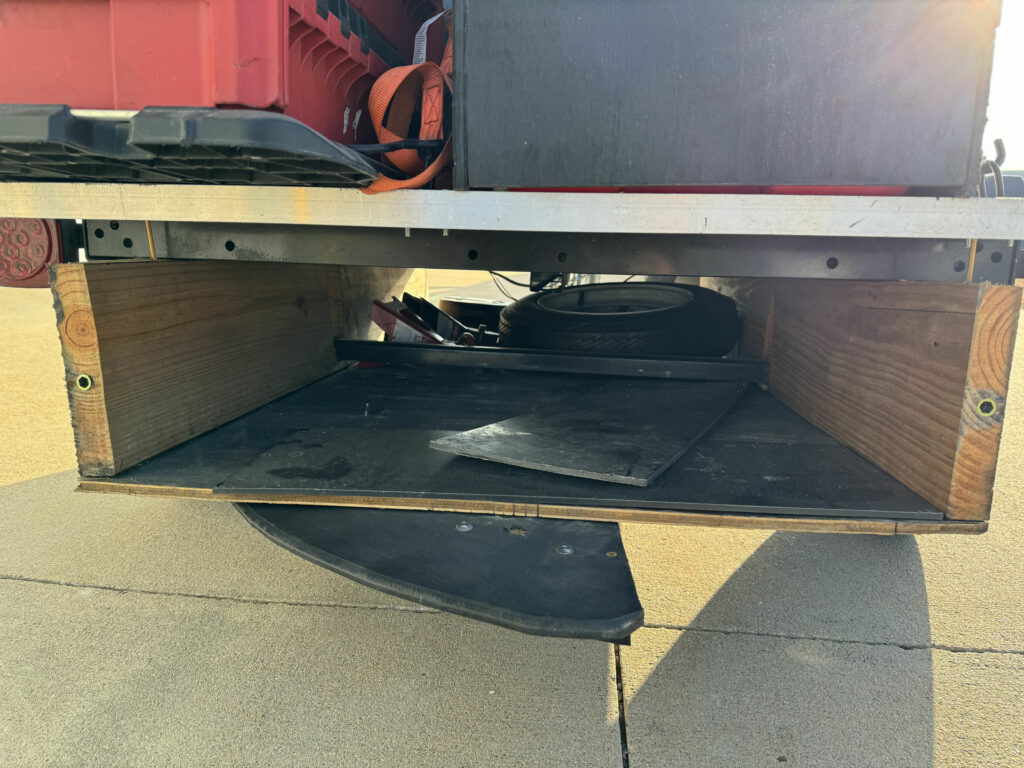
After a year of field testing, many builders implement "Version 2.0" upgrades. One notable modification is the addition of a "lower deck." By mounting a secondary storage area below the main frame—often utilizing 2×10 boards as spacers—builders can store low-profile items like jack stands, canopy weights, or even a spare splitter for the car. This maximizes the vertical space of the trailer without significantly raising the center of gravity.
Technical Upgrades: Radial Tires and Bearing Maintenance
A common point of failure for inexpensive utility trailers is the wheel and bearing assembly. Most budget kits come equipped with 12-inch bias-ply tires. While functional, bias-ply tires generate significant heat at highway speeds and have a higher rolling resistance.
Upgrading to radial tires, such as the 145R12 specification, offers several advantages:
- Heat Dissipation: Radial tires run cooler, reducing the risk of a blowout during long-distance hauls.
- Stability: The stiffer sidewalls of a radial tire provide better tracking behind the tow vehicle.
- Longevity: Radial tires generally offer a higher mileage rating and better resistance to flat-spotting during storage.
Furthermore, the high-speed nature of track day travel requires rigorous bearing maintenance. Enthusiasts often replace the "shipping grease" provided with budget kits with high-quality synthetic marine-grade grease. The addition of "Bearing Buddies" or similar pressure-greasing caps allows for easy maintenance and ensures that the bearings remain lubricated during multi-hour drives.
Economic and Practical Implications
The decision to build a tire trailer versus moving to a full truck-and-trailer setup involves a complex cost-benefit analysis. A DIY tire trailer can be completed for approximately $500 to $1,200, depending on the accessories and toolboxes used. In contrast, a dedicated towing rig (truck and car hauler) can easily exceed $30,000 in initial capital, plus the ongoing costs of insurance, registration, and increased fuel consumption.

For the hobbyist, the tire trailer represents the "middle path." It preserves the purity of the driving experience—allowing the enthusiast to drive their sports car to and from the event—while providing the logistical support necessary for a successful weekend.
However, there are inherent trade-offs. Towing with a small car requires the installation of a hitch, which may involve minor modifications to the rear bumper or chassis. Additionally, the driver must be mindful of the vehicle’s cooling system, as the added weight of a trailer increases the load on the engine and transmission, particularly when navigating mountainous terrain.
The Future of Track Day Logistics
As the automotive industry shifts toward electrification and more complex vehicle architectures, the DIY tire trailer remains a staple of the internal combustion engine (ICE) enthusiast community. However, the rise of "Arrive and Drive" programs and trackside storage lockers is beginning to offer alternatives. Some tracks now provide climate-controlled tire storage and mounting services, allowing drivers to ship their wheels directly to the circuit.
Despite these emerging services, the autonomy provided by a personal tire trailer remains unparalleled. It allows the driver to be a self-contained unit, capable of performing repairs, managing fuel, and swapping tires in any paddock, regardless of the facility’s amenities.
Conclusion
The tire trailer is more than a simple utility tool; it is an engineered response to the specific demands of modern amateur racing. By addressing the limitations of high-performance rubber and the spatial constraints of lightweight sports cars, these trailers have enabled a generation of drivers to push their vehicles to the limit without sacrificing safety or convenience. Whether built from a budget kit or purchased as a premium bespoke unit, the tire trailer continues to be a vital component in the ecosystem of grassroots motorsports, ensuring that the journey to the track is as reliable as the laps turned upon arrival.