
 Farhan hamdan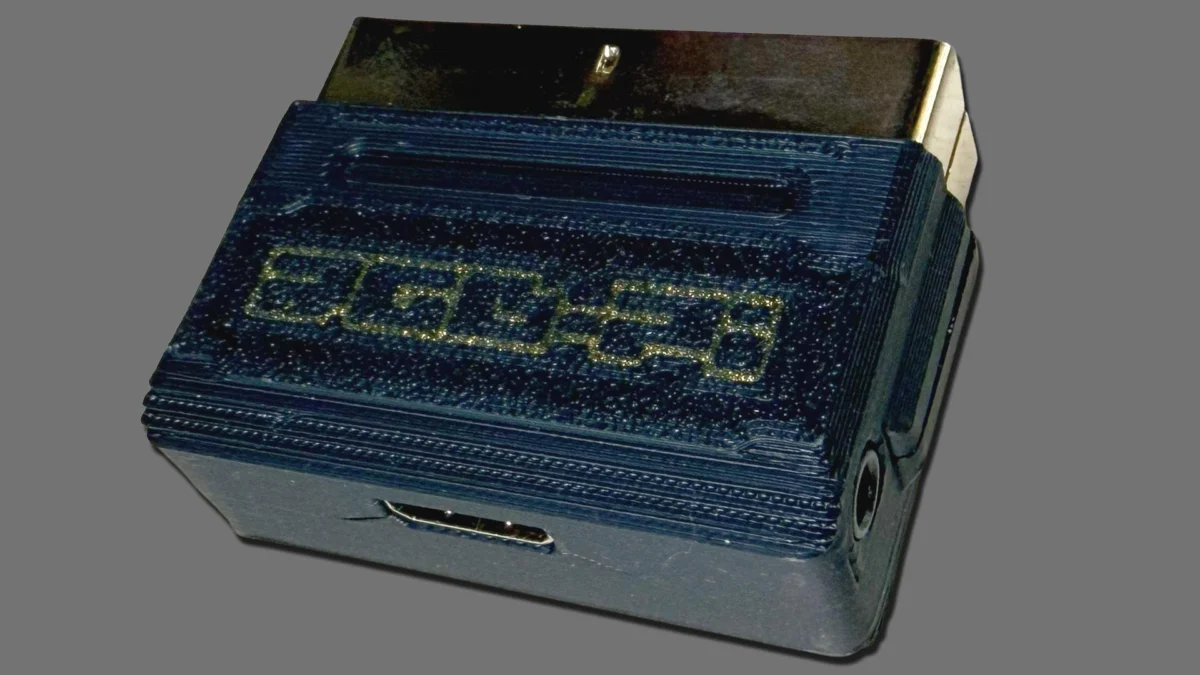
The RGB-Pi 2, a compact device designed to convert MiniHDMI signals to RGB SCART output, has encountered significant performance issues during extensive testing, leading to a current recommendation against its purchase. Despite its promising features, including a remarkably small form factor, integrated audio, and specialized functionalities for RePlayOS like sync combining and light gun support, the unit has demonstrated critical flaws in signal stability and color accuracy. These shortcomings raise serious questions about its viability as a versatile HDMI-to-SCART solution for the retro gaming community.
The Promise and Peril of Modern-Analog Conversion
In the burgeoning world of retro gaming, enthusiasts often seek to bridge the gap between modern digital video sources and classic analog displays, particularly CRT televisions that offer an authentic visual experience. Devices like the Raspberry Pi, running specialized operating systems such as RePlayOS, and FPGA-based platforms like MiSTer, have become central to this endeavor, allowing users to emulate or re-create vintage hardware with remarkable accuracy. However, these modern systems typically output video via HDMI, a digital standard, while classic CRTs predominantly accept analog signals like RGB SCART, a high-quality connection prevalent in Europe. This creates a strong demand for reliable, high-performance Digital-to-Analog Converters (DACs) that can accurately translate HDMI output into pristine RGB SCART.
The RGB-Pi 2 entered this market with considerable anticipation. Marketed as an incredibly compact solution, even smaller than existing HD15-2-SCART adapters, it promised integrated audio and specific enhancements when used with RePlayOS, such as an alternative sync combining option for improved compatibility with finicky displays and a dedicated port for light gun peripherals. Its ability to accept a standard MiniHDMI cable and output directly to RGB SCART was seen as a streamlined solution for many setups. However, initial testing quickly revealed that the device fell short of these expectations, particularly regarding fundamental video signal integrity.
Chronology of Discovery: Unpacking the Flaws
The issues with the RGB-Pi 2 became apparent through a rigorous testing process, initially documented in a series of live streams. The primary and most immediate concern was the device’s inability to maintain a stable signal, exhibiting frequent dropouts and a failure to stay synchronized with various test displays. Initially, during a preliminary livestream, the reviewer misattributed these dropouts to potential monitor compatibility problems, particularly with arcade ROMs being tested. However, subsequent, more detailed investigations conclusively demonstrated that the fault lay squarely with the RGB-Pi 2 unit itself. The device was simply unable to deliver a consistent, stable video output, a fundamental requirement for any video converter.

Further compounding the problems, a critical oversight in the initial testing—the measurement of output voltage levels—was rectified in follow-up evaluations. This revealed a significant and alarming discrepancy in the RGB color balance. Specifically, the green channel was found to be substantially dimmer than both the red and blue channels. Objective measurements using an oscilloscope confirmed that the green output was over a hundred millivolts lower than its red and blue counterparts. This imbalance means that regardless of any software adjustments, the colors displayed on screen would never be accurately reproduced or properly aligned, leading to a visibly incorrect color palette.
The severity of these findings was underscored when other users reported similar experiences, indicating that the tested unit was not an isolated defect but rather representative of a broader manufacturing or design flaw. This community confirmation solidified the conclusion that the RGB-Pi 2, in its current iteration, was fundamentally compromised.
Technical Deep Dive: Sync Instability and Color Imbalance
The core technical issues identified in the RGB-Pi 2 can be broadly categorized into sync instability and color voltage imbalance, both critical for proper video output.
Sync Instability: Video synchronization is the bedrock of any stable display. For an analog signal like RGB SCART, horizontal and vertical sync pulses are essential for the display to correctly draw the image frame by frame. When a device "constantly drops signal" or "wouldn’t stay sync’d," it means these timing signals are either intermittent, incorrectly generated, or too weak for the receiving display to lock onto. This manifests as a flickering screen, image tearing, complete signal loss, or a "jumpy screen," rendering the output unusable. The initial hypothesis of monitor compatibility issues was disproven, highlighting a deeper hardware-level problem within the RGB-Pi 2’s signal generation or processing stages. Such issues can stem from poor clocking, inadequate power delivery to critical components, or flawed signal integrity pathways.
Color Voltage Imbalance: The integrity of RGB video signals relies on each color component (Red, Green, Blue) being delivered at consistent and appropriate voltage levels. Typically, for consumer-grade analog video, a peak-to-peak voltage of 0.7V for each color component represents full white, with 0V representing black. When the green channel is "over a hundred millivolts dimmer" than red and blue, it means the maximum intensity for green is significantly reduced. This is not a subtle defect; it profoundly impacts color reproduction. Imagine a white image: instead of a pure white composed of equal parts red, green, and blue, the image would appear with a noticeable magenta or purplish tint, as green is underrepresented. Similarly, any color relying heavily on green would be distorted. For retro gaming, where precise color accuracy is often paramount for an authentic experience, this imbalance is unacceptable. The observation was verified against multiple sources and cross-checked with other reliable DACs, confirming the RGB-Pi 2’s unique and significant deviation.
Developer Response and Proposed Software Fixes (Update 04/07)

Following the initial public review and detailed findings, communication was established with Mortaca.com, the distributors or developers of the RGB-Pi 2. In an update dated 04/07, Mortaca.com acknowledged some of the reported issues and offered their insights and potential workarounds.
Regarding the "jumpy screen" or sync-related problems, Mortaca.com suggested that the issue, initially perceived as sync instability, might actually be related to a "PLL decoupling problem." A Phase-Locked Loop (PLL) is a crucial circuit in many digital systems, including video converters, responsible for generating stable clock signals and synchronizing data streams. Decoupling issues can introduce noise or instability into these critical timing circuits, leading to the observed screen flickering or jumpiness. They indicated that an updated hardware revision was being developed to address this fundamental design flaw.
For current users running RePlayOS on a Raspberry Pi, Mortaca.com proposed two software-based potential remedies:
- Enabling "Autoreset Mode" within the "Extras" menu on the main RePlayOS screen.
- Changing the "image width to 0.9" (interpreted as "CRT Horizontal Size = 0.90" in RePlay Options Video).
Mortaca.com stated that "99% of the current problems are resolved with software by changing the image width to 0.9," and encouraged users to engage with their Telegram community for further discussion and support. However, the reviewer’s subsequent attempts to implement these suggested software fixes, testing both "Extras RGBPI2_AUTORESET" and "RePlay Options Video CRT Horizontal Size = 0.90," did not yield reliably stable results. This suggests that while software tweaks might mitigate some symptoms for specific setups, they do not fundamentally resolve the underlying hardware deficiencies.
Regarding the critical color voltage imbalance, Mortaca.com responded to direct inquiries about the oscilloscope plots by stating, "The RGB output offers the same voltage and 75-ohm impedance for each color, and the system allows independent color intensity adjustments. The DAC is full-color range RGB." This statement directly contradicts the empirical measurements obtained during testing, which clearly showed a significant voltage disparity in the green channel. Despite a request for Mortaca.com to provide their own scope plots to verify their claims or identify if the reviewed unit was an anomaly, no such data was supplied. This lack of corroborating evidence from the manufacturer further solidifies the initial findings of an inherent color imbalance.
MiSTer Compatibility and Cost-Effective Alternatives
A significant point of concern for a substantial segment of the retro gaming community is the RGB-Pi 2’s compatibility with the MiSTer FPGA platform. MiSTer, known for its cycle-accurate hardware recreations of classic systems, often leverages "direct video" output for optimal low-latency analog signals. Unfortunately, the CH7101 DAC chip utilized in the RGB-Pi 2 is inherently limited in its compatibility with MiSTer. Even if the "jittery screen" issue is eventually resolved, the CH7101 will reportedly never achieve full audio and video functionality simultaneously with MiSTer. While video might function if "DVI Mode" is enabled, this setting would disable audio output, forcing users to seek separate audio solutions.
This inherent limitation, combined with the performance issues, places the RGB-Pi 2 at a significant disadvantage compared to readily available and more affordable alternatives. For instance, a simple setup consisting of an inexpensive $8 DAC combined with a reliable HD15-2-SCART adapter (a well-regarded component in the retro gaming community) offers a demonstrably superior and more cost-effective solution. This alternative not only provides full audio and video compatibility but also ensures accurate and balanced color levels, eliminating the issues observed with the RGB-Pi 2. The price-to-performance ratio heavily favors the alternative, especially for MiSTer users.

Broader Implications and Market Outlook
The experience with the RGB-Pi 2 underscores the challenges and complexities inherent in developing high-quality video conversion hardware for a demanding niche market like retro gaming. The device, in its current state, appears to be primarily, if not exclusively, intended for use with RePlayOS via a Raspberry Pi, with a heavy reliance on potential software patches to mitigate hardware shortcomings. This narrow focus significantly limits its appeal to the broader retro gaming community, many of whom seek a versatile "HDMI to SCART DAC" that can seamlessly integrate with various modern digital sources, including MiSTer, HDMI-modded consoles, and advanced downscaling solutions.
The disappointment surrounding the RGB-Pi 2 is palpable because it fails to deliver on the promise of a universally compatible and high-performance solution. The retro gaming hardware development scene is vibrant, with numerous dedicated individuals and small teams striving to create exactly the kind of robust HDMI-to-SCART DAC that the community desires. These efforts aim to produce devices that offer flawless signal integrity, accurate color reproduction, and broad compatibility across platforms. It is important to note that RePlayOS itself is highly capable and functions perfectly with all properly designed and manufactured DACs, reinforcing that the limitations observed are specific to the RGB-Pi 2 hardware.
For now, consumers are advised to exercise caution. The current recommendation stands against purchasing the RGB-Pi 2. The community awaits an official public announcement from Mortaca.com regarding whether replacement units with corrected hardware will be shipped to existing customers or if refunds will be offered. The demand for a reliable, high-quality HDMI-to-RGB SCART solution remains strong, and while the RGB-Pi 2 showed initial promise, its current performance issues mean the search for the ideal converter continues. Future revisions, if they comprehensively address the identified hardware flaws in sync stability and color balance, could potentially transform the RGB-Pi 2 into a viable option. Until then, the market continues to look for a truly robust and universally compatible solution.








