Cecilia Chamidah Nur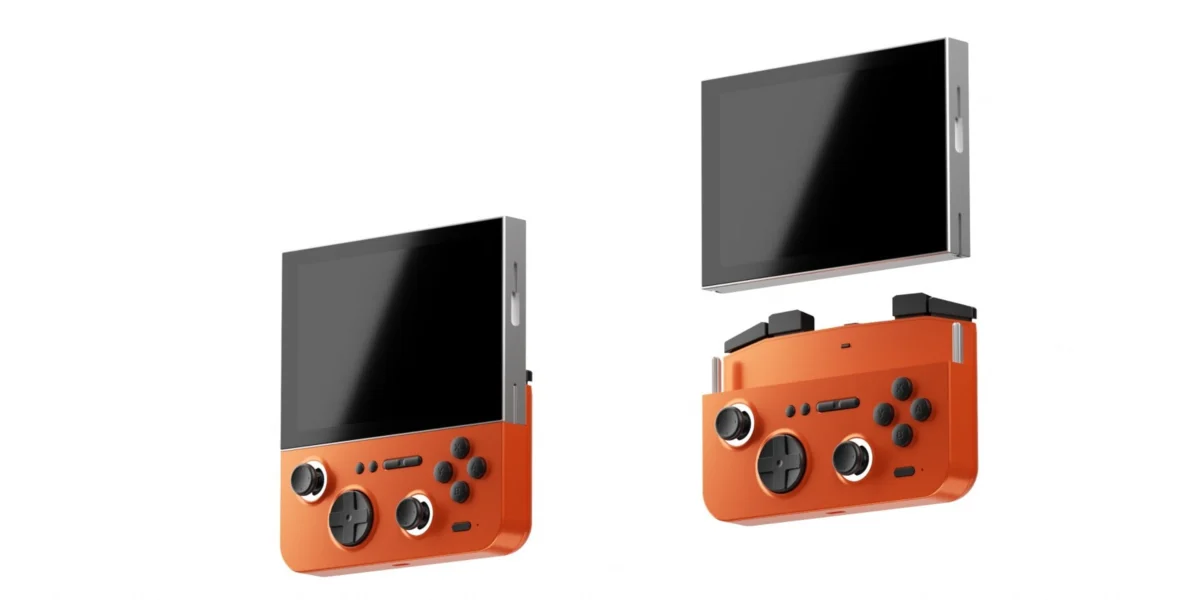
The landscape of modern gaming hardware often grapples with perceptions of stagnation, yet the burgeoning handheld emulation sector continues to be a vibrant crucible of innovation. In an era where mainstream consoles increasingly converge on established designs, smaller manufacturers are pushing boundaries, introducing devices that challenge conventional form factors and expand user versatility. The latest entrant to capture significant attention is the GAMEMT E5 ModX, a device that promises to transcend the typical handheld experience by offering unprecedented modularity, functioning as a standalone controller, a traditional horizontal portable console, and a dedicated ‘TATE’ mode device. This ambitious design positions the E5 ModX as a potential disruptor, offering a fresh perspective on how portable gaming hardware can adapt to diverse user needs and gaming styles.
The Genesis of Modularity: Unveiling the E5 ModX’s Core Innovation
The announcement of the GAMEMT E5 ModX comes at a time when the handheld market is particularly dynamic. Following recent revelations, such as Anbernic’s intriguing rotating portable device – a nod to the gloriously experimental phone designs of the 2000s – the E5 ModX takes a different, yet equally compelling, path towards innovation. Unlike its rotating counterpart, which primarily focuses on a transforming screen for different orientations, the GAMEMT E5 ModX champions a deeply modular architecture.
At its core, the E5 ModX’s distinguishing feature is its detachable screen. This design choice is not merely cosmetic; it underpins the device’s tripartite functionality. The screen unit can be separated from its controller section, allowing for remarkable flexibility. In its default configuration, the device operates as a traditional handheld, with the screen centrally integrated between two controller grips, ideal for widescreen gaming. However, the true ingenuity emerges when the screen is detached. It can then be paired with other devices, such as a smartphone or even a tablet, effectively transforming the controller section into a standalone Bluetooth gamepad. This capability significantly enhances its utility, offering a dedicated gaming control solution for existing mobile ecosystems, thereby extending the value proposition beyond its primary function as a retro gaming device.
Furthermore, the modular design facilitates a crucial feature for retro gaming enthusiasts: the ‘TATE’ mode. This orientation, where the screen is rotated 90 degrees to be taller than it is wide, is indispensable for faithfully replicating the experience of classic arcade vertical shooters (shmups) and other vertical-scrolling games. While many handhelds struggle to offer an ergonomic or visually optimal TATE mode, the E5 ModX’s modularity allows for a dedicated vertical setup, providing an immersive and authentic retro gaming experience that is often compromised on standard devices. This specific focus on TATE mode highlights GAMEMT’s understanding of a significant niche within the retro gaming community, catering directly to a demand that has largely been unmet by mainstream hardware.
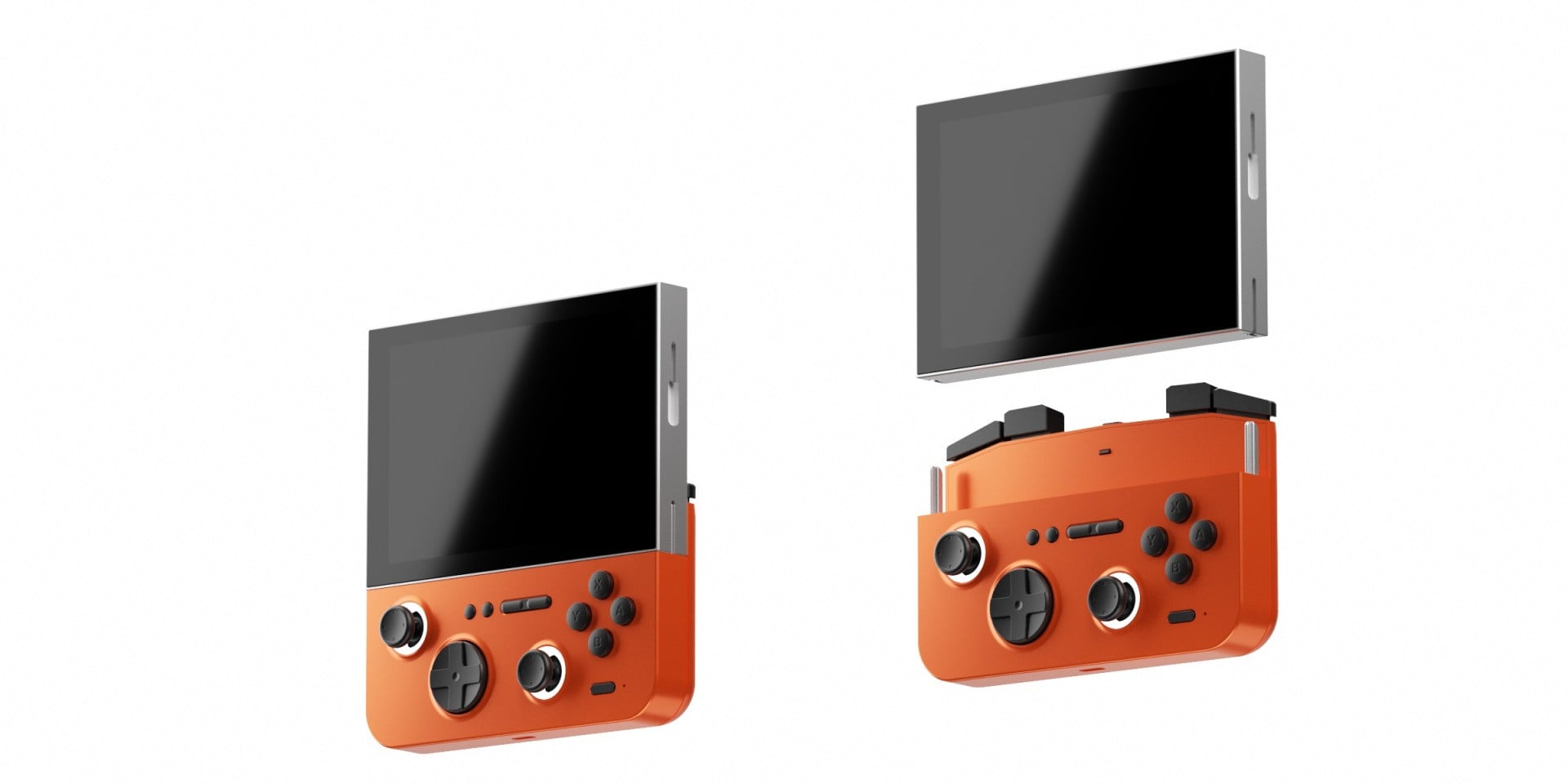
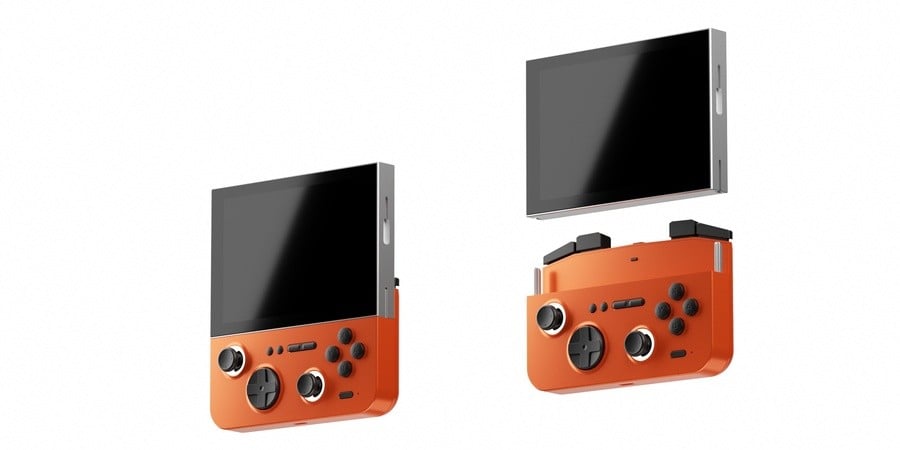
The initial glimpses of the GAMEMT E5 ModX, first teased by GAMEMT and subsequently brought to wider attention by dedicated communities such as Retro Handhelds, underscore a deliberate move towards user-centric design. Images, notably shared by sources like @royibeila (as seen in the accompanying visuals), depict a sleek, adaptable device that promises to break free from the conventional constraints of integrated handhelds. The visual evidence strongly supports the claims of a highly adaptable form factor, sparking considerable discussion and anticipation within the handheld gaming community.
Technical Underpinnings: Powering the Versatility
While the modular design is undoubtedly the headline feature, the underlying technical specifications dictate the practical performance and ultimate appeal of the E5 ModX. Thanks to the diligent efforts of community members, particularly Jdewitz as reported by Retro Handhelds, some key specifications have already surfaced, offering insights into the device’s capabilities.
The GAMEMT E5 ModX is expected to be powered by a MediaTek P60 chipset. The MediaTek Helio P60 is an octa-core System-on-Chip (SoC) that was originally introduced in 2018, primarily for mid-range smartphones. It features four ARM Cortex-A73 cores clocked at up to 2.0 GHz for performance-intensive tasks and four ARM Cortex-A53 cores, also at up to 2.0 GHz, for power efficiency. This hybrid architecture is designed to balance performance with battery life, a critical factor for any portable device. The integrated GPU is an ARM Mali-G72 MP3, a triple-core graphics processor that, while not cutting-edge by current standards, was competent for its time and remains capable of handling a significant array of graphical workloads, particularly those found in retro emulation.
Accompanying the MediaTek P60 is 3GB of RAM. In the context of retro emulation, 3GB of RAM is generally considered sufficient for emulating systems up to the PlayStation Portable (PSP) and Sega Dreamcast era, and potentially some lighter Nintendo 64 or Nintendo DS titles with good optimization. These consoles represent a significant portion of the retro gaming library, offering thousands of beloved titles that run well on hardware of this caliber. However, it also implies a performance ceiling; more demanding systems like the PlayStation 2, Nintendo GameCube, or modern Android games with high graphical fidelity would likely push the P60 and 3GB RAM beyond their comfortable limits, leading to stuttering or unplayable frame rates. This positions the E5 ModX squarely in the mid-tier of dedicated retro handhelds, prioritizing a broad range of classic emulation over bleeding-edge performance.
The display, a critical component for any gaming device, is specified to have a resolution of 1024 x 768 pixels. This resolution, often associated with a 4:3 aspect ratio, is particularly noteworthy for retro gaming. Many classic consoles and arcade games were designed for 4:3 screens, meaning they will display natively on the E5 ModX’s screen without stretching, black bars, or other aspect ratio compromises often encountered on modern widescreen displays. This choice underscores GAMEMT’s commitment to delivering an authentic retro experience, especially vital for TATE mode games which often utilized square or near-square aspect ratios in their original arcade cabinet forms. The clarity offered by this resolution on a handheld screen size should be more than adequate for crisp pixel art and legible text.
While other crucial specifications such as internal storage capacity, battery size, and I/O ports are yet to be fully detailed, their importance cannot be overstated. Sufficient storage is necessary for a substantial game library, and robust battery life is paramount for extended portable play sessions. These details will further shape the E5 ModX’s overall value proposition and user experience upon its full reveal.
The ‘TATE’ Mode Revolution: A Nod to Arcade Heritage
The emphasis on ‘TATE’ mode is perhaps the most compelling argument for the E5 ModX’s innovative approach. For decades, arcade gaming was synonymous with vertical scrolling shooters, known as "shmups," and other genres that benefited from a taller screen orientation. Games like Gradius, Dodonpachi, Ikaruga, and countless others were designed with this vertical aspect ratio in mind. Playing these titles on a horizontal screen, even with software rotation, often results in a significantly reduced play area, smaller sprites, and an overall diminished experience.
The GAMEMT E5 ModX directly addresses this long-standing challenge for retro enthusiasts. By allowing the screen to be easily detached and reoriented vertically, it provides an optimal, full-screen TATE mode experience without compromising ergonomics or screen real estate. This dedicated functionality sets it apart from many other handhelds that either ignore TATE mode entirely or offer cumbersome, less-than-ideal solutions. For fans of classic arcade action, this feature alone could be a significant selling point, offering a level of authenticity previously only achievable through dedicated arcade cabinets or complex home setups. The commitment to such a niche but passionate segment of the retro community showcases GAMEMT’s understanding of its target audience’s desires.
Navigating the Competitive Landscape: The Handheld Emulation Renaissance
The GAMEMT E5 ModX enters a highly competitive yet rapidly expanding market. The last few years have witnessed a renaissance in handheld gaming, driven by advancements in mobile chipsets and a surging demand for retro emulation. Companies like Anbernic, Retroid Pocket, Ayn (with its Odin series), and even larger players like Valve (with the Steam Deck) and ASUS (with the ROG Ally) have carved out distinct niches.
Anbernic, a prolific manufacturer in the retro handheld space, recently garnered attention with leaks of its RG Cube (or potentially RG506), a device featuring a rotating screen that can switch between horizontal and vertical orientations. This directly positions it as a competitor in the realm of adaptable form factors. While Anbernic’s approach integrates the screen rotation, GAMEMT’s E5 ModX goes a step further with full screen detachment, offering greater versatility as a standalone controller or for use with external displays. This distinction highlights different philosophies in achieving adaptability.
Other devices like the Retroid Pocket 3+/4 Pro offer solid performance for their price points, often leveraging more powerful MediaTek Dimensity or Qualcomm Snapdragon chipsets for broader emulation capabilities, sometimes extending to PS2 and GameCube. However, these devices typically adhere to a traditional horizontal handheld form factor, lacking the modularity of the E5 ModX. High-end devices like the Steam Deck and ROG Ally push the boundaries of portable PC gaming, offering performance far exceeding the E5 ModX, but at a significantly higher price point and with less focus on the unique retro-centric features like TATE mode.
GAMEMT, as a newer or less established name compared to some of these market veterans, is clearly aiming to differentiate itself not through raw power, but through innovation in design and user experience. Its modular approach could carve out a unique space, appealing to users who prioritize flexibility, authentic retro experiences, and the ability to repurpose their hardware for different gaming scenarios. The success of the E5 ModX will depend on its ability to execute this modular vision flawlessly, ensuring durability, seamless connectivity, and robust software support.
Chronology of Discovery and Community Engagement
The journey of the GAMEMT E5 ModX from concept to public awareness exemplifies the crucial role played by enthusiast communities in the modern tech landscape. The initial ‘tease’ by GAMEMT, likely through social media channels or industry events, served as the first spark. This strategic drip-feed of information is a common marketing tactic designed to build anticipation.
However, the rapid dissemination of detailed information and technical specifications was largely driven by dedicated online communities. Platforms like Retro Handhelds, which aggregate news, reviews, and discussions around portable emulation devices, quickly became a hub for the E5 ModX. It was through this community that the insights from members like Jdewitz regarding the MediaTek P60 chipset, 3GB RAM, and 1024 x 768 display resolution first emerged. This collaborative investigative process, where enthusiasts piece together clues from various sources (leaked images, unofficial renders, and insider tips), is a hallmark of niche tech markets.

The community’s role extends beyond mere reporting; it acts as an early feedback mechanism. Discussions around the leaked specifications, potential pricing, and design choices provide invaluable insights to manufacturers, even before a product officially launches. The engagement seen on forums and social media platforms surrounding the E5 ModX indicates a high level of interest and critical scrutiny, which will undoubtedly influence GAMEMT’s final product decisions and marketing strategies. This grassroots approach to information gathering and analysis underscores the symbiotic relationship between manufacturers and the passionate consumer base in the rapidly evolving handheld emulation market.
Broader Implications and Market Impact
The GAMEMT E5 ModX, if successfully brought to market, carries several significant implications for the portable gaming industry. Firstly, it could catalyze a renewed interest in modular designs. While Nintendo’s Switch introduced modularity with its detachable Joy-Cons, the E5 ModX takes a different route by making the screen itself the detachable component, offering new avenues for hybrid device functionality. Should the E5 ModX prove popular, it could inspire other manufacturers to explore similar versatile designs, moving away from monolithic handheld forms.
Secondly, it reinforces the growing importance of catering to specific niches within the retro gaming community. The dedicated TATE mode is a powerful example of how understanding and addressing particular enthusiast needs can differentiate a product in a crowded market. This strategy could encourage other companies to delve deeper into specialized features rather than simply chasing raw performance numbers.
However, challenges remain. The modular design, while innovative, can introduce complexities in manufacturing, potentially impacting durability and cost. Ensuring seamless connectivity between the detached screen and controller, maintaining consistent performance across different modes, and providing robust software support for various orientations will be critical for user satisfaction. Furthermore, the MediaTek P60, while adequate for its target emulation range, might be perceived as underpowered by some segments of the market accustomed to more contemporary chipsets, potentially limiting its broader appeal beyond core retro enthusiasts.
The eventual release date for the GAMEMT E5 ModX remains undisclosed, adding to the anticipation. However, the early information and community buzz suggest that GAMEMT is on the verge of introducing a truly unique device. Its success will not only depend on its technical execution but also on its ability to resonate with a market increasingly hungry for innovative, versatile, and authentic gaming experiences that challenge the status quo. The E5 ModX stands as a testament to the fact that innovation in gaming hardware is far from stale, especially within the dynamic and experimental realm of handheld emulation.